When Seconds Count
Whoo-hoo, this month I drew the coveted Writer's Choice card. I had planned to write a piece on late season Puget Sound chinook. A solid plan in place, but then came along the latest WDFW Fishing Rule Change. This closed Marine Area 10 to chinook fishing. This situation where the current estimate for chinook sublegal encounters for the summer fishery is at 122% of the agreed fisheries. The truly difficult part of the MA 10 closure is that MA 10 chinook catch rate typically peaks in mid-August.
I considered shifting the content and discussing areas that explain where to bag a chinook in Puget Sound. After internal debate, I decided I would shift chinook effort from MA 7, 9, 10 and 11 toremaining chinook fisheries. I thought better of the idea. Normally I am more than willing to share information. However, in this case the remaining fisheries really can’t handle the potential for increased fishing pressure. I’d be “Blowing Up” our few remaining opportunities. It’s a shame though, some of my best days on the waterwere caught August through September. I love writing about chinook fishing and the decision was a real dilemma for me. Dilemma or otherwise, in late July things changed and I decided to refocus my article.
This has been a summer of changes around the old homestead. We have and continue to have multiple remodeling projects in work. We moved my mother-in-law in and with few exceptions I’ve been working 6 days a week. Not complaining, all the right thing to do. And then to be honest I absolutely love my job and kind of go through some form of withdrawals when I’m not working… With the hectic schedule and lack of fishing (neither one of my boats have been off the trailer since May and then January before that) I was kind of evaluating life and sorting through what’s important or otherwise. I was even considering selling the boats.
Typically, we meet my fishing buddy, his wife, and sometimes other friends for a meal once a week. Usually, we meet at Billy’s in Burlington on Sunday mornings. We’re regulars and they have one of the best breakfasts in Skagit County. On a Friday morning in late July, I texted my fishing buddy to confirm our Sunday plans and he called me back to let me know that his wife, our close friend, had just had a stroke.
It was the last thing I ever expected to hear. Being that they are 20 years younger and in generally good health, the news was hard to comprehend. As couples we have spent a lot of time together; vacations, fishing, and of course our weekly outing, and nobody ever thought twice about our individual health. Instead of a fishing article I decided to write a brief public service piece.
A stroke is an interruption to the blood supply to the brain. Strokes are the result of an obstruction or damage to the arteries in the brain, such as a clot or aneurysm. A stroke can occur at any age and statistics show that 1 in 5 people that have a stroke are under 55, but the chance increases with age. The interruption can cause brain cells to die and depending on the location, can impact the victim’s speech, vision, cognitive abilities, movement, and/or coordination.
It is critical that you learn the symptoms and immediately react by calling 911.Remember the seconds count. Although the individual symptoms may not be unique to a stroke, the sudden onset or out of the ordinary onset of any of the following may be symptomatic of a stroke and requires immediate EMS care:
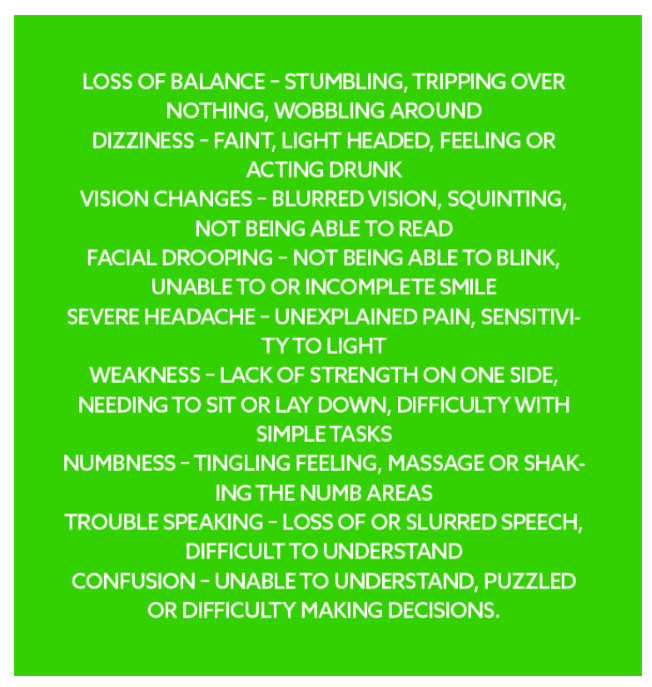
.
Again, recognizing the symptoms and reacting is critical when you suspect a stroke. As outdoorsmen, especially if you or your partner are in a risk category, make sure your cell phone is charged and/or your VHF is in working order.
Risk factors that we can’t change are race, gender, and family history. Fortunately, with the help of your family physician, there are risk factors we can manage to reduce the chance of having a stroke: Blood Pressure, Cholesterol Levels, Smoking, Weight, Physical Activity , and Diabetes.
By being familiar with stroke symptoms and taking action, both recovery and survival are possible. The onset of stroke symptom(s) is sudden with no warning. As soon as something seems off with a loved one or fishing and hunting partner you should take immediate action. Calling 911 may improve stroke recovery prospects and hopefully a piggy of a chinook will be in the cards down the road.
Reference material for this article is courtesy of: https://www.strokeawareness.com/patient/spread-the-word.html
Editor’s Note: As a Registered Nurse of over 35 years, I’d like to affirm that time is of the essence when it comes to strokes. If your fishing buddy shows signs of stroke it’s time to get off the water ASAP and get help. Another excellent source of stroke information can be found at https://www.stroke.org/

/articles/when-seconds-count
Lost Crab Pots
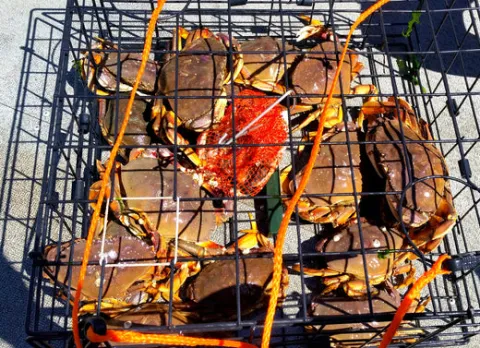
With Puget Sound crab season right around the corner, let’s briefly discuss an unfortunate aspect of the sport; lost or stolen crab gear. While fortunately, or maybe unfortunately, most missing crab gear is actually lost, there is still a high incidence of theft associated with recreational crabbing. There are a few things we can do to reduce lost crab gear.
Much of the time, missing crab gear is due to operator error. Things like short crab pot lines, pots not properly weighted, and set location are often the reason a recreational crabber can’t find their gear. Admittingly, crab gear can be the victim of theft. Either way, how do we reduce lost crab gear?
Crabbers
Crabbers can significantly reduce the amount of gear lost due to operator error by taking a solid look at their gear and where they plan to drop the pots. Always ensure that you have adequate line for the area that you are crabbing. Think depth of the water + 50%. Most of the time recreational crabbing is done in 60’ or less of water so for most crabbers 100’ of lead line is adequate.
Weight
Weighting your pots for the location that you plan to crab is critical. The current can easily move your crab gear and I swear that sometimes a pot full of crab can walk as the crabs migrate with the tides. Puget Sound, many coastal bays, and estuaries are subject to strong tidal currents. Use weighted pots or make sure that you add weight as appropriate. Most missing pots often walk away because they are not properly weighted.
Location
Location is important. Many of us crab where we crab because that is where we crab. In that case, you probably already know the drill, but for new crabbers or when crabbing in a new area it is a great idea to study a chart before sending your gear over the side. Make sure you have adequate line for the area and be aware of any drop-offs and strong current seams. If you have charting capabilities, mark your drop point for painless retrieval later. If you are missing a crab pot, wait for slack tide to look again before you report it as a missing pot.
Sadly, our crab gear or even crabs can be the subject of theft. While crabbing at various popular Puget Sound crabbing areas, we have caught people picking our pots several times. Per the WDFW regulations, it is illegal to set or pull unattended shellfish gear with a buoy that does not have your name on it. Despite the regulations, there are people that disregard the law and selfishly steal our gear and crabs.

I am fortunate that during crab season I can keep a crab pot in the water on the days that crabbing is open. I just collect the crabs and rebait as required as I make my rounds. All too often when I pull the pot, the bait cage or bag is wide open with both the crab and bait missing. I use cheap chicken hindquarters for bait. Most of the time I tie wrap both the pot and bait container, but bait theft is a persistent problem (I should always have chicken bones left). In my case, theft is probably not preventable because the pot is out overnight, but there are things we can do to reduce theft.
Probably the best way to reduce theft is to plan day crabbing trips. If your pot is in the right location, it only needs to soak for 20-30 minutes. Set your pot or string and just hang out in the area until it is time to collect your hard-shelled booty. You can also use tie wraps, but it seems that the crab thieves are wise to that one.
A few years back we were crabbing at Yokeko Point inside Deception Pass. We set a string of pots and went for a quick cruise around Hope Island and back, maybe 20 minutes total. Returning to our pots and coming off plane, we saw a 24-26’ sun cruiser type boat with a group of yahoos pulling a crab pot line. As we got closer, we realized it was our pot and expressed our displeasure with the situation. They were very apologetic and said they thought it was their pot. Oh OK… Anyway, a couple pictures later we went on to check our string.
Identify Floats
One way to reduce theft is to uniquely identify your floats. You still must use a red and white float with your name and address on it, but don’t be afraid to add a personal touch. Flags, additional floats, or rubber duckies can be added to make it clear that it is not someone else’s gear. If you do encounter some scumbag stealing your gear or crab, do not confront them. Be polite in communicating with them and get pictures. Share the pictures with the WDFW, they may increase surveillance in that area.
PNW recreational crabbing is a gift from Poseidon and his Tritons. While catching crab, cleaning, cooking, and (best of all) eating them is an enjoyable family activity, occasionally a pot or 2 disappears. If so, don’t let it ruin the experience. Take precautions to reduce pots lost due to “that’s crabbing” issues and/or gear theft, and crabbing season will be your favorite time of the year. As a final thought: with the possibility of a lost pot, always use “rot cord” to allow crab to escape freely if the pot is lost. A derelict crab pot without a proper escape can attract and kill crabs for years after the pot is lost.
/articles/lost-crab-pots