Silver Salmon River Lockjaw Strategies
Standing at the river's edge and surveying the waters, a loud splash disrupted the silence of the day. Coho or silver salmon are known to roll and jump often, and this gives away their location. This fish was in heavy cover where downed logs had created a log jam and there was no way to get to it without risking gear being lost to the sunken trees. But it meant that fish were in the river and that was good enough to load the tackle into the drift boat and launch for a day of searching for more coho.
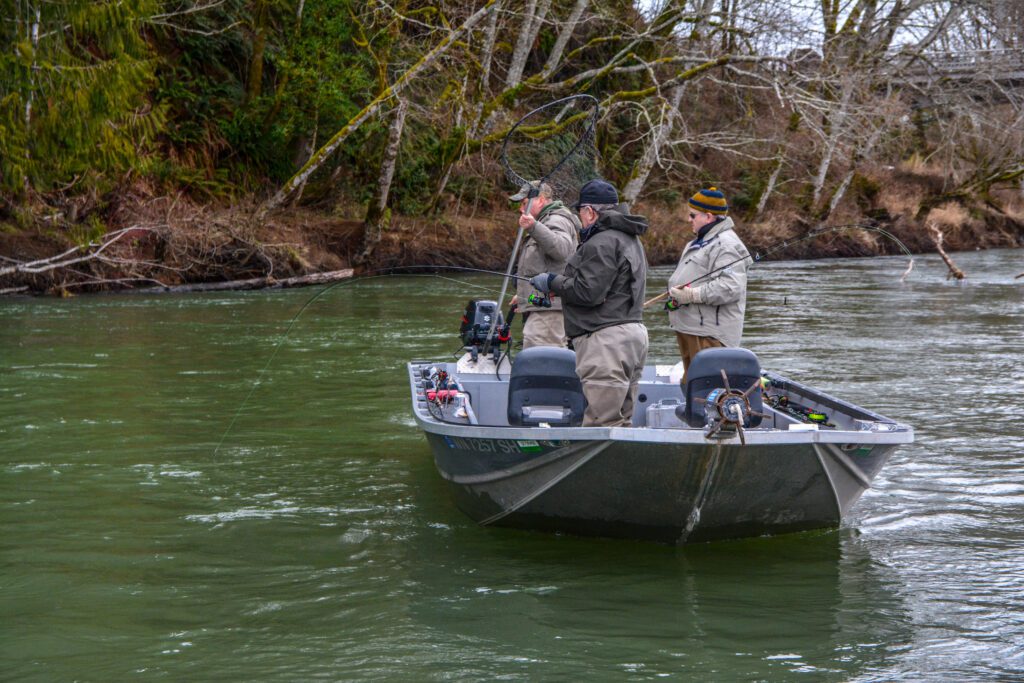
Rowing down the river, which was calm and quiet, we came to a large back slough. The water here was stacked up from the previous winter's floods that cut the side channel deep but now the water was shallow at the outfall creating a lake of sorts. This is known as “frog water” and coho prefer to sit here and rest until they regain energy to continue upriver. With a lot of fish holding in the stagnant waters, one would think these fish are easy to catch but anglers often forget that these are resting fish and that means they are lazy and often lockjaw.
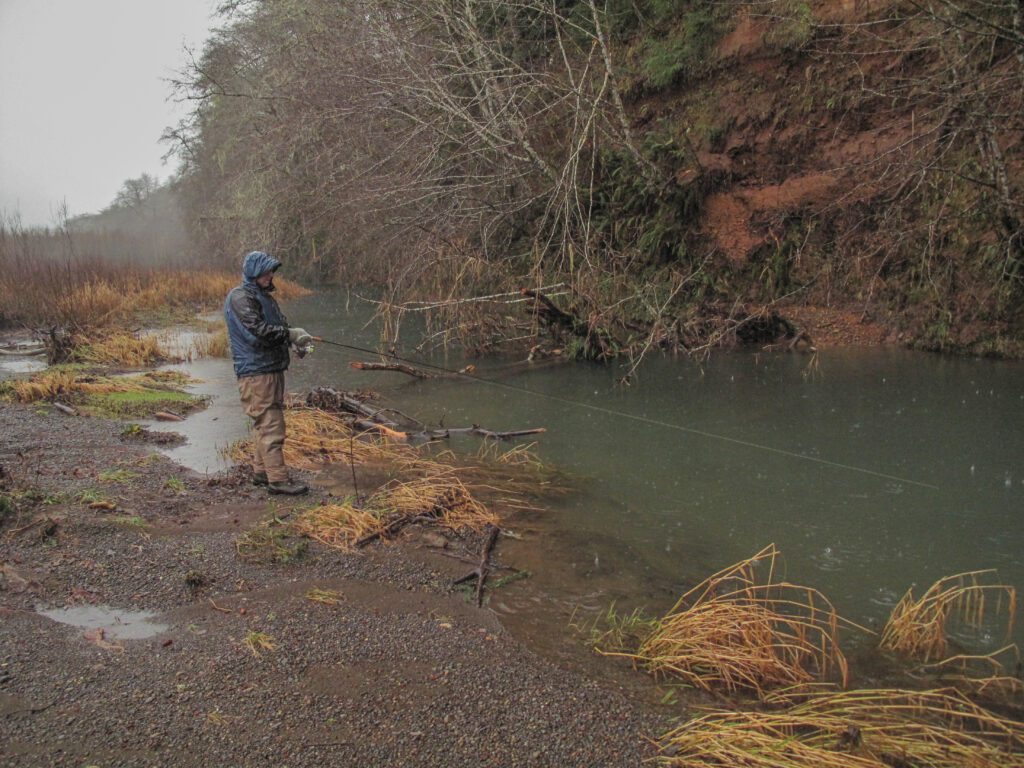
The term “lockjaw” means salmon unwilling to bite. Unfortunately, when anglers come upon a dozen or more fish that are lockjaw the temptation to snag becomes overwhelming. Not only is this illegal but also it hurts the runs of coho because these are resting fish and when snagged they exert energy they are trying to use to head upriver and spawn. When a fish becomes too tired to move it simply dies because water needs to flow through the gills and if the fish cannot move and it is released into slow or stagnant water it will suffocate and die.
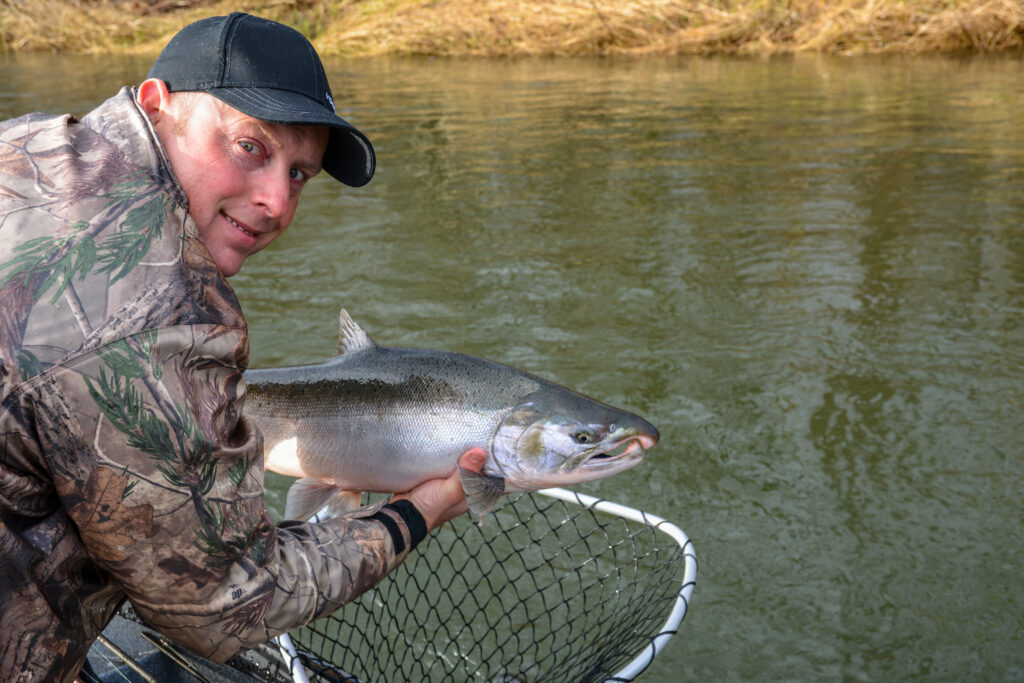
So, how do you get fish to bite when they are all lockjawed? The answer is simple and that is to find fish that are not lockjawed. Seems silly to say that but it is true, you will not get a lockjawed silver to bite. This does not mean giving up fishing for the day but instead knowing that there are biting fish, or a bite might turn on throughout the day. Back to the stagnant waters of the slough.
These fish are resting but that also means they will get their energy back and will bite. If you have ever thrown a spinner or twitched a jig in this water when it is clear enough to see the fish, then you will notice a fish or two out of the school will start to give chase. These are fish that are done resting and have energy and are just waiting for the right conditions.
The right conditions can be anything from enough time to recover to a shot of rain bringing up the river just enough to make it easier for them to migrate. Anglers often head to the river early to get the “early morning bite” but what is really happening is the water has cooled off from a brisk fall night and the fish are more active. As the day heats up the water also warms, and this means less dissolved oxygen and therefore tired salmon. One way to beat the lockjaw is to fish on cool days, after it rains, or early in the day.
Sometimes, our schedules do not line up with the perfect conditions and anglers can only hit a river when the conditions are all wrong for active fish. You can still beat the lockjawed effect by looking for parts of the river where the fish are active. For coho this can be a deep hole where the water is cooler, and boulders churn the flowing water creating dissolved oxygen. Same with riffles and holding areas in the shade. One hot fall day we were floating a coastal river and working on our sunburns when we came across a long stretch of water.
The current was moderate, and the bank had overhanging trees. Peering into the shadows we saw coho stacked up in the shade, swaying their tails in the current and we thought they were just resting. Tossing a jig and a few quick twitches later a fish slammed it hard and erupted out of the water. These were not lockjawed fish but ones that were just staying out of the bright sun and being protected by the overhanging branches. They were also not in “frog water” but instead in a moderate current where they could sit and let the water run through their gills.
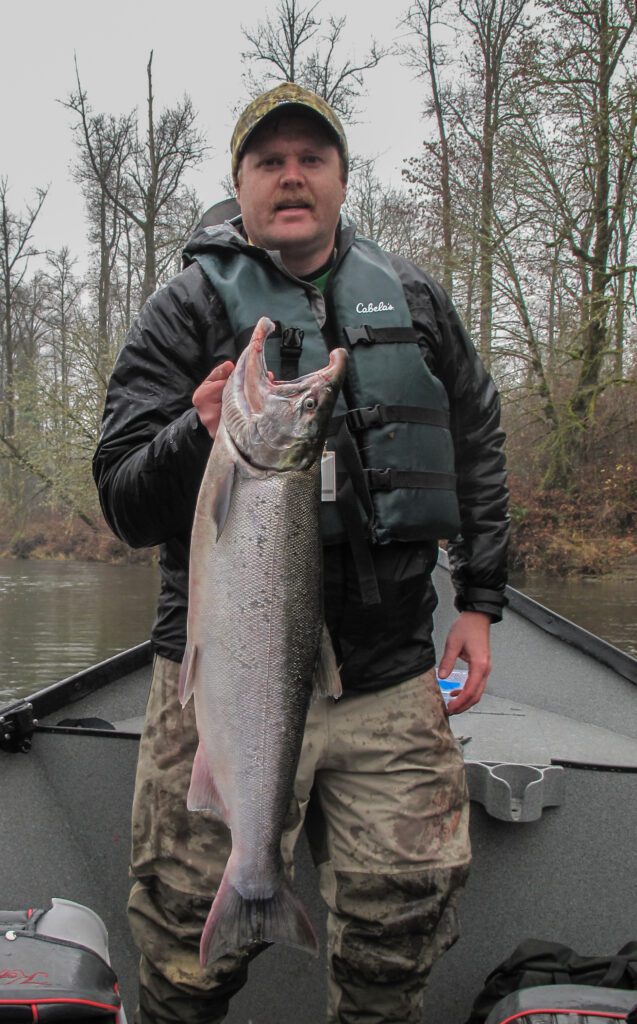
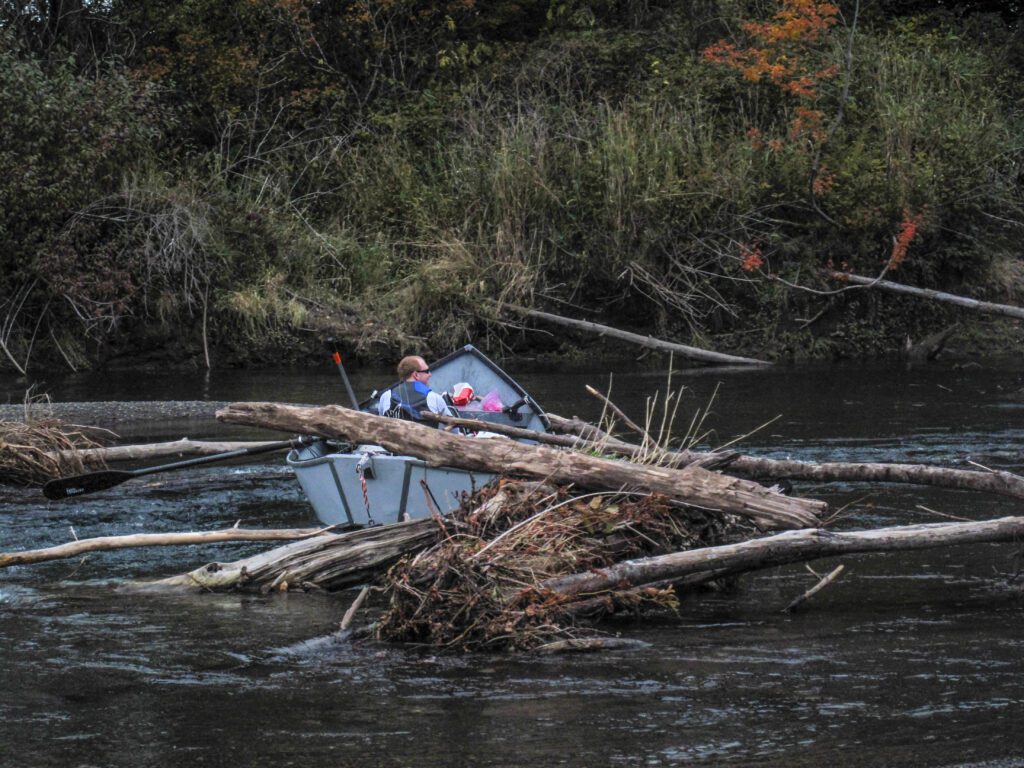
Log jams are notorious places for coho and for eating gear. It is the hardest place of all to catch salmon. Look for deep holes often created by the log jams and watch the fish, or when you see the splashing and rolling as this often means fish are active. A tired fish will sit and rest, but an active fish will be splashing and rolling as it uses energy to do this. Why salmon do this is still unknown with several theories but one thing that is known is that fish that are active are not lockjawed.
Be careful parking the boat over a log jam in current but if you find one that is in a soft part of the river then you can oftentimes move the boat over and tie up to the log jam. The key here is to let the hole rest because it is likely the fish moved out once you put the boat over them. Coho like log jams because it is covered and they feel safe from predators here; the boat will become part of that cover once the commotion stops. Several times we have looked over the edge of the boat and seen coho underneath, sitting there just like they do in other cover.
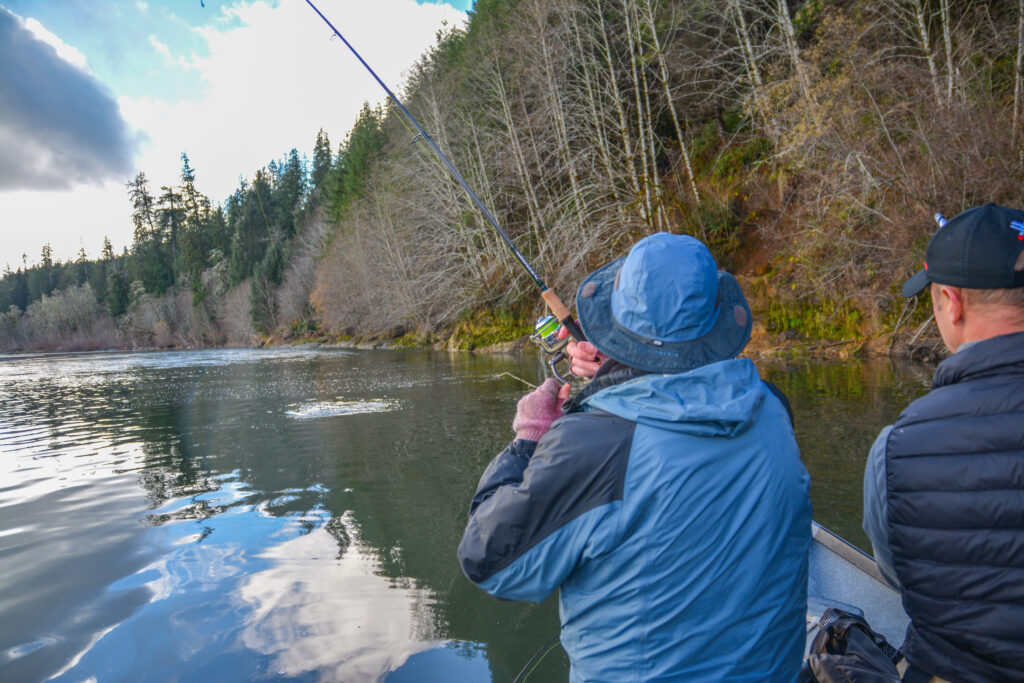
Techniques vary and sometimes you can get a “lockjawed” silver to bite–though the fish was just resting and is now recovered-by using a bait that it simply cannot resist. Such techniques are often the presentation of bait like cured eggs. If you have ever hoverfished, then you have caught resting fish using eggs. This technique which is extremely popular in the Columbia River Gorge is done at tributary mouths where the colder water from the tributary is dumping into the warmer Columbia. The fish will stack up here to rejuvenate in the cooler water and the bite is often very subtle. Floating eggs under a bobber is a top technique to get resting coho to bite. Back to the frog water slough, it is best to float fish it first and see if there are any resting but willing biters in there.
Twitching jigs and swinging spoons or spinners are for active fish. Use these techniques where fish that are more active, such as in runs, riffles, and deep holes. Yes, they also work in stagnant waters but again you will notice that out of the entire school of fish, only a few will chase down the lures. This means having patience and knowing that the fish will eventually get their strength back and bite.

Same with moving fish, be ready for a long lull in action and then all a sudden the “bite” is on. It is likely fish moved upriver and to your location. One cold November day we were fishing the Satsop River and anchored by a small back eddy along a cut bank. We stayed there all day long twitching jigs and occasionally, a pod of coho would make their way upriver. This was announced by one of us hooking a fish and then it would be “on” for a few minutes with everyone catching a fish or two and then the coho simply moved on.
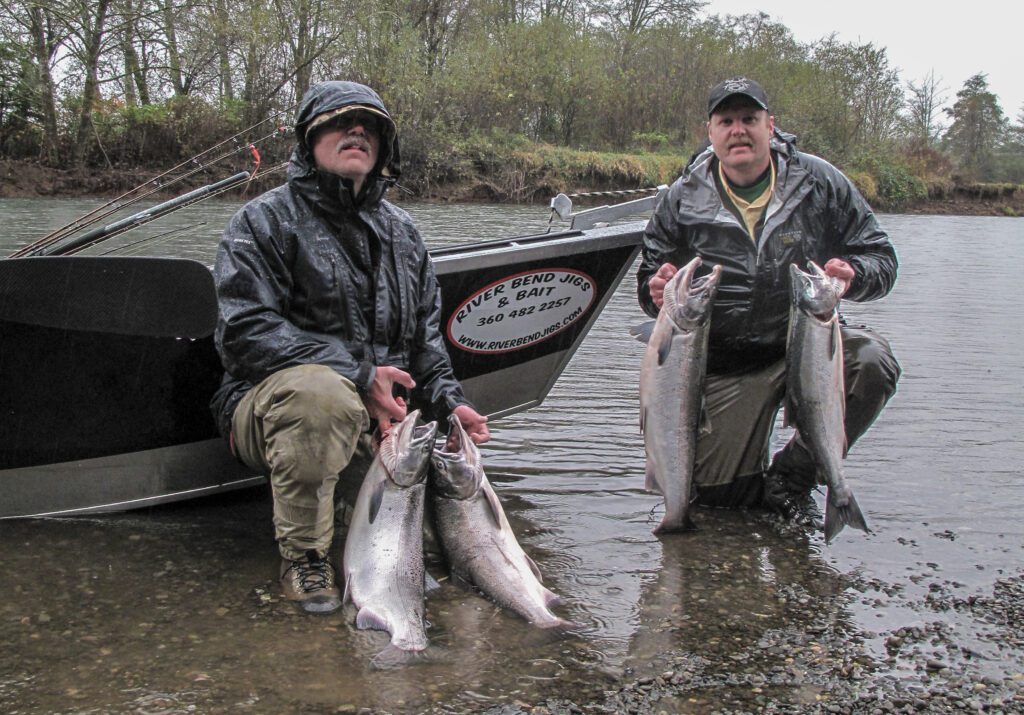
Lockjawed coho are hard to catch and the best way to catch them is to look for fish that are willing to bite. Knowing when they are lockjawed and not harassing them is the best technique you can do to catch more fish. Find willing biters and leave the tired fish alone. Wasting time on them only hurts the run and will cause you to become frustrated. When you make your way to the edge of the quiet river, pause and look around, listening for the splash of a coho. These are the fish you can catch.
/articles/silver-salmon-river-lockjaw-strategies
British Columbia Tuna Time
Timing is everything, especially in fishing. As fishers, we do our best to utilize our logarithmic skills to factor bait, tackle, gear, equipment, safety, weather, time, and environment. Sprinkle on a little bit of hope and you may have a recipe to catch the infamous Canadian Tuna like we did last August in Zeballos, BC in Zeballos, BC with Reel Obsession Sport Fishing.
Nearly a year in the making, last August, we headed out of Spokane to Vancouver Island. Me, Rob, and our two daughters, Cameron and Sarah, headed out on the 700 mile-2 day trip to Zeballos. We had our passports, bibs, maps, lodging itinerary, ferry tickets, snacks, coolers and a navigation plan. We set out to BC hoping to catch the infamous BC Tuna.
Our hopes multiplied as we left Spokane. Rob had been on the horn with Adrian of Reel Obsession and the scuttlebutt was that our timing was right for Tuna. We planned on fishing for Salmon, Halibut, and Bottom fish and the idea of Tuna was a BONUS. All factors were adding up to ideal conditions. The water temperature was right, and the weather was cooperating. Adrian and his fleet were in the Tuna between 20 and 40 miles out when we left Spokane. Our imaginations ran wild as we drove. Would we get there in time?
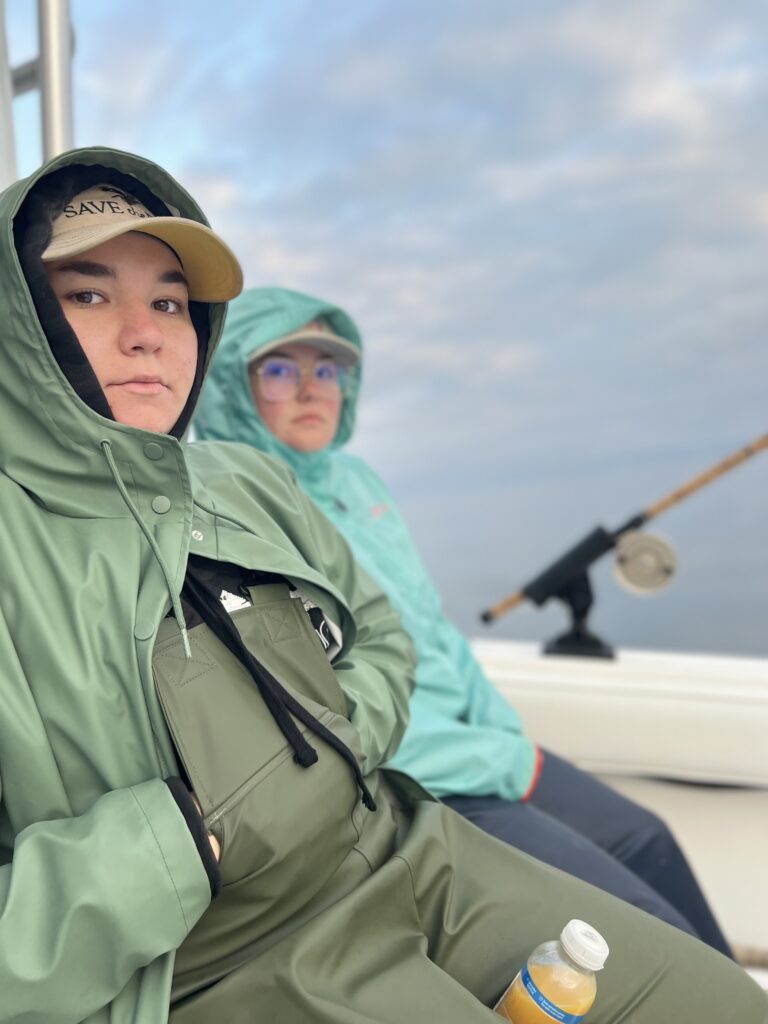
Now, our girls are seasoned on the Salt, and they can travel independently abroad. They were ready for this trip. Their skills would be put to use and pushed. Their mental toughness was developed. They had their own gear, and their stamina was up. The time was right for them to go 40 miles out to sea for a long grinding day of hauling in up to 20 tuna per person as the limit.
It took a while at the border. We were the last truck that loaded the ferry on the last boat of the night. (Planning for this is key. Any delays may affect your ferry sailing)
We got into Nanaimo late and grabbed a hotel. We set out early for Zeballos on the 4-hour drive. We hit a few stores on the way. Zeballos has one small store that is open with limited hours and limited supply, grab your niceties on the way.
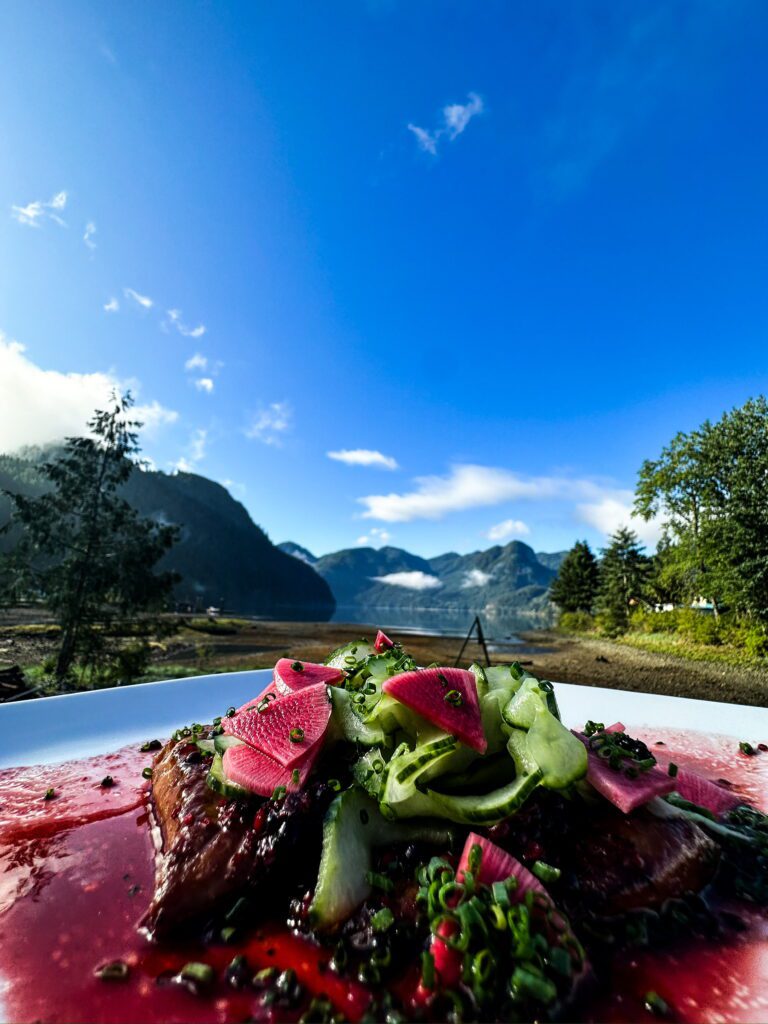
Angie, Adrian's wife and Operations Manager, had everything dialed for us upon arrival. Our rooms were great. The main lodge was bustling. Folks gathered around the firepit with a glass of wine to soak up the views while being contentful waiting for dinner. Sitting down for dinner, the buzz was in, the Tuna were still here! We would be getting our shot at the Tuna Dance!
The morning was met with a communal breakfast and lunch coolers to tote. The scene of the fleet of boats heading out together was a sight to revel in. My girls soaked in the scenery as they gazed with wonder at the open sea. We went 40 miles out. Not all the fleet, but a handful of us Reel Obsession boats were working together over the horn. The radio chimed pleasantries rarely heard over the com in Washington waters. Like, “Lookin’ good aye?” and “Great job, aye!” BC fishers are some of the nicest, hardworking folks I’ve met.
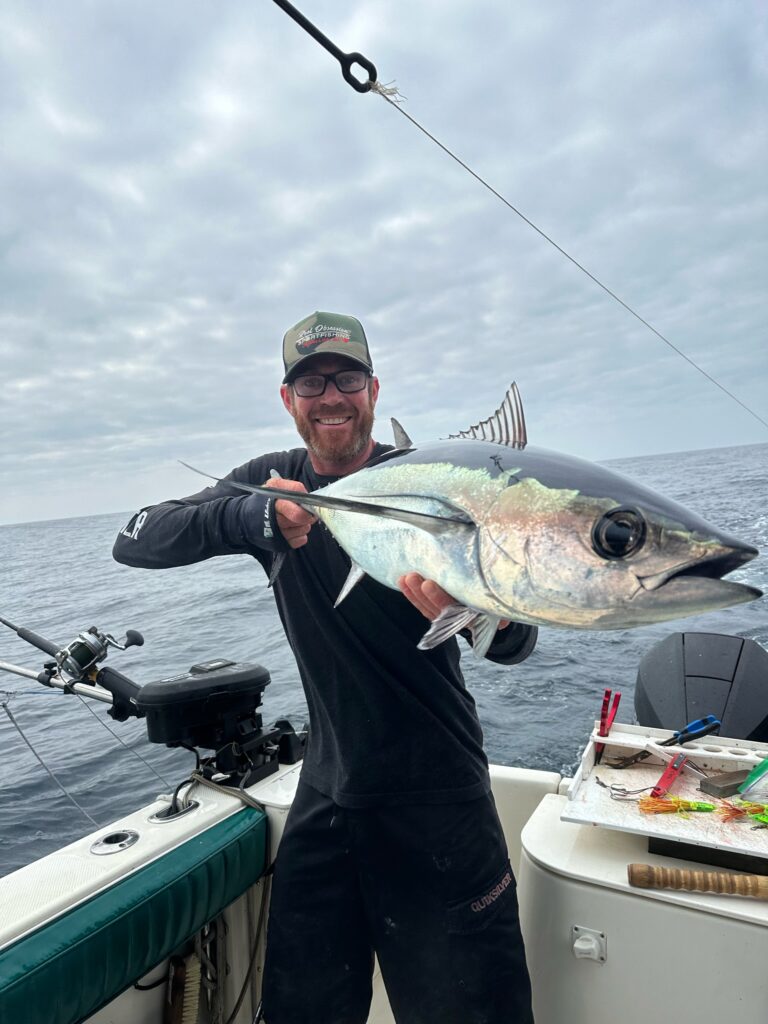
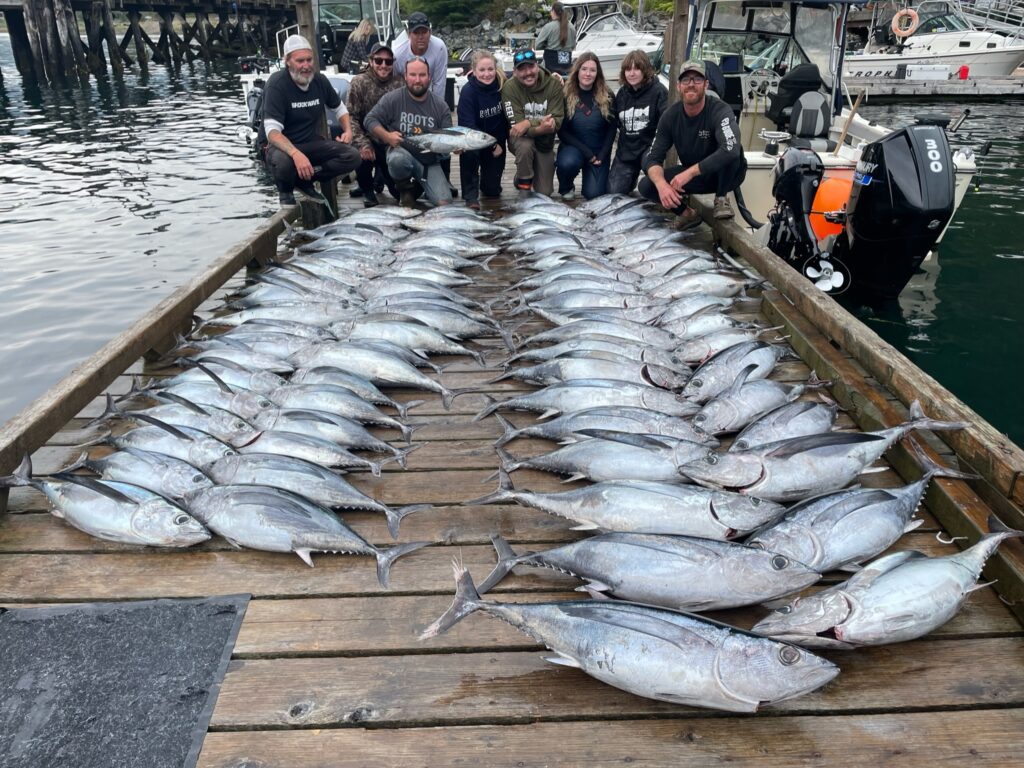
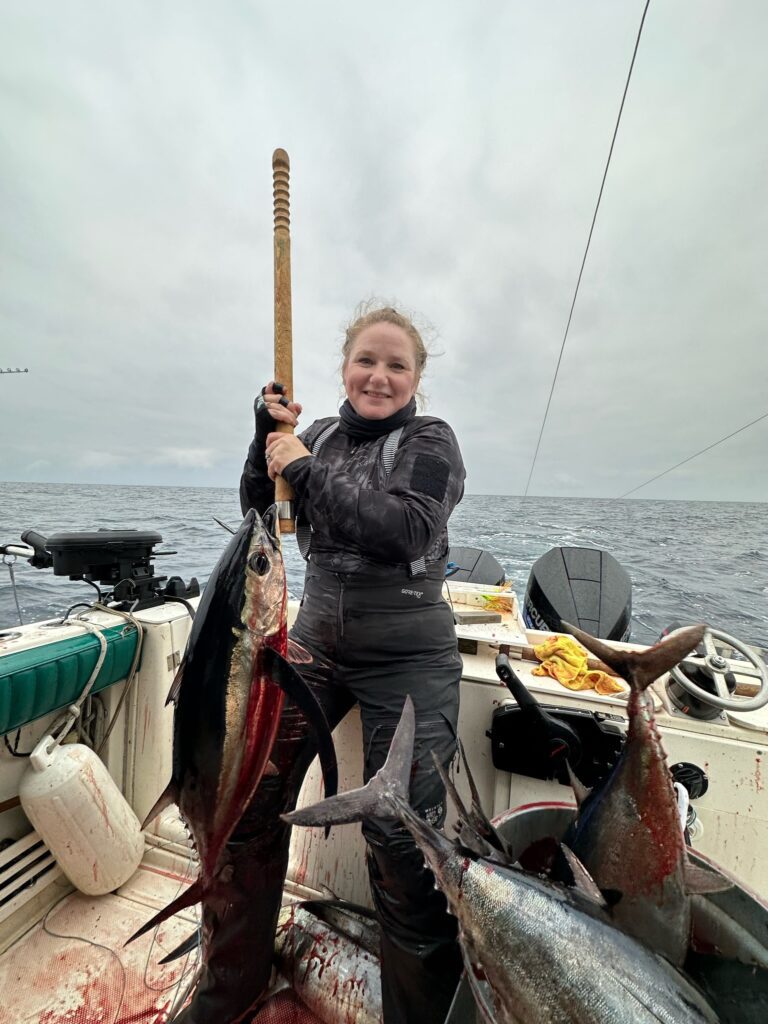
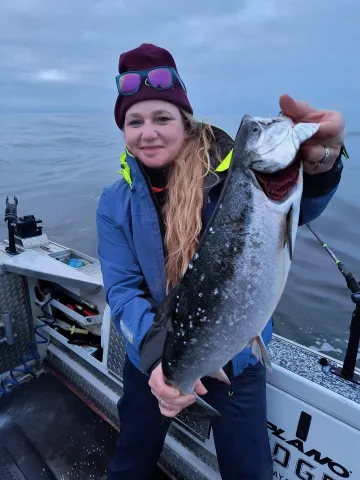
We get to the grounds and Adrian shows the girls the ropes. Essentially, he shows them how to dance for Tuna in a brief 2-minute tutorial. We started to move as a team. We were trolling at about 7 knots fishing with rods and reels and hand lines. Level lines and hand lines are productive and fast; and less awkward than a rod and reel when trolling. “The hand lines help keep the trolling speed up.” Adrian had said. The girls got into it. The handlines helped keep their stamina up. We grinded all day, with not a moment to spare. Adrian was incredible at teaching the girls new techniques, picking up slack when the girls felt a wave of fatigue. Rob and Adrian pulled in the extra slack that day. Mentors are good like that. We grabbed snacks as our energy slowed. Angie and the staff had prepared a delicious lunch for fuel and endurance. We brought in around 40 Tuna! It was incredible! It was rigorous, it was hard, it was fun and It was the time of our lives!
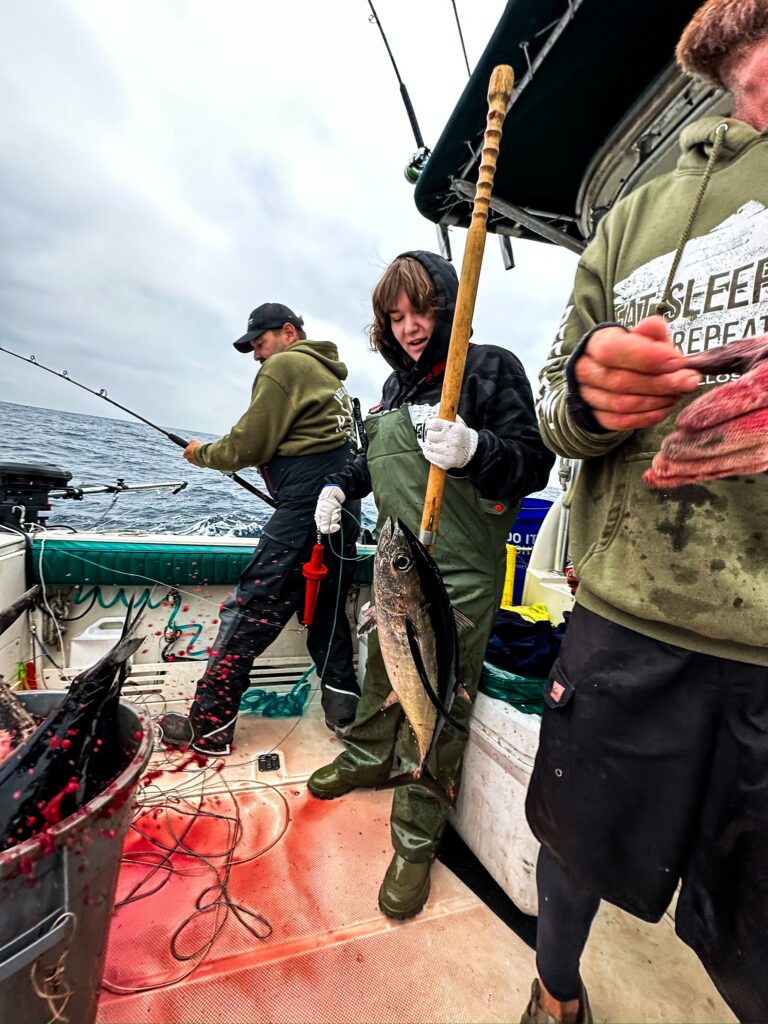
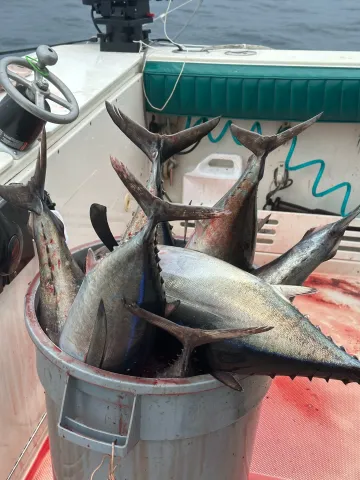
We headed in with the other “Reel” boat that was out. We got to the dock, exhausted. Ange and her team were waiting for us to offload and begin processing. They laid out all the tuna from both boats for some pictures. It was glorious! We headed up to the lodge to get cleaned up and ready ourselves for dinner while the Reel Obsession Crew got to work.
We fished for 3 more days. The fishing was great. The girls wanted to fish for halibut, so we fished in the rain at 300 ft and let them do most of the reeling. We caught our fair share of salmon and some bottom fish. Each day the crew would do the same and offload our catch and get to work while we sat reminiscing about the day in comfort as we soaked in the company and scenery.
We headed out early in the morning with our fish packaged and ready to go for the border. We spent an extra day in Vancouver to play around. We headed home the next day in a straight 8-hour shot. Looking back, Sarah recalls, “The food, scenery, and the people are extraordinary! Zeballos is Awesome!” I agree with her. It was the time of our lives!
*Reel Obsession is a Family Operation. Adrian, and his wife Angie, own and operate the Lodge alongside their two children. Angie runs the land part as the Operation Manager and Adrian runs the Marine side as Operations Manager. Keegan, their son works on the docks and in processing and Kenzie helps serve and operations in the Lodge.
*Reel Obsession is an All-inclusive Fishing Vacation Lodge. Packages include lodging, all meals, snacks, beverages, and guided fishing. They are a licensed processing facility and process and vacuum seal all our fish.
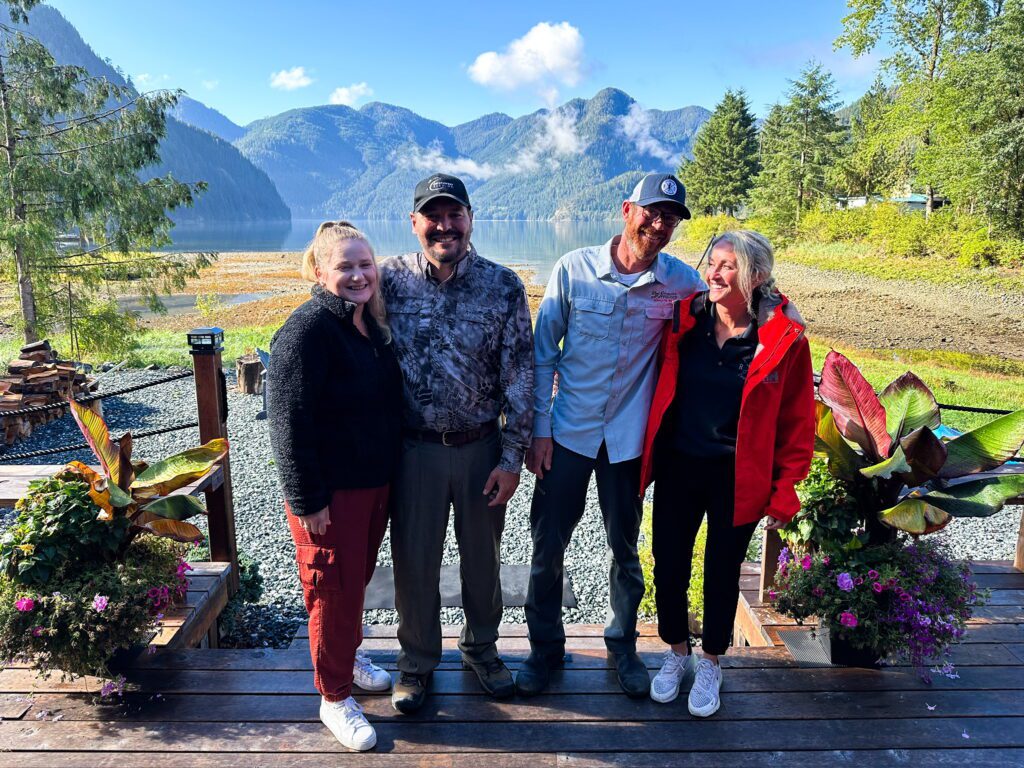
“It’s always a halibut and salmon trip but if the water temps are right, then we can get out for tuna!“ -Adrian O’Connell
/articles/british-columbia-tuna-time
The Other Red Meat
It has been an awesome year for chasing salmon out on the salt, but if you are a Marine Area 7 (San Juan Islands) fisherman you may be thinking now what? MA 7 chinook is closed for the year. At this point, there are limited fall chinook opportunities for our Western Washington salmon slayers. Then halibut, although the fishery is open through September 29th most of them are out in the open ocean doing halibut things. Lingcod are closed for the season and our rockfish fishery continues on a long-term conservation closure… What do we fish for? Why not chase San Juan Island coho, the other red meat?
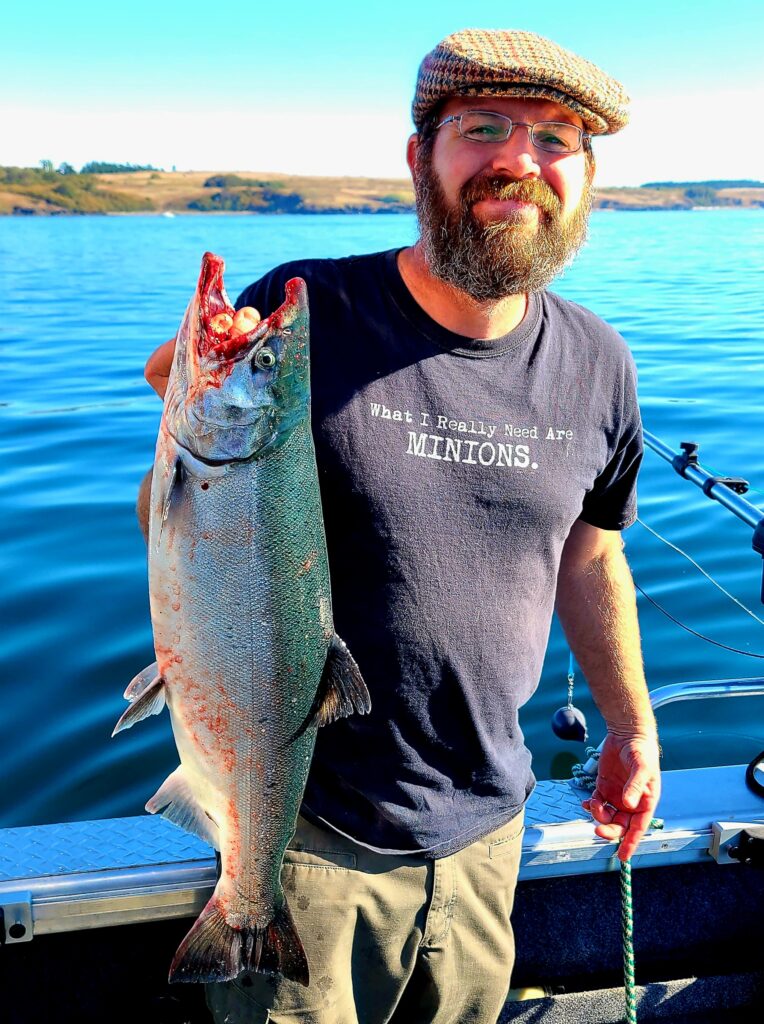
As always review the regulations and Emergency Regulation notices before heading out but the current season is modeled as being open as follows:
8/1-8/31 2 coho no minimum size, release wild fish
9/1-9/29 1 coho
When heading out to hunt San Juan Island Coho, make sure you are aware of the southeast MA 7 closure, and if you plan to fish the banks be cognizant of your actual location. Know where the Canadian border is and where both the MA 7 and MA 6 boundaries are.
Regarding regulations; this year there has been an increase in the number of WDFW staff Safety and Security Incident Reports filed for harassment of WDFW personnel. The Safety and Security Incident Reports relate to negative interactions with anglers and were submitted by Puget Sound Sampling staff over a two-month period this summer. The negative interaction makes WDFW recruitment and retention difficult and staff have quit their job over the treatment they've received this summer.
RCW 77.12.071
Sampling of fish, wildlife, or shellfish by department employees.
- (1) Department employees, in carrying out their duties under this title on public lands or state waters, may:
- (a) Collect samples of tissue, fluids, or other bodily parts of fish, wildlife, or shellfish; or
- (b) Board vessels in state waters engaged in commercial and recreational harvest activities to collect samples of fish, wildlife, or shellfish.
- (i) Department employees shall ask permission from the owner or his or her agent before boarding vessels in state waters.
- (ii) If an employee of the department is denied access to any vessel where access was sought for the purposes of (b) of this subsection, the department employee may contact an enforcement officer for assistance in applying for a search warrant authorizing access to the vessel in order to carry out the department employee's duties under this section.
- (2) Department employees must have official identification, announce their presence and intent, and perform their duties in a safe and professional manner while carrying out the activities in this section.
As a participant in our recreational salmon fishery, please remember that the department is required to monitor the fishery. If they do not have the staffing or there are safety concerns, they may have to close a given fishery because they are unable to monitor it as required under the Federal Fisheries permit.
Once you’ve sorted through the regulations and generally know where you are going, what’s the game plan? During Coho season a good chunk of MA 7 will have coho available. Many of the points along the SW side of San Juan Island produce tide rips that will concentrate bait. Find the bait and coho will be there. This time of the year coho put on the feed bag and fatten up for their spawning rituals. Instead of naming off several already busy point fisheries think bait.
Generally, coho will be found anywhere there is bait. Meter around offshore from the point fisheries and look for bait. Study your charts and note any high spots or ridges that will create a current break and have a look.
You don’t need to find a boiling tide rip, even a subtle rolling seam along an otherwise glassy sea will hold bait. Look for seabirds, a bunch of diving birds sitting on the water means deep bait. a flock of gulls, either floating around or on the wing usually means shallow bait, so continuously keep a lookout for birds.
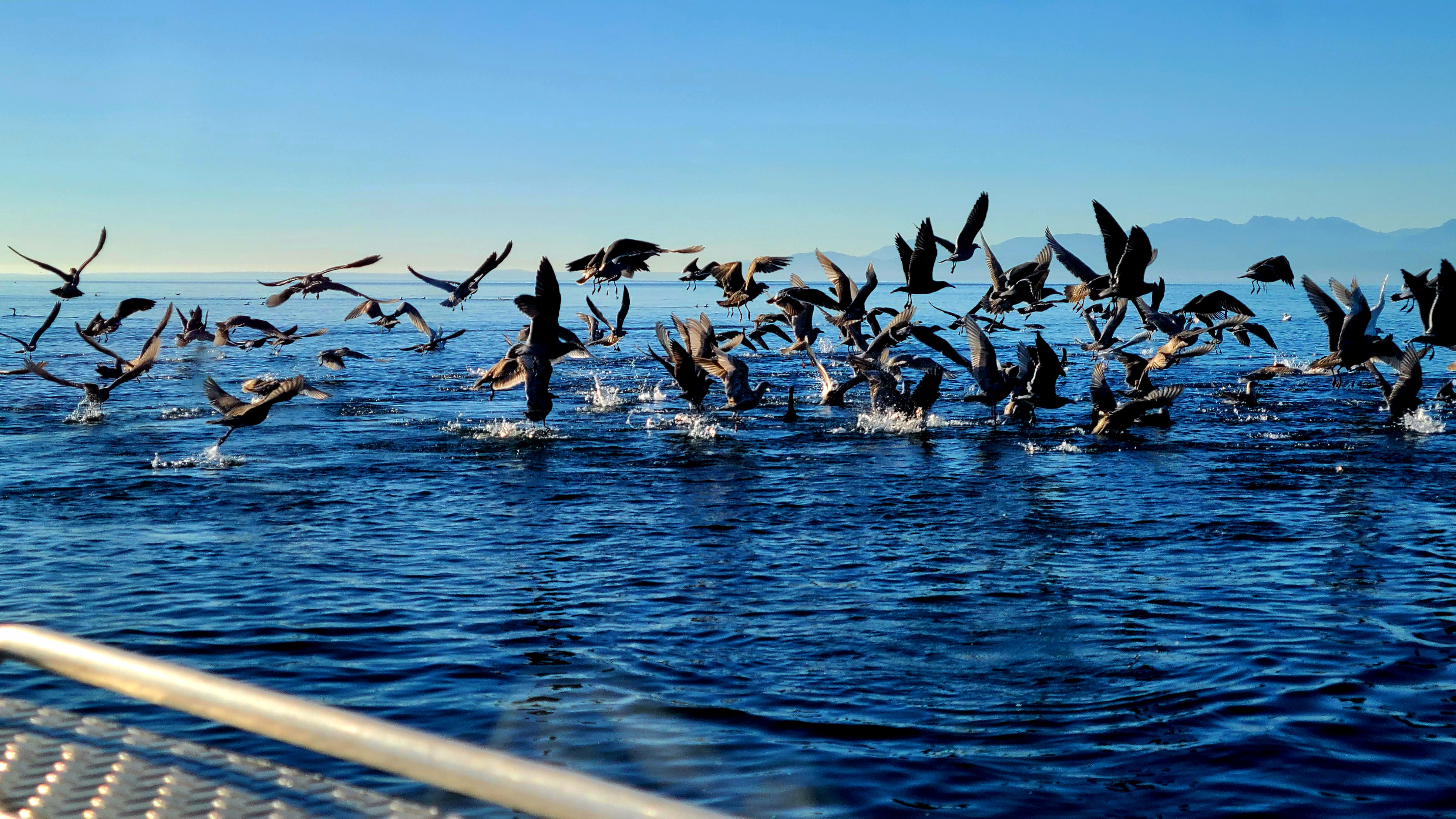
They are kind of the blue light special for coho fishing. Although fishing with the flotilla puts a lot of coho on ice each year, consider finding fish outside the masses. The key to locating coho is locating the bait, find the bait and you will find coho.
One previous September morning, after a quick stop at Holiday for nonethanol and a freshly made breakfast burrito I was off to Cornet Bay. On arrival, I found the bay glassy calm with no wind and was in the water in no time. Fishing with good friends we had agreed to meet at 5:30. I visited with my dock mate and readied the boat and gear for our adventure.
5:30 sharp a set of headlights signals my guests' arrival and we were on the way shortly thereafter. We were handed a gift; the water was dead calm as we motored our way through the predawn darkness. We planned to fish for coho in the Eagle Point area along the south side of San Juan Island. The point was really crowded so I headed offshore to look for bait.
We found a very subtle current break with a number of diving birds sitting on it. Although I had three downriggers onboard, one had problems so we were running 2 and focused on chasing meter marks. We would be rotating through hookups. With very few other boats around we went gear down and started the hunt.
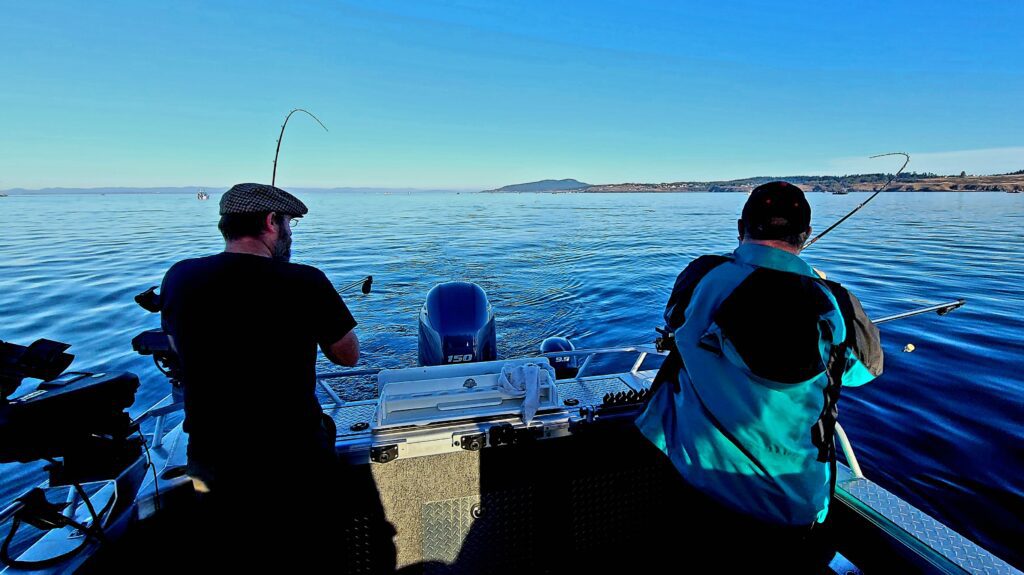
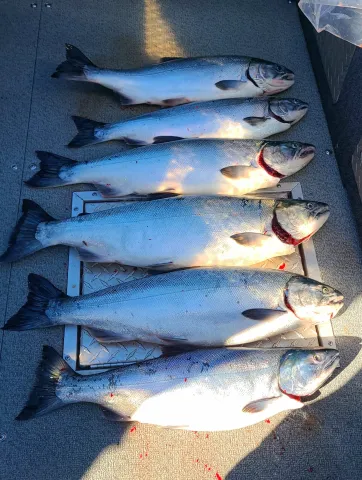
Running only two downriggers turned out to be a blessing because we were on fire. Every hookup turned into a double. Enjoying nonstop action, we had two people fighting fish and one on net duty (2 nets onboard) as we cycled through our rotation. When it was over we had lost about 10 or 12 fish, released a number of fat wild fish but still got easy limits of 8# - mid-teens coho.
It was a stellar day of coho fishing and other than some sore arms my guests had an absolute blast. It was one of the best coho days I have ever experienced. Although I was the skipper, I give credit for our success to a handful of diving birds sitting on a tide rip.
Although many coho are caught on the surface with a cut-plug herring or on trolling flies MA 7 coho are a downrigger show. While most days there is a butt crack of dawn surface bite and occasionally during the day you’ll get a fish with weight or a diver running at 33 pulls, downriggers are a must. Downriggers allow you to target feeding fish.
Regarding gear, probably not a popular opinion, but I think that MA 7 coho are brainless feeding machines. Once they move into the inner sound, they are more selective maybe even smart. In the straights, they focus on their next meal. We have caught coho that were either barfing up small herring or had a number of herring tails sticking out of their mouths, yet they had just snarfed down a hoochie/flasher rig.
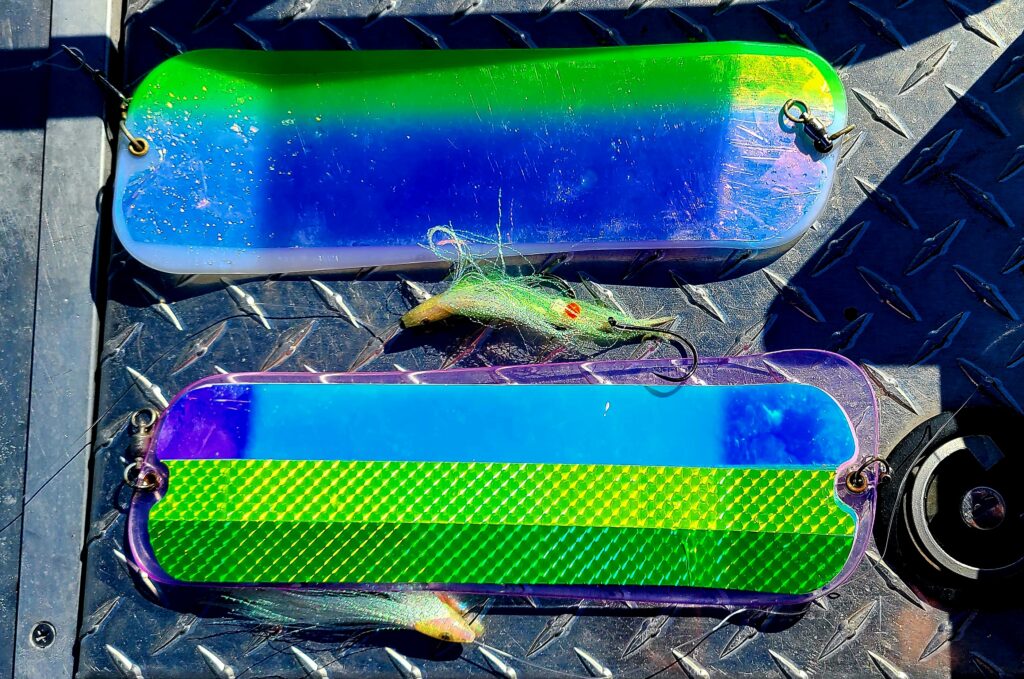
You can’t go wrong with a flasher/hoochie of a flasher/spoon combo. Some version of green or chartreuse would be my starting point but if presented correctly almost any color will work. Many other lures will work too. Consider an Old Goat Lure, a herring or anchovy in a helmet, hoochie/Wigglefin Action Disc combo or even a spinner/bait rig. While coho fishing I always run 11” flashers and the color will vary depending on what the fish want the day that I am fishing.
The day that I took my friends out we found huge schools of small bait so we sized our flies and spoons accordingly. We were running 32-34” of 30# fluorocarbon leaders with a 20’ setback from the clip. All our fish were caught with between 60’ and 140’ of cable out while trolling at 3.2-4.0 mph. The flies we were using were 2 barbless hook rigs and I tipped the lead hook with salted herring strips. The spoons were lathered up with either anchovy or herring goo and also ran on 32-34” leaders.
I want to address the MA 7 weather. I work 5 to 6 days a week on the water in MA 7. While working in the San Juans last year I encountered a significant squall line of thunderstorms. Basically, the weather went from summer boating weather to “what the heck” in minutes. It was windy, pouring icy rain/hail, and very dark. Then the thunder was relentless and deafening.
Coho season falls while our typical summer boating weather is transitioning to an unsettled weather pattern. Most of the time the sea conditions will be very pleasant. But be aware of and prepared for changing conditions. If the forecast is questionable don’t go, or at least proceed with caution. A 15-mph wind against a running tide can be uncomfortable or even dangerous.
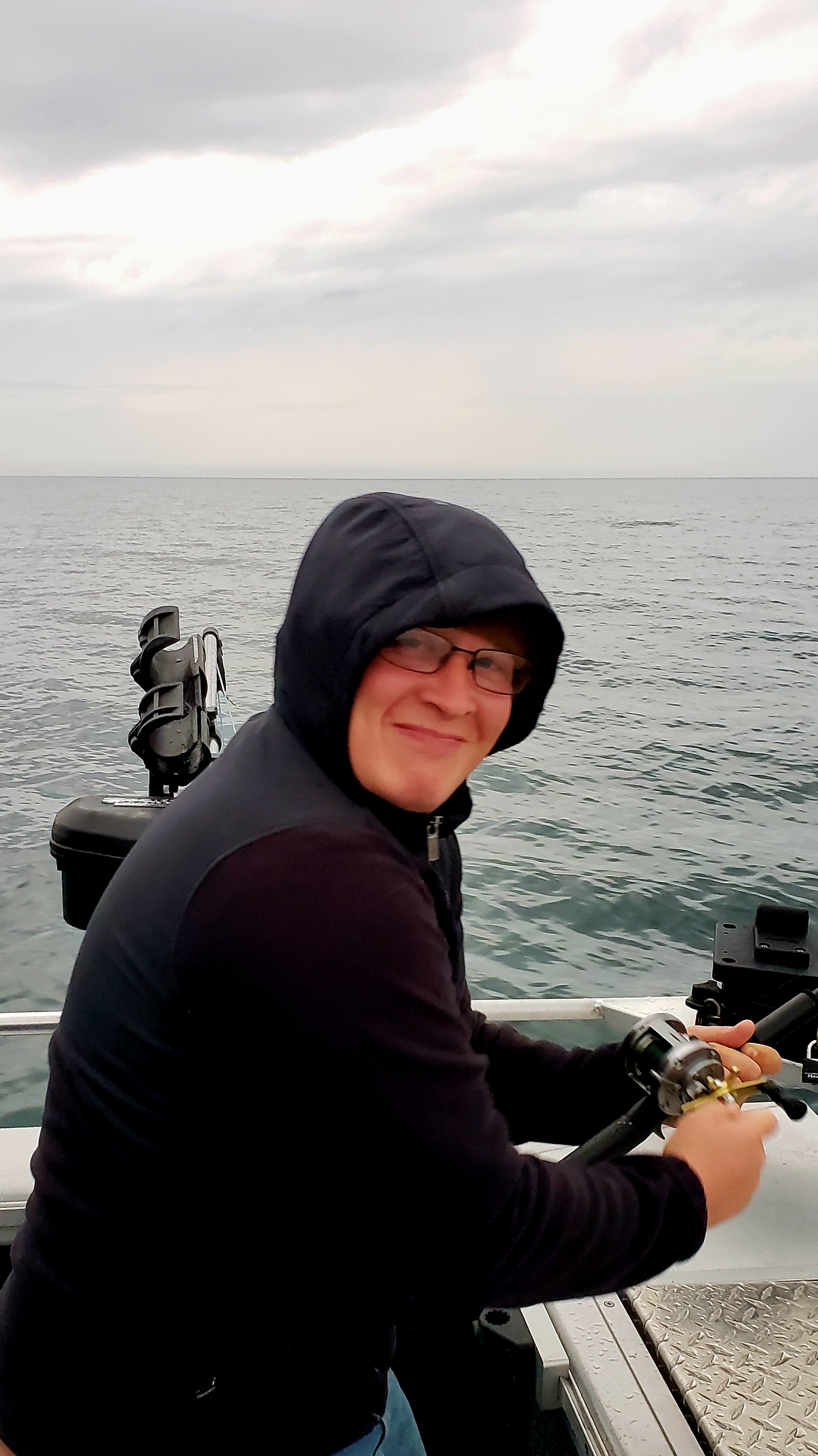
Especially as you depart/approach Deception Pass/Cornet Bay, a key launch area for MA 7 coho. Know the limits of both your boat and crew, and have properly fitting life vests for each person on board and the required safety equipment. Make sure that you have adequate fuel on board, with the longer runs to the fishing grounds and the potential for inclement weather this is not the fishery to play chicken with your fuel gauge. Always err on the cautious side.
Have a game plan for caring for your catch. It will be different for each skipper but have a fish bonker, a bleed bucket, or divers clip and ice available. Once you determine you have a legal fish in the net, stun it to prevent bruising. Then tear or cut a gill, bleed the fish, and get them on ice as soon as they are bled out. Coho are excellent table fare when properly cared for.
Good luck in your quest to catch a box full of San Juan fall coho. It is an ideal family fishery. They are relatively easy to find, usually hungry, and have some serious shoulders. Pack plenty of snacks (no bananas), watch the weather and think safety. Good times and you will find your freezer full of the other red meat, San Juan Islands coho!
/articles/other-red-meat
Navigating Nature’s Nooks - A Guide’s Fishing Wisdom
Guides offer an invaluable service to anglers. Whether you’ve never fished before, are new to the area, or just need to learn a few new techniques and tricks, guides provide knowledge that can stay with you even after you’ve paid for their services.
When fishing with a guide, it’s like the grown-up version of show and tell. They’ll get you situated with everything you need and be sure to coach you throughout the day on the water. I’ve been lucky enough to fish with some great guides and I have not taken their teachings for granted. I’d urge you to think about these different areas of the fishing experience next time you fish with a guide and how you can apply them when you fish on your own.
The Setup
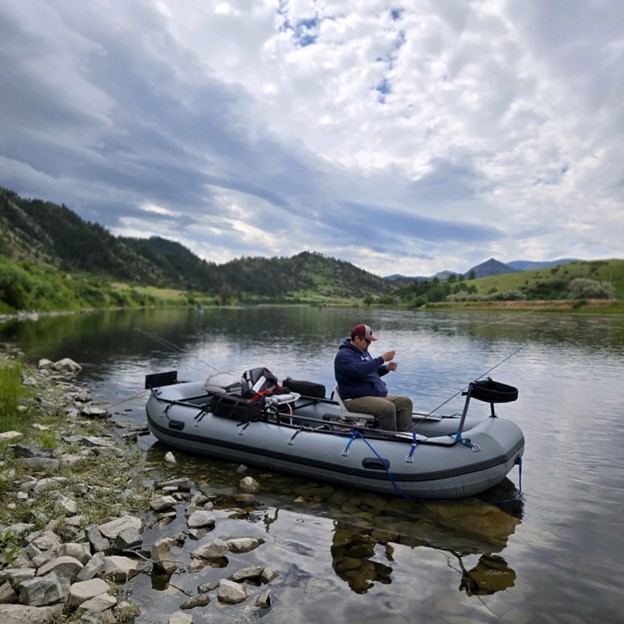
Trial and error can be a learning experience in itself, but man it really speeds things up when you know what you’re doing. Asking questions is never a bad thing to do when fishing with a guide. A guide who wants to help make the most of your experience with them will often answer questions that aren’t even asked. Taking the initiative and asking about the gear being used when fishing with a guide not only gives you something to talk about but is a learning experience in itself.
Why are we using the blue/silver lure instead of the red/gold lure? Is there a reason you’re using squid as bait instead of the herring? What's a split shot and why do we need it? Your guide can be a wealth of knowledge if you only take the time to ask the questions. I’d also add this - there is a great sense of accomplishment when you retain what you’ve learned from a professional and apply it. I think this holds true in nearly all aspects of life. Learn how to cook a delicious meal from a chef and then replicate the dish at home?
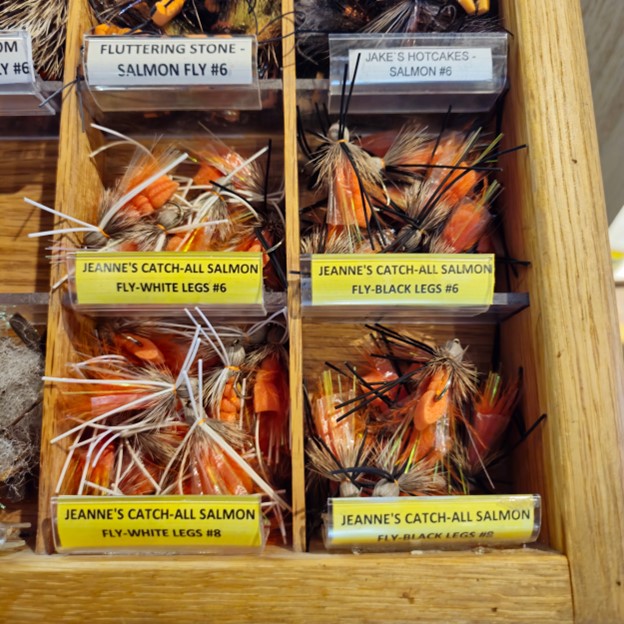
You might win spouse of the year. Have someone in a leadership position in your job show you how to do something and then you accomplish that task later to be complimented by them? Great job satisfaction and collective efficacy. Purchase the right kind of flies for the time of year when fishing, tie them, fish on your own in an area you think will be effective, and actually catch something? This time without a guide? That’s a great feeling.
On The Water
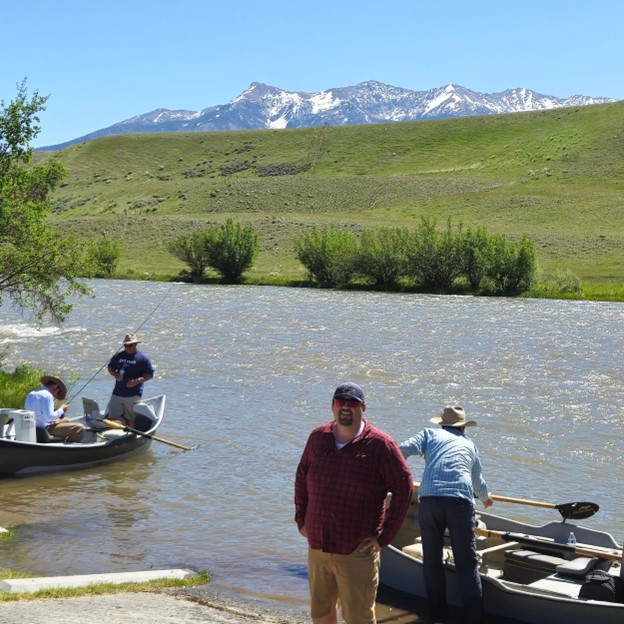
Great, you’ve got the gear. You’ve tied everything together the way it should be just like the guide showed you when you last fished together. Now all that’s left is putting the line in the water. Although, there’s a lot of water to cover and you only have so much time available to fish.
If you were hopefully paying attention to your guided fishing experience, you should be able to ascertain whether or not you are fishing in an area that is likely to hold fish or at a depth that will be productive for you. If you’re planning on coming back to the same waterbody, make a mental note when your guide tells you “This spot is usually really good” or “The fish like to group up behind these rocks”.
Those clues can be used when you come back again on your own, if you remember. More broadly, a guide can help you identify general areas that will likely hold the fish you are looking for. The guide can provide you with a “Habitat 101” crash course while out on the water. Knowing your fish is migrating because of the spawning season, like a plateaued rocky surface, or will hold up in a small bay to rest can help provide you some general knowledge on where to go when fishing on your own.
The Fight
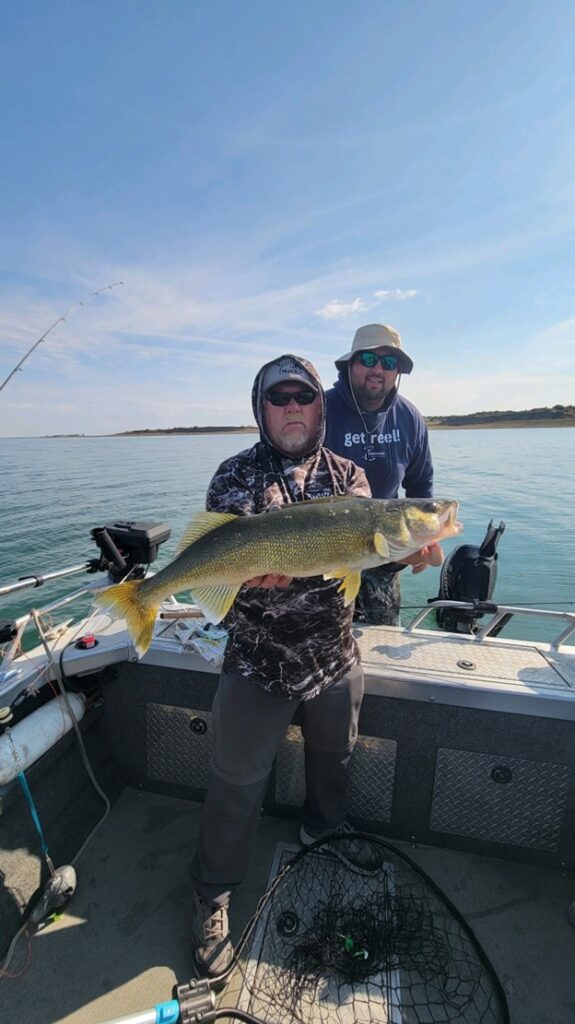
As mentioned earlier, the setup is a crucial part of the fishing experience. Knowing what kinds of lures or bait to use, how long leaders should be or the distance from dodger to lure are all invaluable. Similarly, fishing in an area that is likely to actually hold the fish. But, arguably the most important information you can take away from a guided fishing trip is how to actually fight the fish once hooked!
Take the tips learned during your fishing adventure as you played the fish, with some coaching from your guide, and apply them as best you can in your personal fishing. I know the feeling of hooking into a nice fish and the sense of urgency that takes over, the adrenaline-pumping feeling where you tense up and feel like you’ve got to bring this fish in. All you think about is “hand, reel, crank” until the fish is in the boat.
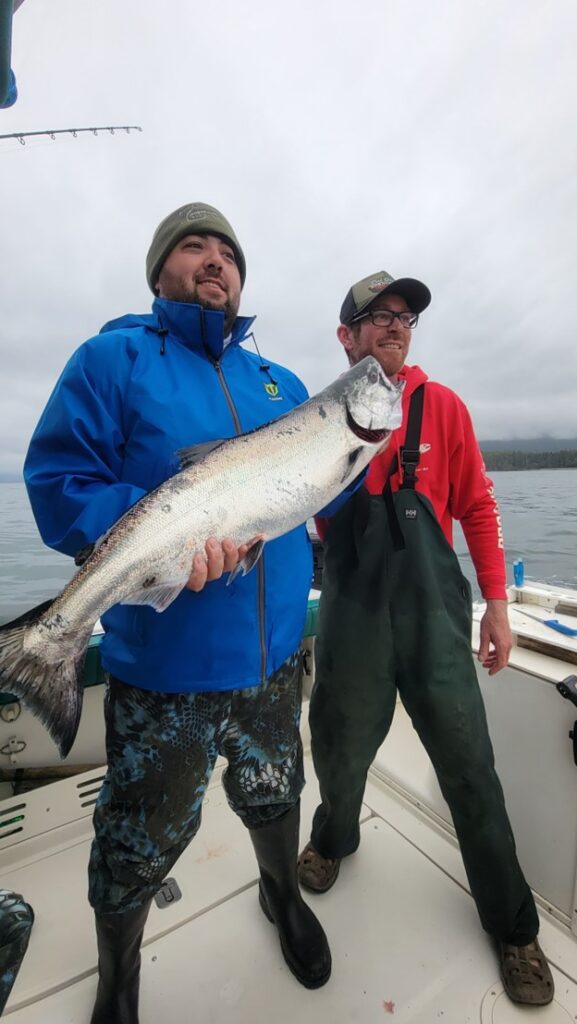
If you can calm your mind during this tussle with your opponent and think back to the advice from your guided experiences, you’ll not only have a more enjoyable time battling the fish, but you should be more likely to land it. Something as subtle as bracing yourself up against the side of the boat when out on the choppy ocean water can help provide solid footing. Remembering and recognizing where the fast water is in the river and steering your fish away from the heavy current and into a section with slower water makes for a, in theory, easier catch.
I only scratched the surface of all the benefits and help that guides can provide us on the water. Certainly, their knowledge and advice is helpful at the moment, while they’re in the same boat as us and judging the conditions of the water in real-time. Still, a savvy angler will retain their advice and draw upon the guide’s experience to apply solid fishing techniques not only during the fishing trip but out on the water during personal adventures as well. Want to get started with some solid guides who are sure to get you on some great fish?
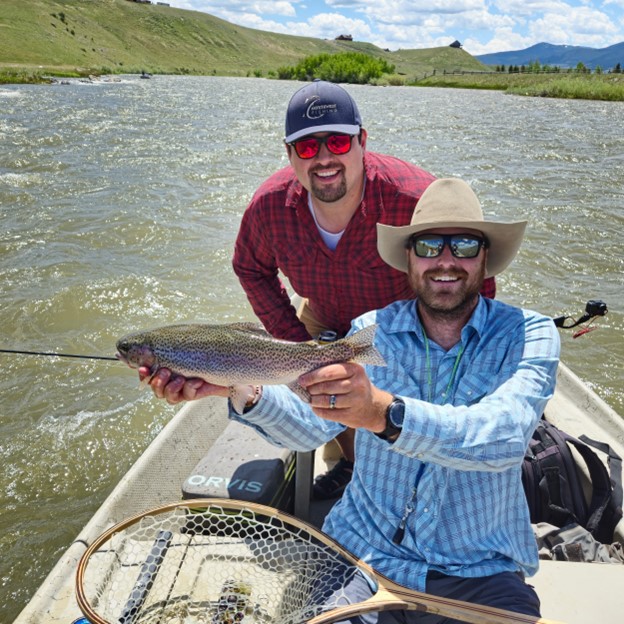
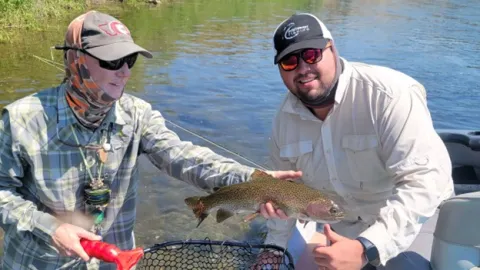
Check out our “Guides and Charters” section in the back of the magazine or in the directory section of the website. They can help you get started if you’re new to fishing, offer advice to seasoned fishermen that only comes with experience from hundreds of days on the water in a year and help you expand your knowledge about the variety of fish and techniques to catch them that swim throughout the northwest. I know I’ve benefited tremendously from their guidance in my own personal fishing outings and know that the same success in my personal fishing life will continue as I keep fishing with and learning from many great guides in the future!
/articles/navigating-natures-nooks-guides-fishing-wisdom
Bright Salmon on a Sandbar
An up-close epicurean angler perspective on the making of a Travel Channel special with Chef Andrew Zimmern.
It mattered to me. It mattered to Josh. It mattered to Andrew Zimmern, the host of Bizarre Foods on the Travel Channel.
On the Columbia, where the chinook blast upriver on swells of tide from the mouth of the river up past Washougal and then seek out the 12-16-foot deep travel corridors close to the banks, the hot salmon bite happens in the first hour.
It didn’t matter to the 17 other people on Zimmern’s crew.
Zimmern was following the Lewis & Clark trail with a perspective on the types of foods the explorers might have encountered. He chose September when the fall chinook salmon (also called king salmon) run is in full swing.
We started in the second hour, on a Tuesday in September, after camera operators, directors, drivers, handlers, drone techs, and a bodyguard were breakfasted, caffeine’d up, and constitutionalized.
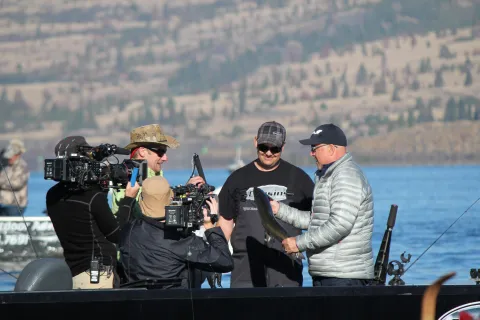
Josh Cooper, stood, his hand on the tiller, his eyes on the water ahead. We idled away from the Rowena launch (Mayer State Park, west of The Dalles). Ahead of us, 64 other boats were on the fish. Rods bent and nets flashed as we took our place in the throng of watercraft.
Cooper, who makes his home in Vancouver, WA, our captain for the day, is one of the best anglers on the river. But sometimes that’s not enough. The bite was over when we dropped our baits.
With us, on Josh's 26-foot Motion Marine Fishing Machine were two camera operators and a sound technician. A camera boat trailed in our wake with the director and additional camera operators. A drone operator and his team staged on the Washington side of the river near the mouth of the White Salmon. The bodyguard stayed on the beach.
Zimmern is no stranger to a fishing rod, but he hadn't fished for Columbia chinook before.
We showed him the baits, hoping he wouldn't gobble them or try to get us to eat them.
We call this hover-fishing when the fish stack two feet off the bottom and we drift our baits into a bio-mass of salmon, as drag-free as possible.
I looped a cluster of cured salmon roe and a sand shrimp tail on a blood-red Daiichi hook. We drizzled Pro-Cure Tuna on the potpourri in case our prospective salmon had cultivated palates.
To hover-fish, the procedure is to start at the top of holding water and run the boat a bit slower than the top currents, the baits "hovering" off the bottom.
Zimmern's rod had a Daiwa line-counter. Without digital advantage, I dropped the lead weight to the bottom and then cranked up two turns.
We tried to follow the contour of the river bottom. When it sloped up, we reeled up, when the water deepened, we dropped weights down to touch, then cranked up two turns.
Fish bit. They flared their gills, inhaled to sample the salmon eggs and shrimp then spit the baits.
Josh missed one. Andrew missed two and I missed a fish.
In the east, the sun climbed higher. Our chances diminished. A drone like an angel flew overhead and three hundred pairs of eyes on 65 boats looked to the heavens.
Then it happened! A fish bit and the hook stuck.
Andrew arced the spine of the rod against His Majesty, the king salmon. After a few tense minutes, a seven-pounder thrashed in the net.
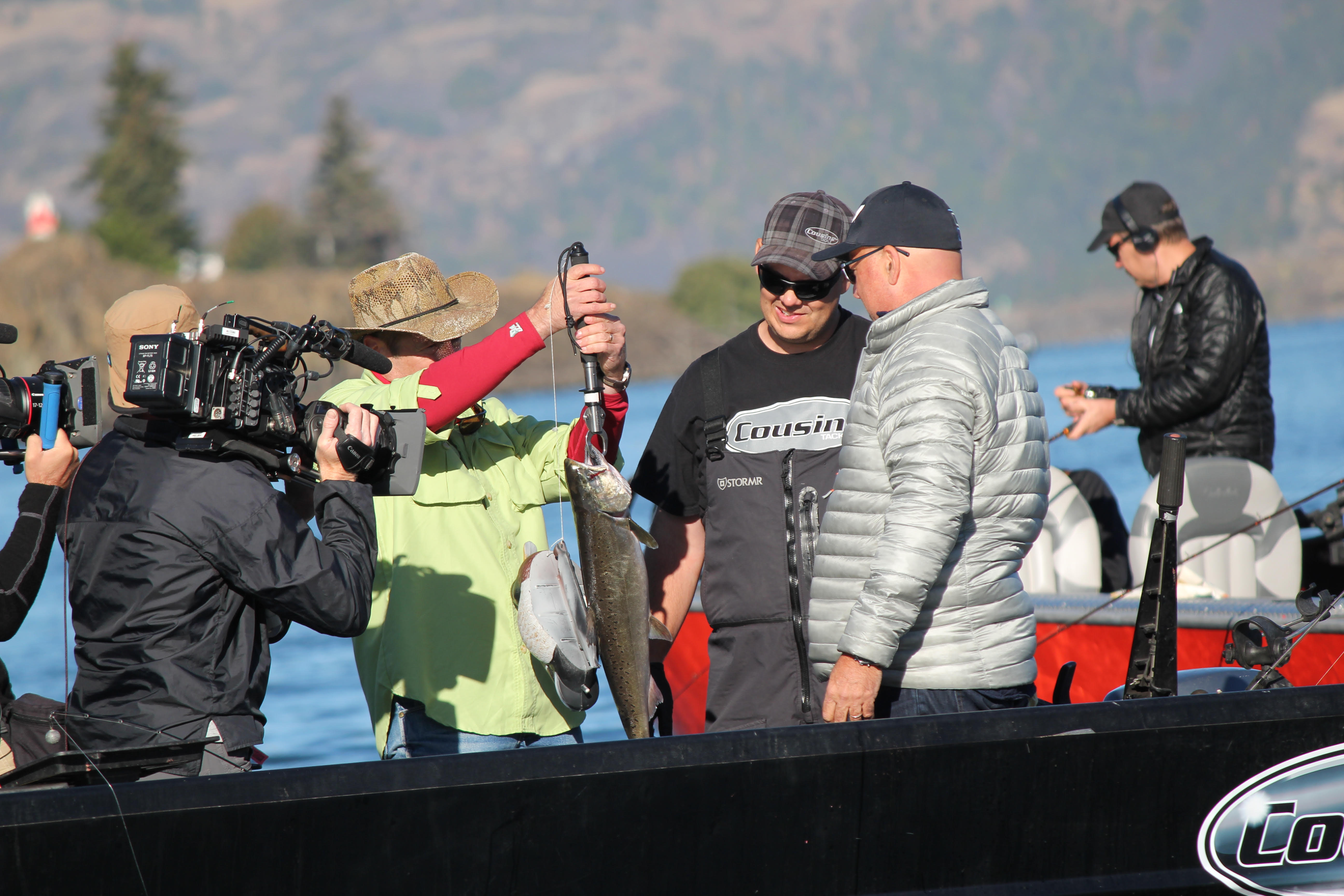
I looked at it, pronounced it a female, and guessed Zimmern would try to spoon-feed us salmon eggs. With one in the boat, we motored away, back to the ramp where the crew had assembled a grill and Dutch ovens.
While a director in cowboy boots stalked up and down the beach, cigarette in and out of his mouth, eyes flicking from one element of the scene to another, Zimmern’s knives flashed. When I angled in to check on the ingredients, I saw prime red-fleshed steaks and two skeins of milt. Milt! Our fish was a male.
In a male salmon, the sperm we call milt lies in two foot-long rolls. About an inch in diameter, the texture of fresh liver, it is often discarded. It shouldn’t be.
On a sandbar on the big river that is the lifeline of The West, there is no better way to taste the elemental flavor of the salmon.
Roasted lemons, eggplant, and onions. Rice and a reduction. Zimmern wasted no motion.
Flames licked at the grill. Seasonings are seared into vegetables, salmon strips, and organs. In moments we held salmon bowls while the good smells wafted out to fishermen still angling for their limits of bright chinook.
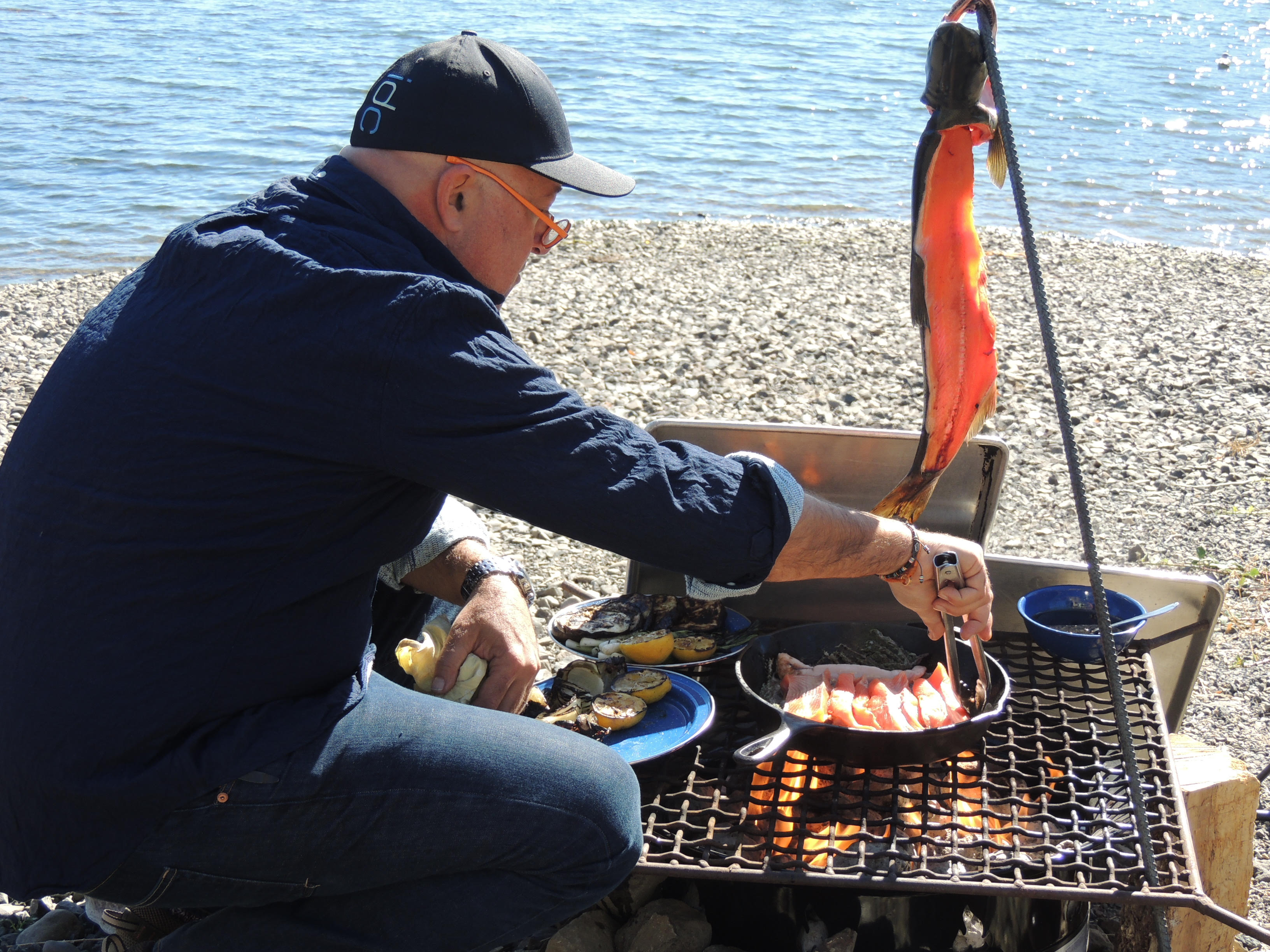
The best place to eat salmon is on a sandbar in September. We ate the strips of salmon with forks and fingers. We ate the milt and proclaimed it worthy. Milt and eggs. These are the building blocks of the protein that energizes the Columbia River. How does milt taste? It cooks up like a better version of tofu and it adds a certain something to a salmon bowl.
This was Zimmern's first time fishing for fall Chinook. While we labored for a bite we talked fly-fishing and grouse hunting. And it was a chance for me to get a glimpse into the machine that was a big Travel Channel production. At the heart of it all was a chef who was a risk taker, story-teller, all-showman, and a real sportsman.
# # #
For a copy of the Fishing Central Oregon book, send $29.99 to Gary Lewis Outdoors, PO Box 1364, Bend, OR 97709 To contact Gary Lewis, visit www.GaryLewisOutdoors.com
/articles/bright-salmon-sandbar
Fall Fishing At Potholes Reservoir
September and October are my favorite times of year and one of my favorite places to recreate is at Potholes Reservoir, located between Moses Lake and Othello in Eastern Washington. This is a large irrigation reservoir fed by Crab Creek, Lind Coulee as well as Winchester and Frenchman’s Wasteway. At full pool, the lake has 28,000 surface acres of water but after a long summer of dropping water the lake definitely “fishes smaller”.
While there is not as much water to fish, particularly back in the sand dunes area and Crab Creek, there is still plenty of lake to fish and at this time of year, the fish are biting as they beef up for the long winter ahead. Let’s run through some of the species you can fish for here and some effective ways to catch them:
BASS:
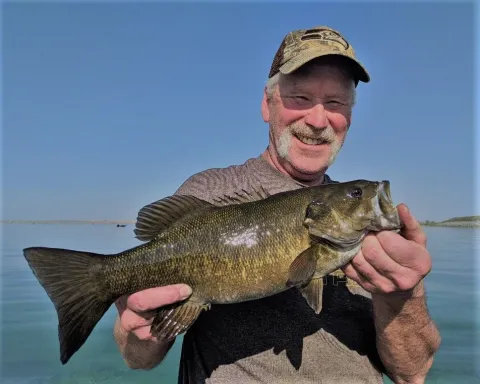
Bassmaster Magazine ranked Potholes Reservoir as the ninth-best bass fishing destination in the Western United States this year and for good reason. There is a healthy population of both largemouth and smallmouth bass in several age classes. The largemouth tend to be bigger, averaging two pounds and getting up to 7-plus pounds. At a typical bass tournament, you’ll need to have a five-fish bag weighing over twenty pounds for a chance to win. The smallmouth run a bit smaller, with one-pound fish being abundant. But I caught a 5.4-pound smallmouth here during September so big smallmouth are around.
At this time of year, the baitfish have moved out into the main lake, and so have the gamefish that are after them. Pete Fisher at the MarDon Resort Tackle Shop and the owner of Fisher Brothers Baits says fishing in front of the dunes on the main lake is the best place to go. The fish will be suspended around sandy humps and Pete says fishing a football head jig with a hula grub trailer is an effective way to catch these fish, which are primarily largemouth bass.
If you want to go after smallmouth bass head towards the face of O’Sullivan Dam or into Lind Coulee at the south end of the lake. Personally, I enjoy using deep diving crankbaits here this time of year which are effective for both bass and walleye. One of my favorite lures is a Berkley Digger crankbait, which dives to depths of 14 feet. When it comes to fishing near the dam, Pete Fisher likes to use perch colored ¾ ounce swimbaits or topwater plugs with white being a preferred color.
WALLEYE:
The walleye bite can be spectacular in the autumn months. These tasty fish tend to be found off the face of the sand dunes or the mouth of Crab Creek. As Nathan Lafrance says, “If you aren’t sure where to go, just look for the line of boats out there, easy to find.” As for how to catch them, Nathan recommends trolling diving crankbaits at a depth of 10 to 12 feet. Nathan says other lures to try are a jointed Berkley Flicker Shad #7 or a Bill Lewis Walleye Precise Walleye Lite crankbait.
PANFISH:
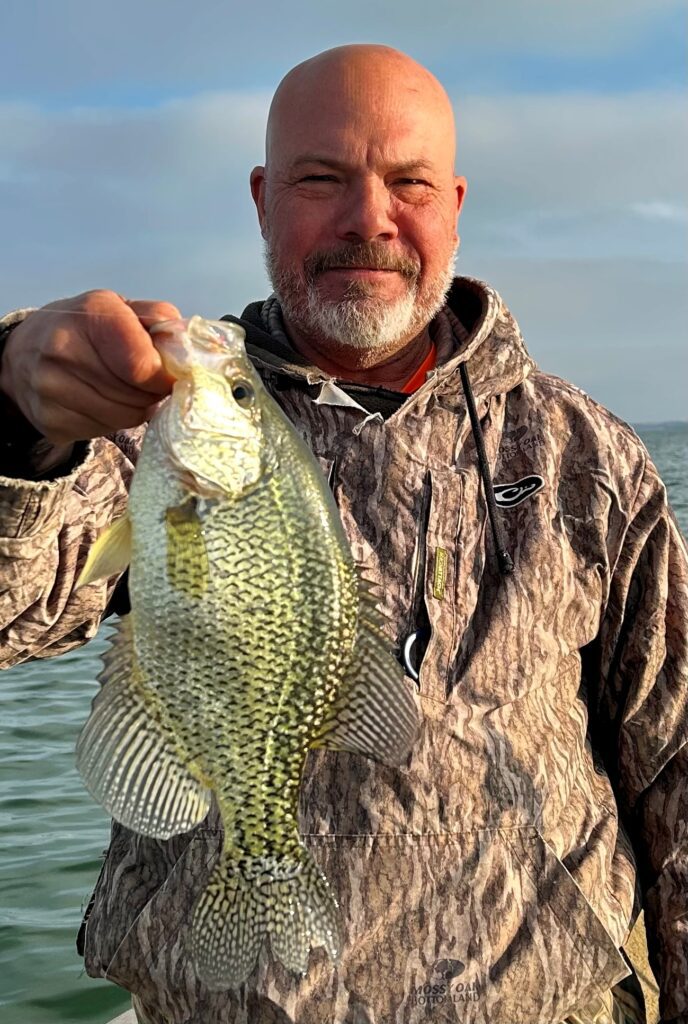
The autumn bite for panfish is excellent and sometimes overlooked by anglers targeting trout, bass and walleye. There is a combined limit for bluegill and crappie of 25 fish, and the crappie have to be at least nine inches long to keep. This regulation has helped turn the reservoir into a quality fishery and 15-inch crappie are relatively common. Last year, an angler reeled in a bluegill that weighed over 2.2 pounds, nearly beating the state record. The perch can also be sizeable here, reaching north of 14-inches in length.
One person who really enjoys fishing for crappie is Pete Fisher. He has a couple of suggestions about where to find them and catch them. Pete says the crappie, like the bass, migrate out of the sand dunes in the late summer. During the autumn months they will be found at the face (or in front of) the sand dunes on the main lake. Fisher says you can cast or troll Berkley #5 Flicker Shads, especially in a Chrome Clown color pattern. Another way to catch crappie is to fish a small jig under a slip bobber after you find a school of these fish. Fisher prefers a white Bobby Garland shad or DS Fry soft plastic lure paired with a small 1/32 or 1/64th ounce jig head. If you do catch a bunch of panfish, you’ll be happy to know there is a fish cleaning station at both MarDon Resort and at Potholes State Park near the boat ramp.
TROUT:
The rainbow bite really turns on in the fall and the size of these fish are impressive. One to three-pound rainbows are commonplace and sometimes you’ll get them bigger than that. Nathan LaFrance suggests trolling Berkley Flicker Shads or longer minnow shaped crankbaits. As to where to find the trout, a couple of good places are off the mouth of Frenchman’s Wasteway or in the northeast corner of the lake near the mouth of Crab Creek.
RESOURCES:
If you are looking for a place to stay you can camp at Potholes State Park or MarDon Resort, which also has cabins and cottages for rent. The resort also has a tackle shop and The Beach House bar and restaurant. The Potholes Bar and Grill is another nearby restaurant that is close to the entrance of the state park.
If you have never fished or hunted Potholes Reservoir before, consider booking a “Cast & Blast” trip with Ross Outdoor Adventures. These trips are only offered in October. Shelby Ross and his guides know how to navigate the tricky channels leading into the sand dunes like the back of their hands. They will take you in before dawn, treat you to a fun duck hunt, and finish the hunt with duck poppers cooked up in the blind. After that you put away the shotguns and go trolling for walleye, usually picking up several other fish species along the way. It makes for a fun day and a great introduction to the fall hunting and fishing scene at this spectacular destination.
WEBSITES:
By John Kruse, host of Northwestern Outdoors and America Outdoors Radio
/articles/fall-fishing-potholes-reservoir
Pan Fishing 101
(Crappie and Bluegill Technique and Set Up)
Fishing for Crappie and Bluegill, often referred to as panfish, provides both novice and seasoned anglers with an exciting challenge and a delicious reward. These popular freshwater species can be found in lakes, rivers, and ponds across Washington State, making them accessible targets for anglers of all skill levels. So grab your tackle box, and join me as we explore the effective techniques and setups tailored specifically for crappie and bluegill fishing.
Understanding Crappie and Bluegill
Crappie:
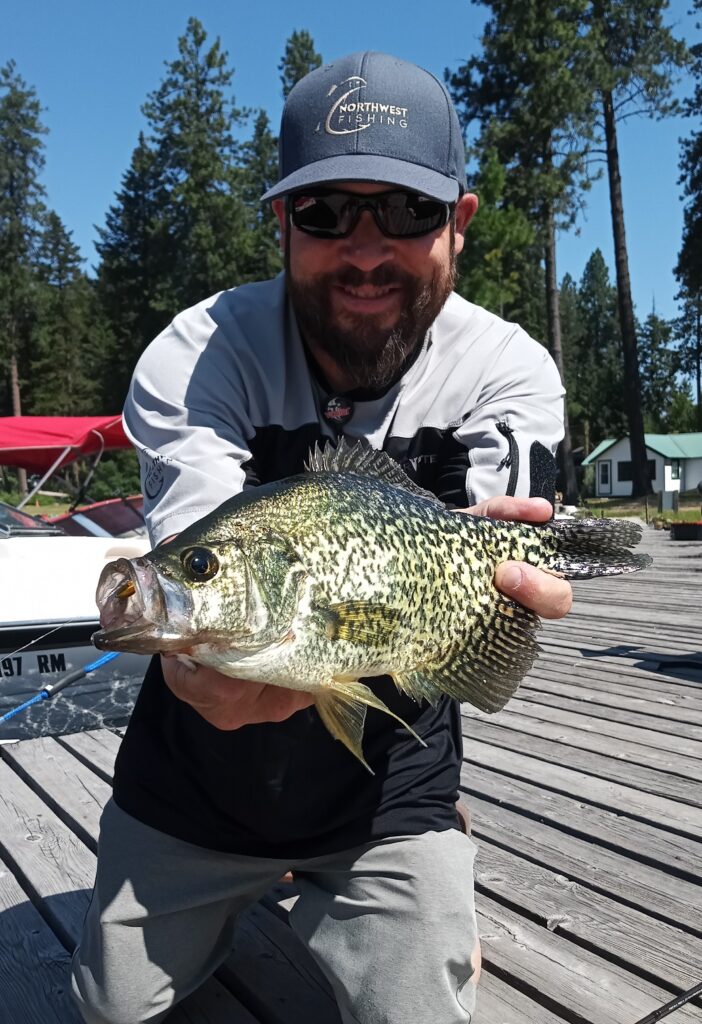
Crappie are highly sought after for this tasty white meat and can grow to impressive sizes with the white Crappie and the black Crappie being the most common species. They are known for their tendency to school around submerged structures such as trees, brush piles, and docks. If fishing from the boat, I'm typically a fan of casting small jigs, and bobbers around these structures searching for bites - and also using my electronics to tell me - what's below, and what are they schooled around? With fishing docks, I begin by jigging shallow and work my way deeper until I feel that “thump!” Usually, they are just suspended a few feet off the bottom below the docks, but at certain times of the day, they are just a foot below the docks, and hugging the boats making it a little tougher shooting your jig under them, trying not to spook em’.
Bluegill:
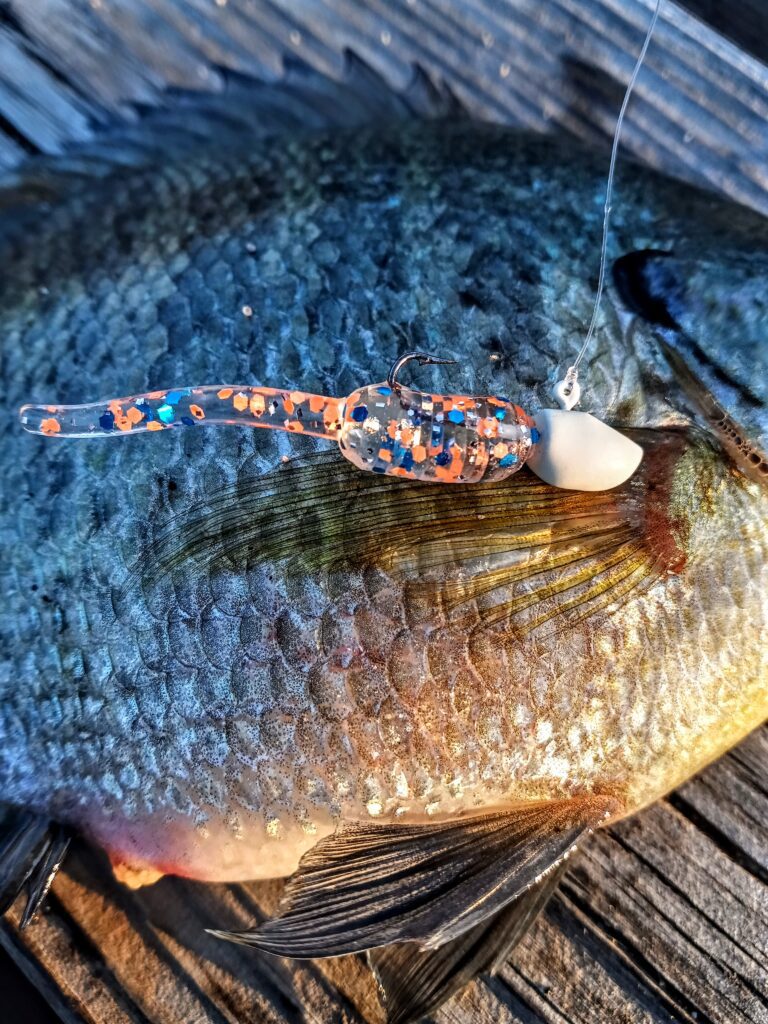
Bluegill is smaller than crappie but just as popular among anglers. They are characterized by their distinctive blue gill covers and can be found hanging out in shallow waters, around vegetation, and structures submerged in water. Bluegill are prolific breeders and often travel in schools, during their spawn, they will have a minefield of beds in the shallows as they become very aggressive in protecting their eggs. It's very fun targeting these, especially practicing catch and release. For many of us, the Bluegill was the first fish caught as a kid that sparked the interest.
Essential Equipment:
Rod and Reel:
For panfish, a light or ultra-light spinning rod and reel combo works best. This setup allows for casting bobbers and small baits accurately and provides the sensitivity needed to detect subtle bites.
Fishing Line:
Use light line, monofilament, or fluorocarbon. Typically in the 4-8lb range, as lighter lines allow for a better presentation of small baits and lures while maintaining enough strength to handle larger fish, I often choose monofilament in the 4-6lb test to allow a little stretch with my hook set, especially fishing crappie with their paper-thin mouths. (Hence the name “Lantern-mouths.”)
Terminal Tackle:
Small hooks such as a number of 6-10 for bluegill, and slightly larger for crappie 4-8, tipped with worms is the most simple way to approach these fish. Split shot weights and bobbers are another effective way to locate fish and to find the depth to adjust your bait too, keeping it in the strike zone.
Baits and Lures:
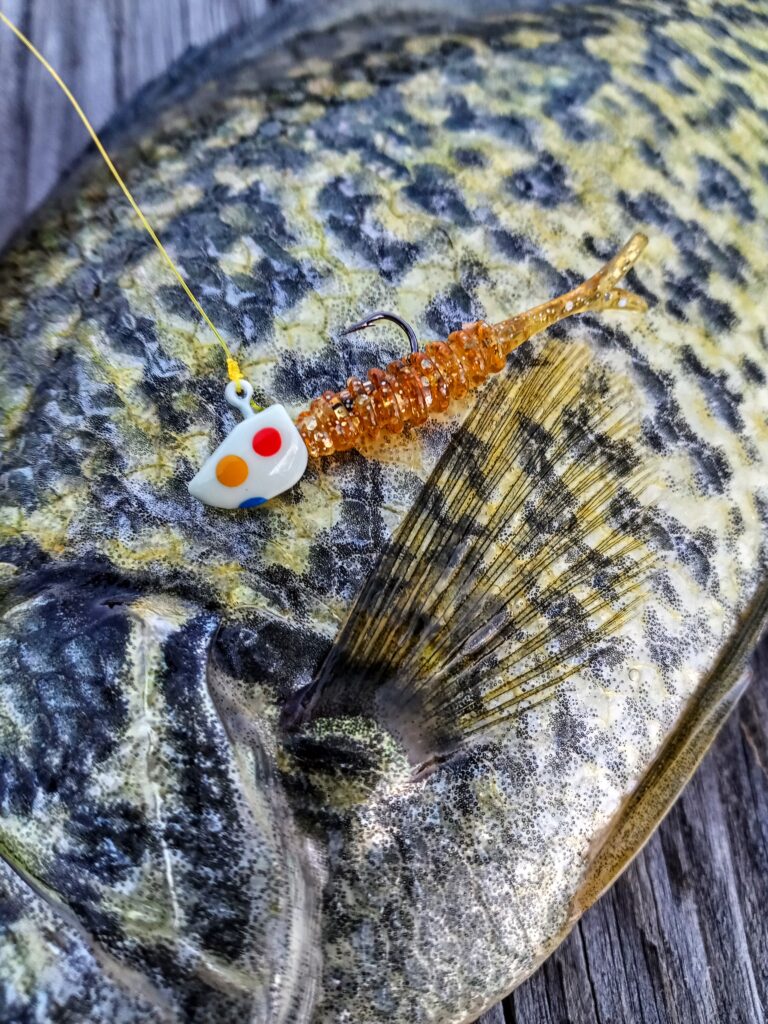
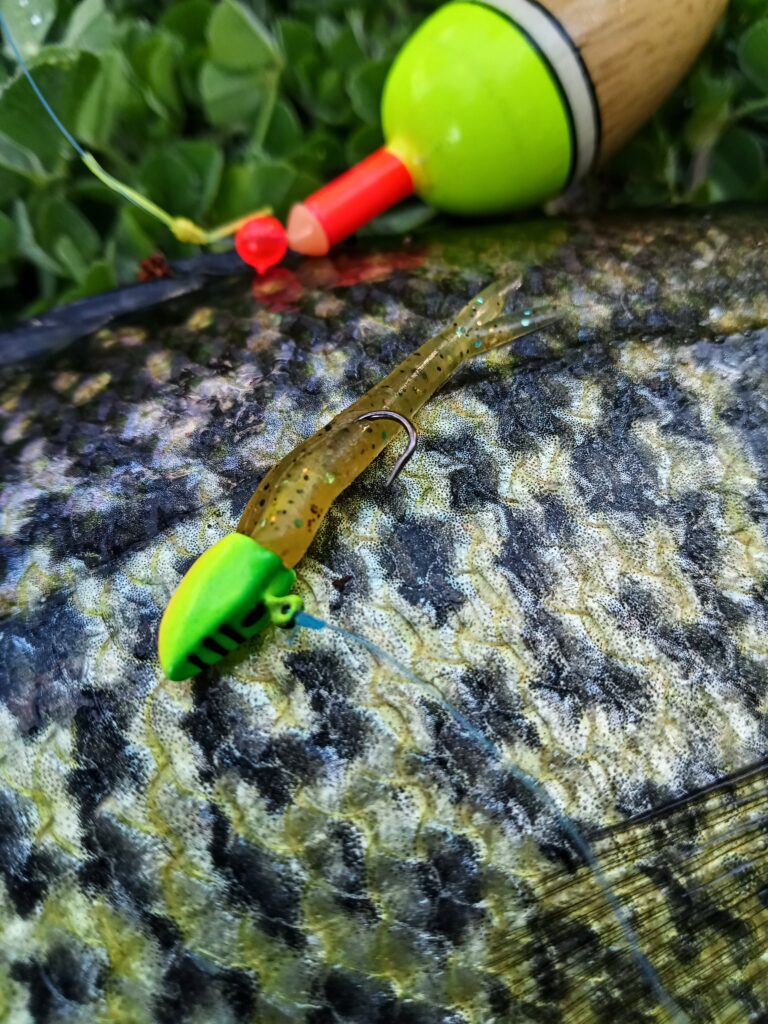
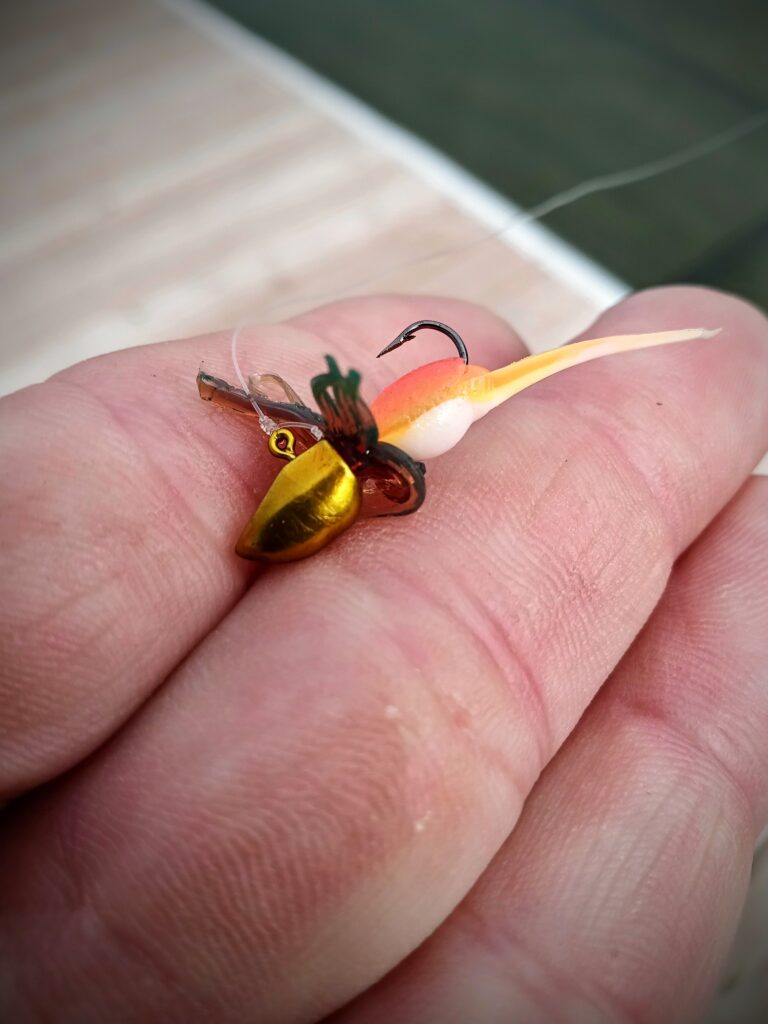
Though we can't use live bait, the most effective bait for both bluegill and crappie is a worm. Cured crickets and minnows work well, but you may have to work your bait more to attract the fish. When it comes to working your baits, we typically refer to artificial baits such as jigs, small crankbaits, spinners, and soft plastics like grubs. Soft plastics come in so many profiles, that you can define the bite with a minnow profile, to a buggy pattern.
Techniques For Crappie:
Vertical Jigging:
Drop a jig or your vertical presentation down near submerged structures, trees, and docks, areas where Crappie are likely to congregate. Use either slow retrieves after casting with an occasional twitch, or gentle jigging motions to act like a wounded, or swimming minnow to entice bites.
Fan Casting Bobbers:
Cast small bobbers around structure docks, brush piles, and/or just outside of major weedlines. I try to have at least 3 rods rigged up with my favorite bobbers, each at different lengths below the bobber to find the depth at the fish are suspended. Anywhere from 2-4 ft below the bobber is a good starting point. When you find the depth, stick to it, and if the bite dies down, continue to move until you get back to the school.
Dock Shooting:
Perfect for targeting Crappie hiding under docks. With a light jig or worm under a float, skip the bait under the docks and other overhead cover where Crappie lurk. I have a ton of success using this technique when I find the Crappie are sucked close to the bottom of boats in a marina.
Techniques For Bluegill:
Bobber Fishing:
Attach the small hook baited with the worm, and/or your favorite micro jig and plastic under the bobber and cast towards shoreline vegetation and those submerged structures. Slipping that bait even a foot or less directly under your float as you reel across the tops of their beds. Being able to adjust your float to the depth of the bait to find where the Bluegill are feeding is important.
Micro Jigging:
Very similar to jigging for crappie but with much smaller jigs and hooks, again casting and retrieving slowly varying the speed to find the most effective presentation, and jigging vertically with different cadences until you find what they want.
Micro Crankbait:
Yes, cranking for Bluegills. We have found much success fishing Micro Crank Baits such as the Z-Cranker from Eurotackle. Trolling right outside the weedlines adjacent from their beds, and they will smoke them baits as they are very aggressive during their spawn.
Tips For Success:
Location:
Use electronics and maps if possible to locate submerged structures, such as weed beds, drop-offs, brush piles, and sunken trees, where Crappies and Bluegills gather.
Time Of Day:
Early morning and late evening are prime times for Panfish, as they are active and feed in those low light conditions. We do find them of course throughout the day, but tend to have the hottest bites early and later.
Patience And Observation:
Panfish can be finicky. Be patient and pay attention to subtle bites or changes in bait behavior. They may want a micro Tungsten jig one morning, and the next they want a larger jigging spoon. Feeding habits can change by the hour too, so don't be afraid to even try beaded head flies.
Catch And Release:
Practice selective harvest and release larger breeding fish to sustain a healthy population. I always release any Bluegill over 9in, and release the majority of Crappie over 12in. Very rarely do I keep fish, but every now and then they are a good fish fry. (Please check regulations on your lake’s fishing)
Fishing for Crappies and Bluegill is not just about catching fish; it's about enjoying the outdoors and honing your skills, whether you prefer the challenge of targeting Crappies with jigs or the simplicity of bobber fishing for Bluegill, there's a technique that suits every anglers style. With the right equipment, techniques, and a bit of patience, you'll be well on your way to filling your cooler with these delectable freshwater treasures.
By mastering the techniques and setups, you'll enhance your Pan Fishing experience and increase your chances of success on your next fishing adventure. “I hope to see you out on the water!” - Eric Magnuson.
/articles/pan-fishing-101
Gear Up for Puget Sound Coho
Grab your rods and coolers, it's time for Puget Sound coho! As far as saltwater salmon go, coho tend to be aggressive and eager biters. You can find them in most areas of the Sound, and the bite will only improve as the season progresses. Coho are plentiful and tasty! They taste good when caught in rivers, but you can't beat a chrome coho fresh from the salt. Having the right strategy, the proper gear and good preparation will help you get a boatload of coho this summer!
Trolling is the most popular way to catch these Puget Sound coho. It's a great way to cover water and adjust your depth based on the fish's location. Having the right gear is certainly important, but having a good strategy makes all the difference. I recommend getting an early start and fishing shallow. As the day progresses, fish deeper. Watch for marks and don't be afraid to drop your gear right down into the fish. Pay close attention to your fish finder.
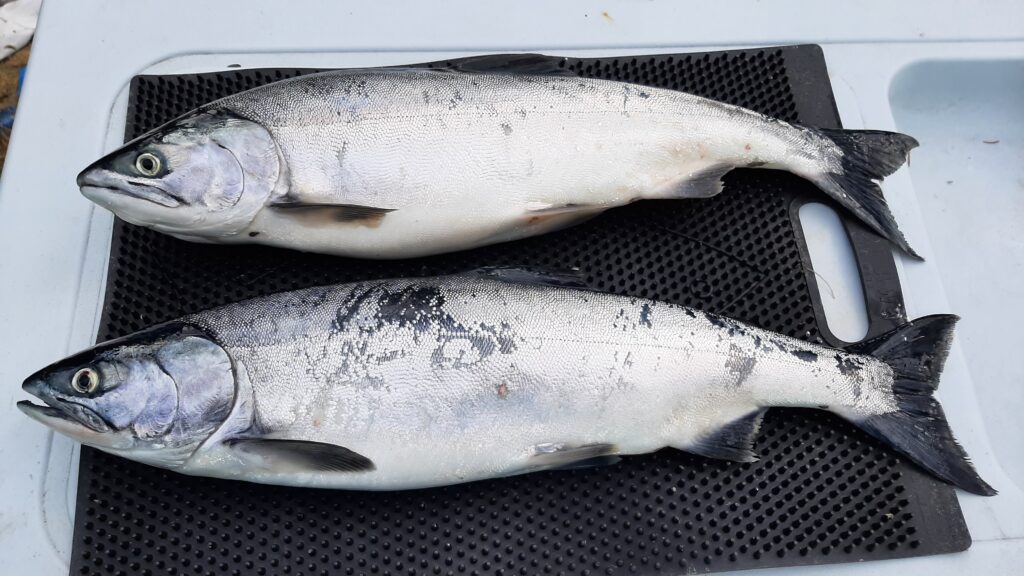
Coho will school up most of the time, so don't be afraid to circle back to wherever you get bites. Coho like a shorter setback than you'd think. I usually use a 50 to 75-ft setback. Trolling speed for coho can be a controversial topic. Speeds anywhere from 2.5 mph to 3.5 mph will work. Here again, is where having a fish finder is crucial. In addition, study tide tables ahead of time. It's no secret that coho love a good tide change. Targeting tide changes early in the morning often results in a full cooler.
So, what gear do you need? There are several different ways to go. You can use trolling flies, herring, spoons, plugs, or spinners. Sometimes coho can be picky, so it's best to employ a variety of lures. You'll want to run your lures behind a flasher. Many different tackle companies make flashers that work well. Don't forget to smear your flasher and lure with a bit of scent! Coho are smart and some scent can fool them into grabbing your lure a little longer. Most days, coho just can't resist herring. They're out there feeding before going into rivers to spawn, so they're hungry! Don't be afraid to add a herring strip to any lure. You can brine up herring strips ahead of time and attach them to hooks, tie herring bellies to your plugs, or stuff your plugs with herring and tuna. Some fishermen dye their herring during the brining process, others don't.
Knowing the right spots to fish is an important part of your prep work that you should research ahead of time as well. The fish start flooding into the Sound through the Strait, so fishing will be best up north early in the season. My experience fishing for saltwater coho is within Marine Areas 9 and 11, so we will discuss those locations here. The oil docks, shipwreck, and Picnic Point are all well-known producers.
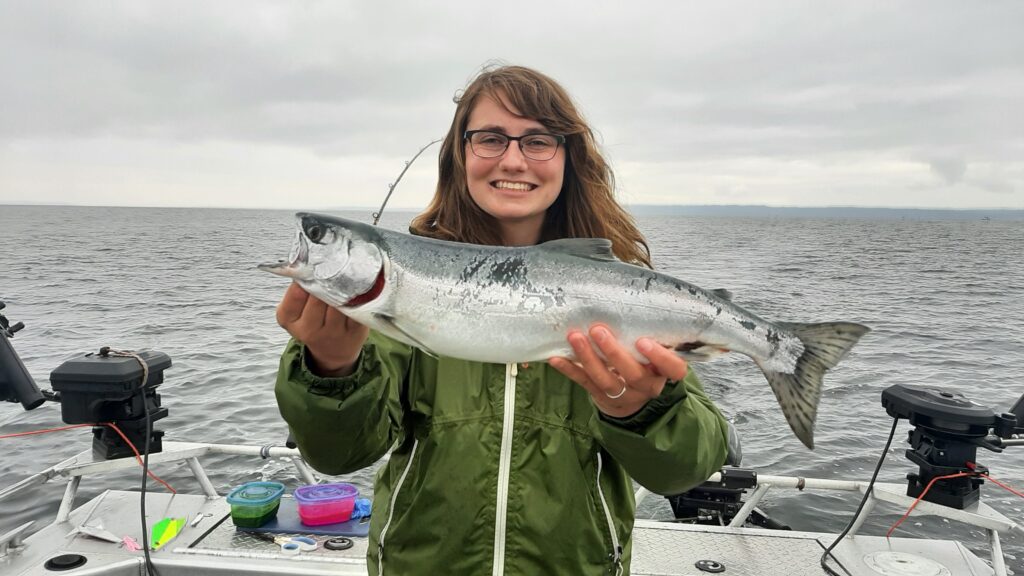
You can launch your boat at Edmonds, Mukilteo, and Whidbey Island. Just be mindful that you don't accidentally cross into another Marine Area once you have fish on board. Sometimes you can keep wild fish in one area, but not in another. In Marine Area 11, common spots include the Yacht Club, Dash Point, and Browns Point. In both areas though, I'd caution against just following the crowd. Don't be afraid to study maps and find your own spots. Points and bays are always good places to start.
Preparation is key! Make sure to check for emergency rules before heading out. Don't forget to brine your bait ahead of time and grab ice to ensure your catch stays cool. Grab those life jackets and check the weather forecast. The Sound can turn nasty at the drop of a hat, especially for small boats. Preparation can make all the difference between a cooler full of coho and a day of disappointment. I'll leave you with a story to help drive this point home.
One day, I was out on the Sound fishing for coho on Mike Carey's boat with another friend. The day had started well- we got on the water at the crack of dawn and saw lots of fish on the meter. We started getting our 3 fishing rods set up when my friend said "Uh oh... I forgot my fishing license!" Mike and I immediately stopped setting up the 3rd rod and told my friend he was on boat-driving duty for the rest of the day. It went from a (potential) 6-fish day to a 4-fish day for us. Preparation is everything! Do your research, make a checklist, and give yourself plenty of time to get ready. Have fun and go catch a cooler of coho!
/articles/gear-puget-sound-coho
August 2024 “Ocean Salmon Update”
When it comes to fall salmon, anglers consider August to be part of the time of year when pumpkin spice lattes and crisp mornings are the norm. The eighth month of the year is technically still summer but anyone who has headed to the ocean this time of year can feel the chill of an early fall coming on. Fog and rainstorms are normal, along with high winds and rough seas but then there are the days of bright sunshine and hot temperatures that remind us it is still summertime, even if only for a few hours in the afternoon. Much like the weather, salmon fishing can change in an instant… Mostly in the form of regulations.
August ocean salmon fishing is all about the rules and emergency closures and openings. The fish are regulated by quotas and estimated returns to natural rivers so be sure to check the regulations and emergency rules daily and be ready to change your location to fish as often as you switch out your cut plug herring. Knowing the rules also means knowing where you are fishing.
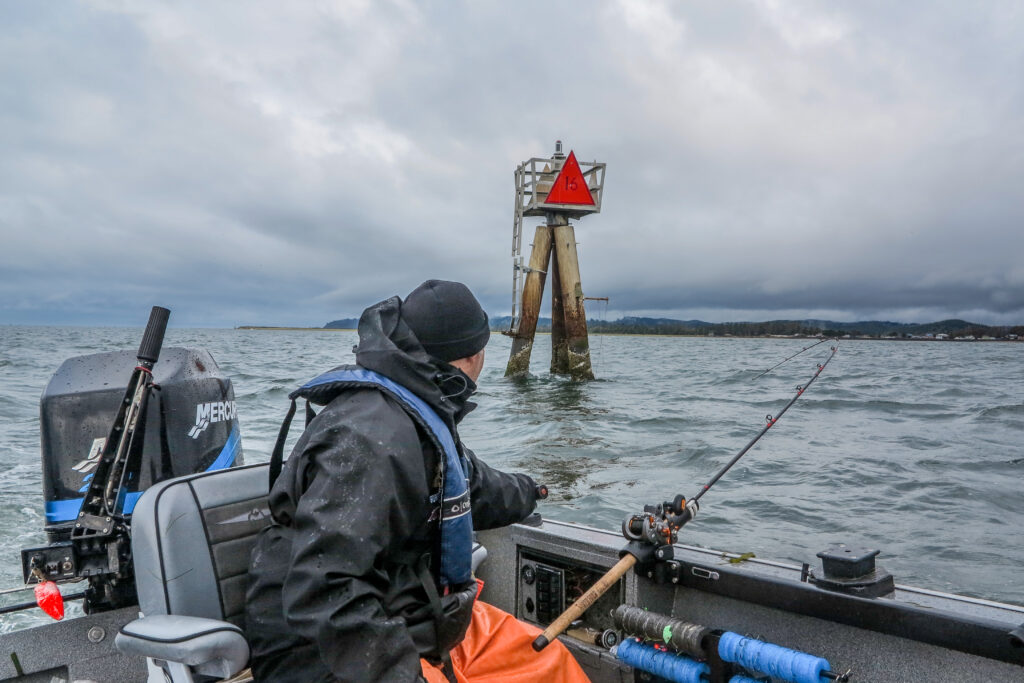
Marine Area 1 is slated to be open for salmon fishing in August for both chinook and coho and this is where anglers will be targeting fish stacked up to enter the Columbia River. Known as Buoy 10, the famed August fishery at the mouth of the Columbia River continues out beyond this buoy marker but is considered Marine Area 1. Depending on sea conditions and bar crossing, fishing can be good out in the open ocean. Especially for coho as the chinook are mostly staging in the brackish water and rushing into the Columbia with each tide change. Coho will stay just offshore a bit longer as they prefer to enter the river in September and into late fall.
Keep an eye on the Buoy 10 rules and regulations as well as any emergency closures or adjustments. If you have the right boat and navigation skills to cross the deadly Columbia River bar, then Marine Area 1 could save your trip if they close or restrict the Buoy 10 fishery. The same goes for about every ocean area you need to know before you go.
Marine Area 2 gets a little more complex come fall. You can still hit the open ocean from the tiny town of Westport. Extremely popular in July when it first opens Westport becomes a mecca of salmon anglers come August. The complexity comes from the Marine Area itself which is broken down into three segments. Marine Area 2 is the open ocean and is slated to be open, but most likely for coho as the chinook quota gets eaten up quickly as the fish pass by heading to the Columbia or start to stage for Grays Harbor and Willapa Bay. This is where Marine Area 2 is broken down into sub-areas.
Marine Area 2-1 is Willapa Bay which has three separate zones known as zones 4, 5, and 6. Zones 4 and 5 are closed and zone 6 is most of the bay itself. A kelp and grass shallow water bay where salmon will stage for weeks before heading up the Willapa River and to hatcheries. Wild chinook must be released, and anglers can use two rods each with the endorsement. A dropper weight system is used since this is shallow water and the amount of eelgrass makes it hard to use downriggers. Watch your gear closely and change out baits often but it is hard to beat hooking a large chinook in shallow water which is why this fishery can be immensely popular.
Grays Harbor is Marine sub-Area 2 known as Area 2-2 with zones 1, 2, and 3. Zone 1, known as the Grays Harbor Control zone, closes in mid-August to salmon fishing, which allows fish to enter the harbor. Zone 2 is the Humptulips North Bay fishery zone and is limited to 1 fish, no wild fisher per day. The other zone known as the East Grays Harbor Zone 3 is mostly a coho fishery in front of the Johns River as all chinook must be released.
The Grays Harbor area is not exceedingly popular as you also compete with commercial and native fisheries but can be productive for those that try it. One of the most unique fisheries in the Grays Harbor area is the Westport boat basin fishery which is fishing in the marina where the fleets of charters and commercial boats are stored. Coho returns here thanks to a release effort with a recent addition of 50,000 late coho expected to return in October and November starting in 2026. For now, the fish arrive in late August and into September and can be caught right off the docks at Westport.
Marine Area 3 is known as LaPush and is very remote. With limited launches and extreme weather area 3 is mostly accessed on days with optimal ocean conditions. It is slated to be open in August for both chinook and coho, but this is one fishery that is often adjusted with an emergency rule. Chinook are prime and targeted in July which often means an August closure but coho here are making their way to the many rivers that have both robust hatchery returns and wild runs as well. Wild coho are not allowed to be kept keeping those runs going so be sure to only keep clipped silvers. This is also a staging area for chums and in the salt, they can be misidentified easily as their purple bars are light and sometimes even non-existent this time of year. Chums must be released so be sure to look at the fish closely and know what you have caught.
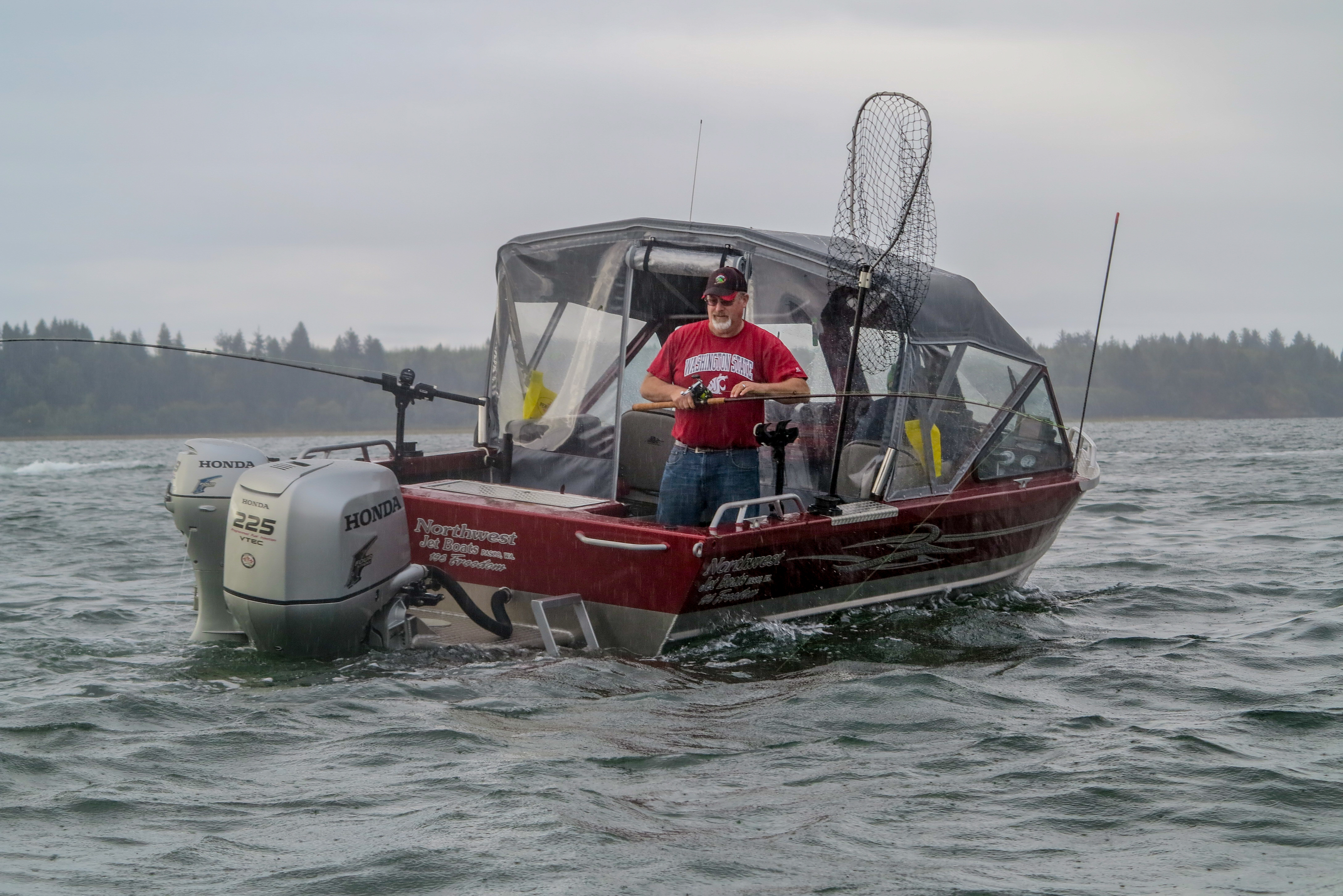
Marine Area 4, the last of the “ocean” areas had a rough start to the chinook fishing. As of July 11th, only 25% of the quota had been caught which normally that time of year the quota is getting close to being filled. I fished this area on July 12th and 13th, when the daily limit of chinook went to 2 per day and we did not hook a single adult chinook. The seas were rough and kept my little 18-foot boat limited to trolling along the kelp line and near shore but those that could make it further out did well. This indicated the chinook were here but out deeper than usual. Coho were being caught but not in respectable numbers which could indicate a later return this year which is great since area 5 to the east is slated to be open into October for coho. Come August the rules for chinook change in Marine Area 4 with it only being open west of the Bonilla-Tatoosh line. Coho is slated to remain open until mid-September in all Marine Area 4.
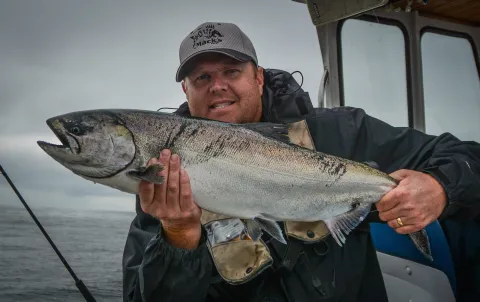
Regardless of where you decide to go, be sure to head out to the open ocean for some great fall salmon fishing. Of course, before you go be sure to check the emergency regulations as these fisheries are subject to quotas and can close quickly. They can also open or be extended as well and just maybe you will find a bonus opportunity out in the ocean. Either way, be ready for some cold, wet, and rough weather as well as bring sunscreen as afternoons are known to burn off the fog and remind us it is still summertime.
/articles/august-2024-ocean-salmon-update
The Aging Sportsman and a Place to Sleep
Ok, I’m sitting here in our group camp while the rest of the gang is out chasing walleye. I love walleye fishing; how did this happen? The progression is a long one and then the wife just had knee surgery and needed an extra hand. The table was set.
When I was a tater-tot my parents used to say that I came out of my mom with a fishing pole in my hand. Although it was likely a tall story, it is based on what turned out to be a lifelong obsession and pursuit of anything that swims. Both in elementary school and in high school if I was late or got caught skipping school it was because I was fishing. Once I could drive, I often went to school with a steelhead or 3 on ice in the back of my car.
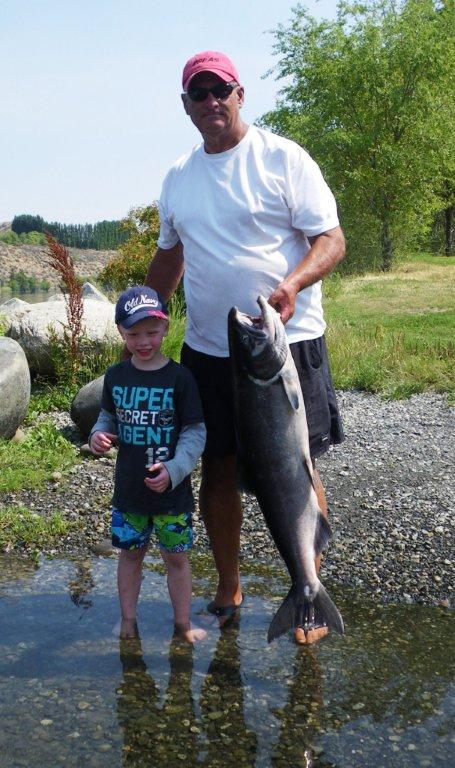
My adolescent preoccupation with fishing followed me through to adulthood. My early days of easy 3 steelhead days or immediate chinook limits just primed the pump. I was obsessed, if I saw a puddle somewhere I believed two things; First that there was a fish in it, and second that I could catch it. I think that I was well into my 40s before I realized that I may have to work for the next fish. Prior to that, I had an unwavering belief that I would hook a fish on every cast, anywhere around the world. I was lucky though; I lived and grew up in the PNW during the heyday of sports fishing.
To that note: I have caught fish all around the world. During my suit and tie days I was fortunate, LOL or maybe it was unfortunate in that I spent a lot of time on the road. I traveled to many regions within the United States, Mexico, and other parts of the world. I always traveled with a 5 or maybe 7-weight fly rod and a travel spinning rod tucked in my carry-on. These being pre-internet days I would research the area that I was traveling to. Then put together a little travel kit for the road. People at home probably thought that I was nuts and the locals where I was fishing knew that I was wacko, “Fishing, do you always release your catch?”
My business travels brought me to a long-term assignment in Southern California. I was still traveling but my regional assignment had changed. Again, pre-internet I didn’t really know what the fishing opportunities would be. As it turned out, I had landed in a fisherman’s paradise. I owned a home in Orange County eventually moving to a small mountain community but I was always close to one fishery or another.
Living in Southern California a sportsman had quick and easy access to a wide variety of both inshore and offshore saltwater fisheries. I got heavily involved in the offshore fisheries, even deckhanding or running the galley on a couple of party boats. My addiction wasn’t limited to the salt, there were also many excellent freshwater options. Close to home there were a number of trout, bass, whisker, and panfish lakes. With some driving you could be fishing planted rainbows in many lakes or clear mountain streams, fishing for High Serria brown or golden trout. With a full tank of gas, the angler could be swinging a fly for a large chinook in a formidable coastal or central valley river. The long and short of it, I was in heaven. I had to earn a living but I was truly a fish-a-holic.
Why the trip down memory lane? I probably could have written this without the memory download but that said; I did spare you the sorted details of 40-plus years of fishing trips, I was setting the stage for an unexpected transition and the actual content of this article.
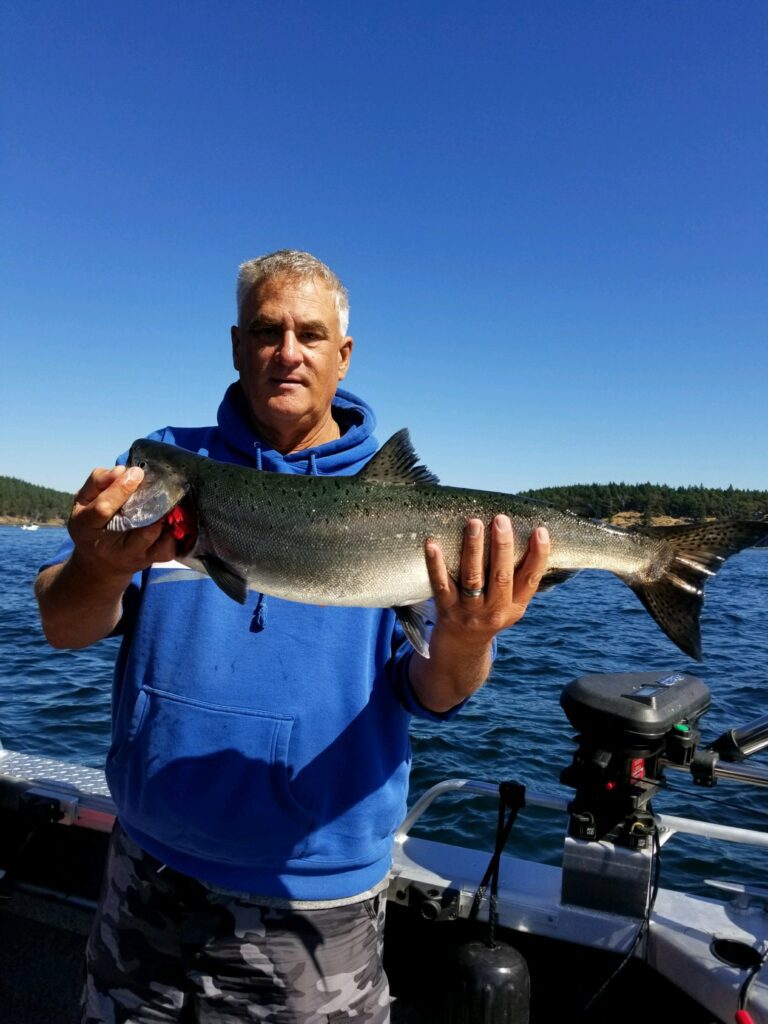
I can’t explain it, but in the last 5 or 10 years I have noticed that I’ve transitioned from an Eveready Fish-a-holic to being content writing about fishing or even sitting around a campfire yapping about it. Oddly during the same period, my ability to sleep pretty much anywhere seems to have gone the way of the dodo bird. Are the two connected, possibly? That would be a whole study of its own.
The glaring tie may be arthritis. Pretty much everything hurts all the time and daily activities are a chore. Fishing; holding a rod, tying knots, managing snaps, clips and downrigger balls require a focused effort these days. Then sleeping has become a serious problem. Gone are the days of a few quick winks in the driver’s seat while parked at a boat ramp. With the onset of arthritis and associated structural problems sleeping in a tent on the ground is completely out of the question.
Unfortunately, the fishing industry hasn’t taken a look at limited functionality due to arthritis. At my end, I try to set gear up so that even with hand strength or manual dexterity issues I can rig the gear with some level of confidence. Having most things pre-tied has been a huge help. The use of the commercial troll line snaps for the downriggers allows me to easily connect the downrigger balls. Keeping the boat organized, having a seat with good lumbar support, and having autopilot for the longer runs also helps. I already own a gazillion reels so I’m probably not going to go out and buy a complement of reels with ergonomically friendly handles but there are some out there. There are also ergonomically friendly aftermarket handles available for some reels. I think that the key is to sit down and really consider what your capabilities or personal limitations are and adjust your approach as required. Additionally, a good fishing buddy is a must.
Lifestyle versus reality. I’m in the process of assessing the reality of my limitations. Do I need my saltwater boat, and my drift boat, if not do I replace them? Simpler makes sense, then considering our local saltwater seasonal limitations, getting a smaller less maintenance rig may be the way to go. Although officially retired I am very fortunate and I have a retirement career. The money is nice but the job was a godsend. I just couldn’t do retired and I was going stir-crazy. Now I run a boat in Washington’s San Juan Islands, am outdoors and with the job being very physical it keeps me active. I mention this because it does have a downside, independent of the weather conditions I run year-round. I’m beat up at the end of the day and instead of fishing on a day off I typically need some recovery time. Eventually, I’m going to have to look at my overall lifestyle including a general lack of sleep and make changes.
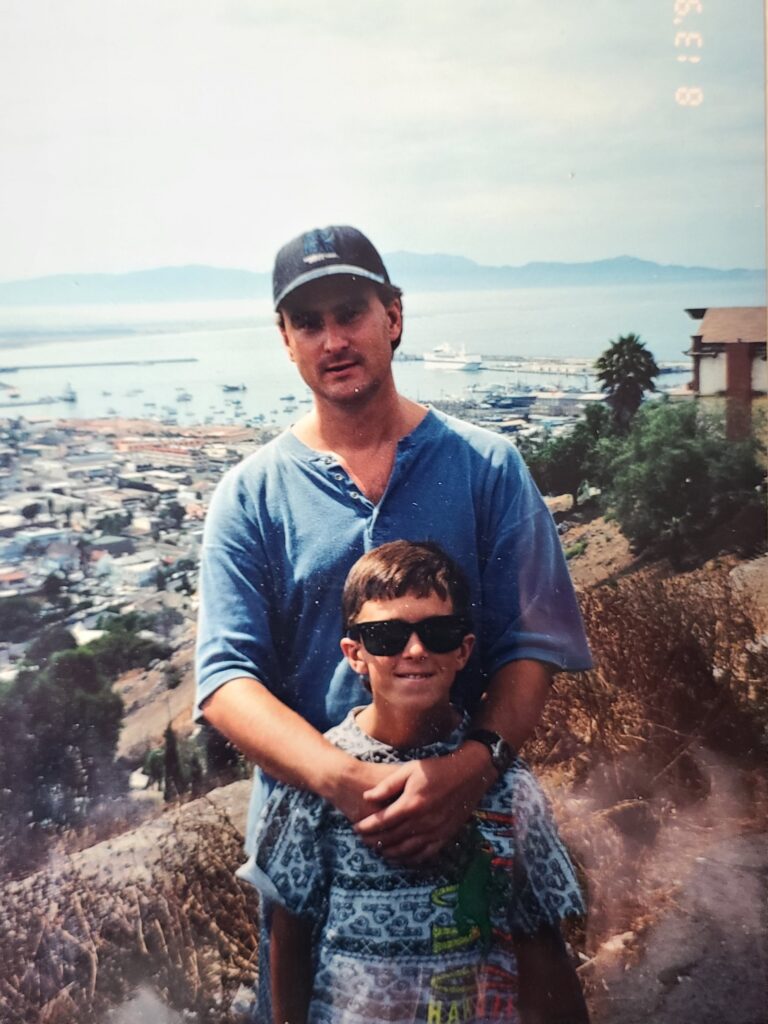
As a sportsman, sleep is an interesting subject. In my younger days, the adrenalin of the next hook-up would keep me going for days and when I did need some shuteye, I could sleep standing on my head if I needed to. I probably don’t need any more sleep than I used to but I do need some comfort. Knowing that the whole tent thing and sleeping on the ground or leaning back in the driver’s seat for a power nap was behind me got me to wondering; where am I going to sleep?
Although a 5th wheel or other pull-behind trailer would be luxurious, at this point I still need to be able to pull a boat. Tents, out of the question, and a hotel bed doesn’t seem to align with most fishing trips. For many years our ARB shell, TruckVault, and a queen-size mattress served us well but it was time for a heated change.
I use the truck for work every day so a full-size hard-sided camper wasn’t going to work. We considered getting a motor home or some form of a van conversion but in the end, decided that they were not in the budget and worse we’re out of driveway real estate. Years ago, I did some catering for a series of offroad events in southern California and there were a ton of both ATC and Four Wheel Campers at the events. They are purpose-built off-road campers. Both manufacturers utilize a lightweight welded aluminum frame and are soft-sided pop-up campers.
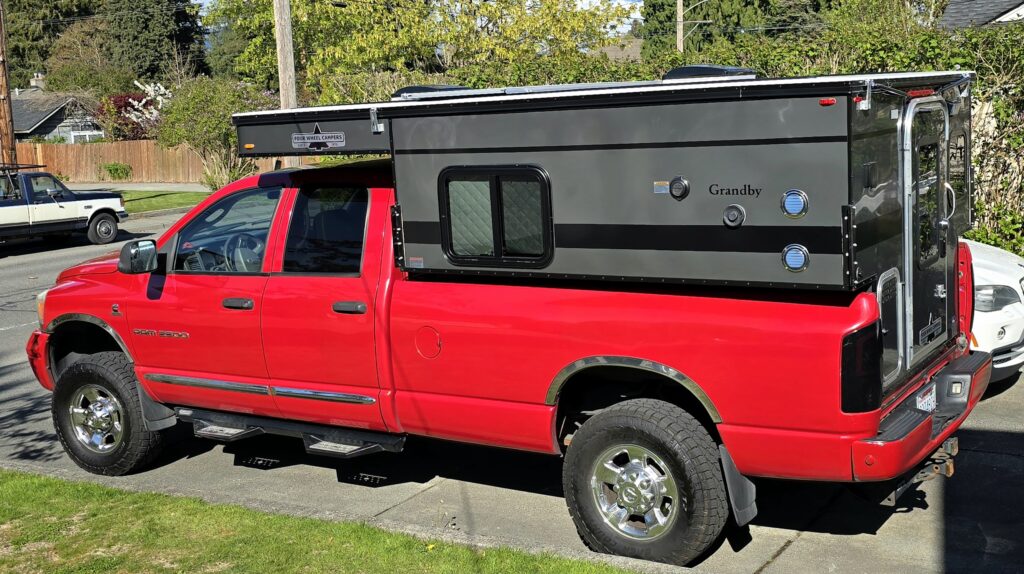
We decided to find a FWC and quickly determined that used campers to fit our full-size truck were few and far between. Order a new one? Well maybe; after researching the cost of the few newer used FWCs available as compared to the cost of a new one, ordering a new camper seemed like a solid financial decision. Add a level of customizations available and we were sold.
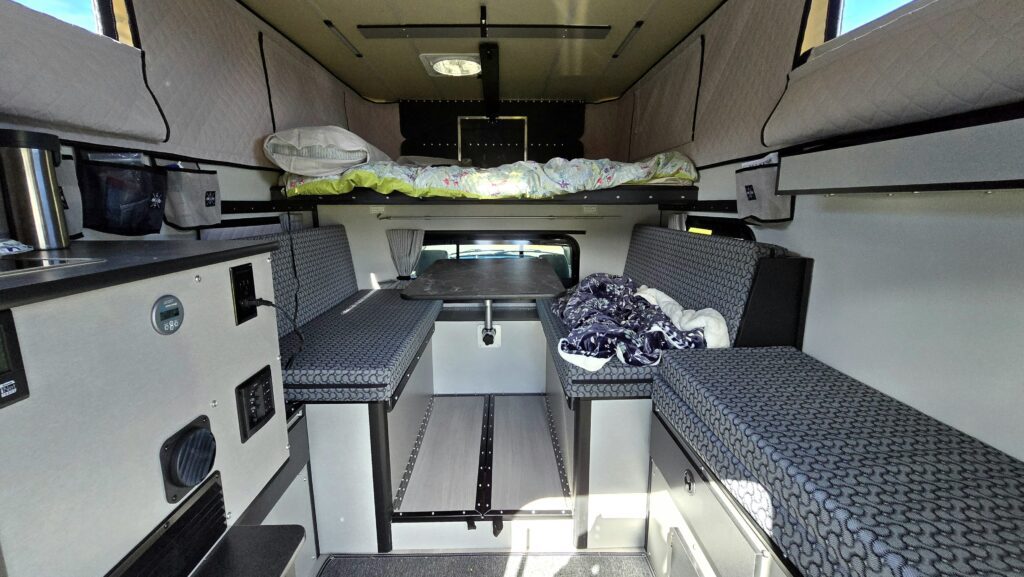
FWCs are available as topper, a basic shell model, a fully loaded slide-in camper and as a flat-bed camper with various options available for each model. We ordered a basic shell but customized our order with forced air heat, a larger bed, a forward dinette a flush mount stove top, an 8’ awning and shore power. Deposit made; the wait began. We expected the 4–6-month lead-time but after a couple months started getting antsy and second guessing our configuration choices. Eventually, our lead time transitioned to an install date and we were off to Mule Expedition Outfitters in Issaquah for the install.
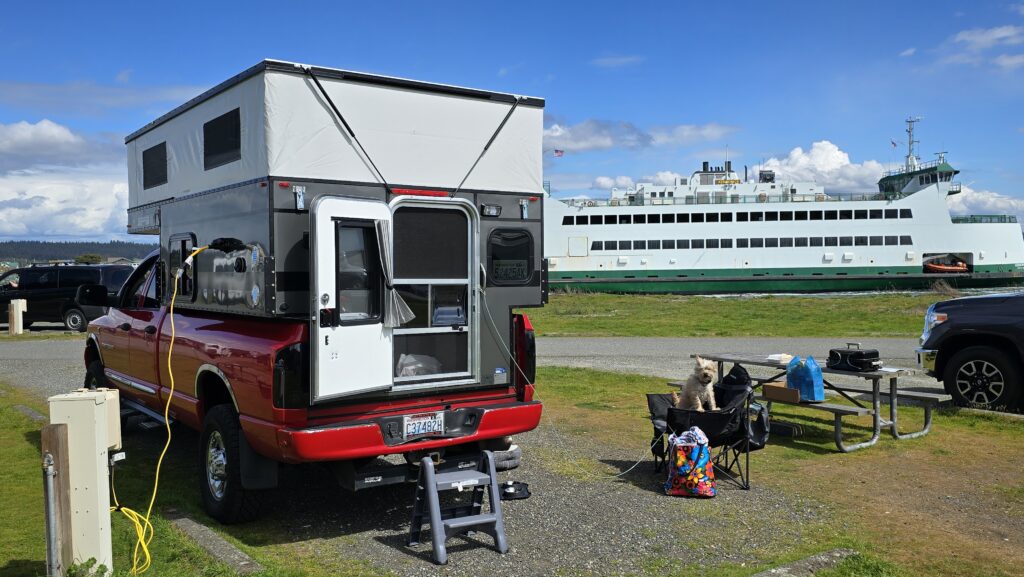
Our installation went smoothly and after a thorough walk-through, we were rolling. The first thing we noticed is that we didn’t notice anything. Our new camper was very well balanced and our truck carried the load well. When we got home, I did the fuel economy calculations and we got 21.4 miles per gallon. I was impressed, our mileage was way better than expected! Since then, we have spent 12 nights camping but I have not removed the camper from the truck. With maybe 10,000 miles behind us as a truck camper combo, the truck is consistently getting 20-22.1 miles per gallon, not bad for a ¾ ton truck with 350,000 plus on it!
To date, we are very satisfied with our customization choices and our Four Wheel Camper far exceeds our expectations. I have to say, I even proposed going camping without any fishing gear! 10 years ago, I would never have considered a camping trip that didn’t involve the boat and fishing gear. The way of the future or a phase? Only time will tell. In the meantime, I love telling fishing stories and we have a comfortable place to sleep!
/articles/aging-sportsman-and-place-sleep