/articles/categories/stories
The Big One Vs. The Many
I can’t be the only one to think about this when I am getting ready for a fishing trip. Would I rather catch “the big one” or would I rather catch a steady stream of fish and hit my limit? The one monster fish could land me in the record books if I do well enough. That’s a fishing story I could get tattooed on me, or at least wear a button that says “Ask me about my state record fish”.
On the other hand, if we do really well, catching the limit on fish would fill up my freezer. And at (insert large number here) for the limit, I won’t even hardly have time to sit down if I’m catching them all day. That doesn’t even include the limit on a different kind of species I could inadvertently catch even though I’m not targeting them! Whether you’re somebody who relishes that big fish or someone who would rather be engaged in a regular catch, let’s at least hear out each side.
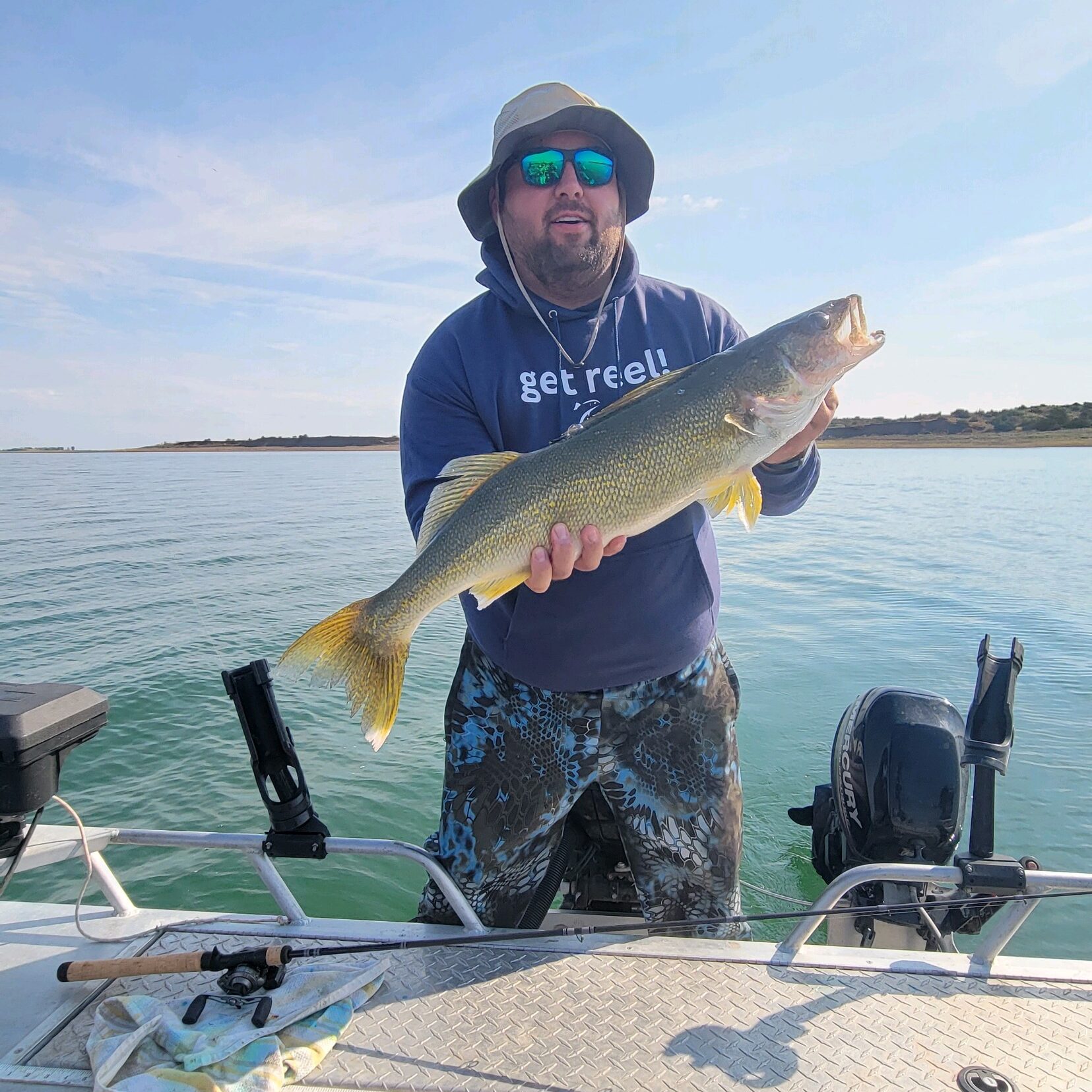
For “The Big One”
Marathon fishing days can lead to a lot of time talking with friends or inside our own minds. Those stretches of time where you’ll change out gear to find something that works. Is waiting the best part of fishing? No, not really. But it is part of the experience. You go an hour, two…six. Maybe without any kind of bite. And then, BAM. Your rod gets absolutely slammed. The fight is like nothing you’ve come across before. You think to yourself you must be snagged up or one of some different species because the one you’re targeting simply does not fight like this.
Then, the fish surfaces. It looks like something that’s been hitting the $5 buffets in Vegas and isn’t afraid to go back for thirds or fourths. It gets netted and you think to yourself, “How in the world did I catch this”. You grin, you cheer, you motion for everybody you're fishing with to take a look. It’s easily the story of the day, probably the story of your year. The old adage, I’ve got bigger fish to fry, tells you everything you need to know about moving on to bigger and better things.
In fact, there’s an argument about the many that will probably resonate with many of you. It’s probably the most obvious argument because it’s the argument in favor of The Big One. It hit me as I was looking back in my photo album trying to justify an argument for the many. Who takes photos of a bunch of small fish? Sure, maybe you’ll take the first one to show you did in fact catch something. Or if you remember at the end of the day you’ll remember to line up all the fish on the dock. But, that’s when you’re already trying to bring the boat in, manage the queue of vehicles trying to get in and out, secure the boat to the trailer, put away the gear, and generally not look like a rookie.
These kinds of photos are great for a guide service to show they get folks on the water and into fish, which is certainly what you would hope for. But to the layman, the appeal really doesn’t seem to be there. Bystanders could look at your spread of fish and comment on you having had a good day, catching near or at the limit is great, but will silently be judging you and think about the mammoth they caught relative to the ho-hum size of the fish you brought in. It’s way more common and photo-worthy to post that one huge fish, rather than the compilation of small to average-sized fish. The one that makes people say “Wow!” But those fish that make everyone on the boat stop and admire it?
Those are the kind of kodak moments you’ll stop everything you’re doing to make sure you document the occasion. Look at any guide service, they post pictures of the legendary fish. State records? Do I need to say anymore? Where else can common folks like us hold a record for 30 or more years, because it sure won’t be in home runs for touchdown passes. But one nice fish can put our names in the record books. And it could be at any moment. Really, if we don’t fish for the clout and sense of self-worth, why bother fishing at all?
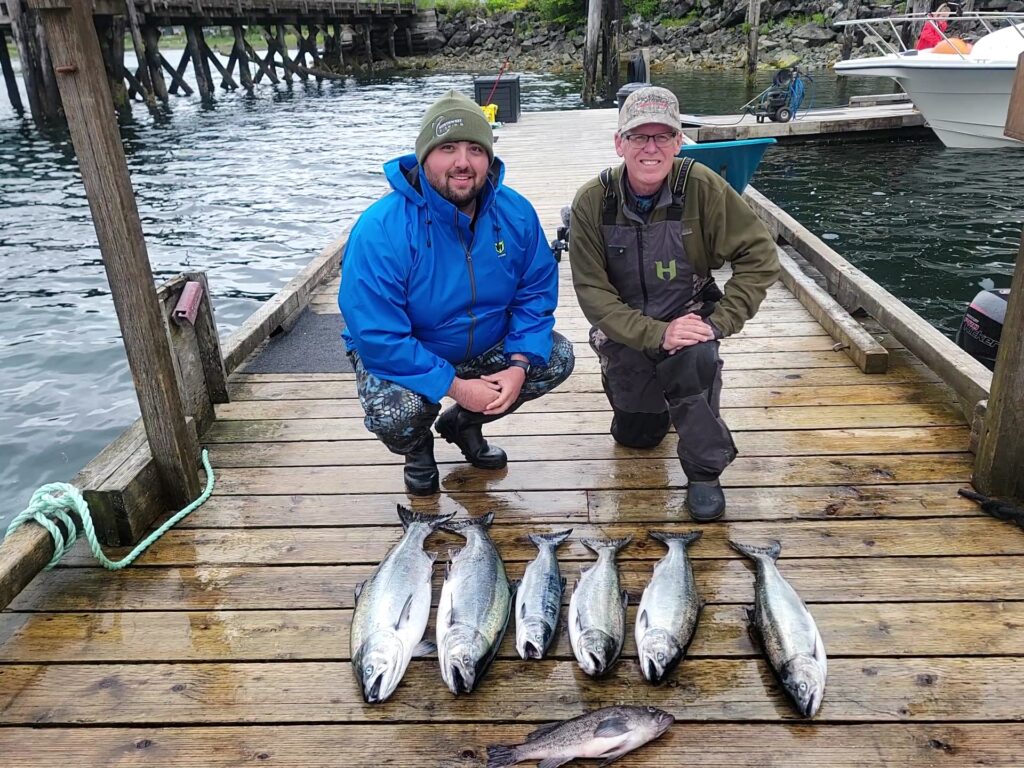
For “The Many”
Who among us doesn’t like pulling in their catch? I mean that’s the main objective of fishing, isn’t it? To bring in something on your line besides seaweed or a bait-less hook? You’re out with some friends, or maybe a kid who hasn’t fished much. An entertaining day with a cooler full of fish is the fastest way to hook someone else into this great sport.
When you get to the point in the day where everyone on the boat is looking at each other and asking whose turn it is, you know you’re in the middle of an awesome fishing adventure. In this fishing reality, we’ve built for ourselves, everyone gets a chance to participate, and everyone gets to enjoy a tasty dinner (if keeping your catch is your thing). The banter picks up. The camaraderie builds. Everyone is in great spirits and appreciates the constant action.
There isn’t that sense of if we catch something but instead, when are we going to catch the next one? You pass by some other boats in the water and exchange the usual conversation. What are you using, how has the bite been, that kind of stuff. Instead of the meh response of just doing OK with a few bites here and there you proudly share that the bite has been insane and you’re getting hit on every rod at every depth with every lure you’re putting in the water.
The other boat slowly trudges by with expressionless faces as they’ve had the exact opposite kind of experience on the day. In fact, they share that they've been camping throughout the weekend and haven’t so much as seen a fish surface or a blip on the fish finder. And like clockwork, your casual conversation is broken up because, well, you’ve got another bite to attend to.
Another area to think about as to why we should be vying for the huge number of fish rather than the huge fish is the likelihood of each happening. We have all caught some big fish, me included. But many more of us, and more often, I would wager have had days where we limited out or went through an insane bite. Those fishing outings where you continuously pull in solid fish. The kind of fish that offers a good fight and makes for a consistent fun experience. For every day where a single big fish gets caught, there seems to be exponentially more multi-fish days out on the water. That consistency can’t be overlooked or overshadowed when we start those early mornings.
There you have it. The pros and cons of catching The Big One vs catching The Many. What do you think? Are you the kind of person who wants to hang his hat on a fish that you’ll talk about for the rest of your life? Or are you the kind of person who pulls in a huge quantity of fish and sees that as a day well spent out on the water? Let’s at least end with some common ground. In each of these scenarios, both kinds of anglers spent the day fishing. They can both be happy about that.
/articles/big-one-vs-many
A Very Special Place
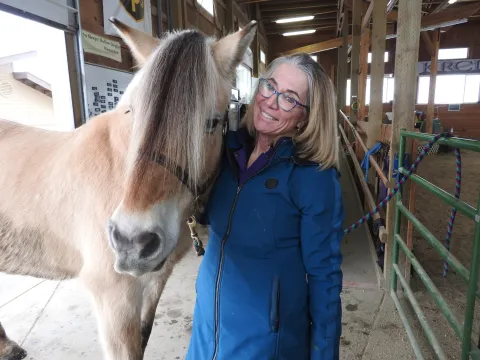
A friend of mine suggested I do a story about the Alatheia Therapeutic Riding Center near Wenatchee and I’m so glad she did. I visited there this past week and met with the co-founder of this very special place, Nancy Grette.
Nancy and her husband Glenn started this non-profit organization at their home on Sleepy Hollow Heights in 2011. The two had purchased several horses they kept on their property but their children had grown and left home and they were pondering what to do. That’s when a five-year-old girl who was physically disabled came out for a ride for her fifth birthday on one of their horses. The ride was an amazing experience for the child and Nancy said she knew what she was meant to do for the rest of her life.
After that Nancy and Glenn started offering weekly rides to disabled children and adults as a means of emotional and physical therapy. The word Alatheia is a Greek word from the New Testament that means “disclosed truth.” It specifically comes from Ephesians 4:15 where the Apostle Paul exhorts all to speak the truth (alatheia) in love to one another.
In Nancy’s words, “It is a way of living, and the riding center is how we choose to speak truth.”
The Alatheia Riding Center provides some 108 individuals the opportunity to spend an hour or more with and on their horses every week. This includes not only physically and mentally disabled children and adults but also combat veterans suffering from Post-Traumatic Stress Disorder. The rides take place on their 12 Norwegian Fjord horses, a small, stout, and ancient breed known for their gentle temperament and sure-footedness. Nancy says these horses are very empathetic and reflect the feelings of individuals they come in contact with. She also explained the weekly rides offer therapeutic benefits for their riders in a physical, emotional, and mental way.
Nancy explains the reason it is a weekly program (as opposed to a one-time experience) is that you need continued exposure to the movements of the horse to get the benefit.
“Physically, when an individual is on a horse, for every minute, a hundred balance accommodations are going on in the body. You are developing balance, and coordination as well as large and small motor skills which is helpful for physical disabilities. Those with learning disabilities benefit from the socialization and peers and executive function of the brain while those who suffer from trauma are ministered to by the horse in a way you can’t explain. The horses are intuitive and in the moment and there is no judgement. People can be who they are with a horse.”
The rides happen in an indoor arena or on a trail overlooking the Wenatchee Valley. This non-profit organization has several employees who work right out of the Grette’s home along with a number of volunteers. One group of volunteers is the barn buddies. These are young adults with developmental disabilities who work at the ranch for two to three hours a couple of times a week. Nancy says they started this program because they learned that once children were out of special education classes in school and on their own as adults, they didn’t have much in place to develop further life skills. The Barn Buddies program allows these individuals, ranging from 21 to 40 years of age, the opportunity to learn how to work on a ranch or in a barn and socialize with other individuals.
The Alatheia Therapeutic Riding Center has plans to expand from its current location soon so that it can increase the number of individuals it serves.
If you want to support this non-profit organization with donations or time as a volunteer contact them through their website at www.alatheiaridingcenter.com or call Tel. 509-630-8710.
John Kruse – www.northwesternoutdoors.com and www.americaoutdoorsradio.com
/articles/very-special-place
The Joys and Challenges of Fishing a New State
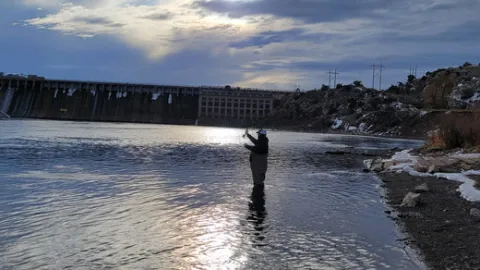
The rainbow on the other end of my line was giving a good accounting of himself. After a solid take, the winter rainbow awoke with several strong jumps, clearing the water with an impressive aerial display, before settling down to a solid tug of war with my 7-weight rod. I slowly worked the fish into the shallows, carefully backstepping on the gravel bottom of the Missouri River. As the fish grew weary, I slipped him into my net and gently slid out the #16 streamer that fooled him. Resting the tired fish, with a strong splash he gave a signal that he was ready to return to his home. I eased the glistening rainbow out of my net and watched satisfied as he darted back to the depths.
It was the middle of January, and my former home state of Washington was trapped in a cycle of wet, icy roads causing a general standstill from accidents throughout the Puget Sound area. Meanwhile, in Montana we were experiencing our first “Chinook Winds” , a warming trend I was told was a common occurrence in the Great Falls area. With temps hitting the upper forties I decided it was high time to explore the winter trout fishery that I had heard and read about on the Missouri River. In Great Falls the river was frozen from an earlier cold snap, but traveling 50 miles to the angling community of Craig revealed a free-flowing river devoid of the summer line up of drift boats plying the waters.
Reaching the Bull Pasture access, I shared a beautiful drift with one other angler. He graciously gave me some tips and an extra leader (I had forgotten mine!). Saying “I’ll see you on the water”, I followed at a respectful distance, giving him first water.
Moving to a new home is not easy. Moving to a new home in another state multiples the challenges and frustrations. For my wife and I it had been a year of packing belongings, cleaning, getting quotes for house repairs, and slowly but surely learning our new hometown, Great Falls. Somewhere in that mix of seemingly never ending tasks I vowed to myself that I would get some fishing and exploring in. Over previous visits my son Matt and I had fished different locations and so I knew a few places to go, but I also wanted to learn new spots and explore fresh places.
Montana has a wealth of angling options, but they are very different from Washington. Lakes are fewer and farther between. Trophy trout rivers are seemingly around every bend. Reservoirs offer big bodies of water which suited my Thunderjet well, but I was also looking for those local spots closer to home where I could make a quick drive, fish, and return home with time left in the day to do chores.
Fortunately, I discovered a totally unexpected source of fishing information other than YouTube and internet searches. That information source was none other than the various handymen and contractors that came to our home to work on building a fence, repairing a garage door, and graveling our driveway. Striking up conversations I quickly discovered that, like myself, these anglers were more than happy to talk about fishing and share places to go, times to fish, and gear to use. Following our chats, I would go to my computer and do the further research needed to start expanding my fishing horizons. New locations and fishing adventures were what I craved, and suddenly my world was opening to a wealth of exciting opportunities.
Networking is nothing new, but in our new age of social media it seems to me we are losing that piece of our human connection. Or, maybe it’s just that I’ve read one too many harangues of comments such as “I don’t share locations” anytime someone asks for help on social media. As if that is the cause of our woes as anglers, and being more selfish is the solution to shrinking opportunities. Perhaps the answer is we all expand our horizons, finding those new locations and species to target. And we share the wealth, instead of tightly clinging to our ever-shrinking little world, becoming bitter and inward focused. But I digress…
As I made new friends and we shared our passion for fishing, more ideas and destinations swirled in my head. Epic adventures lay ahead of me – a trip to Fort Peck to target land-locked chinook salmon, or maybe an RV trip to a remote high country lake to fly fish out of my belly boat. Or win the Montana angler lottery’s trip of a lifetime and float the Smith River on a four day camping-fishing adventure. Can’t forget Flathead Lake with its famed lake trout fishery.
In addition to learning new spots to fish, I realized with both a feeling of sadness but also intrigue that the fishing routines I was used to in Washington were going to be very different in Montana. For one thing, gone will be the days of waiting to hear what seasons will or won’t be open. No longer would my boat see the salt water and flow of the tides. Battling seaweed while trolling for salmon will be a thing of the past. Having my choice of dozens of kokanee lakes was done. And steelheading… I can only say I am very thankful to have seen the days when local rivers had healthy returns and anglers had a multitude of opportunities to catch these magnificent fish.
In their place, however, were new piscatorial pursuits. Reservoirs with solid populations of large walleye, bass, and pike awaited. Kokanee lakes, while less in number and more spread out, offered solitude and bigger fish. Smaller mountain lakes and high elevation ponds compelled me to buy a new belly boat, bringing me full circle back to my first year in Spokane when I would travel to the multitude of trout lakes and fly fish out of a float tube. I realized with a feeling of excitement that I would need to dust off my neglected fly rods, go through my fly gear, and reacquaint myself with the fine art of fly fishing.
Montana is truly the Mecca of fly-fishing and my new home put me in close proximity to one of the most famous and bountiful trout rivers in the west, the Missouri River. I will confess, my first few trips to the “Mo” were humbling experiences. My fly-casting skills left much to be desired and Missouri rainbows are not easily fooled by sloppy casts. That said, I am embracing the challenge of becoming a better fly-fishing angler, and I observe with satisfaction a steadily improving presentation and distance in my fly tossing.
Most of all I am excited to share new adventure stories and TV episodes with our readers featuring the “Big Sky” country. I look forward to taking friends new and old out to enjoy with them the beauty that is Montana. In the meantime, wherever you call home, I encourage you to broaden your horizons, fish new waters, and share your love of fishing with other anglers. Take a kid fishing and help spark the passion in the next generation so our waters will have advocates to take care of them, help them flourish, and protect them.
/articles/joys-and-challenges-fishing-new-state
Did WA State Parks Cancel Thanksgiving?
I was reading the September Washington State Parks e-newsletter, which covered the remaining free days available for day visitors to enter and park in Washington’s State Parks without a Discover Pass. One of those dates is the day after Thanksgiving: Friday, November 24th. I was curious why the State Parks and Recreation Commission chose to not call it a Thanksgiving or Day after Thanksgiving free day and emailed the media department to ask them why.
Having not received a response right away, I began researching this and found the day after Thanksgiving was first made a free day to enter state parks in 2017 which was called Autumn Free Day. It remained as Autumn Day through 2021, but in 2022 the free day after Thanksgiving got a new name, Native American Heritage Day. However, in 2023, the late November free entry day was once again designated, Autumn Day. Is this all about wokeness and cancel culture towards Thanksgiving? Did someone object to it being called Native American Heritage Day?
I did receive a reply from State Parks media staff shortly before this column went to press stating, “Washington State Parks and the departments of Fish and Wildlife (WDFW) and Natural Resources (DNR) have offered a Discover Pass “free day” the day after Thanksgiving for several years. The free day is not associated with Thanksgiving. It is the last free day of the year and coincides with autumn and school vacation for many families.”
So perhaps I’m mistaken about cancel culture, though the reply doesn’t answer the question as to why they changed the name from Native American Heritage Day back to Autumn Day for 2023.
Maybe it’s just the way things are done by our state agencies in Washington these days. A great example is the Hungarian partridge, nicknamed the “Hun” for short, which saw its name changed to the completely non-offending and uninspiring name, gray partridge, a few years ago by WDFW. Autumn Day falls into the same category. Afraid to offend any one person or group of people, you just change the name to something that won’t offend (or inspire) anyone.
Of course, that’s just my opinion. However, no matter what it’s called, November 24th would be a good day to get outside into one of our state parks instead of spending the day inside big box retail stores or in front of a computer all day shopping online.
*This article does not necessarily represent the opinion of Northwest Fishing or NW Reel Life magazine.
/articles/did-wa-state-parks-cancel-thanksgiving
How to Survive Opening Day
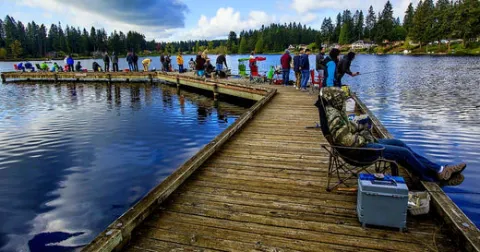
April is unofficially the start of spring and often linked to mythical tales of rebirth, resurrection, and fertility. Throughout history, spring has been celebrated via a diverse lineup of traditions. It is a time of rebirth that can be tracked back for centuries. Where many of the ancient festivals can be directly linked to some sort of bloodshed and brutality, fortunately for the Western Washington angler, we see April as opening day of lowland lakes season.
Where hopefully our participation does not result in bloodshed, opening day can either be a bodacious good time or a stressful one. As a small child I remember anticipating opening day for months, any given year it was probably the highlight of the year for me. My opening day experiences have always been memorable. To this day, fishing or not, I eagerly await opening day each year. In a sense, opening day marks my renaissance each year. Unfortunately, not everybody feels the same way, and opening day can be an overwhelming source of frustration.
So, how does one survive opening day crowds?
Opening day frustrations come in many forms and we all have different tolerances for things that are generally out of our control. Your mindset should be that most things associated with opening day will be out of your control. The list is long, but some things to think about are tackle/gear availability, where to go, gear failure, and crowds.
Planning and preparation will go a long way in smoothing over any pre-opening day jitters. Don’t go to your local tackle shop on the Friday before opening day and expect to find your favorite lure, a kiddie setup, a jar of Ball-O-Fire eggs, or buy your license. Even well stocked tackle stops can run low in the days leading up to opening day. Shop early and remember that in our post pandemic world, the tackle shops are dealing with supply chain issues.
If they don’t have something it’s likely not their fault, and they are doing everything they can to anticipate your needs. Locally, Kevin Johns with Holiday Sports is a both the tackle buyer and lifelong local fishing expert. They are well stocked for opening day. If they don’t have what you’re looking for, look up Kevin and he will steer you in the right direction. SportCo/Outdoor Emporium, Johns Sporting Goods, Yeager’s, and even some local hardware stores have a fishing expert. As a hidden gem, the fishing department manager at Ace Hardware in Anacortes knows her stuff and is very devout in her pursuit of our local fisheries.
Before opening day take the time to go through your gear and, if you’re using them, your boat and trailer. Did the battery survive the winter, trailer lights work, and are your winch and/or tiedown straps functional? Check the line on your reels, replace as required. Check your rods for damage and cracked guides. How does your tackle bag or box look, are they adequately stocked? Make sure you have serviceable PFDs for everyone that may be on your boat, and it’s a good idea to have life vests for any children and non-swimmers when fishing from shore.
As part of your planning activities, maybe visit the area you plan to fish ahead of time. Check ramp conditions, look at the boat trailer parking options, shoreline access points, and hazards. Make sure there are not any surprise road or access closures. Over the winter, some of our access points may have been updated, and parking or access could be different.
Hopefully your upfront planning and preparation will help to soothe and your opening day anxiety, but you’re not out of the woods just yet. You still have to survive opening day!
I kind of look at opening day as maybe attending Mardi Gras in New Orleans. All the individual components and food may be a little odd or even uncomfortable, but the combined experience is an absolute hoot. A big thing to remember about opening day is that it is typically a family event. Strive to make it a positive experience for everyone involved.
Children are very perceptive and are constantly learning from our behavior. If they get tangled with your prize stocked rainbow or one of the grandkids hooks your favorite fishing hat when casting just laugh it off. In the event of a tangle or other calamity, no matter who is at fault don’t be afraid to say that you are sorry to your fellow angler. Use the time to teach good sportsmanship and etiquette.
You will have no control of the crowds and know that going in. That said, you can do a few things going in to improve the experience. First and foremost is to arrive early. Not just early but hours early. Your favorite spot at the corner of the dock or bulrushes is more likely to be available, and if you’re boating, you may find trailer parking within a reasonable distance to the ramp. On that note; if fishing from the shore, don’t impede the boat ramp access. Boaters need room to maneuver their rig, a place to beach their boat, and a line free path to and from the boat ramp while on the water.
As an alternative, if early doesn’t work, sleep in. Get up, have a cup of joe or three, and maybe even breakfast before heading off the lake. There is a thought here; opening day is all about voracious, planted trout. These fish will have the feed bag on all day. Years ago, I hatched an opening day plan to fish Lake McMurry in Skagit County. We had a guest from Alaska, she was an avid angler but had never fished an opening day.
The plan was for me to launch at o-dark thirty, then wait for them to arrive around daybreak. In accordance with the plan, I launched hours before daylight and was the second rig in the parking area. After launching I motored out, dropped the anchor, and waited for the crew. It was cold, raining and breezy, and in short order I was soaked the bone. With dawn came a renewed hope that I wasn’t going to die of hypothermia just off the Lake McMurry boat ramp, but my wait continued. There was a lot of activity, and I enjoyed watching all the happenings. My waterlogged condition was improving and almost bearable.
It was a little later, the rain had turned to mostly a mist and the sun was trying to show itself. I was eager to join the other opening day participants but somehow, I was still waiting. A few of the boats that had already launched and headed out fishing were now coming back in with easy limits. I was getting a bit anxious and at that point I had full on gold (I mean, fish) fever.
Eventually the gang showed up, they had overslept and ended up parking somewhere way down the road. I considered expressing my displeasure with the situation, but here came one of the kids, little legs going as fast as they could, carrying a McDonald’s bag. She was over the top excited that they had stopped and gotten me breakfast and coffee. Although they were both cold, her enthusiasm was infectious and the wait was forgotten. We got loaded up and cast off on our adventure. We had an absolute blast, lots of joking around, lost fish, and full stringers. We started out just doing catch and release, and then quickly filled out our limits. I don’t know how many fish we caught that day, but it was one for the books. As applicable to opening day survival, there were a few lessons learned moments in our adventure.
Although a bit frustrated with the wait, I stayed positive and we had a great time. The kids and our guest thoroughly enjoyed our adventure and never saw my tribulations. The second lesson was in the opening day bite. Even though people were coming in with early limits, I think the bite improved as the day progressed. I believe that with the unsettled weather, the surface temperatures were lower early on. The bite really got going as the lake warmed up. I’m sure if we had waited until 1:00 or so to launch, we still would have limited and not had to worry about parking. Maybe off subject, but regarding lessons learned, always carry a big thermos of hot tea or coffee!
If you just can’t get into the opening day hocus pocus no worries, you still have options. Remember that almost everyone that owns a fishing rod will be fishing an opening day lake. What that means to you is that, for the most part, our other fisheries will be deserted. The year-round lakes will be just hitting their spring stride. We have enjoyed kokanee limits from Lake Stevens, Lake Cavanaugh, and Lake Samish on opening day.
There are other fisheries to explore as well. You’ll want to check the WDFW regs before you hitch up your rig, but for 2023 it is likely that both halibut (MA 6-10) and spring chinook in SE Washington will be open. Both have their own crowds and challenges but are solid alternatives to our Western Washington Lowland Lake opener. You may also consider shallow water fishing in the salt. Both surf perch and bottom fish such as the Irish lord family, sanddabs, sole, flounder, and greenling are all available year round. Check the WDFW regulations and bottom fish definitions for the area you plan to fish.
Your ability to survive opening day may be a crapshoot, but with a little advanced planning you adventure should be mostly painless with bloodshed limited to a skinned knee, sliver, or the rare hook in the finger. Again, opening day is a huge family event, so patience and understanding will be your friend. At all costs, make opening day fun for all and be a teacher.
Assure your gear, boat, and trailer are up for the task before you head to your favorite lake. Get your tackle and licenses as early as possible. Make sure the kidlets are wearing properly fitting lifejackets and, as appropriate, bundled up for the weather. Opening day is not the time to cut back on snacks, a full tummy is a happy tummy. A little attention to details and you will not only survive opening day, but the gang will eagerly look forward to next year’s festivities.
/articles/how-survive-opening-day
Mayfield Muskies
It was August 2, 1996. Son Don and I were on the second day of a four-day fishing trip. We had spent the night camping at Riffe Lake’s Taidnapam Park and were now heading to Mayfield Lake to try for one of the elusive tiger muskies. For the past few years, tiger muskies have been the big attraction at Mayfield. A sterile cross between a true muskellunge and a northern pike, they had been planted into Mayfield Lake to help control the large numbers of squawfish and other rough fish. They have a reputation of being very difficult to catch and have been called “the fish of 10,000 casts.”
It had rained hard most of the night and was still raining very hard as we reached the Ike Kinswa State Park launch ramp at Mayfield Lake. We had planned to camp the night at the state park but had noted that the “campground full” sign was posted.
The only raingear we had was jackets so we stripped down to swimsuits and rain jackets. Neither of us had fished for tiger muskies before and had no idea how or where to start so we started at the bridge near the launch ramp.
Don hooked the first fish, a squawfish, -- the first of at least 50 we were to catch during the day. We saw a couple of huge splashes near the bridge supports that we assumed must be muskies. We also saw some large, dark shapes in the water that definitely looked like big muskies.
We saw a big fish splash under the bridge. Don motored over and made a long cast with his huge Rapala 18 S. There was a big swirl as the fish struck -- Don’s 15-pound test Maxima stretched and snapped. The muskie’s teeth had cut the line as clean as a razor blade. I then cast a large spinner bait to the area and had an instant hook-up.
“Got him,” I said excitedly but the big fish leaped and spit out the hook. We didn’t think it was the muskie but never knew for sure just what species of fish it was.
We continued fishing for a couple of hours. Don was throwing a large silver Rapala Shad Rap and I was casting a large brown crawfish Hawg Boss Super Toad. We were catching squawfish almost constantly. We caught so many that when one was hooked, the other angler barely looked and just kept on casting. “Casting on automatic,” as Don put it.
Finally, Don really got my attention when he yelled, “Muskie, I’ve got one.” The huge fish was beautiful and put up a pretty good fight. Fortunately, this fish was hooked in the lips and was unable to cut the line with his sharp teeth. As he began to tire, we were wondering how we could land it. We had no net. After a few unsuccessful attempts trying to land him by the gill plates, I grabbed his lower lip with a pair of pliers and hoisted him into the boat. The hooks were removed and he was placed into the live well for a much-needed rest.
When the fish was first put into the live well, it was so tired it could not remain in an upright position. I held it upright for a couple of minutes while its gill plates pumped fresh oxygen into its body. The fish then seemed to quickly recover its strength while we readied the cameras and the tape measure.
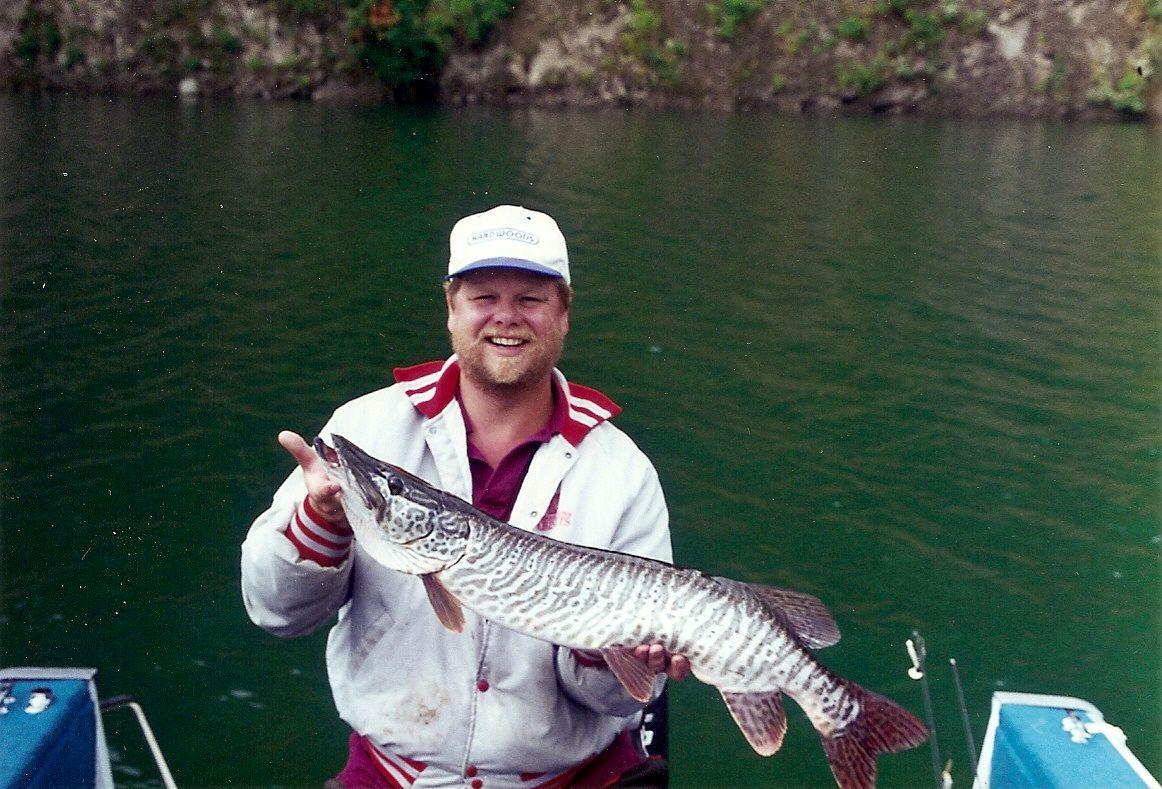
When we were ready, Don removed his seemingly fully recovered muskie from the live well and we measured it at 36 inches even. Then a few quick photos were snapped and the big beauty was thanked for the memories and gently released. Satiated, by the experience, Don and I just sat down and relaxed in the boat. We celebrated with a cold beer and recapped the catch as the boat slowly drifted in the breeze.
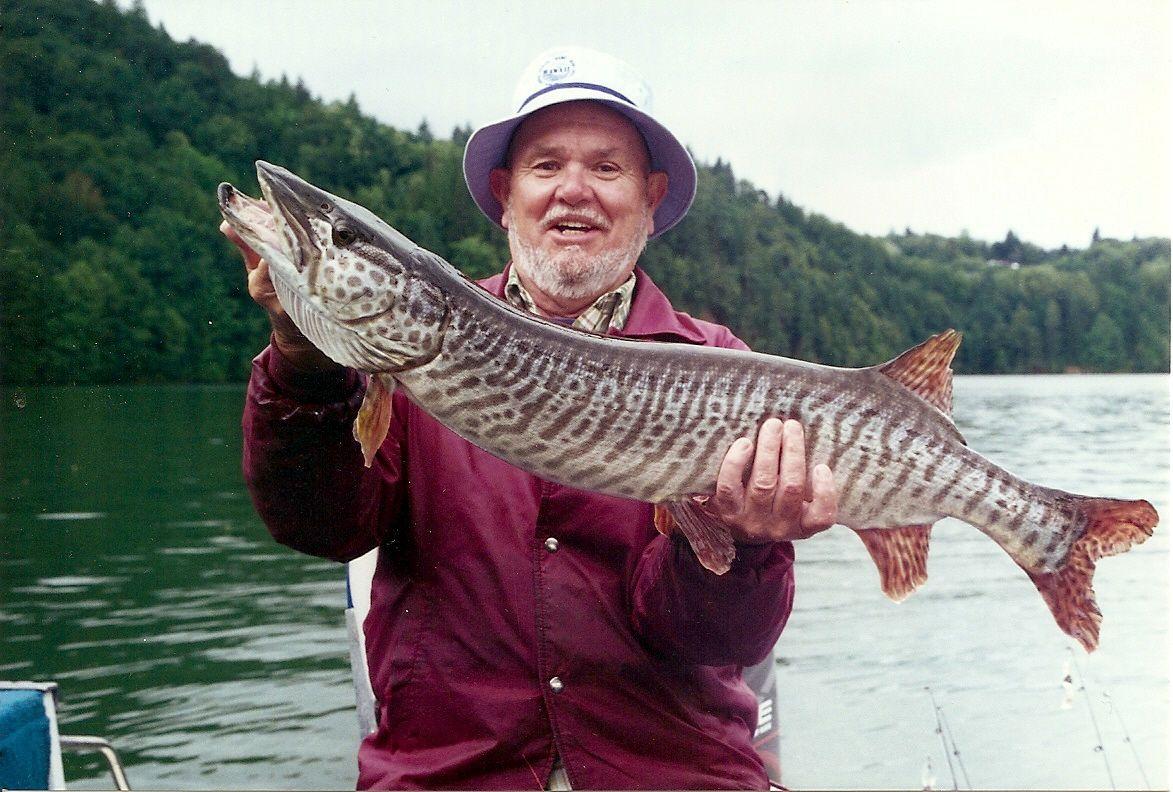
Don offered me the front seat of his boat and first opportunity at prime casting areas. I declined, preferring to relax in the back seat while Don ran the electric motor and controlled the boat. We started fishing again, starting where Don had hooked his muskie. After only about a dozen casts later, Don cast to the end of a large log near the shoreline and started his retrieve. I watched his cast and then cast my crankbait to the middle section of the same log. The fishing gods surely smiled at me as the twin to Don’s beautiful muskie smashed my lure.
“Dad, you’ve got a muskie,” Don yelled only seconds after I had seen the fish hit and had set the hooks.
Fortunately, this muskie also had the crankbait in its mouth and was unable to bite the line. (Wire leaders are a very good idea for these fish.) It too, was beautiful in the clear lake water but fought little with its mouth almost pinned shut by the treble hooks. The big fish was landed and put into the live well for a rest. Again the tape measure stretched to 36 inches. We snapped a few more photos and the big beauty was released to continue his job of eating the numerous squawfish.
Shortly after catching the last muskie, the skies really opened up and the rain just poured down. Seeking some shelter, Don drove the boat under the bridge. As we sat under the bridge, I commented, “I don’t think I’ve ever seen it rain harder than this." And, -- about then, it started raining about twice as hard. Then the wind came up suddenly and started blowing like an angry typhoon.
After a few minutes, the rain and the wind let up and we motored out from under the bridge. We saw a sailboat upside down in the middle of the lake. One person was trying to swim to the shoreline and the other one was clinging to the keel of the capsized boat.
First, we rescued the nearly exhausted swimmer and then motored over to the boat. The man clinging to the keel of the boat just happened to be the state park ranger. We hooked our rope onto his boat, partially uprighted it, and towed it back to the Rangers dock. The ranger was very grateful for the assistance.
“We could use a campsite tonight,” I commented.
“I think we can work something out,” the ranger said.
That evening, we drove into the campground and asked if a campsite was reserved for Johansen. “Yes sir,” the park employee said as he directed us to a free campsite. That evening we had a nice campfire, had some hot chili, and enjoyed a couple of drinks while we recapped a very eventful day.
/articles/mayfield-muskies
Choosing a Fishing Guide
I have been fishing my entire life, but even today, try to fish with at least two to three different guides a year to learn new techniques and methods. Outside of time on the water, fishing with a guide is the single greatest way to become a better angler. Note that even the most experienced anglers can learn new things and your guide will be your teacher.
What continually impresses me is just how much our fishing methods can change from one place to the next and even within a specific system, such as the Columbia River for example. I am also surprised at how confident guides tend to be in their techniques. It is equally surprising how much those techniques may differ from other guides fishing the same fishery.
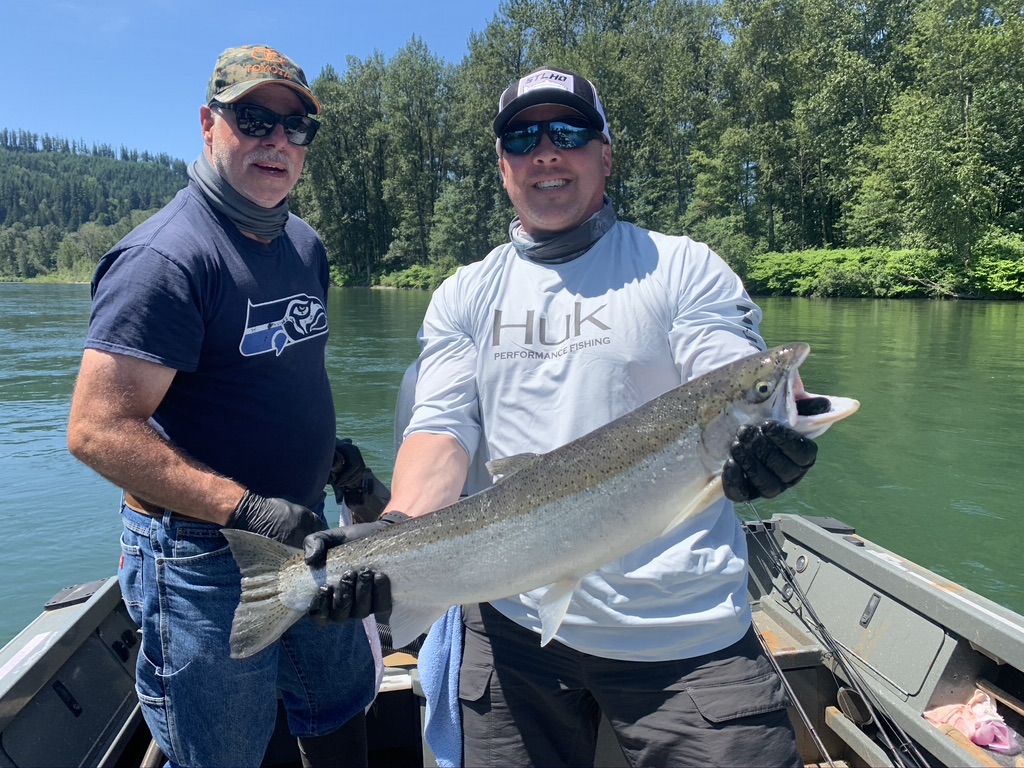
As a client, I find that I receive a constant barrage of feedback on what I am doing correctly or incorrectly and why. It seems that one guide tells me to fish a certain way and when I replicate this fishing technique with a different guide, I am re-educated. As hard as this is, it does build perspective and allows us to become better overall anglers.
Now that we have established that guides vary in their approaches, I would like to address how different their client approaches can be. For this purpose, I have categorized guides into three categories, the great, the effective, and for me, the “no thanks”.
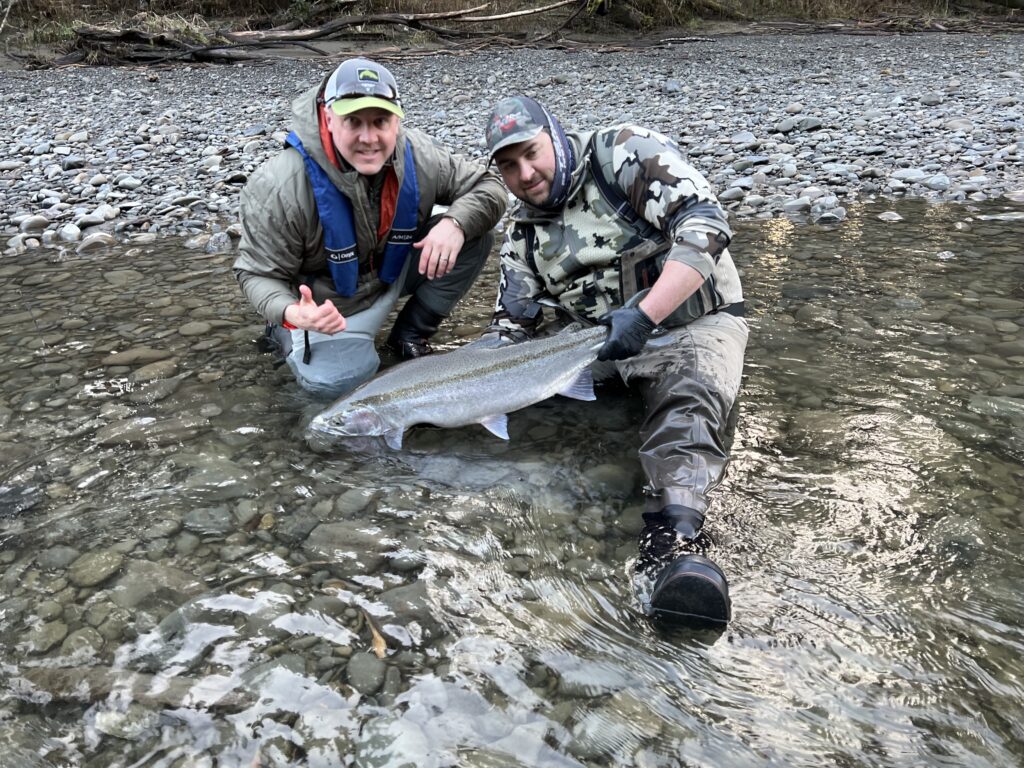
THE GREAT
The first guide type, the Great, is without question my favorite. Though their goal is to put you on fish, they are more concerned with providing an experience and making sure that their clients have a great time. This is the approach that makes fishing fun and the type of guide to fish with, regardless of how “fishy” they might be. I highly recommend that you seek this type of guide as I guarantee that you will fish with them again and again and laugh every time.
They tend to be a lot of fun, laid back, funny, and willing to teach you little things that allow you to become a better fisherman. Rarely will this guide correct you with sharp criticism. They have generally honed their skills around feedback and are fantastic teachers who lead with a positive approach.
THE EFFECTIVE
The second type of guide, the effective, tends to be more intense and highly competitive. This guide is all about catching limits and will put in a long day to make this happen. I feel that an angler can learn a lot from this type of guide, but often the experience can be intense, and the fisherman might leave feeling inadequate and exhausted. This is a tough one because the experience itself is not necessarily laid back and enjoyable, but the outcome is often good, and you learn new skills. I have not entirely determined the best approach to use with this type of guide, but I feel like you should give them feedback on their approach and define the limits of your expectations. It is a toss-up whether I fish with this type of guide more than once, but again, they tend to be very good fishermen, and much can be learned while fishing with them.
THE "NO THANKS"...
The third is the guide, whom I call the “no thanks”, who wants to put you on fish and get you back to the launch or dock as quickly as possible. I tend to avoid these types. As an example, I recently had a guide in Alaska who asked us to be at the ramp at 3:45AM. No big deal for me, but a bit tough for my 17-year-old son. I inquired about going an hour later and the guide responded by telling me that he had six fish in the freezer and would be happy to give them to us if we wanted to sleep in. Really? Did he think that we were only going out to fill the freezer? Needless to say, I will not be fishing with this guide ever again. As you can see from my story, this guide has little interest in the experience that he or she provides, and I feel that their approach is very self-serving. Fishing with this type of guide is why I started writing!
With social media prevalent, it is much easier to find a guide today who meets your requirements and expectations. It is also much easier to determine client approval ratings before you spend money fishing with someone who is only going to disappoint you. This makes things better, but it also does not tell the story of who the person is. Getting to know the guides that I fish with and building a lifelong relationship is not something that can be done on social media. Join a Facebook group, ask friends, do your homework, and look for guide #1 above. I promise that you will thank me for it later.
Need ideas or recommendations, email me at bknight@iss-safe.com and I will do what I can to help.
One final thought. Anglers need to understand that they play a role in their success and the experience itself. The guide can only do so much; you need to meet them in the middle, listen to what they tell you, and engage with them. Don’t be afraid to tell them what you want and how they are doing. If they exceed your expectations, tip them well as they work hard for a meager income. A decent tip is around $100 per person, per trip.
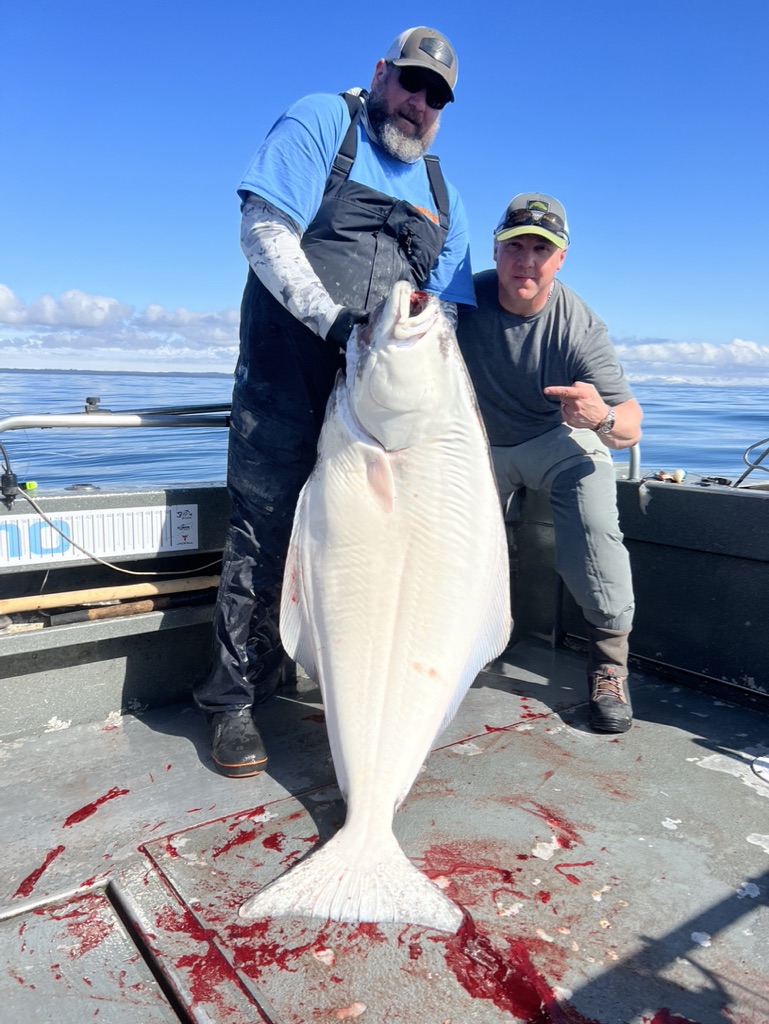
I hope that you find this information useful and helpful in selecting your next adventure and the guide who is going to take you there. Find a good one and you will go back year after year. An argument can be made that you can buy your own boat and do it yourself, but I would counter that argument by addressing the fact that when you are running the boat, you are not fishing, and you are often feverishly catering to the anglers in the boat.
It is a lot of fun but can be exhausting. I would argue that this is a great option if you love to watch other people catch fish and if you love to teach. This can be extremely rewarding. If you love to fish, go with a guide, and let them do the work so that you can relax and have a great time.
/articles/choosing-fishing-guide
Bucket List Fishing
What an adventure this whole fishing thing is. Like many things in life, often the journey is more fulfilling, exciting, and memorable than the ending. I shouldn't even say “ending”. Maybe outcome or result are better words. I have no intention of stopping fishing for what quickly became one of my new favorite fish—the latest stamp to be added to my fishing passport.
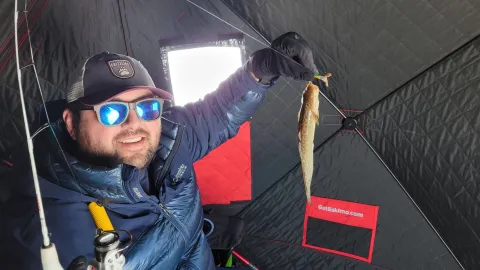
I’m going to come right out with it, the fish pictures included with this article are not show-stopping, wall-mounting, brag to your buddies type of fish. Some might look at them and wonder if they were even photo-worthy at all. But to those folks, I’d retort with a new phrase that has newly become part of my regular vernacular. A polite way to say be nice, be joyful for others, or perhaps more bluntly, a phrase we all heard as kids, if you don’t have anything nice to say, don’t say anything at all. Don’t yuck someone’s (my) yum. My recent yum, both literally and figuratively as you’ll come to read, centers around catching what became a winter fishing obsession. I am referring to one of the more mysterious fish I’ve come across as an angler, the burbot.
Highly regarded for its taste as poor man's lobster yet criticized for its appearance, I knew I had to catch one, two, as many as I could. They are most active during the winter months and at night, two challenges as we’ve had an unseasonably warm winter and I’m more apt to hit the snooze button and sleep in than drive to a frozen lake and sit outside in the dark or first light of the morning hours. Still, I had to add this fish to my checklist of caught species.
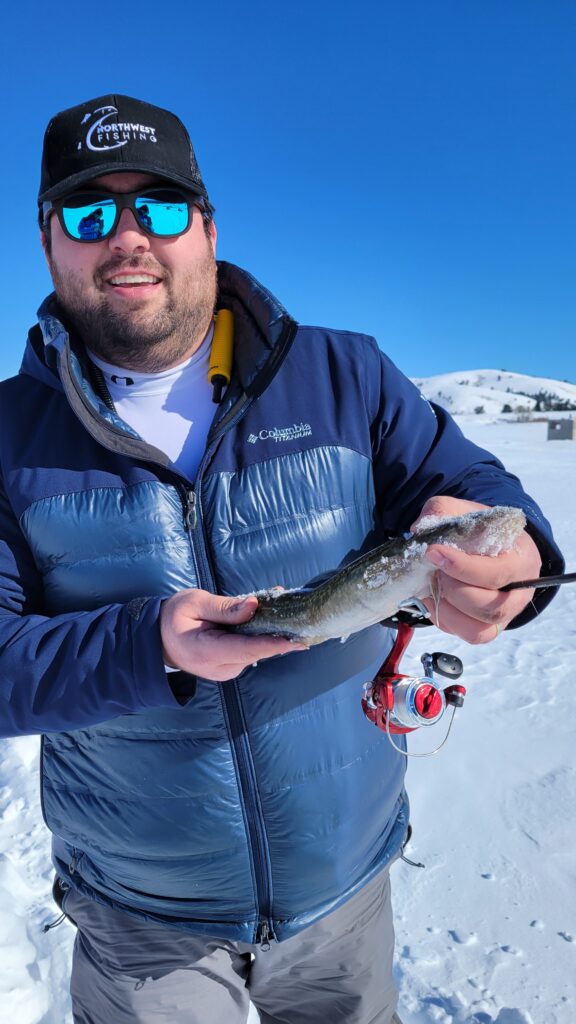
The fish is an oddity with their eel-like appearance, freshwater habitat (the only cod to live in such an environment in North America), and some seeming barriers in place - fishing during the winter, night activity, and competition with other anglers - I was obsessed. I researched online, talked with other anglers, called MT FWP for information from biologists in the field, asked questions when buying gear at local shops, and watched YouTube clips (check out our ProTip video with Craig Dowdy on the website or our YouTube channel on how to filet burbot), anything you could think of to educate myself on how to best catch this fish. Maybe a bit counter to the introductory prose, I’m all for enjoying the experience of fishing and the ambiance of the outdoors, but darn it, I really like catching fish, too. Especially with all the work and background knowledge I had completed. Not catching the fish would’ve been a letdown, surely.
After finding a few reservoirs in my area and properly gearing up, the only thing left to do was hit the ice. A scenic 20-minute drive to my first location yielded no fish. Slightly concerning, but motivating at the same time, another angler told me about some perch and a small ling (another name for the burbot) he released. Good to know, but after a few more evenings on the ice with no fish, it was time to try somewhere new. How about 40 minutes away? I had heard more consistent information about the fish being abundant in this second location but again, coming up sevens at this new spot.
For those without an interest in throwing dice at the craps table like myself, that means I didn't catch anything here either. So, perhaps where I should've started all along, a trip to White Sulphur Springs, MT about 1.5 hrs. away would host my next attempt. As with most fishing, the lulls made for some long hours. Despite the wait, I had the opportunity to hook into my newest fish friends both jigging for them and through a stationary rod, both targeting slightly off the bottom, about 40 feet. I'll never forget the sight of my first burbot as it appeared from the icy blue depths below. Examining this new-to-me fish, it had greenish, yellowish, olive covered spots all along its body. A catfish like appearance with a more than normal amount of fish slime coating the body, which I quickly became acquainted with as it slithered snake-like in my hands. Knowing I had finally caught one had me pumped up! All that was left was to see how it tasted.
As mentioned, they are highly regarded for their table fare. Bringing my catch home, I had done my homework as to how I should prepare my meal. Simplicity is sometimes the answer. Boil a little lemon soda, poach the fish for a few minutes and dip in some garlic butter with lemon on the side. Enjoy, easy. One thing I hadn’t accounted for, sharing with my family. My wife, not as invested in the pursuit of this fish, was fine to try it, compliment me on cooking it and move on with her evening. My kid, 2 years old, however, grabbed this fish by the fistful. So much so that I started getting a little jealous!
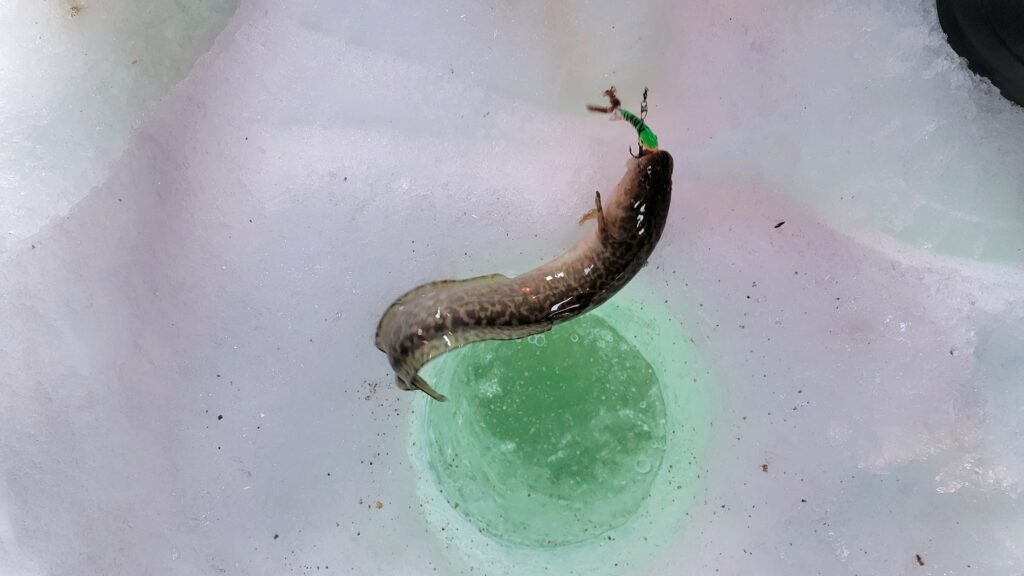
I put in the legwork to catch this fish and had built my first meal up in my head and here she is eating it all! Rationing out my portion, I was glad to see my daughter enjoyed the meal, but I was for a moment inclined to respond like the 2-year-old I was interacting with - to say “mine” and grab it all back. They don’t call this fish the poor man’s lobster for nothing I suppose. The white meat is what you’d expect from any similar cod fish, but the firm texture and taste of the fish paired with the garlic butter and lemon certainly lived up to my expectations. The enjoyable meal was the culmination of my burbot experience and a fitting way to affirm my latest fishing craze.
So, now that I’ve caught what was previously a mysterious fish to me, I look forward to another season with refined skills but the same level of excitement I had before encountering the burbot. A note for myself, I’ll have to do some research on some of those other strange fish to be caught…paddlefish, an arctic grayling, pallid sturgeon…all to hopefully be checked off the species bucket list.
/articles/bucket-list-fishing
Onward Hoh... River That Is
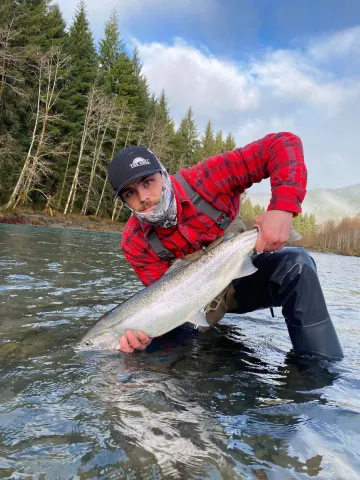
If ever there was a river world renowned for its beauty, versatility, and Gollum-like trophy steelhead, this is it.
The Hoh River, from deep within the Olympic National Park, sourced from Mt. Olympus himself.
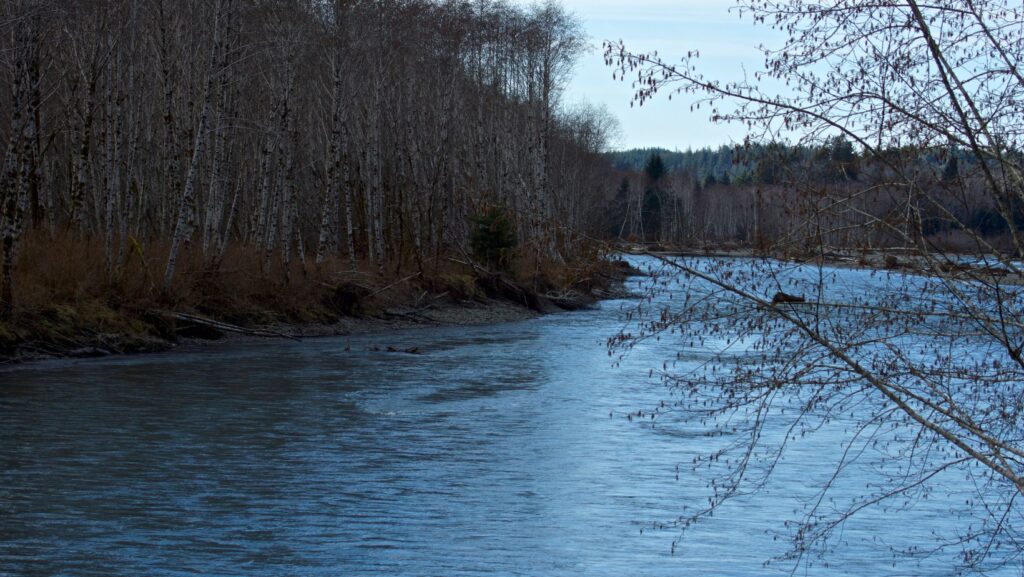
Floating north and west with a full mountain embrace, collecting headwater tributaries like badges of honor. A collection of blue and white glacial waters swirling under a canopy of fierce and protected old growth, this braided channel river looks to be strategically created. An art unto itself. Its milky slate blue waters, glisten like the eyes of a newborn.
The Hoh River flows 56 miles from its headwaters to the Pacific Ocean. The South Fork Hoh River is 17 river miles in length and enters the main stem at the Olympic National Park boundary at RM 30. The upper section of the Hoh watershed lies entirely within the Olympic National Park. The middle section of the river flows through state and industrial forest and valley homesteads. The Lower Hoh River encompasses the lower third of the watershed, 16 river miles from Highway 101 to the Pacific Ocean. 750 miles of tributaries flow into the river below ONP. Of these, 250 miles provide fish habitat. Numerous spring-fed terrace tributaries feed the Hoh River.
The Hoh River watershed is home to four species of wild salmon, steelhead, and many other fish and wildlife species. Located at the mouth of the Hoh River, the tiny Hoh Indian Tribe or “Chalá·at” ("Those-Who-Live-on-the-Hoh River") are dependent on the fish and wildlife of the Hoh River for their subsistence and commercial economy. Protecting the watershed’s function is key to preserving these important resources, not only for the tribe, but also for fishing and recreational communities in nearby cities and towns, and up and down the coast.
Despite this river's status as one of the healthiest in the country, the Department of Fish and Wildlife has enacted severe restrictions on coastal steelhead fishing due to “low returns.” It was specifically focused on the long-term decline of coastal steelhead in the Queets and Quinault watersheds, Quillayute River system, Hoh River, and Willapa Bay River system.
Between December 1st, 2023, and March 31st, 2024 there are opportunities to fish from floating devices on the Hoh Sunday through Tuesday only from the Morgan’s Crossing boat launch downstream to the Washington Department of Natural Resources Hoh Oxbow Campground boat launch, and Wednesday through Saturday only from the Hoh Oxbow boat launch downstream to the Olympic National Park boundary near the mouth.
Barbless single hook, catch and release only. This is a continuation of the WDFW implementation of the Statewide Steelhead Management Plan which requires the Department to prioritize the sustainability of wild coastal steelhead runs by focusing on healthy levels of abundance, productivity, diversity, and distribution.
While these regulations are creeping onto every river in the state, if you are like me, it isn't necessarily a deterrent. There is more than just catching to all of this. It is the gorgeous scenery, the fresh air, the sun on my face and wind in my hair. Even the rain, which you should expect.
Annual precipitation is 140 to 170 inches. The Hoh Rain Forest is one of the finest remaining examples of temperate rainforest in the United States. Giant Western Hemlock, Douglas-fir, Western Red Cedar, and Sitka Spruce dominate the landscape, while ferns and mosses cloak the trees and forest floor. This is a great reminder of why I am here, alive and a part of it all.
The Hoh River is what legends are born from, whether you are a conventional or a fly angler. From a bank or a boat, you are bound to have a great time. Prime fishing for winter Steelhead happens in February and March, though any time of the year the river is producing, depending on what you are fishing for.
If steelhead aren’t your thing, don’t worry – the Hoh boasts impressive salmon runs each year from late spring through fall and manages to sustain returning populations of both Chinook and coho salmon.
The early summer run of Chinook begins in May and is productive through about August.
The Coho run on the Hoh, like on all other Pacific Northwest rivers, occurs in the fall.
If you’re a salmon fan, fishing in the Hoh can be good from May through November, if the river stays open.
Resident trout are available in the river in addition to sea-run cutthroat that make their way up the river later in the summer and through the fall.
Where do you go from here? Do you prefer floating down the river with a seasoned guide? There are plenty of options. Hopefully, I'll have many more opportunities to meet some more awesome river guides but today I am going to throw a nod out to Pat Neal. (Hoh River Rafters)
With 35 years of experience, Pat has the Hoh River in his back pocket. He is a writer for the Peninsula Daily News and a published author. He is warm and funny, and made me feel completely at ease in conversation. One of my biggest hangups with float fishing is space and comfort, but I look forward to some solid adventures with this local gem.
If walking the banks is your thing, there are three DNR-managed campgrounds with river access and a lovely property called Hoh Valley Cabins ( Hoh Valley Cabins). The Peterson family are descendants of some old-timey pioneers; their family property covers about 500 acres and over a mile of riverfront with access to the river.
In this age of river closures and limited opportunities, we are lucky to have one of the last strongholds of Winter Steelhead right in our backyard. Observe where you can fish, do not encroach on tribal land, and always check the rules and regulations prior to embarking.
/articles/onward-hoh-river
Soothing My Soul on the Sol Duc River
Of the many rivers in the beautiful state of Washington, the Sol Duc is one that can manage to keep just about everyone happy. Whether you fly fish, spin, or bait cast, there is, or at least was, a fish with your name on it!
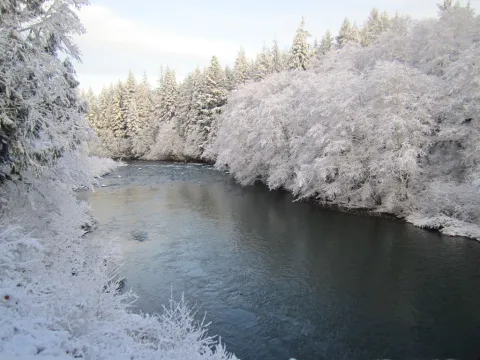
Fish species on the Sol Duc include Fall and Summer Chinook, Winter and Summer Steelhead, Coho, Sockeye, and both resident and sea-run cutthroat trout. The Sol Duc River runs 78 miles from the Olympic Mountains and cuts Southwestward through the most spectacular scenery in Washington State. With a variety of access points, you'll be greeted by precipitous gulches and mossy rocks in vivid green tones set a fire by the angle of the sun.
Picture perfect moments around every corner. The river is a pleasure whether you're catching or not. Just to be there, to catch a glimpse of an ancient creature born of the gravelly riverbeds. Traveling their way through genetic imprinting, magnetic fields, the temperatures, and conditions of the earth, making a 70-mile journey into the unknown.
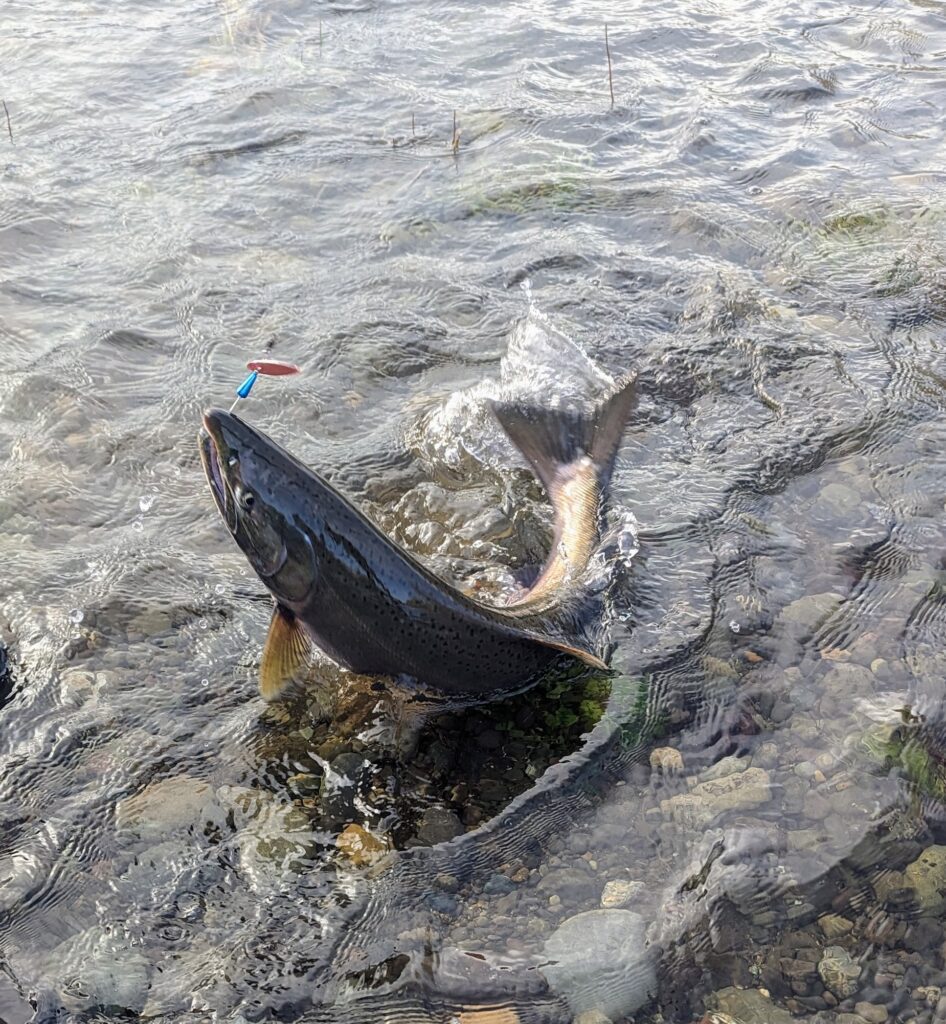
What is it that ensures a fish can find its way back to the place it was born? When I can't even find my way home without an app. An interesting factoid, scientists have discovered fish have ear stones called otoliths. These “otoliths” incorporate chemical elements from the water as the fish grow and move. Picture a growth band of a tree, with each ring recording a chemical map of where the fish has been, how long they stayed there, and how fast they grew. Scientific advances like this are pivotal in managing fish populations.
I have a deep concern and respect for the natural world, a curiosity for things we can and cannot explain. A desire to be a part of it all, to get my hands dirty and my mind clean. So, while we still can, I will travel my own way, finding places that provide an opportunity to get my line wet.
My most noteworthy experience would be a fantastic stay at the “Cabin on the Middle run” in Forks. (olympicpeninsulawaterfrontcabins.com) Easily accessible and found off 101, this well-appointed, clean and cozy cedar cabin boasts everything you need and more. For me it was the stocked kitchen and comfortable beds, topped off with a long hot shower. Though, I must admit we spent most of our time in the backyard. Our hosts and neighbors were so very friendly and helpful. Which isn't always the case when you're fishing in someone's backyard. We were rooted on and engaged in friendly conversations with guides floating by and neighbors on their decks. When I lost a huge dazzling Coho the echoes of disappointment hummed through the valley.
The comradery of fishing is something you'll never understand, until you feel it. Like a Folie à deux, are we driven by madness or passion and is there really a difference? Whatever it is, that makes us feel hyped up by each other's experiences, it is infectious and exhilarating. I desperately hope the rivers will return to a place where we can enjoy catching at least one fish. Not just for the fun, but also for the food. Nothing beats a filet from the river. I have become so spoiled by the flavor of a fresh catch, commercially sourced just doesn’t make the cut.
Make sure you check all regulations before heading out these days. Low returns have caused a system-wide closure in the Quillayute river system. This system includes the Sol Duc, Bogachiel, Calawah, Dickey, Sitkum Rivers and Thunder Creek.
As heartbreaking as these closures are, they are necessary to ensure that our rivers can support humans and the local ecosystem. I admit, a mix of resentment but also understanding that the system works to protect, preserve, and perpetuate fish and wildlife.
As a fisherwoman, my recreational opportunities are last in line and that is ok. Will this closure stop me from enjoying the beautiful Olympic rainforest and its awe-inspiring rivers? Never! I will plant my feet in the forest, hike to the waterfalls and sit my soul quietly by the river. Waiting my turn.
/articles/soothing-my-soul-sol-duc-river