/articles/categories/fishing
Coho Prospects for 2026 by Mark Yuasa
As summer begins to fade away, excitement is blooming heading into fall with a large coho forecast expected to peak in the weeks ahead.
The front end of the migratory coho run - commonly labeled as silvers by anglers for their bright, chrome-colored body - entered the Strait of Juan de Fuca and Puget Sound in early August, with fair to good catches reported.
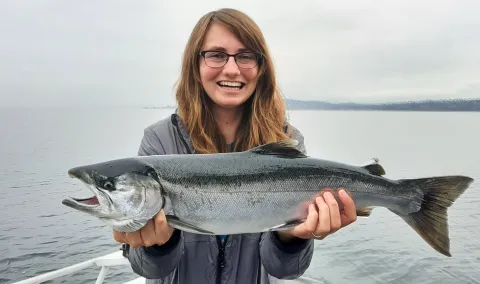
Coho (averaging 4 to 15 pounds, with some exceeding 20 pounds) create a lot of fervor, and when hooked, they’ll leap out of the water and make erratic zigzagging patterns across the surface.
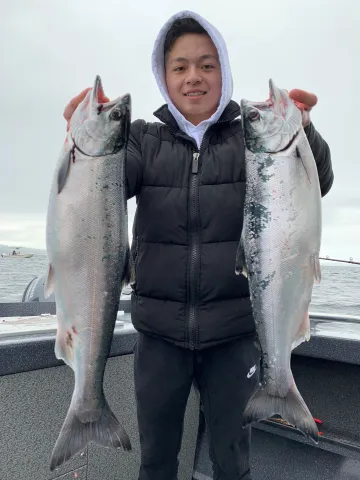
Washington Department of Fish and Wildlife (WDFW) salmon managers indicate that the 2026 coho prediction has the potential to generate the highest statewide recreational fishery catches seen in more than 20 years. Fingers crossed! The 2026 statewide combined hatchery and wild coho forecast is 1,827,748, up from 1,588,658 in 2025. In Puget Sound, the coho forecast is 897,190, up from 727,058 in 2025; 722,134 in 2024; and 760,029 in 2023.
During the North of Falcon salmon season setting process earlier this year, WDFW staff presented the 2026 Puget Sound coho forecasts and abundance trends. For hatchery coho, it showed a 4% improvement, and wild coho are up 53% compared to the 2025 forecast. The recent 10-year average for hatchery coho is up 45%, and wild coho is up 55%. The total Puget Sound coho (hatchery and wild combined) is up 49% from the 10-year average run size and up 22% from the 2025 forecast.
The coho buzz began back in June when Marine Area 10 (Seattle and Bremerton Area) saw good fishing for resident coho. Krill, a major part of a coho diet, has been plentiful in Marine Area 10, as well as baitfish such as herring. The ample feed kept many of the resident fish congregated in the area, and they are now being joined by their larger migratory cousins.
Marine Area 10 is open for coho daily through Sept. 30 with a two salmon daily limit, and anglers must release Chinook and chum. Fishing is also open daily from Oct. 1 through Nov. 15 with a two salmon daily limit, and anglers must release Chinook. Shilshole Bay reopens on Sept. 1. To know when it’s best to hit the water, be sure to monitor the WDFW catch sampling webpage at https://wdfw.wa.gov/fishing/reports/creel/puget.
A good number of coho have already entered the Strait of Juan de Fuca at Marine Area 5 (Sekiu-Pillar Point) and Marine Area 6 (East Strait of Juan de Fuca). These two areas are the barometer of when the peak return of coho will move into Puget Sound.
The Marine Area 5 salmon fishery is open daily through Sept. 24 with a two-salmon daily limit, and anglers must release Chinook, chum, sockeye, and wild coho. Then the area is open daily for all coho retention from Sept. 25 through Oct. 15 with a two-salmon daily limit, and anglers must release Chinook, chum, and sockeye.
In Marine Area 6, the salmon fishery is open daily through Sept. 24 with a two-salmon daily limit, and anglers must release Chinook, chum, sockeye, and wild coho. Then the area is open daily for all coho retention from Sept. 25 through Oct. 15 with a two-salmon daily limit, and anglers must release Chinook, chum, and sockeye.
The best fishing in the Strait tends to be located about one to 10 miles out in the shipping lanes at depths of 200 to 500 feet or deeper. Remember to stay within the U.S. side of the shipping lanes. Look for tide rips and current breaks where krill and baitfish tend to concentrate and attract coho. Also, watch for schools of coho jumping and rolling on the surface.
Moving inland, Marine Area 7 (San Juan Islands) is open daily for all coho retention from Sept. 1 through Sept. 30 with a two-salmon daily limit, and anglers must release Chinook, chum, and sockeye.
Looking for popular inner-sound locations for coho? Try Marine Area 8–1 (Deception Pass, Hope Island, and Skagit Bay), which is open for coho daily through Oct. 11 with a two-salmon daily limit, and anglers must release Chinook and chum. And, just to the south near Everett is Marine Area 8–2 (Port Susan and Port Gardner), which is open for coho daily through Sept. 25 with a two-salmon daily limit, and anglers must release Chinook and chum.
Marine Area 9 (Admiralty Inlet) from Port Townsend south to Apple Cove Point-Edwards Point southernmost boundary line, and all points in between, are open daily through Sept. 18 for hatchery-marked coho with a two-salmon daily limit, and anglers must release Chinook, chum, and wild coho. Fishing is also open for all coho retention from Sept. 19 through Sept. 30 with a two-salmon daily limit, and anglers must release Chinook and chum.
Marine Area 11 (Tacoma and Vashon Island) is open for coho daily through Sept. 30 with a two salmon daily limit, and anglers must release chum and all Chinook (closed for Chinook retention on Aug. 15). Fishing is also open seven days per week from Oct. 1 through Nov. 15 with a two salmon daily limit, and anglers must release Chinook.
Marine Area 13 (South Puget Sound) is open daily for hatchery-marked coho through Sept. 30 with a two-salmon daily limit, and anglers must release chum, wild coho, and wild Chinook. Fishing remains open daily beginning Oct. 1 with a two-salmon daily limit, and anglers must release chum, wild coho, and wild Chinook. Anglers may fish with two poles with a Two-Pole Endorsement. In Marine Area 13, Squaxin Island is a popular area for those targeting hatchery coho.
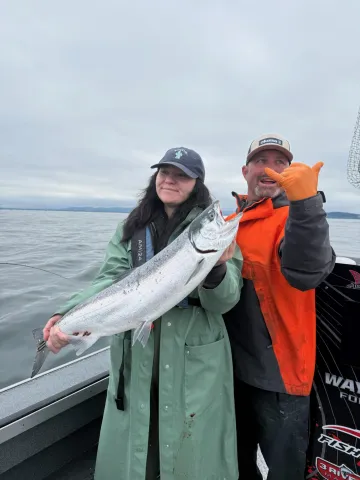
Coho bank fishing access
As these fish turn the corner around Port Townsend and enter Puget Sound, bank anglers can find numerous publicly accessible shorelines and piers that are within easy casting distance of silvers. When accessing these areas, make sure to be courteous and respectful around private property shoreline boundaries.
Top locations in the northern region include Point Wilson in Fort Worden State Park north of Port Townsend; Fort Flagler State Park on Marrowstone Island; Marrowstone Point Lighthouse; and the western and eastern shorelines of Whidbey Island around Fort Casey, Lagoon and Bush points, Bait Box Hole just north of Possession Point, and West and North beaches at Deception Pass State Park. The Oak Harbor Marina also has two net pens where hatchery coho are raised and released annually. In 2022, 30,000 fish were released from the net pen, and fish that survived will return this season to the area.
In northern and central Puget Sound, try Point No Point on Kitsap Peninsula; Browns Bay; Salsbury Point; Edmonds Marina Pier; Mukilteo Lighthouse and the public pier at the Mukilteo Ferry Landing; Richmond Beach and Meadow Point Beach at Golden Gardens; Shilshole Bay Pier; Seacrest Pier in West Seattle; West Point at Discovery Park; Carkeek Park, Lincoln Park and Alki Point Lighthouse in West Seattle.
In southcentral and southern Puget Sound, head to Browns Point Lighthouse Park and Dash Point State Park; Dolphin Point off the east side of Vashon Island; Blake Island State Park; Three Tree Point; Point Robinson Lighthouse, Point Beals, and KVI Beach on Vashon Island; Southworth and Manchester areas; and public piers at Des Moines, Redondo, Les Davis, and Point Defiance Park Boathouse.
Stay clear of large ships in shipping lanes
Many coho tend to congregate in the shipping lanes, and fishing is legal in the ship traffic lanes as long as the lanes are kept clear for ships, according to the Board of Pilotage Commissioners of Washington.
Shipping lanes should be cleared when ships - who have the right of way - are five minutes away (about two miles) to avoid impeding traffic. Be aware of your surroundings and monitor vessel traffic on VHF radio channel 14. Lastly, anglers should stay out of ferry lanes when ferry boats are present.
The U.S. Inland Navigation Rules and COLREGS Rule 10 state: Vessels less than 65 feet in length shall not impede the passage of vessels transiting the traffic lanes. For more information, refer to the Board of Pilotage website at www.pilotage.wa.gov.
Westport Boat Basin coho fishing
On Washington’s central coast, the Westport Boat Basin coho-only fishery is open daily through Jan. 31, 2027. The best timing is September through October as coho raised in the marina’s hatchery net pens begin to return.
The daily limit is six salmon, and no more than four may be adult fish. Anglers must release Chinook. No night fishing and an anti-snagging rule is in effect, and any hooks where the weight is molded directly to the hook - such as twitching jigs, swim jigs, or casting jigs - are not allowed. Only single-point barbless hooks may be used. The Catch Record Card (CRC) code for the basin fishery is 2-2W.
(Mark Yuasa is a Washington Department of Fish and Wildlife Communications Manager and longtime local fishing and outdoor writer.)
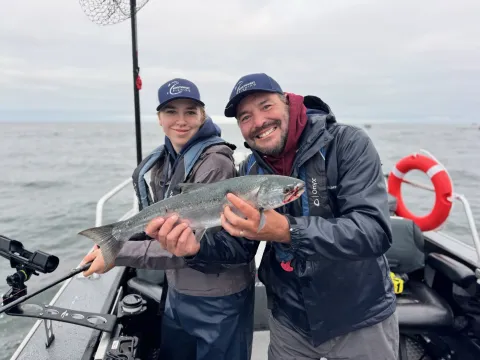
/articles/coho-prospects-2026-mark-yuasa
A Hidden Gem by Mike Carey
Tucked away in the northeast corner of Montana is a body of water that is often overlooked by those not in the know. A 4,000-acre reservoir stocked with 100,000 walleye every year, and teeming with well-fed northern pike, yet anglers drive by oblivious as they head to the famed waters of Fort Peck Reservoir.
It's an understandable oversight. After all, Fort Peck is the destination for anyone traveling to this part of the state. It's a long drive from everywhere – why would you want to stop an hour short of Glasgow and miss out on the amazing fishing Fort Peck has to offer?
During my first three years of living in Montana, I made the 5-hour drive to Glasgow and went right by Nelson Reservoir, thinking how I could fish there and lose a day on Fort Peck? Then I started to do a little research and realized that this (much) smaller body of water was held in high regard by those in the know. Nelson Reservoir was viewed as an alternative option when the winds were blowing hard and keeping anglers off Fort Peck.
Nelson Reservoir was created from the Milk River in 1914 when the dam was constructed, and enlarged in 1921, providing off-stream irrigation. The reservoir has 30 miles of shoreline at full pool, with a maximum depth of 47 feet and fills to 4,320 acres. There is a free campground, first come, first served, pit toilets, and a concrete boat ramp with a small dock. A word of caution regarding this launch. It has to be one of the shallowest-angled ramps I have ever used. I had to back all the way into the water to eventually launch my 16-foot jon boat. If you have a larger boat, you will definitely benefit from having someone's help by driving the boat off your trailer!
Motoring out at the crack of dawn, I enjoyed a golden red, orange, and yellow sunrise, with a few scattered clouds catching and reflecting the morning rays over the calm lake. I have the Garmin Boating App on my phone, which I think is a must for anyone fishing in lakes and reservoirs. Sure enough, I had a depth map on my phone and had already selected a few likely-looking locations to try.
Montana is a two-rod state for lakes and reservoirs, and I always take advantage of the chance to put out a second line. My target for the day was walleye. I rigged both rods up with Mack's Lure setups, a green/yellow walleye pop on one rod, and a silver smile blade on the other. 2-ounce bottom walkers got my gear comfortably down to the 20-30 foot deep starting range. After feeling the bottom-walker bounce the bottom, I reeled up a couple feet and set the rods in rod holders. One rod had a nightcrawler for bait, and the other had a leech (which I must say; I have found just about out-fish nightcrawlers!).
My jon boat has a 50 HP jet to move it, and a Minn Kota Power Drive on the bow. I jokingly call
this jon boat my "old man" boat because I specifically wanted a 16-foot boat I could use on both the Missouri River and smaller lakes, and it had to be light enough that I could handle it as I got older. So far, it's worked out perfectly, and I really enjoy fishing in it. It's also a blast to be running a river on a jet boat again! It's a Lowe Aura L1648M from Elephant Boys in Spokane, and I was very pleased with the set-up and service.
Starting at 1.2 mph, I set the course and sat back to wait and see what might be around. My dog, Duke, looked at me and settled in for a nap. Duke is a great pheasant dog, but when it comes to fishing, he is more interested in naps and treats than fish. I decided to run bottom-bouncers, picking out a couple of 2.5 oz. On one rod I ran a Mack's Lure Wally-Pop in green/yellow with a smile blade, and on the other a set of orange and yellow beads with a smile blade. One rig had a nightcrawler on a slow death hook, and the other a leech on a single hook. I'm really growing to like leeches as bait. They are tough and stay on the hook well, stretch out nicely while trolling, and have a nice motion to them in the water. In addition, being shorter than a night crawler, I have been getting more consistent hook-ups. Finally, the perch are less interested in them, so I get fewer perch nipping my bait.
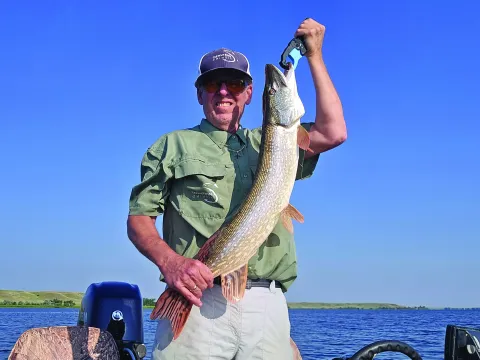
It didn't take too long before my rod doubled over and the line started pulling out of the reel. Grabbing the rod out of the rod holder, I felt the solid weight of a good fish. The line was peeling off the reel. "This is a nice fish, Duke!" Duke looked up from his nap, as if to say, "Hey, I'm sleeping here." I think this is one nice walleye when it takes a run and clears the water, revealing a very strong Northern Pike! OK, game on! I proceeded to work the freshwater barracuda to the boat and scooped him into the net – yes! For my personal best, I measured the fish in the net, and it hit 30". Not a monster by pike standards but a lot of fun to catch. After reviving the toothy beast, I released him back to the water. Although I understand pike is good to eat, I'm only keeping walleye on this trip. In any case, it's a great way to start the morning. The excitement over, Duke goes back to his bed, a little more awake and interested in what's going on.
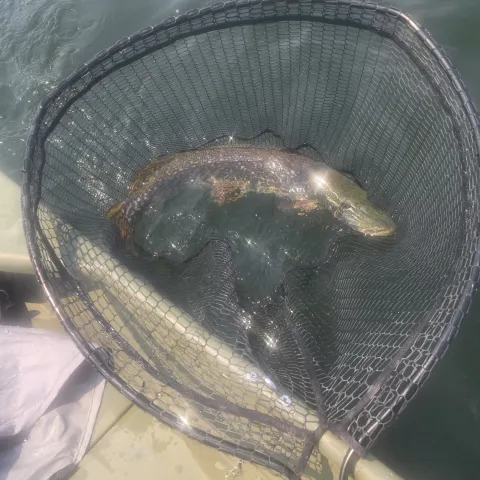
I methodically work different depths and land a nice 21" keeper walleye. But the pike just keep biting, getting in the way of my walleye fish fry. Every time either rod doubles back, I'm hoping it's a nice walleye, and every time it turns out to be another nice pike!
I do end up with three keeper walleye, more than enough for my fish fry, but wow, what a day for catching pike! I end up with easily over a dozen caught and more lost. The pike are healthy 28-33" specimens.
There are Nelson Reservoirs all over the Pacific NW. Lakes and reservoirs that are overlooked and driven past en route to more well-known, popular destinations. The moral of this story is: don't overlook that lake you drive past; it might just be your next great adventure.
/articles/hidden-gem-mike-carey
Washington Coastal River Salmon Prospects by Brent Knight
Washington’s coastal rivers occupy some of the most productive salmon country in the Lower 48. From the Willapa and Chehalis systems north to the Quinault, Queets, Hoh, and Quillayute system in Forks, these waters support Chinook, coho, chum, and other salmonids while sustaining tribal fisheries, recreational anglers, commercial fishing communities, and ecosystems built around returning salmon.
For 2026, the outlook is encouraging in several important respects. Forecasts released by the Washington Department of Fish and Wildlife (WDFW) point to substantial returns of coho and other salmon to the Washington coast, and ocean fishing opportunities reflect relatively strong expectations for several stocks. At the same time, the picture differs considerably by river and species. Natural-origin Chinook remain a particular concern in some watersheds, while changing ocean and freshwater conditions continue to create uncertainty.
A Stronger Coastal Coho Picture
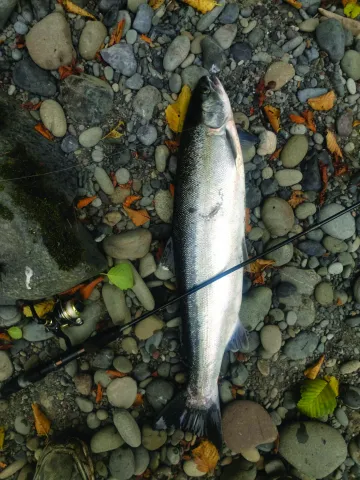
Coho are one of the brightest parts of Washington’s 2026 coastal salmon outlook.
WDFW forecasts an overall Washington coastal coho return of approximately 419,000 fish in 2026. That total includes both naturally produced and hatchery salmon returning to coastal watersheds. Individual systems illustrate the scale of the expected return. Preliminary forecasts put Willapa Bay coho at approximately 127,000 fish, including about 100,600 hatchery-origin and 26,500 natural-origin fish.
Grays Harbor also has a substantial projected coho return. Preliminary forecast tables indicate roughly 71,900 natural-origin and 93,300 hatchery coho, producing a combined forecast of about 165,000 fish. Farther north, forecasts include approximately 60,000 coho for the Quinault system, 31,500 for the Queets, and 6,500 natural-origin coho for the Hoh.
These forecasts do not guarantee equally good fishing everywhere. River flows, ocean survival, harvest rates, run timing, and in-season abundance can all influence what anglers ultimately experience. Still, the numbers provide legitimate reasons for optimism about coastal coho fishing during the 2026 season.
The ocean fishery provides another indication of that outlook. Washington's recreational ocean salmon fishery received a 102,900-fish hatchery coho quota for 2026, up from 99,720 in 2025. WDFW described the forecasts for important Chinook and coho stocks contributing to the ocean fishery as strong enough to provide good recreational opportunity.
Willapa Bay Shows Both Opportunity and Concern
Few places demonstrate the complicated nature of Washington salmon management better than Willapa Bay. The 2026 preseason forecast calls for approximately 28,120 Chinook returning to Willapa Bay. However, only about 2,779 are projected to be natural-origin fish, compared with approximately 25,341 hatchery-origin Chinook. The natural-origin forecast is below WDFW's listed escapement goal of 4,353 fish.
That contrast explains why a seemingly healthy total salmon return does not necessarily mean managers can liberalize fishing across the board. A large hatchery return may create harvest opportunities while a comparatively weak natural stock requires protection. In Willapa Bay during the 2026 season, recreational regulations therefore require anglers to release wild, or unmarked, Chinook.
Coho present a more favorable picture. The forecast of 127,123 Willapa coho includes a natural origin return of 26,499 fish, compared with a listed WDFW escapement goal of 13,600. Chum salmon are also expected to return in significant numbers: the 2026 Willapa forecast totals approximately 110,837 chum, the great majority of them natural-origin fish.
Willapa therefore illustrates an important point about discussing “salmon prospects.” There is rarely one simple answer. One species, or even one component of a species, may be doing relatively well while another remains constrained.
Grays Harbor and the Central Coast
Grays Harbor and its tributaries, including the Chehalis and Humptulips systems, are another major focus for coastal salmon anglers.
Coho prospects appear relatively promising based on preseason abundance estimates. Chum numbers are also notable. WDFW's 2026 forecast projects approximately 93,877 chum returning to Grays Harbor, including more than 87,000 natural-origin fish.
As elsewhere on the coast, however, abundance is only part of the management equation. Fisheries must be designed around conservation requirements, escapement objectives, treaty obligations, and the expected effects of different fisheries on individual salmon populations.
Washington's annual North of Falcon process brings WDFW, tribal co-managers, federal managers, anglers, commercial fishing interests, and other participants into the season-setting process.
Forecasts are developed early in the year and then used in negotiations and modeling that ultimately determine where, when, and how salmon can be harvested. That means a large overall forecast does not automatically translate into a long season or generous limits on every river.
North Coast Rivers Remain Wild-Salmon Strongholds
Moving north along the Olympic Peninsula, rivers such as the Quinault, Queets, and Hoh retain something increasingly valuable: substantial natural salmon production and extensive habitat within or near protected lands.
The 2026 preliminary coho forecasts illustrate the importance of these systems. The Quinault forecast includes approximately 23,600 natural and 36,500 hatchery coho. The Queets forecast includes roughly 10,400 natural and 21,100 hatchery fish. The Hoh forecast calls for approximately 6,500 natural coho.
These rivers are important not simply because they produce fish for harvest. They are also benchmarks for understanding how salmon populations function in watersheds that retain comparatively intact forests, floodplains, tributaries, and spawning habitat. Protecting that habitat will be increasingly important as environmental conditions change.
The Biggest Unknown May Be the Ocean
Salmon spend part of their lives in freshwater, but much of their survival story is written at sea.
Ocean temperature, currents, upwelling, prey availability, predators, and marine food webs can dramatically affect the number of juvenile salmon that survive long enough to return as adults. Those conditions can change rapidly, making even scientifically sophisticated forecasts imperfect.
That uncertainty deserves particular attention in 2026. NOAA Fisheries reported in March that a large marine heatwave had persisted off the West Coast since the previous summer, only the third time such a broad area had remained exceptionally warm for so long into winter without an El Niño event. NOAA notes that marine heatwaves can reduce salmon survival because warmer ocean conditions are generally associated with lower productivity, although the effects can vary by species and location.
Freshwater conditions pose another long-term challenge. Climate change is altering both rivers and the ocean, including the availability of cold-water habitat for salmon during freshwater stages of their lives. For Washington's coastal watersheds, maintaining cold tributaries, reconnecting floodplains, improving fish passage, protecting spawning gravel, restoring estuaries, and preserving functioning forests will therefore become even more important.
Habitat Is the Long-Term Investment
Fishing regulations can control harvest, and hatcheries can provide fish for fisheries, but neither can fully substitute for productive habitat. Salmon need connected habitat throughout their life cycle: clean spawning gravels, cold tributaries, complex river channels, floodplain wetlands, estuaries, and productive marine waters. Habitat restoration is therefore a major component of salmon recovery efforts throughout the West Coast.
Significant investment continues in this area. In 2026, NOAA Fisheries announced up to $99 million through the Pacific Coastal Salmon Recovery Fund for state and tribal conservation and recovery projects benefiting Pacific salmon and steelhead.
Those projects may not produce immediate results visible during a single fishing season, but over decades they may prove more important than any particular annual forecast.
What Anglers Should Expect in 2026
For Washington coastal salmon anglers, the 2026 season offers genuine reasons for enthusiasm. Coho numbers are encouraging in several major systems. Hatchery production should provide meaningful harvest opportunity, and the recreational ocean fishery entered the summer with slightly higher quotas for both Chinook and hatchery coho than in 2025. Willapa Bay also has strong projected hatchery Chinook and coho returns, while coastal chum forecasts exceed 200,000 fish between Grays Harbor and Willapa Bay.
But optimism should remain measured. Natural Chinook abundance continues to limit opportunity in some areas, and anglers should expect selective fisheries, changing regulations, and river-specific restrictions designed to protect weaker stocks. Forecasts are estimates rather than guarantees, and actual returns can diverge significantly from preseason expectations.
The larger story is that Washington's coast still possesses something extraordinary: rivers capable of producing substantial numbers of wild salmon alongside hatchery-supported fisheries.
The challenge is ensuring they remain that way. If habitat restoration, responsible harvest management, hatchery reform, tribal and state co-management, and climate adaptation can work together, Washington's coastal rivers can continue supporting salmon, and salmon fishing, for generations to come. The 2026 forecasts provide reasons to look forward to the coming runs, but the future of these fish will ultimately depend less on any single year's numbers than on the condition of the rivers and ocean they depend upon.
/articles/washington-coastal-river-salmon-prospects-brent-knight
Find Big Smallies Fast on the Mid-Columbia by Gary Lewis
Learn how to quickly read and tackle big fish in unfamiliar waters.
If an angler is hunting big fish on the Columbia, the challenge is to read the water fast. It’s a lot like how tournament anglers have to adjust when fishing a lake for the first time.
My biggest ever largemouth came from the mouth of the John Day River. We were done fishing for the day, but we wanted to throw a cast at a clump of willows. The big fish, a female, was staged right where she could ambush minnows running out of the mouth of the river. She ambushed the wrong thing that day. After we weighed her, we put her back.
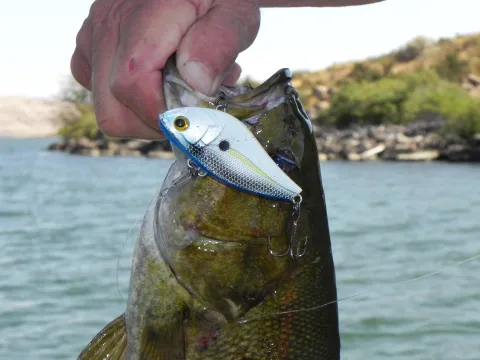
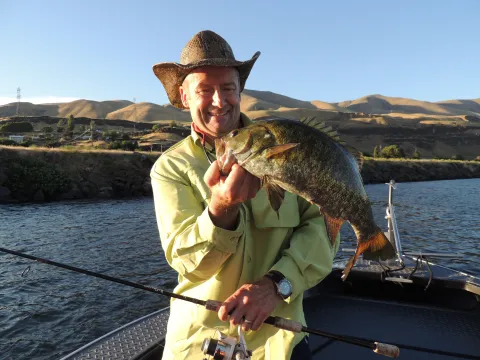
The river is home to a few largemouth, but smallmouth bass are the primary target.
AN OPEN-MINDED APPROACH
Once, I interviewed a couple of bass pros about how they find big fish fast. Ish Monroe, an MLF pro from Hughson, California, said, "Most people miss out when they don't approach the water with an open mind."
Dean Rojas, from Lake Havasu, Arizona, pointed out that western reservoirs are characterized by lots of rock and clear water. That sums up the Columbia. Rocky points, rip rap, cliffs, and beaches illustrate where bass are likely to be in the summertime.
Sometimes we get hung up on what color of bait works best in what kind of water.
"In clear water, I use more natural colors," Ish said. "In dirty water, dark colors like black and blue or bright colors like chartreuse work better."
Shade is most important, Monroe said, "and thick cover." But the third component is access to deep water. "In shade and heavy cover, bass just sit in it and wait for the bait to come to them."
One of the best tools for the traveling bass angler is Google Earth. A quick virtual tour of a reservoir can reveal structures that might not be seen at full pool. Old photos can reveal structures that were flooded when the dam was built.
The McNary Dam, which holds Lake Wallula, was finished in 1954. The John Day Dam, which created Lake Umatilla, was completed in 1971. The Dalles Dam was completed in 1957, creating Lake Celilo. All three lakes flooded small ranches, small towns, small roads, and the mouths of creeks. Those roads and foundations are all still there, but are not evident except at extremely low water.
A better way to see the structure is with Navionics. The same water, examined with a Navionics chart, reveals the road beds, old foundations, and submerged bridges. Imagine bass bedding on the old road and schooled up in an old schoolhouse.
A few days before a trip, I like to check Weather Underground (www.wunderground.com) for the 10-day forecast. This site tracks cloud cover, temperature, precipitation, wind, wind direction, and the barometer. It is hard to quantify how barometric pressure affects bass fishing, but it does. When the barometric pressure is high, fish tend to be slow and sluggish. In general, I like to hit the water when the pressure has been stable, around 30.00 for three days, ahead of a low-pressure front. Fishing tends to be best when the pressure is dropping, is low, or slowly rising. When the pressure is higher, expect fish to pull back into cover or suspend in deeper water. In these cases, downsize the bait and try for pinpoint casting into heavy cover. Or use a slow spybait presentation in deeper water.
Sometimes the biggest fish come when stalking close to the bank. One time on the big river between Biggs and The Dalles, I was fishing with Jim Goerg and Michael Gibney. I was drowning a new swimbait, and Gibney and Goerg were using tubes. At the head of an island, Gibney stepped up to the trolling motor. “20 feet deep here.” Wham! My rod bent with a 12-inch bass.
Gibney’s rod shivered, and he set the hook. I brought my fish to the boat quickly, but there was no stopping Gibney’s fish. “I don’t know what this is, but it’s not a bass,” he said. “And it’s not a salmon.”
A six-foot, six-inch three-power Lamiglas and a Pflueger Maxx XT spinning reel loaded with 20-pound braided Power Pro is good medicine for a four-pound bass, but Gibney was definitely under-gunned for the mystery fish he’d hooked. We followed the fish into 70 feet of water, dangerously close to the nets.
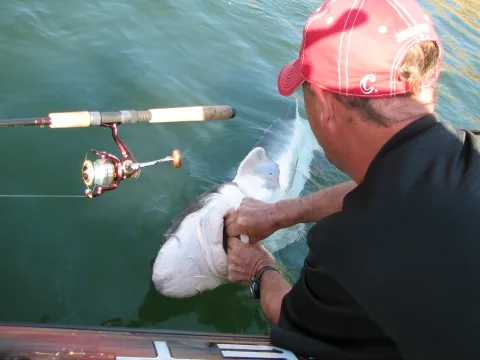
Twenty-five minutes later, we caught a glimpse of a seven-foot sturgeon, with a three-inch green pumpkin red flake tube in its mouth. Close to the boat, another huge sturgeon rolled. The fish blasted for deep water again, and Gibney handed me the rod.
Fifty-two minutes after the beast grabbed the tube, we had him alongside the boat, where I backed the hook out with pliers. He kicked away with a splash that drenched the bass pro.
Gibney wiped the water from his glasses, and we went back to the head of the island. I switched to a tube. Gibney tied on a silver-sided jerk bait. He rocketed a cast past an underwater ridge of rock, and we watched, stunned, as two 6-pound smallmouths attacked. Gibney's bait was almost out of the water, but one of the 6-pounders grabbed my bait and spit it back out, then the other slammed it and threw the hook. A third fish, the consolation ten-incher coming out of nowhere, clamped down, held on, and coughed up a crawdad on the way in.
# # #
Gary Lewis makes his home in Central Oregon.
SIDEBAR
Prospecting the Back Bays
Bass often hide in surface weeds, which can grow a thick mat of vegetation at the surface.
Look for grass mats or weed mats with open water beneath them. This could be broken-off tule reeds, patches of lily pads, or dead weeds of any variety - anything that provides protection above and freedom of movement below. Anglers walking the shore can often do better than fishermen in boats.
Flip or pitch into vegetation. A lure with fast-sinking action causes reaction strikes. If the rig sinks and hits the bottom without a strike, try again close by. Use a heavier rod for punching because fish hooked in these close quarters can come with five pounds of weeds.
Get no closer to the shoreline or the weed bed than a long cast. Stay off the trolling motor. Stay quiet on the boat. Try not to open and close the rod lockers in shallow water.
-Gary Lewis
/articles/find-big-smallies-fast-mid-columbia-gary-lewis
Ten Rules of Coho Trolling by Mike Carey
It’s coho time in the Sound, with resident coho open, and soon the ocean runs will start showing up. Fishing for these silver bullets will only get better, peaking in early September.
With that in mind, I was looking back through previously released articles and found this helpful article I wrote several years ago. The time has passed, but the rules still hold true. And while I won’t be fishing the Sound this year, my thoughts will be with anglers throughout the Pacific Northwest enjoying this special fishery.
So here are my “Ten Tips” to help you catch more coho this year!
September is a special time for me. Like the change in the weather, I can feel a change in myself, a pent-up anticipation that has slowly been building over the summer and, like clockwork, bursts forth in full bloom. It’s coho time in Puget Sound! Yes, this is a great time of the year to be a salmon angler in Puget Sound, if the runs are strong and the fishing is open.
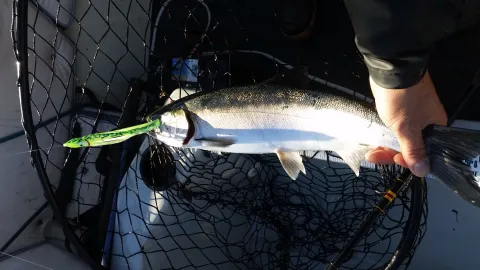
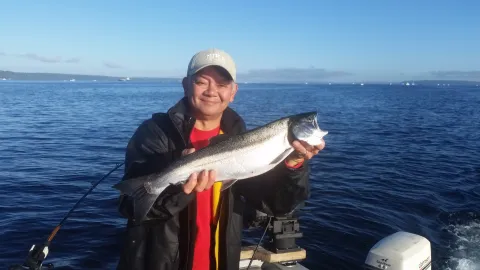
Looking at my fishing report data from trips going back twenty years, it becomes pretty obvious that September is the time to put away freshwater gear and focus on salmon. August can be productive, but September can be (and often is) lights out. My reports show multiple trips with limits by 9 am, red-hot fishing, and lots of pictures of shiny chrome coho. As the season progresses into later September, the fish show a steady increase in size. By late September to early October, the 6-8 pound coho are replaced by beautiful 10-14 pound hooknose monsters. It’s the time of year to stock up the freezer on tasty coho!
For those new to this fishery, you’ll find a wealth of information on techniques and locations scattered on the web. I've broken down some of my thoughts on coho trolling into Ten Rules of Coho Trolling.
Coho tend to be pretty cooperative salmon when it comes to catching them. As these fish stream in from the ocean, heading through the Strait of Juan De Fuca and into Puget Sound, they are putting on the feed in preparation for their runs up to the spawning grounds.
It’s not unusual to find coho stuffed with herring. Don’t get me wrong, there are days they, like other salmon, will have lockjaw. But that truly is the exception, not the rule. Speaking of rules, I offer a list of rules I’ve developed over the years to catch more coho. You’ll likely have your rules to add to this list. Or you may disagree with some of them. But hopefully it will give you some additional ideas when targeting coho in the Sound.
Rule #1
As Russell Wilson would say, “Separation is in the preparation”. - When you put your boat in the water, you should have everything ready to go. No fiddling around with gear or bait the morning of a trip. My fishing ritual is to have everything ready to go the night before.
It’s like a general plan for battle. My rods are ready and geared up. My bait has been cut and cured. My boat is prepped and clean, batteries are charged, the gas tank is full, snacks are bought, and there’s ice in the coolers for the fish.
This evening before prep time is actually a ritual I cherish because, like Russ, I’m visualizing success and making a plan in my head. I try to never go fishing without a plan.
Rule #2
Start early, go shallow. - I try to be on the water as early as possible. Ideally, that means running lights on and gear going in the water while it’s still dark or just turning light. I will run my gear in the top 10-30 feet of water to start.
This is the time of day when a salmon fly in the prop wash can be deadly. I like Arctic Fox Trolling Flies. Denis Peirce ties a nice fly in a variety of effective salmon colors. Try running the fly back 40-50 feet and troll fast (more on that later) with the fly practically skipping on the surface.
Just be sure to have the clicker on the reel because these strikes can be vicious. I love the sound of a clicker going off in the morning!
Rule #3
Watch your fish finder, drop your depth – As the morning progresses, drop your downriggers down. I’ve read the “rule of thumb” is ten feet every hour until you’re trolling your gear around 40-60 feet. That’s fine, I guess, but I also use my fish finder. If I see bait and fish marks down 50-70 feet, I’ll drop down to those fish even if it’s early in the morning. As the day goes on, I may even drop my downrigger ball down to 110-120 feet deep. Depth can be a tricky thing because when coho fishing, I troll fast, which leads us to the next rule.
Rule #4
Troll fast! - In my experience, coho love a fast troll. I have an i-Troll throttle control and will set it on “hunt” mode to keep my boat going fast, around 3.3 to 3.9 mph. A few years back I did a lot of underwater filming and noticed a distinct increase in salmon aggression when the flasher was whipping around in a complete rotation. If it was only doing a lazy rotation, or not doing a full rotation, coho would tend to swim behind the gear, just watching. But speeding up and getting that flasher fully spinning would elicit vicious strikes. I will troll both with and against the tide and catch fish going both ways.
Just be sure to increase your throttle going into the tide to maintain that 3.5 mph speed. I’ll also program my i-Troll to give a periodic 3-5 second slowdown and then speed back up to “wake up” coho that may be lazily following but not biting. It can often trigger a bite. Oh, another thing that will often trigger a bite – if you’re checking gear, pop your line off the release and set the rod in the rod holder. Let the gear come up on its own. I have caught a lot of coho that will chase the gear as it ascends to the surface. Don’t reel your gear in until it hits the surface.
Rule #5
Coho are hungry; feed them! - Coho love a strip of herring on just about any lure. I will add strips to hoochies, flies, and even a small strip on the hook of a spoon (but not too much; you don’t want to kill the spoon’s action). Be sure to brine the herring strips a day ahead of time in rock salt and/or commercial herring brine. Add scents and bite enhancers as well. Check your gear every 20-30 minutes and freshen up with a new herring strip. If you get a bite but no release, bring it in and check it! The one exception to this rule I have is if the dogfish are in thick, I will go without bait.
Rule #6
Experiment – My “go-to” setup is a magnum green splatter glow hoochie, herring strips, 26-30” leader, and an 11” dodger (pick your color…). I always start with this setup. On a second rod, I may run a different color and smaller hoochie. If there is no action and I am seeing fish on the fish finder, I will start trying spoons and plastic lures like the old Big Al’s Cripple Herring. Sometimes the coho just want something with more action. This year, I’m going to be trying the new Old Goat OG2 5” salmon lure. The Old Goats have been awesome on kokanee, and I think they will be deadly on coho. They have an amazing action that I think coho will love.
Rule #7
Fish Where They Ain’t (anglers that is) – coho in Puget Sound can be found pretty much anywhere. We all have favorite starting locations, and it’s human nature to follow the crowds of boats because “hey, they must know something I don’t”. Maybe…and maybe not. I try to start my troll away from clusters of boats. Why be surrounded by additional lures in the water? You want to troll over fish that aren’t seeing offerings non-stop. So, move away from everyone else – and if you take my advice and troll fast, you will, very quickly.
You’ll still find the fish if they are there, and cover more water to find the biters. When you do, don’t be afraid to mark the fish on your fish finder and troll around and right back over the same spot. Again, in viewing underwater footage, I invariably see groups of 4-6 coho following my gear. A solo fish is very rare. So, work over those spots when you pick up a fish.
Rule #8
Midday and tide changes are good – I know I said earlier I like to hit the water at daybreak, but there are days when that just doesn’t happen. The good news with coho is that it doesn’t matter. You can (and will) catch coho all morning and into midday. Tide bites are the period before and after a low or high tide, and these times can be very productive. My favorite tide sequence is a high tide at around 9-10 a.m. The flood tide pushes fish, and as the tide slows down, it triggers a feeding opportunity below for the coho salmon.
Bait becomes easier to pick off without a steady flow of water, and the coho bite often turns on. If you miss that crack of dawn bite, fear not; the coho will cooperate. I’ve caught my biggest hooknose fish from 11 am to 1 pm.
Rule #9
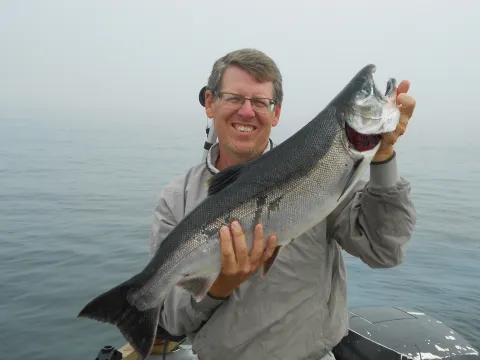
Playing and netting your fish – OK, you have a big fish on and are trolling at 3.5 mph. What do anglers often do? Why, slow down, of course. Bad move. In today’s age of barbless hooks, slowing down is an invitation to let the fish go. The second there is slack in that line, the hook can slip out. Trolling for coho is not a fishery that is about the fight; it’s about catching fish. If you want an epic battle against coho (and they are a hoot), catch them in rivers, or mooch for them. Trolling with an 11” flasher gives these fish a focal point with which they can get slack line.
We don’t want to do anything to help them out, like slowing down. Once they are on the surface, do your best to keep the flasher out of the water. This will help prevent the fish from getting slack line between the hook and the flasher. Make sure you have a net with a long handle and a big opening. This will help as the netter reaches out. Remember, the netter scoops as the angler guides the fish into the net. Don’t make the mistake of the netter reaching to net the fish! Once the fish is close to the boat, slowing down a bit is OK, by the way- just keep that flasher out of the water.
Rule #10
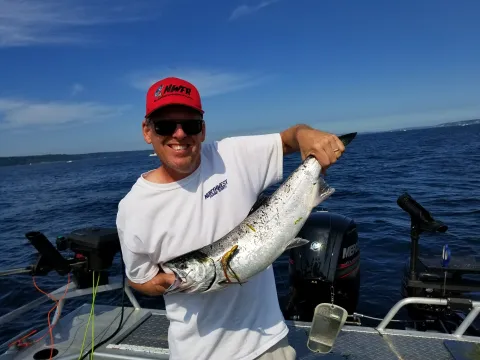
Take good care of your fish – Non-anglers have no idea what freshly caught salmon tastes like. As anglers, we are blessed to be able to have the freshest salmon on the planet. So, take good care of your caught fish. Bonk the fish enough to stun it, then cut a gill and bleed the fish out for a few minutes.
After that, into the ice cooler it goes.
Don’t hang it off the side of the boat to bake in the sun. At the end of the day, gut and cut into steaks, or fillet the fish. If possible, vacuum-seal whatever fillets you don’t eat for dinner. Properly cared for, you’ll have tasty fish until the next season, when you get to do it all over again!
/articles/ten-rules-coho-trolling-mike-carey
It's Yellow Perch Time by Mark Yuasa
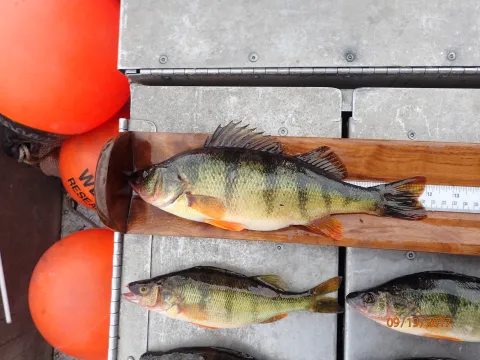
We’ve rounded the corner on summer, and the clock is ticking as the pre-fall chore list or heading back to school obligations become the front burners instead of on-the-water activities. Summer days are winding down, but that doesn’t mean you have to throw in the towel on fishing. Late summer and fall are prime times for yellow perch fisheries in many statewide waterways. Yellow perch are colorful and identified by their golden-yellow, orange, and brass-colored bodies with distinct olive-green, vertical, triangular bars along each of their sides.
One of the top locations to catch a batch of yellow perch is Lake Washington, which is situated right in the backyard of downtown Seattle. Yellow perch are a very stable population in the lake that covers nearly 22,000 acres and stretches 20 miles from Kenmore on the northern tip to Renton in the southeastern most section.
What makes these fish even more appealing is the fact that they’re available to catch year-round, with late summer through early fall being the most productive fishing period.
Yellow perch average 7 to 10 inches (made up of three- and four-year-old age class fish), although some will be as large as 12 to 14 inches or longer. The official WDFW state record – https://wdfw.wa.gov/fishing/basics/records – of 2.75 pounds caught by Larry Benthien at Snelson’s Slough in Skagit County on June 22, 1969, could eventually be broken and come from King County’s largest watershed.
Washington Department of Fish and Wildlife (WDFW) biologists say this is largely based on ample feed and lots of “elbow room” for yellow perch to grow in Lake Washington, the second-largest natural-bodied lake in Washington.
Yellow perch spawn in the spring well ahead of many other warm-water fish species in the lake. The female perch are the largest and tend to grow much faster (maturing in three to four years) and are long-lived up to eight to 10 years.
Lake Washington has a diverse ecosystem, and you can also catch cutthroat and rainbow trout, catfish, carp, peamouth chub, brown bullhead, smallmouth, and largemouth bass, and black crappie. Another abundant fish is the “rock bass”, a species of sunfish.
Fishing gear and tips
Yellow perch is one of Washington’s several "panfish" species, which are very popular across the state because they’re easy to catch and a great introductory fishery for beginners, young kids, and an overall fun family fishing activity. They are outstanding in eating quality, similar to the white, flaky flesh of walleye.
On lightweight fishing gear, yellow perch will put up a good fight, and they’ll often stay active all day. It is not unusual to see thousands of perch schooling in shallow water areas of the lake, and while reeling one in, you could see many others following it up to the surface.
Even during the middle of a summer afternoon, yellow perch aren’t spooked by all the boaters and jet- or water-skiers zipping around Lake Washington.
The best period to target yellow perch begins around July, when the water heats up, and will peak in August through October. As winter arrives in November, yellow perch become harder to catch since they usually move into deeper water locations.
Yellow perch tend to school in shallow water areas, 15 to 35 feet, and you’ll find them close to the shoreline or on the edge of drop-offs. Look for them hiding in shaded spots along the cover of weed beds, milfoil, aquatic weeds, and lily pads, or under docks or overhanging trees and brush. At night, they’ll often look for cover in these locations to avoid predators such as smallmouth and largemouth bass.
Yellow perch mainly feed on small fish, crayfish, snails, clams, and smaller invertebrates.
What makes this fishery fun for everyone is the fact that there are so many locations accessible by boat or from the shoreline and public docks around Lake Washington.
The lake has plenty of elbow room to fish around Seward Park; Gene Coulon Park in Renton; Yarrow Bay in Kirkland; Magnuson Park; Andrews Bay; Newport area; Webster Point in Union Bay; Juanita Bay; Foster Island in the Montlake Cut; and docks at Mount Baker Park, Madison Park, Stan Sayres Pits, Leschi Park, Luther Burbank on Mercer Island, Kirkland, and Kenmore.
You can find a list of public fishing piers on Lake Washington on WDFW’s website: https://wdfw.wa.gov/sites/default/files/publications/01996/wdfw01996.pdf.
Fishing gear consists of a light-to-medium-action trout fishing rod with a spinning reel attached to a four- to six-pound test main line. Simply stick to a piece of worm on a 15- to 24-inch leader with a small salmon egg-style hook to a drop-shot egg-style weight.
Once you catch your first perch, you can use a small chunk of the meat or — believe it or not — even an eyeball. Colorful, tiny three-inch plastic worms or small-skirted crappie jigs and lures tipped with maggots, wax worms, or shrimp will also catch fish.
Yellow perch are light biters and tend to nibble on your bait, so don’t set the hook hard and let them play with the bait. Then wait for your rod to bend before you gently reel them up. Yellow perch are bait stealers, and don’t be duped when you occasionally reel up bare hooks. The great news is that once you drop it back down, you’ll likely be rewarded with an actual fish!
Additional lakes to catch yellow perch
Besides Lake Washington, there are many other statewide lakes where you can find yellow perch.
A standout yellow perch fishery in Eastern Washington is Curlew Lake in Ferry County, located northeast of Republic. For more than a decade, the yellow perch population has continued to rapidly grow and, combined with the average size (9 to 10 inches), has generated considerable enthusiasm by anglers.
“Curlew is a special place because it has ideal habitat, good water quality, and plenty of food that creates a fast growth rate for the yellow perch population,” said Danny Garrett, a WDFW biologist.
Other east of the Cascades yellow perch fisheries include Moses Lake and Potholes Reservoir in Grant County; Leader Lake, Palmer Lake, Whitestone Lake, and Washburn Island Pond in Okanogan County; and Roses Lake and Wapato Lake in Chelan County.
Shifting back to the west side of the state, yellow perch can be found in Lake Sammamish near Issaquah; Lake Whatcom near Bellingham; Sawyer Lake northwest of Black Diamond; Lake Goodwin northwest of Marysville; Lake Stevens east of Everett; Beaver Lake and Pine Lake near Issaquah; American Lake near Fort Lewis; Lake Kapowsin southeast of Puyallup; Angle Lake south of Sea-Tac Airport; Lake Desire in Renton; and Lake Meridian in Kent.
Before heading out, check the WDFW regulation pamphlet for specific rules at https://wdfw.wa.gov/fishing/regulations. You can also find yellow perch information on the WDFW website at https://wdfw.wa.gov/species-habitats/species/perca-flavescens, including an informative video at https://youtu.be/-V5d--VkQ4Q.
Contributed by Mark Yuasa, WDFW
(Mark Yuasa is a Washington Department of Fish and Wildlife Communications Manager and longtime local fishing and outdoor writer.)
/articles/its-yellow-perch-time-mark-yuasa
The Cure for High Lakes Trout by Gary Lewis
How to turn eggs from hatchery trout into more hatchery trout.
We had a mild, dry winter with little snowpack. Now in the heat of summer, wildfire smoke shrouds the lowland valleys, and a lot of people who would rather be fishing are staying home.
Up in the mountains, the air is clear and beautiful. If there is smoke in the air, it filters the light and provides an otherworldly feel on the high lakes.
Here in central Oregon, the trout fishing has been fantastic. Fly-rodders, lure fishermen, and bait anglers have been having the best trout season of their lives.
I have started tying egg loop knots and curing eggs on a smaller scale. Our hatchery programs turn out legals, "trophy" trout (14 to 18 inches), and brood stock fish that can go six pounds or more. Some of those hatchery fish have eggs in them, which look like bait to me.
WHY SPAWN SACS?
Trout eggs are few and fragile, and the skein is weak, but they are a dynamite way to turn hatchery trout into more hatchery trout.
Use spawn netting to conserve the eggs for a longer time in front of the fish. While an egg-looped bait might stay on the hook for three or four casts, the spawn sac bait can go for 40 or 50 casts and multiple fish.
I kept the eggs from a 30-inch lake trout and put them in a paper towel in the refrigerator, and forgot about them till I was in Alaska. My wife was home and cured the eggs for me (her first time curing eggs), and we put them to use on a fall trip to one of my favorite lakes. I wound up catching a pair of beautiful brook trout. Opening our mixed bag of rainbows and brookies that evening, I harvested bait for the next trip.
Try to get eggs from four or five trout before starting the cure. First step in preparing the eggs is to allow them to air dry on a paper towel for a day or so.
The cure itself can be any one of dozens of commercial powder or liquid offerings or a person can prepare their own with Borax, brown sugar, and salt. Lately, we have been using Pro-Cure's Last Supper blend, augmenting it with sea salt and krill powder.
Donning latex gloves, I roll the eggs in the cure, making sure the cure adheres to both sides of the skein. Next, I sprinkle on extra salt and krill powder. Then I let that combination drain/air dry for about a day. After that, the eggs are ready for the spawn netting.
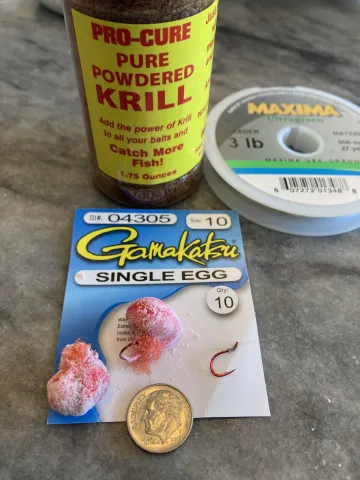
For these smaller baits, I will use a No. 8 or No. 10 egg hook with an egg-loop knot. The bait should be the size of a dime. I get two to four baits out of a skein and four to eight baits per fish.
Cut a small rectangle of netting (I use Atlas Mike's) and lay the bait on it. Then gather the edges and tie it with stretchy string (like Kwikfish Stretchy Thread. Trim off the extra string and netting, and you have a dime-sized bait ready to fish.
Baits can be stored in Ziploc bags, plastic boxes, or glass jars. Use the baits as-is or add a little more Borax to toughen them up.
Curing eggs for a spawn sac presentation allows the angler flexibility in doctoring the baits to specific conditions or to provoke a reaction bite. Eggs sink, which makes spawn sacs a great choice for a float (bobber) presentation. But because eggs sink, they are prone to hang up on rocks in a drift-fishing presentation. The "cure" for that is to add a foam egg (like a Mad River Fish Pill) to the spawn sac.
Jason Hambly, of Pro-Cure Bait Scents, in Salem, Ore., recommends adding krill powder to any trout bait. Garlic, too, is a proven trout favorite. I like to add a touch more garlic to a bait intended for cold water presentations. When the temperature drops in December in these parts, it can be harder to get fish to move. But they seem to move for garlic. Salt, brown sugar, and anise are other scents that could be added to spawn sacs. It makes a lot of sense to bring several flavors and experiment with what works in varying conditions.
STILL WATER RIGS
For our fisheries, I like a finesse presentation using a smaller No. 10 egg hook and a light three-pound test leader. When targeting bigger trout, consider sizing up to a No. 8 egg hook, nickel-size baits, and a five- or six-pound-test 20-inch leader.
Attaching bait is as simple as running the point of the hook beneath the netting knot, then securing it with the egg loop.
In a lake, the bait can be presented under a float when targeting a specific feeding zone. I like to use a sliding sinker fished over a ledge on a travel zone, such as along a drop-off.
WHERE TO FISH
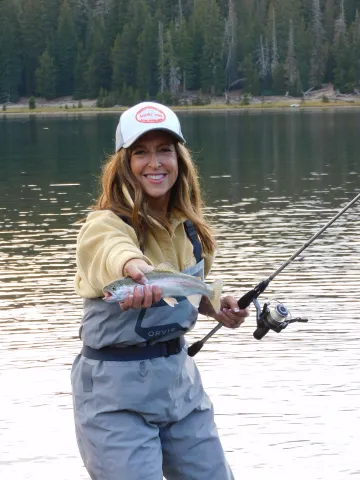
In August and September, plan trips to hit one or more fisheries. Think early morning and late evenings. Eat an early dinner and fish the last two hours of the day. Get up at dawn, fish for the first hour of the day, and then go get breakfast.
In the Cascades, top destinations include Diamond Lake, Detroit Lake (even as it draws down), Cultus, Elk Lake, Olallie Lake, and Timothy. But there are a hundred more. Open a map or get a copy of the Fishing Central Oregon book or Fishing Mt. Hood Country. The Department of Fish and Wildlife stocks all the drive-to and hike-in Cascade lakes.
Sometimes it's fun to experiment with something new, to do something different.
Reinvent your fishing and target trophy fish and brood stock with scaled-down baits.
# # #
Gary Lewis makes his home in Central Oregon.
/articles/cure-high-lakes-trout-gary-lewis
Long Lake Walleye by Eric Magnuson
There are lakes you fish because they're close to home, and then there are lakes that become part of who you are. For me, that's Long Lake, known to some as Lake Spokane. Growing up on that lake, from the shores of my grandparents' place at Willow Bay, or at my favorite Aunt and Uncle's place just before Tum Tum. I have so many fond memories of this lake and how it's changed over time. Stretching nearly 24 miles, located northwest of Spokane, this reservoir has a personality that changes with every season. Some days it's calm and forgiving. Other days, it demands patience and humility. But one thing remains constant: the opportunity to catch incredible walleye if you're willing to learn the lake. Walleye aren't flashy fish. They don't explode on a topwater lure or leap skyward like a trout or bass. Instead, they reward anglers who pay attention to subtle details. That's exactly what keeps me coming back year after year.
Spring is when my anticipation begins to build. As water temperatures climb into the mid 40s and low 50s, walleye transition from spawning areas and begin feeding aggressively. I focus on rocky shorelines, gravel flats, and the mouths of smaller bays. Areas around Nine Mile Falls and just below, I focus on stretches with gradual drop-offs adjacent to gravel beds; this will often produce consistent action. Fish are usually holding in 8 to 20 feet of water, especially during low-light periods. This is a great time to take advantage of the night fishing near the Spokane House launch. Pulling crankbaits such as large Bandits really gets the big fish's attention. Typically, fish anywhere from 12'-17' feet directly in the rocks, making sure them Bandits are tickling them as you troll. You will lose lures, but the rewards are worth it. Just please be cautious of that stretch of river as there are plenty of boulders and good current. I have found 3' of water quickly in my Hewescraft, and it can get hairy.
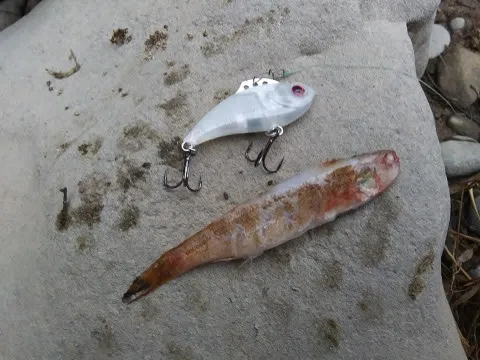
During spring, a jig tipped with a soft plastic paddle tail or curly-tail grub is also hard to beat. Natural colors like pearl, chartreuse, white, and motor oil consistently produce fish. Slowly hopping the jig along the bottom often triggers strikes. A live nightcrawler on a jig can make an already productive presentation even better when fish are less aggressive.
As spring gives way to summer, walleye begin following schools of baitfish toward deeper structure. Long tapering points, submerged humps, rock piles, and channel edges become prime real estate. Most fish settle into depths between 18 and 35 feet, although early mornings and evenings often pull them shallower to feed.
Summer is trolling season, and it's difficult to beat a well-presented bottom bouncer paired with a crawler harness. Smile blades in silver, gold, chartreuse, orange, and red finishes all have their moments depending on water clarity and sunlight. Keep your speed between .8 and 1.0 mph, making gentle turns to vary lure speed and trigger following fish. I really like to bottom bounce long sandy flats or gravel areas, finding a lot of these fish not too far from the main river channel.
Crankbaits also shine throughout the summer. Deep-diving models that imitate perch or juvenile trout can cover water efficiently. Productive colors often include firetiger during stained conditions and natural perch or silver patterns when the water is clear. If electronics reveal fish suspended over deeper water, trolling crankbaits slightly above them is often more productive than dragging lures directly through the school.
Fall is my favorite time on Long Lake. Boat traffic fades, temperatures cool, and the walleye feed heavily before winter. Fish move back toward shallower structure, often holding around rocky points, submerged rock piles, and weed edges in 10 to 25 feet of water.
This is when jigging becomes incredibly effective again. Sonic Baitfish, blade baits, jigging minnows, and traditional lead-head jigs all produce. Slow, deliberate movements often outperform aggressive retrieves as cooling water slows a walleye's metabolism. Every tap feels meaningful, and every fish seems a little heavier.
Many anglers put their boats away once winter arrives, but a few of us dedicated walleye fishermen know some of the year's best fishing is still ahead. Long Lake remains open year-round, and walleye continue feeding despite the cold water. They simply become more predictable.
Winter fish often concentrate along steep breaks and along the river channel around edges, and rocky structure in 20 to 40 feet of water I have found most success. Vertical jigging with SonicBaitfish, jigging soft plastics, or blade baits worked painfully slow can be incredibly productive. Patience becomes your greatest lure. Sometimes, a bait barely moving is exactly what a cold-water walleye wants. A presentation of a plastic that mimics a leech is deadly.
Throughout the year, electronics become one of your greatest tools. Modern sonar and forward-facing technology help identify baitfish, underwater structure, and subtle depth changes that often hold active fish. Still, technology only tells part of the story. Learning how wind pushes bait, how changing weather affects feeding windows, and how seasonal movements repeat themselves every year is what truly builds confidence on this lake.
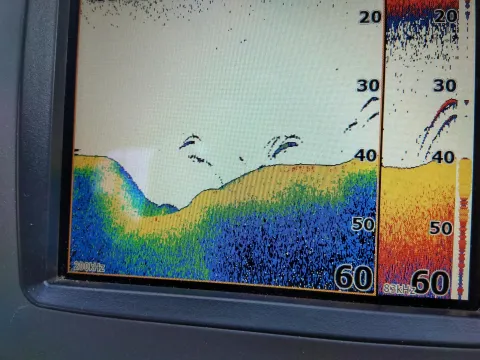
Long Lake is full of hidden rock piles, long underwater points, flooded timber, and contour changes that don't always appear obvious on the surface. Every trip reveals something new. Every missed fish teaches another lesson. That's part of its charm.
Walleye fishing isn't always about filling a livewell. It's about watching the sunrise paint the water gold, feeling that unmistakable thump on the end of your line, and knowing you earned it through patience and persistence. Long Lake has taught me that success isn't measured only by numbers but by time spent learning a place that never stops surprising you.
Every season tells a different story on Long Lake. Spring brings hope, summer rewards consistency, fall offers excitement, and winter reminds us that the best anglers are often the ones willing to fish when everyone else has gone home. That's why this lake keeps calling me back—and why I know it always will.
And for my last cast, always be aware of the winter water levels. Not every winter is necessarily fishable, depending on the levels. And check regulations before heading out, as Long has separate rules from Roosevelt.
Reel In the Memories!
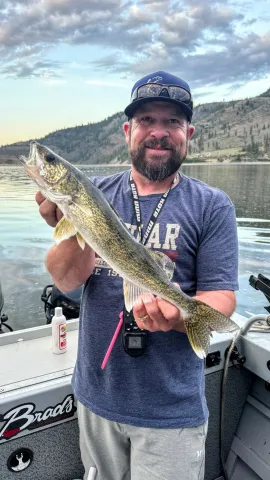
/articles/long-lake-walleye-eric-magnuson
Walleye Here and There by Mike Carey
After moving to Great Falls, Montana, I’ve been spending much of my time exploring the various fisheries in my new State. The past year, my focus shifted to one of my favorite fish to eat, good old “marble eyes”, AKA walleye. It turns out that Montana isn’t just a trout state. The more I learned about Montana walleye, the more excited I became. While a walleye is a walleye and state borders don’t change that, I have noticed a few differences between fishing for walleye in Montana as compared to Washington.
I have many fond memories of fishing the Potholes, Banks Lake, and the Columbia River. All are beautiful destinations and hold healthy walleye populations. Over the years, I learned a lot about walleyes from Shelby Ross of Ross Outdoor Adventures. So, when I began exploring walleye fishing in Montana, I felt I had a pretty good idea of what I was doing. How pride goes before the fall!
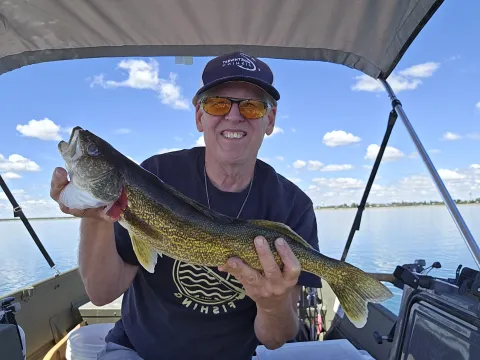
Walleye in Montana are… different. Underwater structure is different as well. While the Potholes in Washington features long stretches of submerged dunes that are made for trolling, reservoirs in Montana tend to be more vertical, with structures rapidly dropping off from shallow to deep water, and fewer long flats are present. And when you do find a flat area, it’s easier to find yourself dropping off from shallow to deep in a matter of seconds. Likewise, the Columbia River is significantly different from the Missouri River. Big, deep water vs. shallow water with distinct holes distinguishes the two rivers entirely different to approach and fish.
I’d read that the Missouri River was a challenge to unlock, and I found out just how true that was. One section below the Hauser Dam is prime trout water, with riffles, pockets, and runs that would make a line-flinger light up. And yet, walleye can be found in this very stretch of water, just waiting for someone to toss a plug their way. Go downriver farther to my neck of the woods, Cascade to Great Falls, and you’ll find deep holes of 15-20 feet and then stretches of sand bars waiting to trap an unsuspecting prop boater (best to have a jet boat in these waters). Farther down, as you reach Fort Benton and Loma and the river, free of dams until Fort Peck, reminds me of the Cowlitz River with fast runs, distinct tail-outs, and gorgeous pockets that just dry out “fish me!”
In other words, a walleye angler fishing the Missouri will need to be flexible with a number of different techniques. Bottom bouncing, jigs under floats, jigs with no floats, plugs, spinners, bait, no bait – whew! I’m going to need a bigger tackle box.
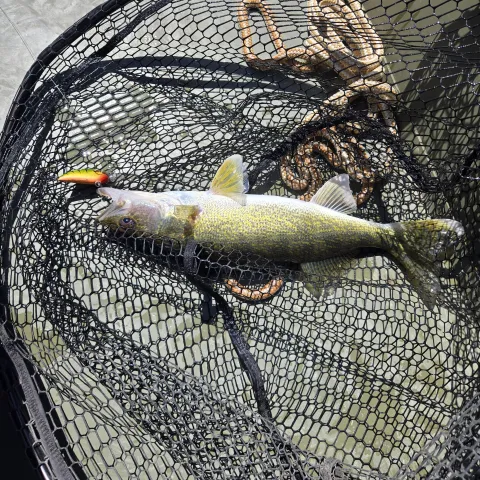
Meanwhile, in Montana, when we talk about lake fishing, we are often really talking reservoirs. A whole new set of challenges to learn. Yes, you can find nice flats to troll your bottom bouncers and diving plugs, but be ready for sudden and dramatic depth changes. These bodies of water have covered up river valleys and can reach depths of 120-200 feet in short order. In addition, you’ll find some very juicy bottom structure, underwater rocky humps that you’ll want to mark and come back to in your walleye search. Jig fishing these drops and humps is your best option here. Put away the trolling and use that spot lock anchor button and work these promising underwater drop-offs with a jig. Try tipping your jig with a minnow or a leech to entice even the stubbornest of walleyes.
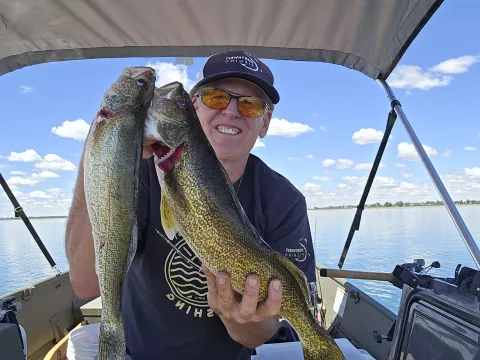
Something else I have noticed that is quite different between Washington and Montana walleye is growth characteristics. While Potholes and the Columbia are generally a numbers game, in Montana, my experience has been that quality and not quantity has been the norm. I can confidently say that every location I’ve fished for walleye has yielded not a limit of eaters, but rather, I tend to catch a couple of eaters and then a pig, 22-26”, fat, quality fish. Why this is so, I can’t say. Maybe less pressure and more feed allow for greater growth and more quality fish? Maybe pike keep the small fish in check? A recent trip I took to Nelson Reservoir yielded a dozen pike in the 28-33” range, and only four walleyes, one of which was a beautiful 23” specimen. Those pike must be feeding on something to produce so many big fish…
Montana has a healthy walleye fisheries program, and the hatchery at Fort Peck took 62 million eggs last year, enough to stock the needs of the entire state’s walleye fisheries. In addition, Montana Fish, Wildlife, and Parks (FWP) has introduced cisco, a herring-like forage fish for walleyes, into Fort Peck and Tiber reservoirs, resulting in an eye-popping winning weight of 143 pounds in the 2025 fishing derby at Tiber Reservoir.
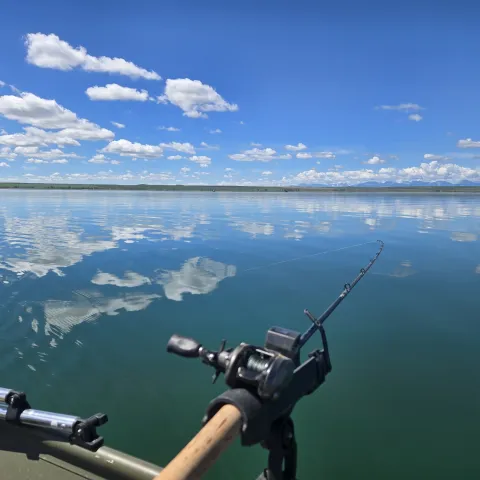
What isn't different between Washington and Montana walleye is the taste. Anglers can enjoy delicious fresh walleye year-round, either in open water or in the winter through the ice. Unfortunately, both states also share a common problem: contaminated waters. I strongly urge you to follow guidelines on fish consumption and limit the fish you keep to under 22". Doing so will reduce your risk of contamination from mercury and Per- and Polyfluoroalkyl Substances.
Stay safe and enjoy the incredible walleye fisheries each state has to offer!
/articles/walleye-here-and-there-mike-carey
Getting Ready for Salmon Season! by Hannah Pennebaker
If you're anything like me, then you have dreams about bobber downs and chrome fish. The long wait is over, and the time is finally here! Whether this is your first or fiftieth salmon season, preparation is the key to success. Let's go over some tips on how to ensure your boat, trailer, and gear are in tip-top shape for this salmon season.
If you have a boat, you'll want to make sure it's running smoothly and has all the gear you need. Fill up your gas tank, check your batteries, test your downriggers, and fire up your motors. Take a look at your engine hours and take care of any recommended services. Repair shops are busy this time of year, so it's not a bad idea to watch some tutorials and figure out how to do some basic repairs and services yourself. Our boat has both a 2-stroke main motor and a 4-stroke kicker, so my husband and I have had to become adept at both 2-stroke and 4-stroke motor maintenance!
Don't forget to ensure you have all the Coast Guard-required safety equipment aboard your boat. This equipment is required for good reason, and the Coast Guard conducts inspections.
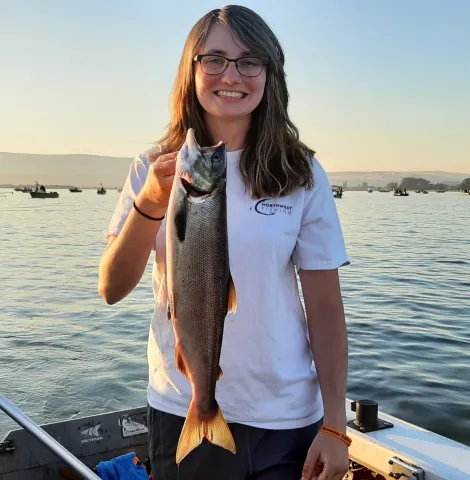
Here's a good checklist to use:
Flares (3 daytime and 3 nighttime, or 3 daytime/nighttime combos)
Life jackets for everyone on board
Throwable flotation device (if boat is 16ft or longer)
Navigation lights (if traveling between sunset and sunrise or during low visibility periods)
Horn/whistle/other sound signal
Fire extinguisher
Carbon monoxide warning sticker/placard
Not Coast Guard required, but good to have:
Manual bilge pump
Marine toolkit
Marine radio
Extra gas cans
Spare motor parts (spark plugs, hose clamps, etc.)
First aid kit
Let's not forget your boat trailer! Make sure to do a thorough visual inspection of the brakes, chains, couplers, straps, wheels, bearings, and tires for damage and wear. It's a good idea to re-grease your wheel bearings every year. Top up the air in your tires if needed. Hook up your trailer lights and verify that your signals are all working. While you're at it, make sure your registration is up to date for both your boat and trailer.
Once you've verified that both your boat and trailer are in good, safe condition, it's time to look at your other gear. Look over your rods and fix any broken guides or tips. Open up your reels and grease any and all moving parts to prepare them for the fights ahead. I like to polish up any spoons or spinners that have corroded during the off-season. This is also a good time to organize tackle boxes and stock up on any swivels, line, etc. Do it now before the season is in full swing and tackle store shelves are empty!
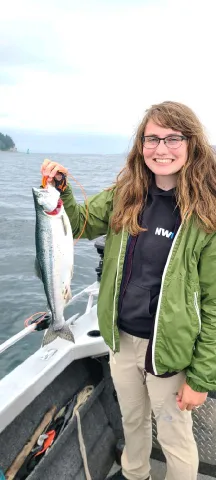
Here are a few other miscellaneous things to check before going out. Make sure you have an up-to-date fishing license and catch record card. You can either use a paper card or use the MyWDFW app. Catch record cards are not added automatically in the app. You need to add them to your cart in the MyWDFW or Fish Washington app for $0. If you're going to an area without cell phone service, the data in your card will be added locally and updated when you come back to an area with service. Be sure to familiarize yourself with the rules of the area where you'll be fishing. Don't forget to pinch your barbs and keep all fish in the water until you are 100% certain it's legal to retain. WDFW has great resources on how to identify each salmon species in both saltwater and freshwater. Please follow the rules and help protect the resource so that future generations can enjoy fresh, local salmon on the dinner table too!
/articles/getting-ready-salmon-season-hannah-pennebaker