/articles/categories/destination
Kayak fishing in Makah Land
With cracked and battered hands, I paddled east with 25 knots at my bow and an incoming tide on my stern. Colliding forces of Mother Nature churned heavy swells into a roller coaster of seawater, tossing me about as I struggled to stay on track. A behemoth of a fish, a monster, 50, maybe 60 lbs, haunted me from the day before, yet kept me moving eastward, into the fray.
This is just one of the many tense experiences that characterize a spring kayak fishing trip at the continental United Sate’s most northwestern point—Neah Bay. Neah Bay has become somewhat of a kayak-fishing Mecca for me. Each year I make the almost 4 hour drive to its rugged and draw dropping coastlines. Heading up the east side of the Peninsula, the drive treats travelers to a myriad of jagged points and bluffs that meander past ancient saltwater beaten sea stacks before colliding with the belly of the North Pacific. The coastal terrain then wraps around Washingtons most Northwestern point, Cape Flattery, which is a marine anomaly in its own right, and then heads down to the sandy beaches of Makkah Bay, ending just south of Cape Alava.
Though fishing might be the main attraction for readers, it’s worth noting that this area holds an endless amount of wealth in its natural beauty and also in its cultural and historical prominence. The Makkah Museum is open to the public and is a great place for visitors to learn about Neah Bay’s native community and their long connection to the land and sea, that of which is estimated to be around 3,800 years old.
Case in point, the Makah tribe, for at least the past 1,500 years, have paddled hand carved cedar canoes out to often treacherous seas, where paddlers would track and hunt humpback and grey whales with harpoons attached to sealskin floats. They are the only tribe in the U.S to have whaling rights secured by way of treaty, though this right was later repudiated by the U.S government after commercial whaling by both European and Americans had all but extirpated both grey and humpback whale populations.
From here visitors can explore the many outdoor attractions Neah Bay has to offer. Whether it’s a backpacking trip down to Shi Shi Beach to camp and fish for surf perch, or a day trip to the Point of the Arches, there’s a number of things you can do to diversify your fishing trip before getting into filling your cooler.
Any trip to Neah Bay with a kayak should be well thought-out and planned, this is especially true during the spring when inconsistent and stormy weather frequently results in the waters around Neah Bay being under small craft warning. Always plan your trip around NOAA marine weather forecasting and make use of apps that predict swell size, wind speeds and wind directions. Optimal conditions would be flat and windless, and if we waited for those conditions, we would never fish. So, sticking with days where winds are sub 15 mph, swell size is moderate, and wind waves are predicted to be no more than a couple feet, will all help keep you on the right side of the water.
Staying on the right side of the water is always the goal, but as probability has it, there will be some point in any kayak angler’s life where he or she will get dumped into the salt. This is especially true if you’re launching or landing in surf zones. If you are prepared for it, which you 100 % need to be, then an experience like this will only serve as a minor inconvenience as opposed to something life threatening.
First order of your operations will be gearing up to stay warm. I suit up into a 5.4 mm wetsuit, equipped with a hood and 5 mm booties. Essentially, I dress the same exact way I would if I was to surf anywhere on Washingtons chilly coast (with the exception of a PDF). Many anglers prefer a wetsuit as they are not bulky, they make movement easy, and they perform consistently each time. Another option is to use a dry suit.
Dry suits are a breeze to put on when compared to a wetsuit, they slip on over your insulating layers, provide you the security of knowing that if you were to go in; you won’t experience a layer of cold water rushing over your skin like a wetsuit allows, and you can slip out them without a struggle as soon as you are done fishing. The downside of a dry suite is that in the event of dunk— a tear or a leak in the suite would allow water to flow inside and render it completely useless, thus making hypothermia less of a possibility and more of an inevitability.
If you do get dunked, you need to know how to get back into your boat. This is something that requires practice and should be done in calm and shallow waters, perhaps somewhere close to home. Neah Bay is not the place you want to have a “learning experience” when it comes to falling into the water. Know how to right your boat if capsized and know how to climb back in.
Finally, secure all your gear like you were planning to flip the boat. Lanyards and bungee cords are your friends. Keep hatches closed and secured and you should be set to catch some fish.
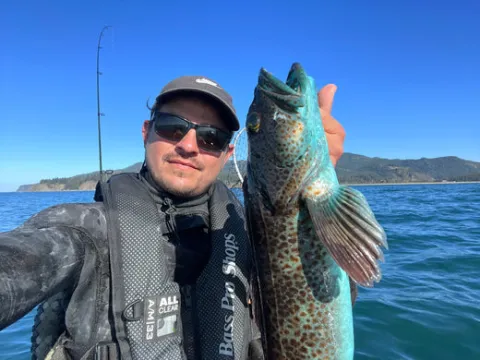
Spring kayak fishing in Neah Bay is red hot when it comes to Lingcod, rockfish, and Cabezon. They can be caught in relatively shallow waters where kayak fishing is more feasible, and in general, these amazing predator fish are typically going to bite down on whatever you’re willing to throw at them. My best luck comes from jigging 2 oz jig heads with a white single or double tailed grub.
The best bait for catching a trophy lingcod might be lingcod itself. The experience mentioned at the intro to this article foreshadowed what has become the most intense battle with a fish I’ve ever been part of, and that experience happened to occur because of the lingcods love for the predation of its own kin.
It was late morning and I had been fishing for a couple hours with various species already onboard. Snagging on kelp is a frustratingly common occurrence when fishing the straights of Juan de Fuca side of Neah Bay, and after losing my gear several times to snags, I was ready to throw in the towel. Just at that moment, my line was once again wrapped up on some vegetation deep below the surface. After a few attempts to free my hook from what would surely become its forever home, I felt a tug at the line.
Oscillating between thoughts of a monster fish or a monster let down, I decided to swing towards optimism and fought this potential snag like it was more than just another disappointment. I reeled in and raised the rod tip, letting it back down as the fish either slowly took line out or the current was simply just pushing me away from the point where my hook was snagged. Again, there was another strong tug at the line. This was a fish. Perhaps a fish caught-up around some kelp, but a fish for sure. After fighting for what felt like an eternity, and as the minutes passed by, and my arms became more tired, I finally felt progress as my reel started collecting more line.
Finally, through the darkness of the water, I made out the shape of not one, but two fish. A good size lingcod, maybe 30 inches long had its mouth tightly secured around my hook, and even more tightly secured around him—was something that I thought only exists in nightmares. A lingcod that looked to be about the length of my kayak was lock-jawed around this smaller fish, and they were getting closer to the boat. Fearful of what would happen if I tried to land this razor toothed behemoth in a kayak, I panicked a bit.
Yet, in a split-second decision, I grabbed my net and tried for a swoop. As I reluctantly scooped toward the fish that would in no-way ever fit into my net, let alone my boat, the giant ling let go of the smaller fish, and in true nightmarish fashion, breached out of the water with its mouth wide open and razor-sharp teeth exposed. Only inches from its giant head, I watched as the open mouth of the fish passed by my face and then landed back into the water, into the depths of Neah Bay; where I was oh so happy to see it disappear.
/articles/kayak-fishing-makah-land
Road trip options for ice-out trout
Remember that opening day of trout season tradition? It's a thing of the past. Most of our best trout fishing lakes and reservoirs are open year-round. In Oregon, you can go fishing when you feel like it or when the ice thaws, whichever comes first. Here are some of the best ice-out trout fishing destinations for early April.
Central Oregon
In Central Oregon, and west of Tygh Valley, Pine Hollow Reservoir is a 240-acre irrigation impoundment set in mixed pines and oak trees. Less than an hour's drive from The Dalles, it is a popular summer fishery, but can be pretty quiet early in the spring. And that's when this fishery kicks off. The Oregon Department of Fish and Wildlife stocks legal trout and big brood stock rainbows here, starting the third week of March if ice allows. When the ice first begins to thaw, the fishing should be excellent. A boat is a good idea for this lake, although there is good bank angling at the east shore boat ramp and on the east shore. My favorite trolling pattern touches at the buoys in front of the resort.
Nearby, and west of Wamic, Rock Creek Reservoir shows off best early in the season when ODFW stocks approximately 12,000 legal rainbows between early March and the end of May. Plan it for the third week of March and beyond. This is a good spot for bank angling, but a car-topper boat is a definite advantage. Bait is allowed and bank anglers do best when using jar baits with a sliding sinker and a long leader. This is not a place to use a light leader. The Department often plants brood stock trout that can run up to 30 inches long.
Summer Lake
Near the town of Summer Lake, 60-acre Ana Reservoir is one that does not ice over, but the best timing is going to be after the third week of March when ODFW typically plants 3,000 legal rainbows. The community of Summer Lake has been paying for additional trophy rainbows to be stocked in this lake, creating a destination fishery that is still relatively unknown. Trust me, if you catch one of the big ones and want to keep it for a barbecue, it may be one of the best tasting trout you have had in a long time. Or let it go for the next guy to tangle with. Your call. Best place to start is at the boat ramp and along the dam. Bank fishing is good here. Fly anglers will want a boat or float tube.
If you plan a trip to Ana, there is a good RV park, nearby hot springs with cabins, and the Lodge at Summer Lake. Tell them you're there for the fishing and they will keep this trophy program going.
In early April, Krumbo Reservoir is one of the best things going when ODFW plants the first legal rainbows of the year. Krumbo, a shallow desert lake on the west side of the Steens, is 150 acres and fishes best in spring and fall. Because the lake is so food-rich, the trout can winter over and 20-inchers are common. Bank anglers can do well here, although bank access is tricky, scrambling over lava rocks. A better bet is to bring a float tube or a small boat.
Between Sumpter and Baker City, 2,235-acre Phillips Reservoir was a formerly great rainbow trout fishery which was overrun by yellow perch and has since been rehabilitated with the help of the tiger muskie. That is all you need to know. But since you want more, I'll give it to you. Phillips is a better-than-good ice fishing destination. Perch can be easy to catch through the ice and are every bit as good to eat as walleye. And the perch, because there are fewer of them now, are bigger. As this issue goes to press, Phillips Reservoir has about 12 inches of ice, so depending on the spring conditions, it could still be iced over well into April. Another item to consider is that Phillips is refilling after being drained last year so boat ramps might be out of the water.
At full pool, trolling is a real treat on this lake. An angler should plan to troll for rainbows and spend a little time targeting tiger muskie, which is a catch-and-release fishery. On a steady diet of six-inch perch and 10-inch rainbows, these fish grow to four feet long and weigh as much as 30 pounds. I hooked one once and lost it when it plowed through the weeds next to the boat, jumped as high as my shoulder and broke my line. Use a steel leader and a six-inch swim bait or large spinner bait to target tiger muskies.
Lake Simtustus
One of my favorite lakes right now is Lake Simtustus, located seven miles west of Madras in the deep, narrow Deschutes canyon. Simtustus was formed by Pelton Dam, backing up to Round Butte Dam below Lake Billy Chinook. The reservoir was named after a Warm Springs warrior who served as an Army scout in the Paiute wars of the 1860’s and lived on the Warm Springs Reservation. The reservoir receives about 25,000 trout each season; a hard-fighting summer steelhead strain that run a fat 12 to 14 inches in April.
To fish Simtustus, an angler must not only have an Oregon fishing license, but also a tribal fishing permit. The annual price is up to $60 to fish Simtustus, and that keeps a lot of anglers away. Simtustus has been kicking out limits of rainbows already this year, but not for me. When I fished it in February, I only caught one, but I'm seeking rainbow redemption with several trips on the calendar for April and May.
For the trout fisherman, at the end of a long, cold winter, it's time to plan some road trips and do battle with trout.
# # #
Gary Lewis is the author of the Fishing Central Oregon book. For a signed copy, send $29.99 (free shipping) to PO Box 1364, Bend, OR 97709. Contact Gary at www.GaryLewisOutdoors.com
The End
/articles/road-trip-options-ice-out-trout
Buoy 10 primer
Dropping gear down slowly so not to have it tangle is the key to catching salmon at the famed Buoy 10. Sure, there are a few other things, but if you do not put the gear into the water correctly all the rest that follows does not matter. It was a skill that I learned years ago while fishing on an August day just outside of Astoria’s East Mooring Basin. I use cannonball weights from 8 to 16-onces on a short dropper and slider, to an in-line flasher trailing a plug cut herring pierced with super sharp hooks. From the weight to the herring is nearly 4-feet of what could be a tangled mess, so it is best to slowly drop the gear into the water. Once you hit bottom, do a half crank up on the reel and then put it into the rod holder, and put your hands into your pockets.
A few years ago, we started the day just like this and before my son could warm his fingers in his pockets, the rod doubled over and stayed down. This meant a big fish was on, and just as quickly as we had put out our gear, Ryan was lifting the rod and reeling. A battle that ensued much longer than we had already been fishing, and twenty minutes later an 18-pound Upriver Bright, or URB, came to the net. It was a hot fish with sea lice, and not even completely out of the ocean, with the incoming pushing tide bringing brackish water as far upriver as Portland, Oregon.

This is Buoy 10 and though we are still several weeks away from the river opening, you need to get the gear, boat, and plans ready now. Start with motel or camping accommodations. By now about every motel, hotel, and VRBO will be full with no vacancy. The best you can do is get on a standby list. Camping is always an option, but that does not mean it will be close by. Most campgrounds and state parks will be full as well. Even if you venture to the outlying areas such as Ilwaco, Long Beach, Seaside, and other towns, the motels, hotels, and campgrounds will be full.
Another option is to call some fishing friends who had the forethought to get accommodations already and see if you can join them, or if they decide to cut their trip short, then take the rest of their reservation. If you are willing to travel a bit further, then look to Longview and even Kelso. It will add a few hours to your trip, but you can find places to stay. Two years ago, we spent the first night in Longview and made the trip to the boat ramp that morning, but we were jumping in with Jason Hambley of Pro-Cure, so we did not need to launch a boat as he was at the dock and waiting for us.
Once you hit the water, be sure to look at the tides, as this will determine where to fish. With each incoming tide, more fish push up into the river. The tides here are so strong that when it is at high tide the fish will be facing downriver, as that is where the current is coming from. Do not think that you always must troll in one direction, and let the tides tell you which way to point the bow of the boat.
Astoria-Megler Bridge
The Astoria-Megler Bridge is the starting point for most anglers. Here, most of the fishing is done on the east side of the bridge, or “above the bridge”. This is because of the shipping channel on the south side of the river in front of Astoria, as well as a deep slot on the north side of the river near the Washington side. The middle is a big sand flat and be sure to be careful when crossing, as you could be in 10-feet of water one minute and the next in 6-inches of water. Again, know the tides, and if you cross at high tide, you might not be able to cross at that same place on low tide.
Just downriver from the bridge is the church hole, aptly named for a church that can be seen along the shoreline. Keep going down the river towards the ocean and you will find other well-known spots, such as the checkboard and the jetties, until you find yourself at the Buoy 10 deadline. From there you are out in the open ocean, but do make the mistake of thinking Buoy 10 is protected water. About anything from the church hole downriver gets to be big water, and depending on winds and tides, it can turn quickly.

As the tides start going out, the river returns to its normal course, and you fish it as such. The area above the Astoria bridge is good about any time, but it can be better during specific times such as the tide change, as the fish will once again be facing upriver and resting before pushing on when the water starts to slow with the onset of the incoming tide. The waters on the south side of the river by East Mooring Basin are similar. Here you will see large cargo ships anchored up, and it is easy to tell which way the tide is flowing by looking at the ships which will swing with the tide.
When it comes to gear, leave the downriggers at home. Everyone here uses a dropper weight and trolling set up. The standard is a cannonball on a slider, and the weight will vary depending on the tides and current as well as how many rods you are fishing. Rods at the front of the boat need heavier weights so they do not drag back into the rear rods.
Set-up
The set-up can differ a bit depending on what terminal gear you plan to use. One of the most popular set-ups includes a triangle flasher such as the Big Al’s Fish Flash from Yakima Bait Company or the UV Triangle Scent Flash from Mack’s Lure. The advantage of the UV Scent Flash is the ability to add extra scent. A brined herring that has soaked overnight in Pro-Cure’s Brine-n-Bite keeps the baits solid in warm and fast running currents.
It also as increases their shine, and that little bit of extra flash helps the salmon locate the bait, as the waters can be a bit murky. Some anglers also choose to dye the herring to a bright chartreuse color or blue, with Pro-Cure’s Bad Azz Bait Dye or their Brine-N-Bite Complete in chartreuse or blue making it a one-step curing and dyeing process.
If you do not know how to properly plug cut herring or do not want to mess with bait, then you have a few other options. One being the Simon Cut Plug, which resembles a plug cut herring and is solid, but has a scent chamber that also holds a miniature chem-light that makes it more visible. Brad’s Cut Plugs are also popular here because you can stuff them with bait and scent.
Just be sure to check on this lure regularly as it is secured with a rubber band, and any missed bite means the lure could have been opened. Yakima Bait Company came out with the SpinFish a few years ago, and they have become popular at Buoy 10. The larger sizes mimic a wounded baitfish, while the small 2.0 and 2.5 sizes work much like a spinner but can be filled with bait and scent. Spinners are another option.
When fishing spinners, small SpinFish, and the kokanee size Brad’s Cut Plugs, most anglers switch to a 360 flasher. These are the standard 11-inch flashers that saltwater anglers use. The flasher makes a large rotation, and using a short and stout leader of 40-pound monofilament, the spinner or small lure kicks out. Add in the spinning blade or action of the lure and it creates an impulse bite, where a salmon reacts to it and grabs it out of instinct as the prey tries to get away.
Advantage
The advantage to using spinners or spinning lures is that if you miss a bite then there is no worry if it not working. You can leave it in the rod holder and keep fishing. With bait you need pull it in and use a new bait every time you get a bite, or every hour or two without bites. With the scent holding lures it is best to add more scent every few hours as well.
The bite can be very tide and water temperature dependent. When the water is warm, such as during low tide, and the only water flowing is the summer Columbia River runoff, then the bite can turn off. The incoming tide pushes colder water into the tidal zone, and this helps with the bite as well as pushing in fresh fish. For days with a low tide swing, anglers often head to waters closer to the ocean where the fish will mill around before committing to the journey upriver. If the salmon fishing is slow, then be sure to toss a few crab pots out near Ilwaco: just be sure to use heavy weights to keep them from being pulled out to the ocean. You can also fish for other species if you decide not to salmon fish.
Bottom fish such as black sea bass and lingcod lurk along the jetties. This makes a multi-day and multi-species fishery option for those that want to make it a vacation. This year, there will be a few days in late August where salmon fishing is closed, to help with chinook escapement. If you find yourself at Buoy 10 during this time in August, then maybe spend a day or two out crabbing and bottom fishing.
Be sure to check for in-season updates and know the rules. Either Washington or Oregon fishing licenses work, but the catch codes of the record cards are different depending on which license you have. This year both chinook and coho must be clipped (hatchery only) below Puget Island, and there is a two-salmon daily limit with only one being a chinook. Once September rolls, around the chinook fishing will be closed but the coho fishing gets good and the daily limit is increased. Buoy 10 is almost here, and now is the time to plan and prepare.
/articles/buoy-10-primer
How to Have a Blast At Brewster
You’ve probably heard stories about the Brewster pool, if you haven’t fished it before. It’s one of the most productive and legendary fisheries in the state, and many fishermen look forward to fishing it every year. Thousands of chinook and sockeye salmon make their way up the Columbia River and stage in the cool waters of Lake Pateros (also known as the Brewster pool) before heading up the Okanagan River. The fishery typically opens up in July and can be extremely productive for both species of fish. Despite their long journey, the fish are willing biters and taste great on the grill or smoker. 20-pound chinook are regularly caught, and the sockeye are great eating quality.
It’s a fun fishery for a summer day, but learning how to fish it isn’t always easy. Brewster is about an hour north of Wenatchee, so it’s quite a drive. It can also be intimidating because there are so many other boats in the water. As long as you do some research and have patience, you’ll have a great time and catch some fish. Here’s some tips and tricks to help give you a successful day at the Brewster pool.

Chinook
The chinook fishery at Brewster tends to be a first light fishery, so grab the coffee and headlamps so you can launch in the dark. It’s a short run from the boat ramp to the pool, just stop when you see all the other boats! The most important thing to know about the Brewster pool is that it’s a trolling game. Some anglers jig or anchor up, but they are few and far between. There are just too many boats for anyone to anchor up. Most fishermen in the pool use cannon ball droppers and skip the downriggers. You can run anywhere between 4 to 12 ounces of lead, depending on the current and the stoutness of your rods. Brad’s Super Baits trolled behind 360 style flashers are the go-to, but many anglers have good success with spinners too.
Wrap or stuff your plug with tuna, herring, or shrimp to give it extra pizazz. If you run spinners, you can put some gel scent on them or hook on a coon shrimp. Don’t be afraid to swap out the hooks on your lures. Chinook have thick, tough jaws, so you want your hooks to stick. Troll between 1.5 to 2mph if you can, but you may have to match your speed with other boats if the pool is crowded enough. When fighting the fish, keep the pressure on. These fish will spit the hook if there’s any slack in the line, and they really tend to explode when they see the net. Adjust your drag and be patient.
Sockeye
If the chinook aren’t biting or you have bored kids in your boat, Brewster pool sockeye are plentiful and hungry! They are a bit smaller than Baker Lake sockeye, but they taste good and are much more numerous than the chinook. Like the chinook fishery, sockeye here are caught by trolling. There are usually two groups of boats in the pool, one that trolls faster for chinook on the current break between the Okanagan and the Columbia, and one that targets chinook closer to the mouth of the Okanagan. Chinook and sockeye do sometimes bite on the same gear, especially when the sockeye really start to stack up in the pool.
If you catch a chinook on sockeye gear, hang on! If you’re targeting sockeye, the same concepts you use when kokanee fishing apply. Use short leaders and lots of scent! Mack’s Lures offer a variety of sockeye lures that are all killer in the Brewster pool. Pink lures work best for sockeye. Pair them up with a dodger or smaller flasher, and you’re in business. Don’t forget to tip your lure with a piece of coon shrimp. You can cure your own or buy some pre-cured ones. No need to use the whole shrimp like you did for chinook that morning, you can just use a small tail piece. Thankfully, the sockeye bite all day, but the fish are more active in the early morning. Use lighter cannonballs than the ones that you used for chinook earlier in the morning. It’s worth using different weights to make sure your lines don’t tangle, particularly if you’re running 4 or more rods. The sockeye move deeper as the day heats up.
There’s a deep river channel somewhat near the shore that the sockeye like to hang out in, but definitely don’t be afraid to fish away from the crowd and try new areas. The sockeye in the Brewster pool are higher up in the water column than the chinook, so a good fish finder can really help you out. Just like their freshwater dwelling cousins, sockeye prefer a slow troll. Again, if you’re fishing in the crowd, you will probably have to match their general speed. Make sure your gear looks good before dropping it down. You’ll want your dodger to give your lure plenty of action to attract the sockeye, so shorten your leader if you need to.
Here’s a few words to the wise about the Brewster pool. Wear sunscreen! The sun can really beat down on those hot days between bites, you’ll be glad to have it on board. It’s a good idea to start fishing at first light and run back before noon, before the heat becomes too unbearable. Also, make sure to pay attention to your surroundings. The Brewster pool isn’t exactly a secret, so you can expect to have company. Sometimes there are hundreds of other boats out there, especially on weekends. Paying attention to the helm and giving other boats some space will help avoid flared tempers.
If you’d rather not deal with the potential stress, there are dozens of guides that you can book to fish the Brewster pool. You can kick back and enjoy the beautiful scenery, and come home with a cooler full of filets. Speaking of coolers, they are a must-have- both for cold drinks and for keeping fish. You’ll want to bleed and ice your fish ASAP for the best meat quality. Lastly, get to the boat ramp early and bring a good book. The boat ramp can get very crowded, especially when the sockeye are in. It’s a good idea to use the time spent waiting to prep your boat. This is another instance when having patience and a level head will help you out. If you’d rather not spend an hour or two waiting to launch, again, hiring a guide might not be a bad idea. Some of them actually launch the night before, anchor up, and sleep on the boat before they pick you up.
Once you’re done fishing for the day, head into the town of Brewster for lunch. There are several excellent restaurants, and downtown Brewster is worth exploring for the afternoon. It’s a great way to cap off your day of sockeye and chinook fishing! Fishing the Brewster pool is an unforgettable experience. Head out there and have fun!
/articles/how-have-blast-brewster
Five 5-Star Fishing Destinations
Calling a fishing destination “5-star” can mean a lot of things to different people.
Some people are all about the fishing and only the fishing. Five stars to them means spectacular fishing opportunities for that prized species on their list. For them, it could be good numbers, rare fishes, or even “trophy” size. If this means sleeping in a car on the side of the road it makes no difference to them. It’s all about the fish.
Other people are looking for a trip the whole family can enjoy, a vacation with a side of good fishing. They want some amenities, some nightlife, maybe some local culture and sightseeing. Then a couple days on a blue water charter.
Throw in all the factors like; do you want a guided/charter experience or are you more into self-guided adventures? What time of year? What species? What’s on the bucket list? Boat or shore? Fly fishing? Budget? Well, you get a lot of answers for what a 5 Star Fishing Destination entails. And guess what? Everybody’s right. Your dream fishing destination is a personal thing. Whether you’re a trophy hunter or dream of ten inch trout on a quiet Alpine Lake, who can say its not “5 star”? Fishing is many things for everyone, but here are some of our favorites from over the years and why we think of them as “5 star”. (Hint: the reasons aren’t all the same.)
Starting from East to West:
Fort Peck, Montana
DIY Road Trip Adventure
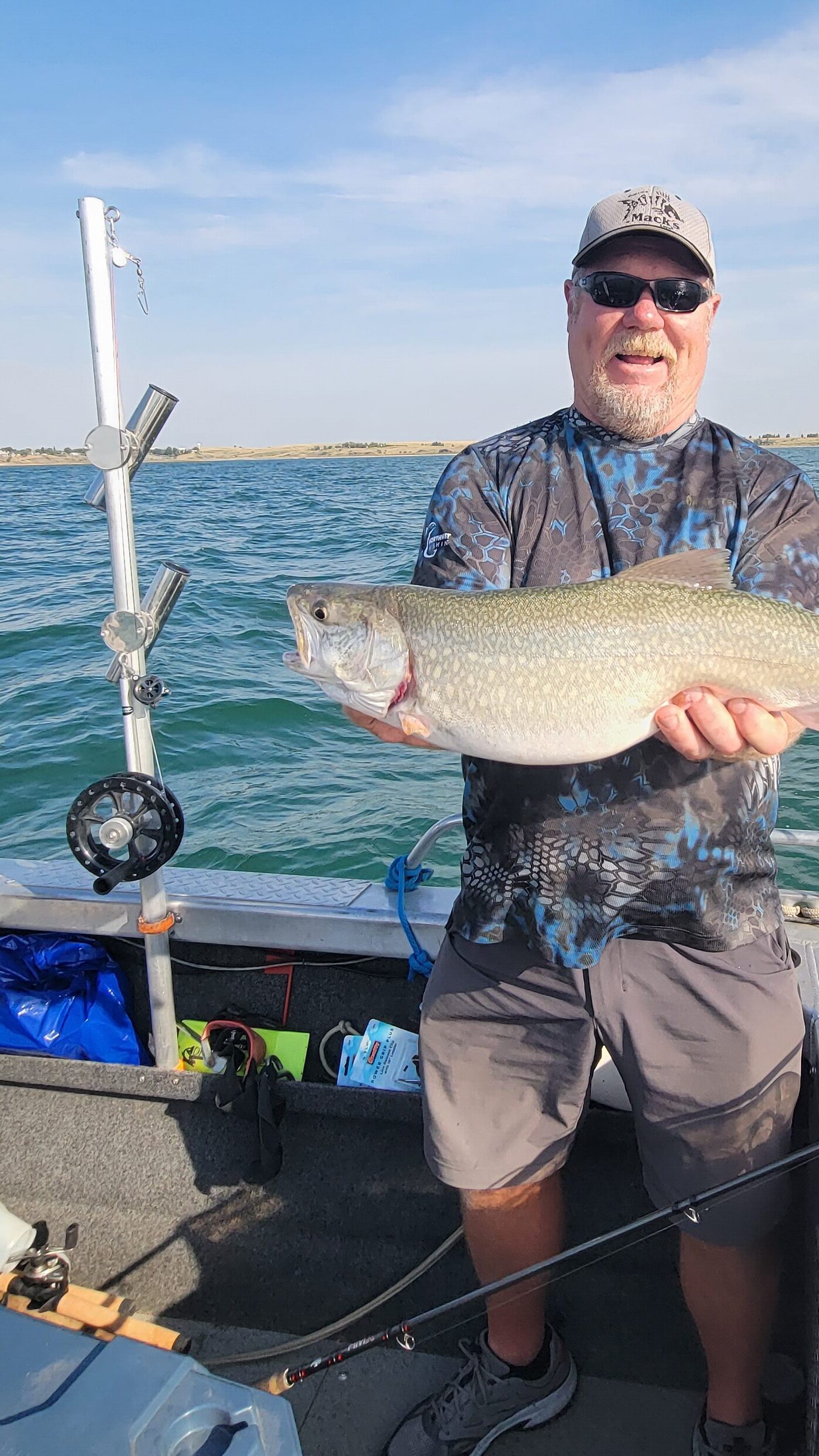
For some people seeking out fishing destinations, the adventure of getting there is more than half the fun. Fort Peck Montana is nearly 1000 miles from Seattle and a 15-hour drive straight through. It is so far East it’s not really PNW anymore. The road to Fort Peck has its share of roadside attractions, beautiful scenery, and fun stops if you plan your time accordingly. If your 5-star fishing destination means a nice long road trip, you should put Fort Peck on your list.
Why Fort Peck? Last year a new state record came out of Fort Peck that caught the attention of anglers across the U.S.. You might be surprised that the record was for Chinook Salmon, a 32.62 Chinook to be exact. That’s a nice fish anywhere! And travelling across the northwest to this unlikely spot for a chance at 30 pound plus Kings is what makes this one of our 5-star destinations. The fishing opportunity doesn’t stop with salmon at Fort Peck, Walleye, Sauger, Northern Pike, Lake Trout, and Small Mouth Bass all abound in one of the most beautiful, uncrowded fishing destinations in the United States. And from experience, they grow them large in Big Sky country!
Fort Peck Reservoir is a big lake (about 134 miles in length, 1520 miles of shoreline, and roughly 220’ deep when full) created by the Fort Peck Dam on the Missouri River, and boats are recommended but there are a lot of marinas and campgrounds to plan your trip around with many having shore fishing opportunities. Glasgow, Montana serves as a good base camp with various lodging, restaurants, and re-supply options and is just 17 miles from the Fort Peck Marina. The Cottonwood Inn & Suites has a variety of options for lodging; from RV Parking to hotel rooms, and amenities include boat parking, a casino, and restaurant.
You can learn more about Fort Peck, and how to fish it at https://fwp.mt.gov/fish
Lake Pend Oreille, Idaho
North Idaho Trophy Hunting
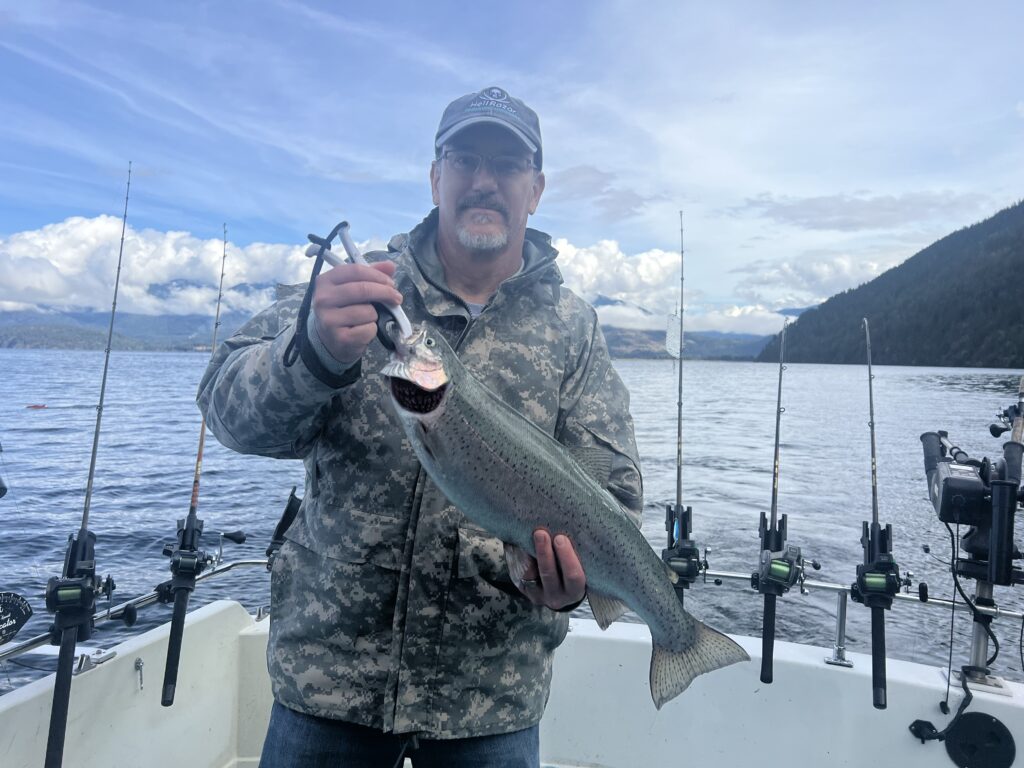
Lake Pend Oreille is the largest lake in Idaho and in the top 50 for the U.S.. It is really deep (over 1000 feet in some areas) and is known for naval submarine testing. This is beautiful country, with a host of fishing options, but what many come for are the Kamloops. Kamloops are a Gerrard strain of rainbow trout and that are known as some of the biggest trout around, and are highly sought after to round out an avid trout anglers trophy checklist. Your chance for “Big fish” is what makes Lake Pend Oreille a 5-star fishing destination.
The Idaho state record Kamloops rainbow trout was caught out of Pend Oreille in 1947 by Wes Hamlet in 1947. That’s a long time for a record to hold up, but that doesn’t stop anglers from pursuing glory every year in tournaments, by boat, and from shore. Pend Oreille is also home to massive schools of kokanee (a favorite food of the Kamloops), and populations of pike, bass, perch, walleye, crappie and mackinaw. The lake has a history of big fish taken from it in addition to the trout record, these include a 43-pound 6-ounce mackinaw in 1995, and a world record 32-pound bull trout in 1949.
The idyllic town of Sandpoint sits on the shores of Lake Pend Oreille, nestled in forests between the mountains and the lake. A destination town for skiers in the winter and boaters in the summer, Sandpoint is a great home base for the family fishing destination vacation with some boujee amenities not too far from some small town, rustic escapes. The theme park, Silverwood, is less than 30 minutes away. If you’re looking to plan a trip with something for everyone, shopping, hiking, dining, and trophy fishing, Sandpoint and the neighboring town of Ponderay are great options.
The word is out, and the popularity of the area has grown immensely for so plan ahead! Jeff and Mona Laybourne of Superfly Tackle not only operate the local tackle store and carry everything you need, but they make specialized gear to target the lake’s prized trophies. They are a wealth of information and can be reached online at https://superflyflies.com/.
Clearwater River, Idaho
Steelhead Mecca
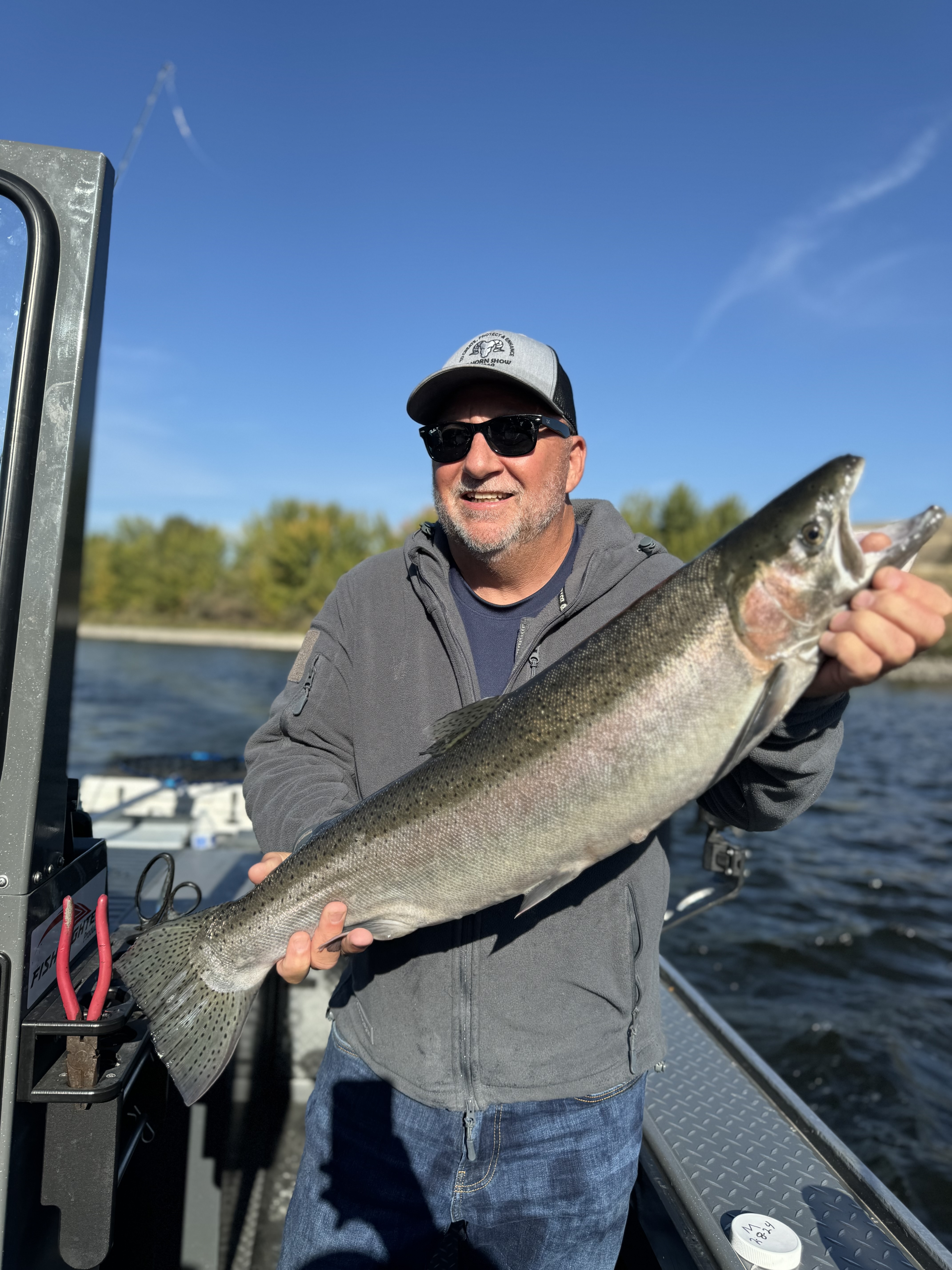
Arguably the most consistent steelhead fishing in the region and your best shot at steelhead retention (catch and keep), the Clearwater River’s retention steelhead season runs from early October to mid-April, with prime time being October through January. You can be at this steelhead promise land in just under 6 hours from Seattle.
The river draws steelhead enthusiasts from around the northwest, offering outstanding opportunities for catch-and-release fishing, fly fishing, shore fishing, and of course drift boats and power boats. The Clearwater’s “B-run” may be the best bet in the region for a trophy 20 pounder, and B-run fish typically average 12-14 pounds. Many of the fish originate at the Dworshak National Fish Hatchery managed by the Nez Perce tribe of Idaho, located at the confluence of the North Fork and mainstem Clearwater, about 3 miles west of Orofino, Idaho.
While the epic steelhead fishing and amazing stretches of highly fishable water make this a 5-star fishing destination, the Clearwater is not a one trick pony. The Dworshak hatchery bolsters catch and keep chances for King and Coho salmon with sustainable fish production goals. Coho were declared extinct in the river in 1986, but this year there was an overlapping sport season for Coho, Kings, and Steelhead! These October days are prime time and can be some of the most amazing, quality, days of an angler’s life. With returning Coho averaging 8-12 pounds, 10 to 20 pounds plus Chinook, and those amazing B-run in the river at the same time, pandemonium has been the theme more than once! Recent years have seen spring run Chinook seasons as well.
This adventure is really about the fishing and those special days on the water. There are a variety of options in the area for shore fishing, multiple boat launches, and some great area outfitters. Many folks skip the hassle of pulling the boat and learning the river, instead walking onto a guides boat and getting right into the hot spots. Many of these area professionals provide a “hot lunch” as well, and around noon you can smell burgers and brats all around the river. Guides we recommend in the area include Toby Wyatt of Reel Time Fishing https://reeltimefishing.com, Kyle Jones of Jones Sport Fishing https://jonessportfishing.com, and Adam Hocking of Steel Dreams Guide Service https://steeldreamsfishing.com. For lodging Lewiston, Idaho has all the amenities with the Hell’s Canyon Grand being our usual choice. Orofino, Idaho, has several good options as well.
Potholes Reservoir, Washington
Walleye Wonderland
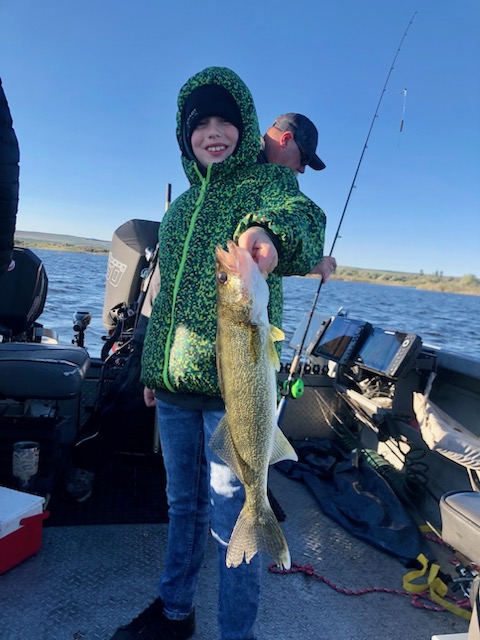
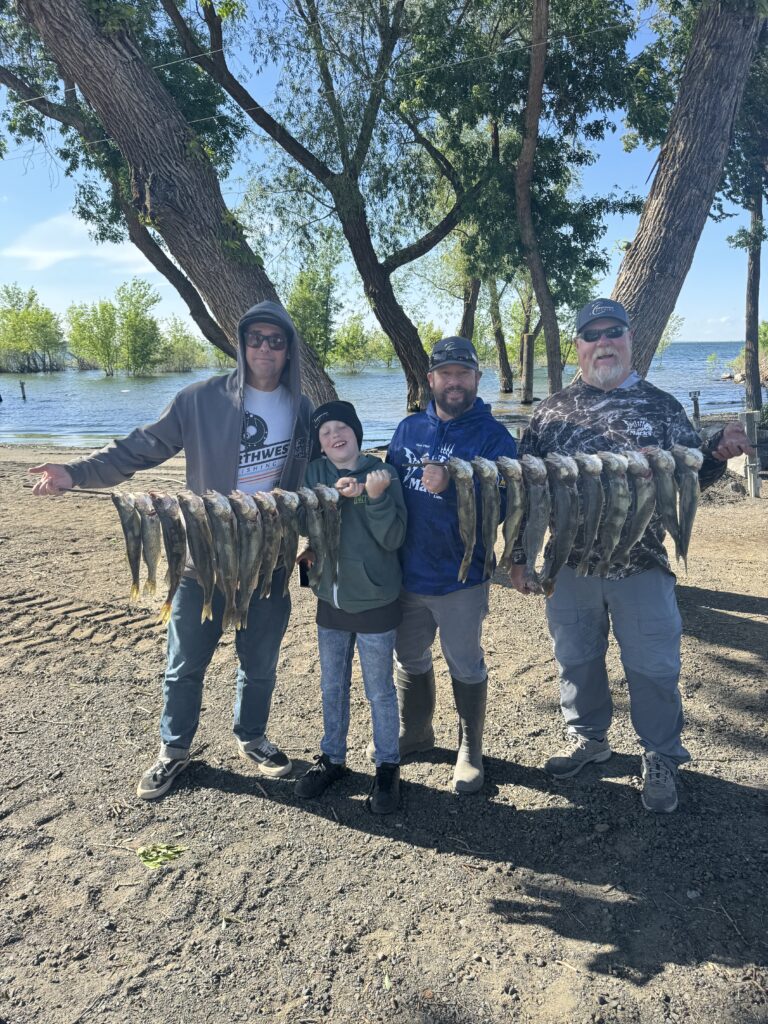
Not everyone’s into walleye, but if you are, Potholes Reservoir should be on your list. Located about seven miles south of Moses Lake in Central Washington, Potholes Reservoir offers year-round fishing opportunities for walleye, smallmouth bass, largemouth bass, and panfish. Dinner plate bluegill are not unknown and last year there was some great rainbow fishing.
The lake is large and shallow, with most of the lake less than 30 feet deep. What used to be, and still is to some extent, a large collection of sand dunes, is now a one-of-a-kind regional destination for bass and walleye anglers and recreation of all sorts. Part of the Columbia Basin Irrigation Project, multiple tournaments are held on the Lake annually, most held at the MarDon Resort Marina.
With over 300 days of sunshine, MarDon is popular as a destination for families, and vacationers nearly year-round (boating, camping, resort events, wildlife & birdwatching), with the Fall and Winter offering excellent waterfowl hunting opportunities. The resort has a variety of lodging opportunities from big RV spots and campsites to beach houses and cabins, you can customize your Potholes Lodging experience to your needs. The marina offers quick access to the Lake, and the restaurant and resort store means you don’t really need to go anywhere.
The consistent walleye fishing, and the flexibility to tailor the trip to whatever you’re looking for is what makes this a 5-star fishing destination. Walleye are delicious table fare, and the big boys can offer a surprising fight. Nothing beats a mess of walleye grilled up after a day of fishing with one of those epic Potholes sunsets on the horizon.
You can fish from the shore or the marina dock, launch your boat, rent a boat, or hire a local guide to experience Potholes Reservoir Fishing. Shelby Ross of Ross Outdoor Adventures is the resident expert on lake conditions and where the fish are.
To learn more about MarDon Reservoir visit https://mardonresort.com/ to contact Shelby Ross of Ross Outdoor Adventure visit: https://rossoutdooradventures.com
Zeballos, BC
Trip of a Lifetime
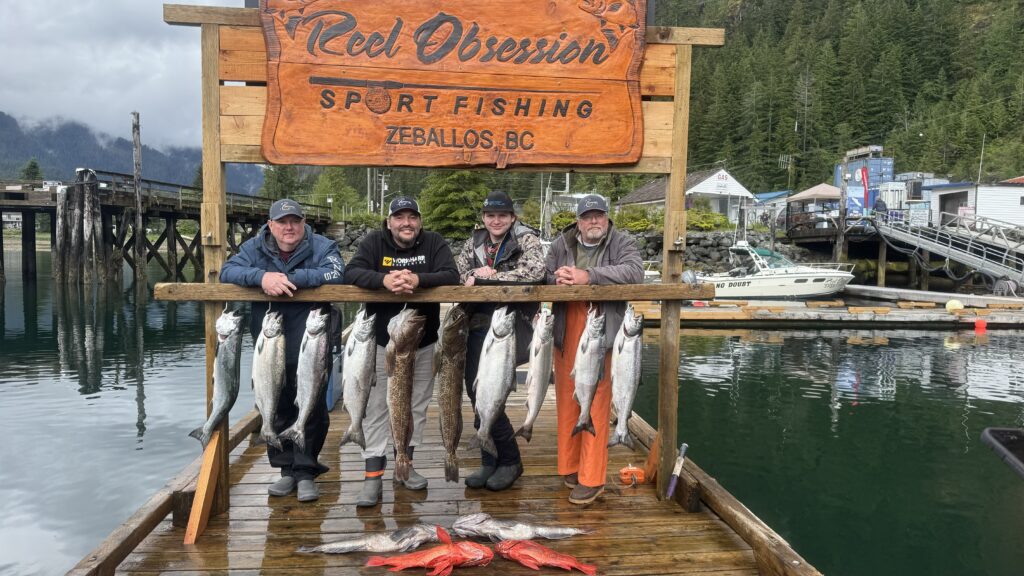
This one is for those people who want the ultimate PNW fishing experience. You want salmon, you want halibut, you want the smell of saltwater and rugged untouched shorelines. This destination is not for people that one shopping, nightlife, and dance clubs. When you pull into Zeballos, BC you drive into the past. There’s one thing to do: Fish, Eat, Sleep, Repeat.
There’s one primary business in this town: Reel Obsession Sportfishing. Zeballos is about halfway up the west coast of Vancouver Island in British Columbia. It looks just like the coastal parts of the PNW. On the drive up (about 4 1/2 hours from the ferry in Nanaimo) there are towering Cedars and Firs, jagged mountains and pristine streams. There aren’t any mini-marts though. This trip is all about decompressing and enjoying some of the consistently best all-around salmon & halibut fishing in the region, and the team at Reel Obsession is obsessive in providing an unforgettable experience for their guests.
From the time you arrive until you depart, they have thought of everything. Wonderful accommodations, amazing chef prepared meals, top quality boats, gear, and equipment, and off the hook fishing is what makes this a 5-star fishing destination. Owners Adrian and Angie O’Connor have grown their operation to include up to 30 guests daily with groups of two, three, and larger visiting for three- or four-day inclusive trips. Guests start their day with breakfast in the common room then head for the boats, lunches already onboard, after eight hours of fishing your captain returns you to the dock. Fish are filleted, vacuum packed, and flash froze – all while you enjoy the latest chef’s creation. Then you wake up and do it again.
Located at the end of Esperanza Inlet which leads to Nootka Sound and then the Pacific Salmon Highway, fishing from Zeballos allows multiple options to intercept salmon, access to reliable halibut grounds, and the chance at ling cod and bottom fish nearly every trip. Later in the season Albacore Tuna trips are possible as are the chances for the prized Tyee Salmon (30 pounds or larger).
U.S. guests are limited to specific travel limits which usually fill a good cooler. Reel Obsession books up fast each season, we recommend you reach out to them early to plan your destination fishing adventure. For more information about Reel Obsession visit https://reelobsession.ca
/articles/five-5-star-fishing-destinations
NW Good Eats: Laughing Dog Brewing
Who: Laughing Dog Brewing
What: Award-winning Brews and Award-winning Chef
Where: 805 Schweitzer Plaza Dr. Ponderay, ID 83852
About their Dog House:
Laughing Dog Brewing is a must-stop for those fishing in or around Lake Pend Oreille in North Idaho.
Located in Ponderay, just north of Sandpoint, the easy access to Highway 2 (Highway 95) and Highway 200 lends itself to a quick and restful stop for the traveling fisherman. No need to kick off your boots here, walk in just as you are - straight off the boat - and bring your furry friend with you. Yes, as in the name, Laughing Dog caters to those with pooches in tow.
Laughing Dog not only has 12 taps on hand, but their food is an elevated comfort style that triggers curiosity and tickles the pallet. The menu is constantly evolving, being driven by local produce and their award-winning Chef/Owner’s imagination. Which in my opinion, is limitless. Chef Adam Hegsted is a genius in his field at the top of his game.
The Food:
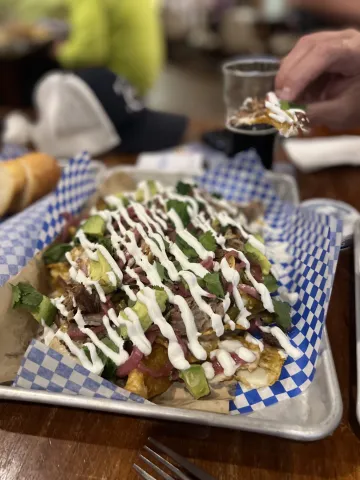
Laughing Dog takes the hotdog to a whole new level. Their Haute’ Dogs menu has something for everyone. Try the Traveler! Made with local smokey sausage, it is topped with jalapeno jam, peanut sauce, cilantro, pickled jalapenos, and basil aioli. Laughing Dog's burger choices are just as imaginative and delicious. The PB & J Burger has jalapeno jelly, peanut butter sauce, cilantro, Thai basil aioli, and pickled peppers on a brioche bun. The Korean Chicken Sandwich is amazing and is my favorite. The Classic Burger delivers for those burger enthusiasts’ predetermined expectations of what a hamburger should taste like. The Truffle Mac and Cheese and Avocado Nachos are two of Rob Holman’s favorites.
The Taps:
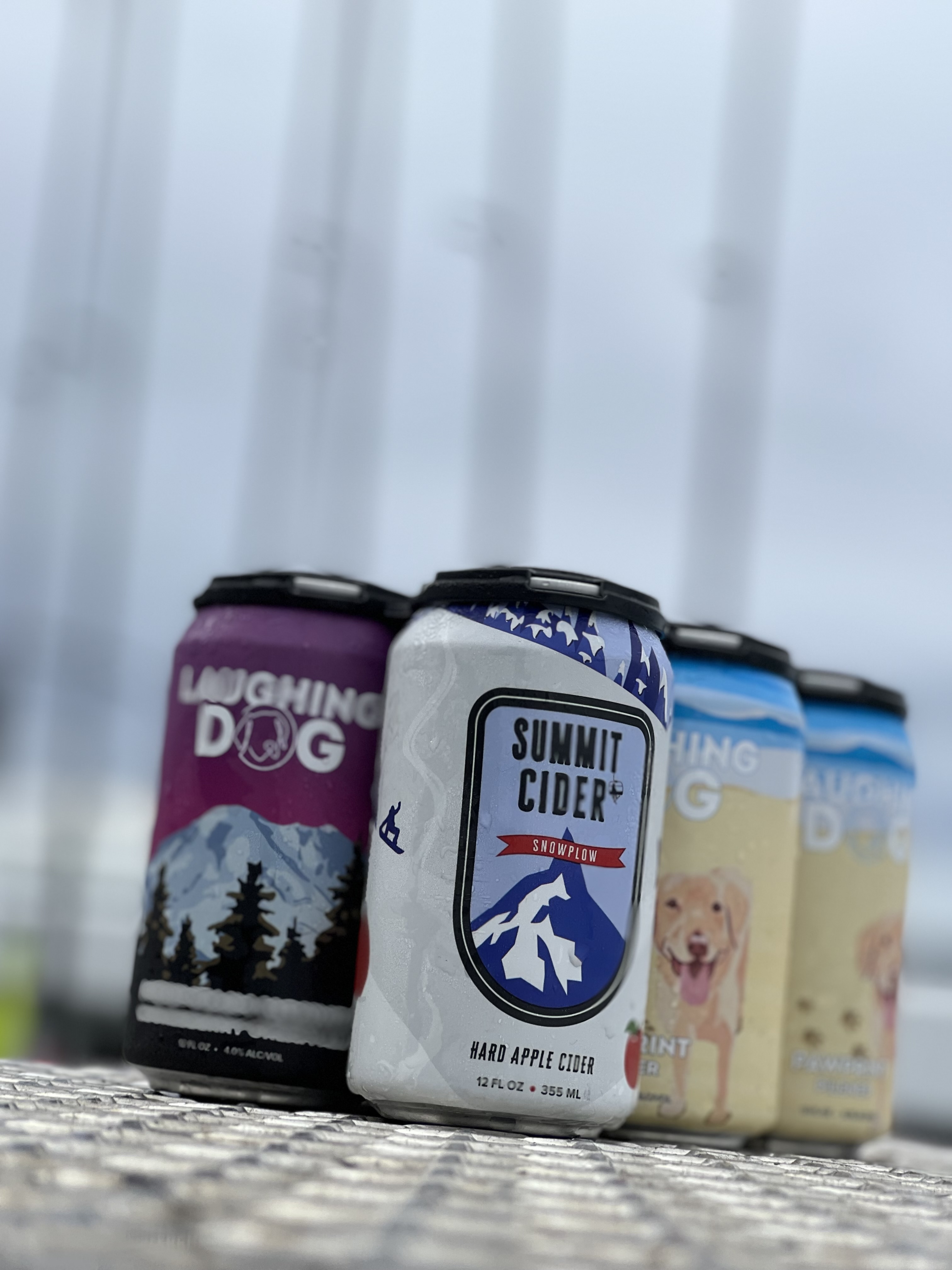
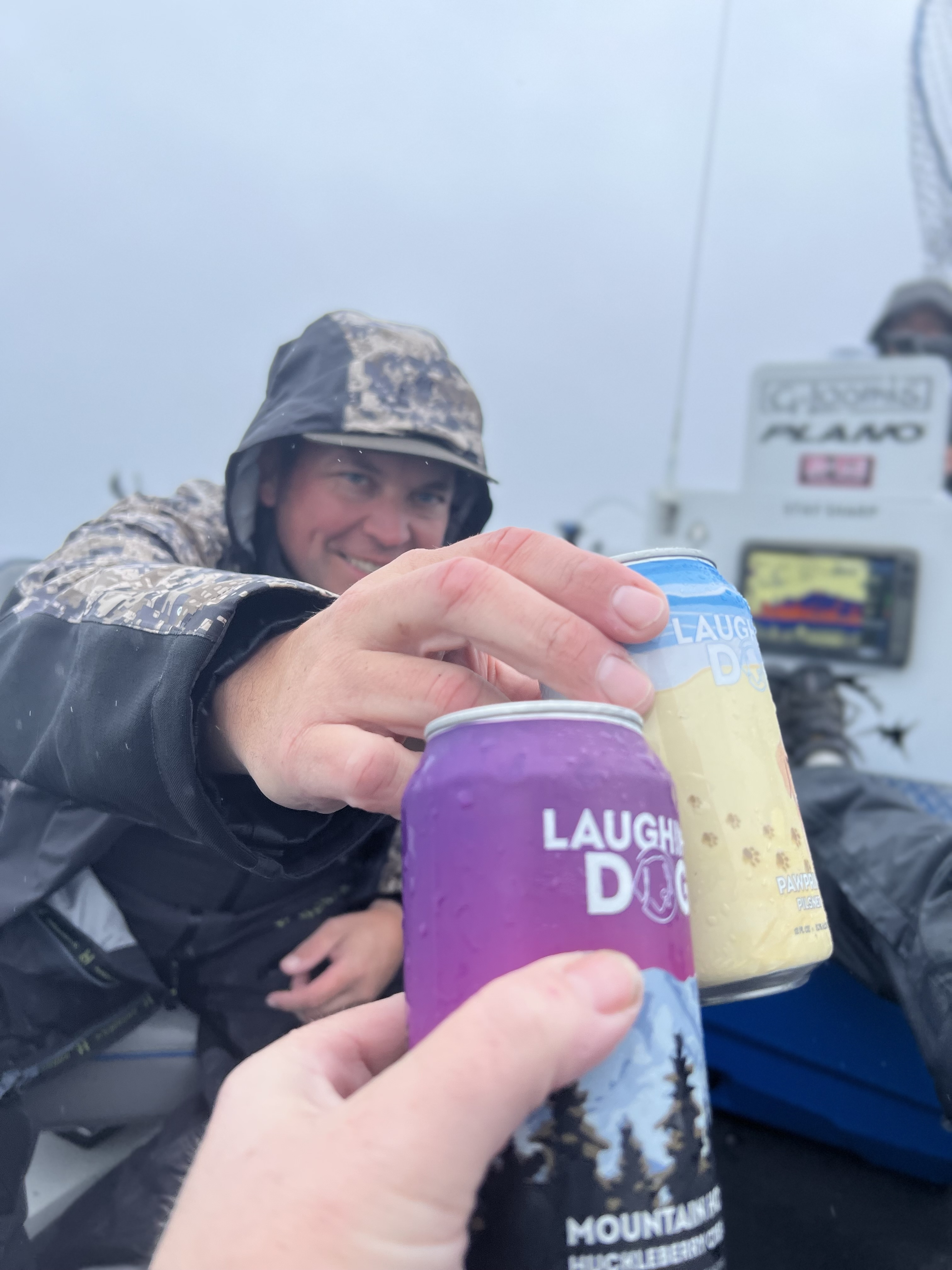
Laughing Dog Brewing is known for many things, and their Huckleberry Ale is top of the list. Amid huckleberry territory, Laughing Dog prides itself on sourcing NW ingredients that are brewed in the Northwest in their Ponderay Brewery. The summit Cider is out of this world and is made with northwest apples. The Dogfather…It's everything the name suggests, and more. Stop in to find a new creation on tap, like the Huckleberry Seltzer, that has made its way from the tap to the shelf because of its taste and popularity. Schedule a tour of the Brewery if you have the time or check out their website to find where you can find Laughing Dog Brewing products in stores near you.
Find Our Beer – Laughing Dog Brewery (laughingdogbrewing.com)
The awards:
- 2023 Gold metal recipient Belgium Beer Festival class “Brown Ale”
- Best of Inlander Spokane 2024
/articles/nw-good-eats-laughing-dog-brewing
Destination Spotlight: MarDon Resort
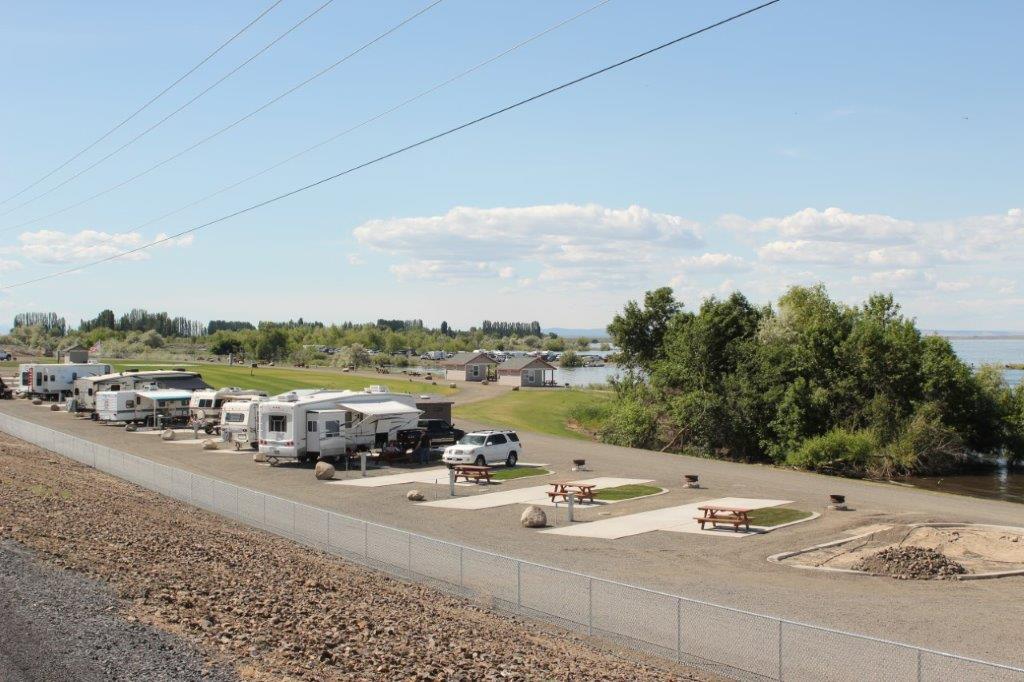
We are a Destination RV Resort on the shores of Potholes Reservoir, 15 minutes South of I-90 at the Moses Lake exit. Potholes Reservoir is a 28,000-acre lake held back by a 3.5-mile earthen-filled dam, the longest such dam in the US. There is a boat launch at the resort as well as 3 others on the lake.
We are a 3rd generation family resort. The senior Mesebergs bought the resort in 1972, moving from Seattle to MarDon. Now their grandchildren, Levi and Annie manage the resort. Our motto is From our family to yours!
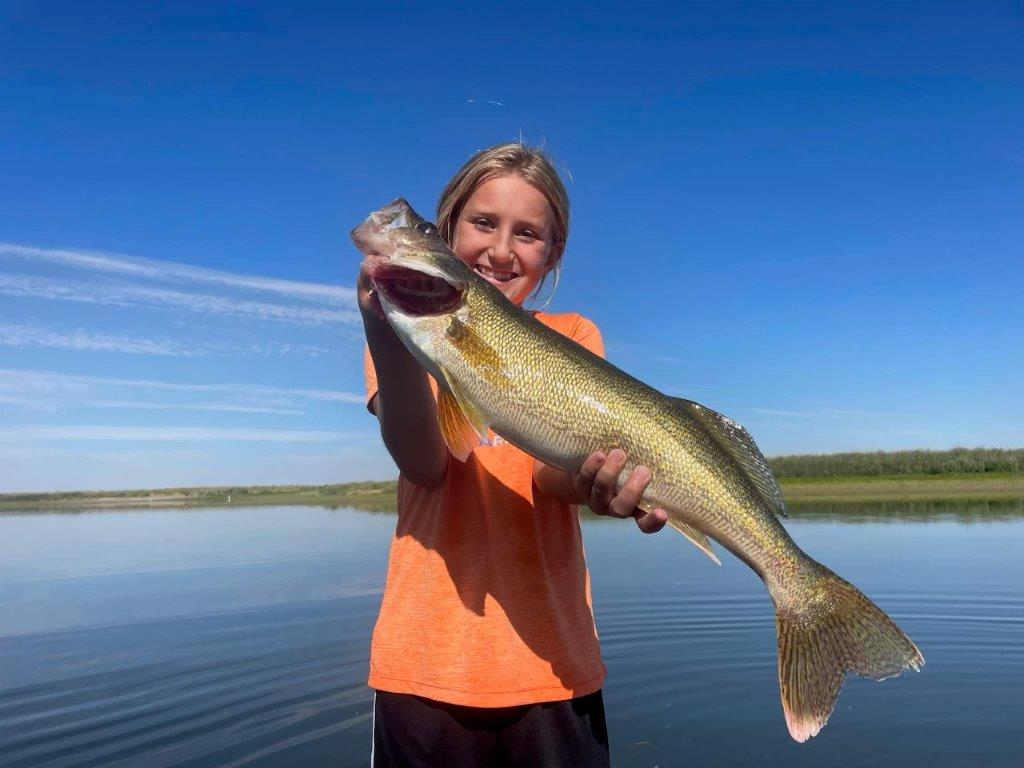
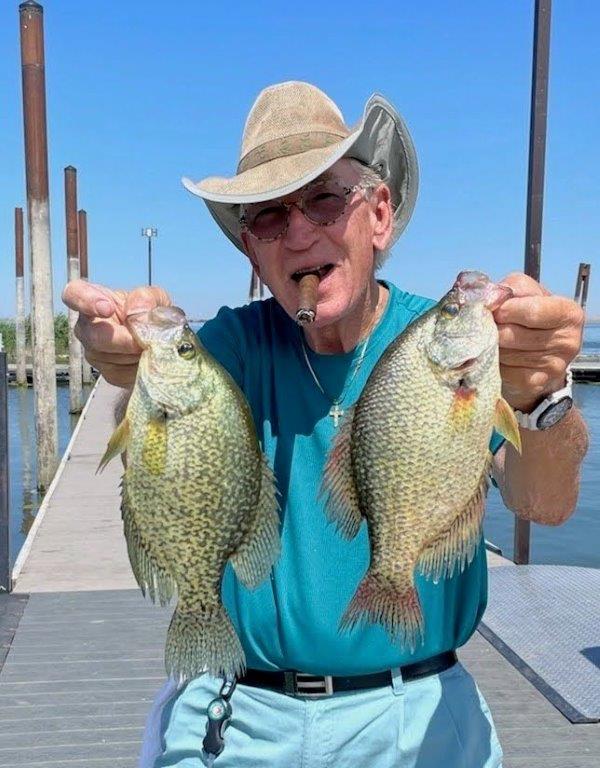
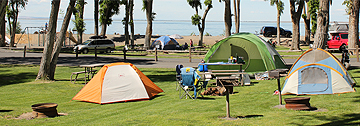
Over the last 10 years, our family has added big rig RV sites and remodeled existing RV sites in the park. We have replaced both old motels with 10 cottages and 5 beautifully appointed lake houses. We also have rental homes and camper cabins sprinkled throughout the resort. Once you are here and settled in the lodging or your RV, you can explore the resort and lake shoreline. Come evening, enjoy a meal in our Beach House at MarDon Restaurant and lounge. Or catch the sunset while you relax in a lawn chair on the marina while wetting a line. The marina boasts crappie, perch, bluegill, bass, trout, and the occasional walleye bite. And if you didn’t bring the right tackle or nightcrawlers the MarDon Tackle and Gift Shop is the place for you.
And don’t forget to leave time to try our 18-hole mini golf course, $5 or $10 (kid/senior or adult). It is challenging, fun, and a good way to work up a competitive banter amongst your group. Or spend the day on the beach while the kids build sand castles and frolic in the lake. For the older kids, there is a dock to swim to.
The resort offers seasonal rates. Summer RV is $40-$85, $40 being a weekday water and light hookup, while the $85 is a big rig pull-through full hookup site with a concrete slab. The spring/fall range is $30-$70. Summer lodging is $165 - $410. All units are for 4, 6 or 8-person families. The $165 is a camper cabin, Cottages are $240-$335, Lake Houses are $290-330, and the large rental homes are $410. The Spring/Fall range is $120 - $315.
Nearby is a beautiful 18-hole course 1 mile from the resort, The Legacy Golf Resort. Pro Touch rents jet skis (1 mile away but they will deliver to our beach). MarDon Resort rents pontoon boats for families of 8 or less and 14’ fishing boats with a 15 hp motor for 2-4 people. There are 70+ small lakes below the dam to explore, www.columbianationalwildliferefuge.com
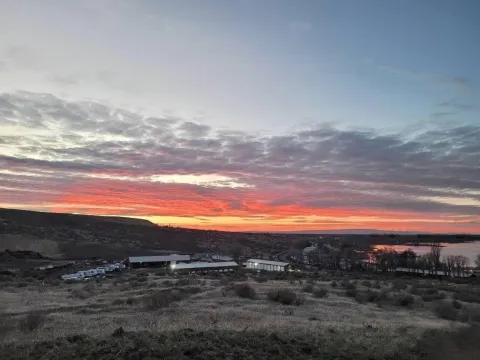
In other words, you will find more to do than you have time for. We have big skies, big water, and the best sunsets that I have ever seen (and I have been to Hawaii!).

/articles/destination-spotlight-mardon-resort
Big Bass Tournaments
A GREAT WAY TO BREAK INTO THE WORLD OF TOURNAMENT FISHING
Tournament bass fishing can be an intimidating experience, but it can also be a whole lot of fun and if you want to dip your toes into the world of competitive fishing, a Big Bass tournament is a terrific way to start!
THE STANDARD TOURNAMENT FORMAT
For decades, the standard tournament format involves either an individual angler or a two-person team on board a bass boat fishing for anywhere from one to three days. The goal is to catch five big bass, put them into your livewell, and at the end of the day bring them to the dock where a weigh-in takes place. The team with the heaviest bag wins. After the weigh-in, the bass are released into the lake. If anglers submit a dead bass to be weighed in it is subject to a penalty with a certain amount of the weight being subtracted. In some cases, dead bass are not allowed to be weighed in at all.
There is usually an 80-20 rule when it comes to these bass tournaments, especially the opens where anyone can fish the event. The top twenty percent of anglers tend to end up at the top of the leaderboard while the other 80 percent of the anglers essentially donate their entry fees to the winners.
It’s a tough way to break in because there is invariably a huge learning curve when it comes to tournament fishing that improves with on-the-water experience. It is something that can’t be overcome by watching YouTube videos about bass fishing.
Another barrier to anglers wanting to get into the tournament scene is the best anglers also have the best electronics, boats, 250 HP outboards, Power Poles, forward-facing sonar, and more. In other words, they spend a bunch of money on equipment that may give them an edge over their competition.
HOW A BIG BASS TOURNAMENT WORKS
Big Bass tournaments are a completely different animal from a standard bass tournament. They are almost always open vs. club tournaments, meaning any angler can compete and you don’t have to be a member of the specific club putting on the tournament.
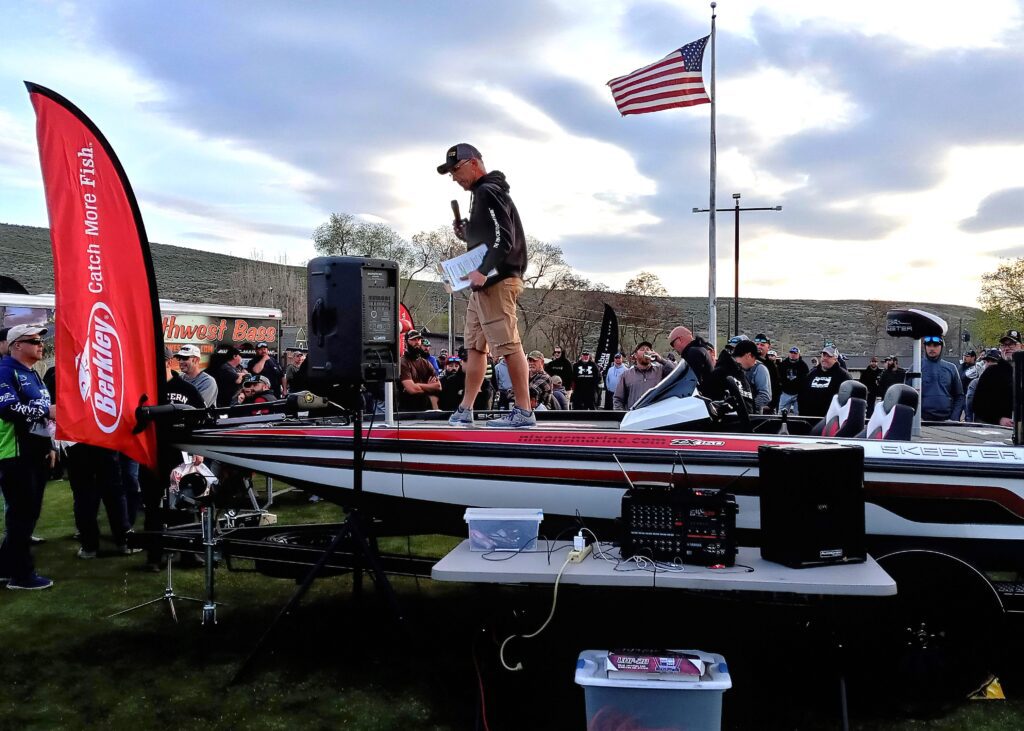
The goal of a Big Bass tournament is to catch the biggest bass and the payouts can be huge. Northwest Bass and Nixon’s Marine team up to give away a new bass boat to one of the hourly winners. What is an hourly winner? That would be the biggest bass caught over an hour-long period throughout the tournament. During the Northwest Bass tournament I participated in, some 100 teams were competing, and seven hourly winners. Each hourly winner was given a key and one by one, the team would get into the giveaway boat and turn the key to start the engine. One of the seven keys works, the other six do not and it’s an exciting event to watch at the end of the day.
Other tournaments I’ve participated in with Limit Out Marine and the Mount Saint Helens Bass Masters also had hourly payouts for the biggest bass weighed in each hour and a big check (up to $10,000) for the biggest bass weighed in during the event.
Big Bass tournaments draw big crowds fishing from a variety of different boats. Unlike the upper-level tournament anglers who routinely catch three to four-pound fish over the course of the day, a Big Bass contestant only needs to catch one good fish to cash a check. This really helps level the playing field, giving even the casual bass angler a shot and being a winner.
CONSERVATION
Tournament bass anglers pride themselves on their catch and release ethic of letting all bass go at the end of the tournament. However, catching bass in the morning and driving around the lake all day can really beat the fish up, especially on a windy day. In some cases, bass don’t make it alive to the weigh-in and in other cases, while they may be alive when they are released back into the lake they may not survive over the long term.
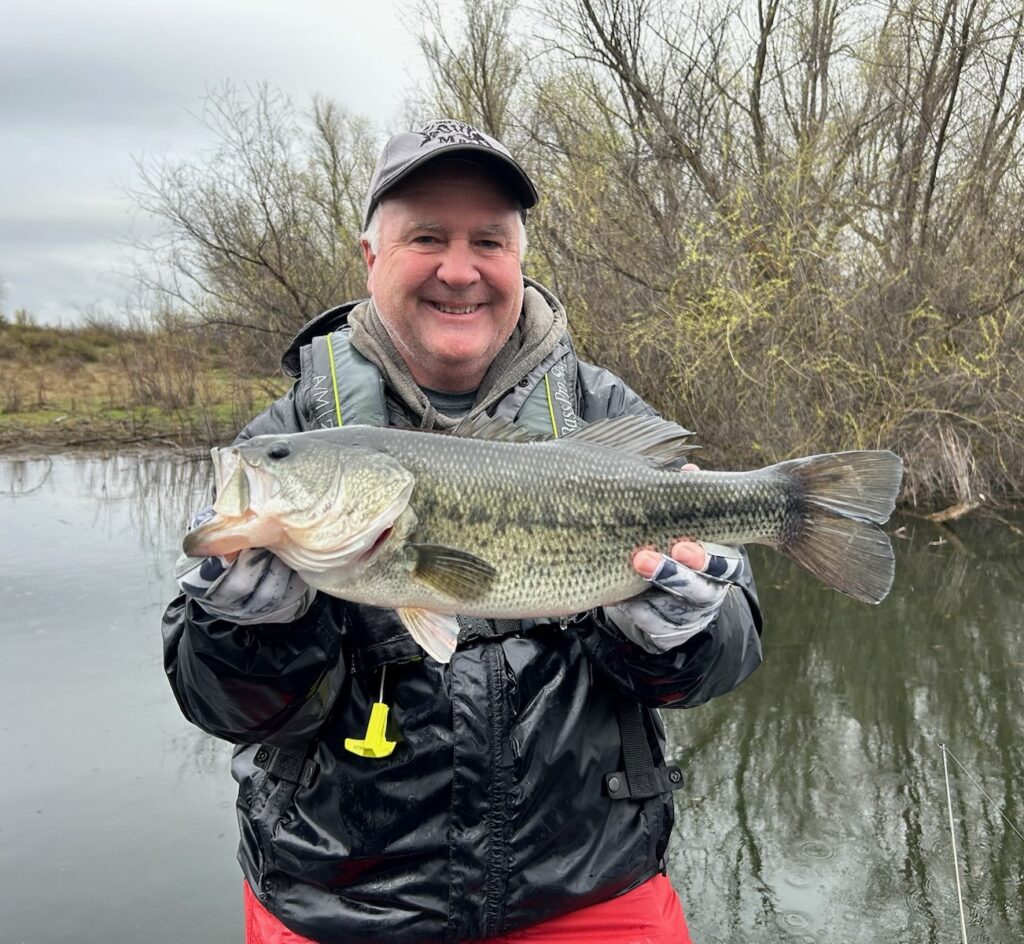
That’s why Big Bass tournaments are much easier on the fish. You generally know what it is going to take to have a chance to win an hourly weigh-in. So, let’s say that weight is four pounds. You might catch five fish that are all three-pounders you would normally have in the livewell all day but in a Big Bass tournament, knowing you need at least a four-pounder, you release them immediately right where you caught them.
If you do have a four-pound or bigger fish in this scenario, you race back to the weigh-in site within the hour, get it weighed, and then release it back in the general area where you caught it. By doing these things, you are really helping the overall fishery by keeping the bass healthy and back in the water as soon as possible.
STRATEGIES
The best thing about a Big Bass tournament is that no matter what your skill level, you know that even a blind squirrel can find a nut sometimes and the same goes for you as a Big Bass tournament angler! However, if you want to increase the odds there are a few things you can do.
Do your research and find out, historically, where the bass are usually found in the body of water you are fishing at the time of year the tournament takes place. Ask the local bait shop employees what the hot lures and offerings are for the time of year you are fishing. And most importantly, fish the lake or river before the event.
Many tournaments will have a cut-off date where you cannot be on the water for several days before the tournament begins. That’s okay. Just get on the water as close to the cut-off as you can. Explore the lake. Figure out the places where the fish are not and narrow it down to where they are in terms of depth and orienting around structures; whether it be trees, submerged vegetation, beaver huts, rocks, points, etc.
Oh, and don’t go crazy and win the pre-fish! You don’t want to catch 30 fish at one place because you’ll likely find those fish wise up to what you are trying to sell them come tournament day. Instead, just hook a couple and shake them off so that the majority of the fish in the area you want to be on your big day are undisturbed.
WASHINGTON BIG BASS TOURNAMENTS TO CHECK OUT:
The following clubs and tournament circuits offer Big Bass tournaments, open to the public, every year:
- Limit Out Marine/ Big Bass Trail – www.bigbasstrail.com
- Northwest Bass – www.northwestbass.com
- Washington State Bass Federation – www.wabass.org
- Mount Saint Helens Bass Masters - www.mshbm.org
Big Bass tournaments! They are a ton of fun and a great way to get into the sport. Give it a try this year.
John Kruse – www.northwesternoutdoors.com and www.americaoutdoorsradio.com
/articles/big-bass-tournaments
Cowlitz River Smelt Dipping
Although this time of year can seem low on fishing opportunities, there is one fishery that I always look forward to. The Cowlitz River smelt fishery is a truly special opportunity. It's unique for several reasons. One, you don't even use a fishing pole! Two, you usually have less than a week's notice when it opens. Three, it's only open for a few hours at a time.
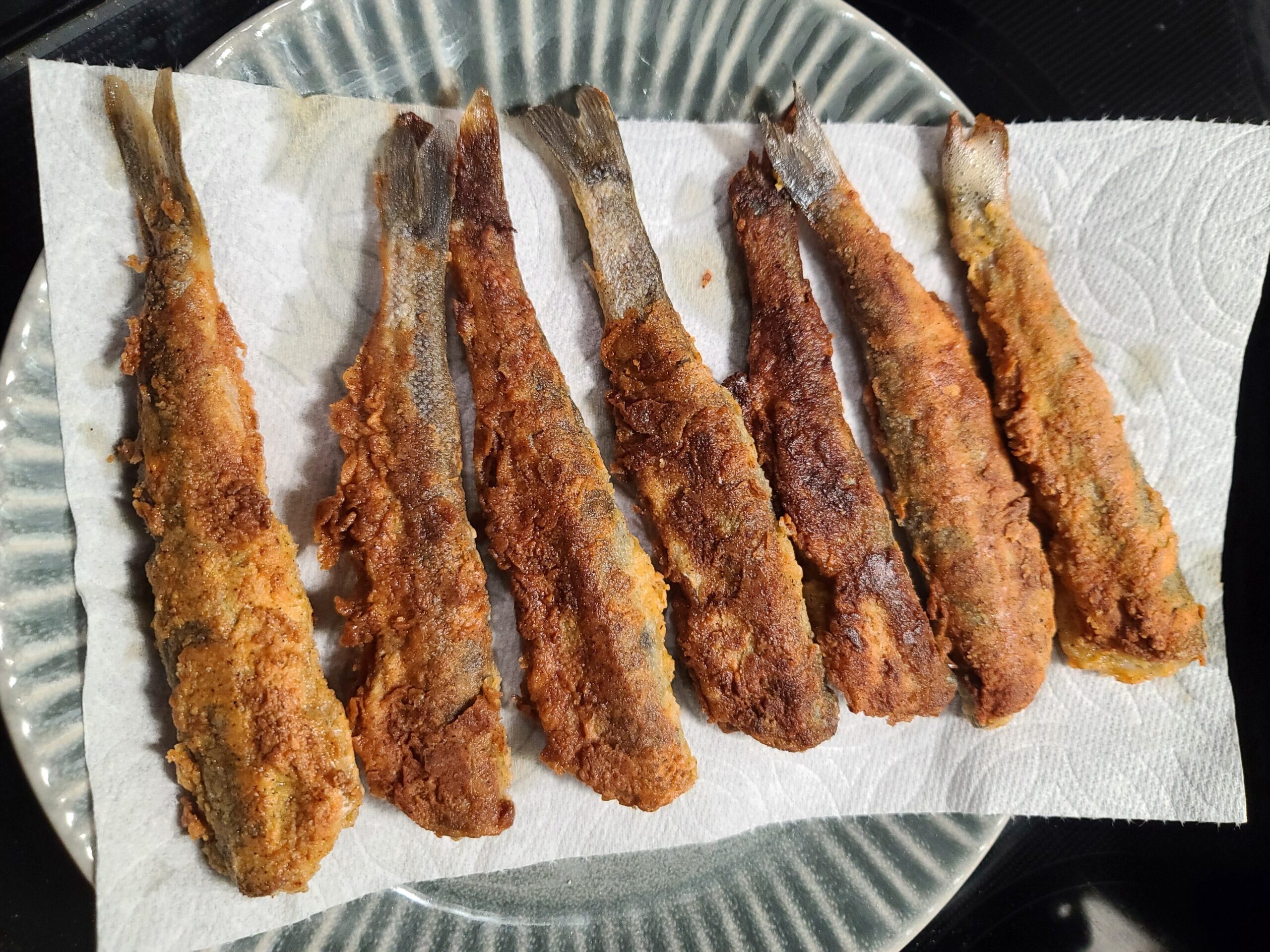
Thankfully, there is a generous 10-pound limit, and you don't need a fishing license to participate. Smelt are absolutely delicious when fried or smoked. They're very oily fish, and their meat is soft and sweet. If you aren't interested in eating them, they make great cut bait or crab bait. Interested in trying the fishery? Let's dive into how and where to get them.
Thankfully, the gear needed for smelt dipping is pretty minimal. You will need a bucket to hold your catch, a scale, and a long-handled net. I typically use a 5-gallon bucket, but you can get away with using a smaller bucket if that's what you have. The limit is 10 pounds, which WDFW says is typically a quarter of a 5-gallon bucket. It's a good idea to carry a scale though, in case you get checked by a game warden.
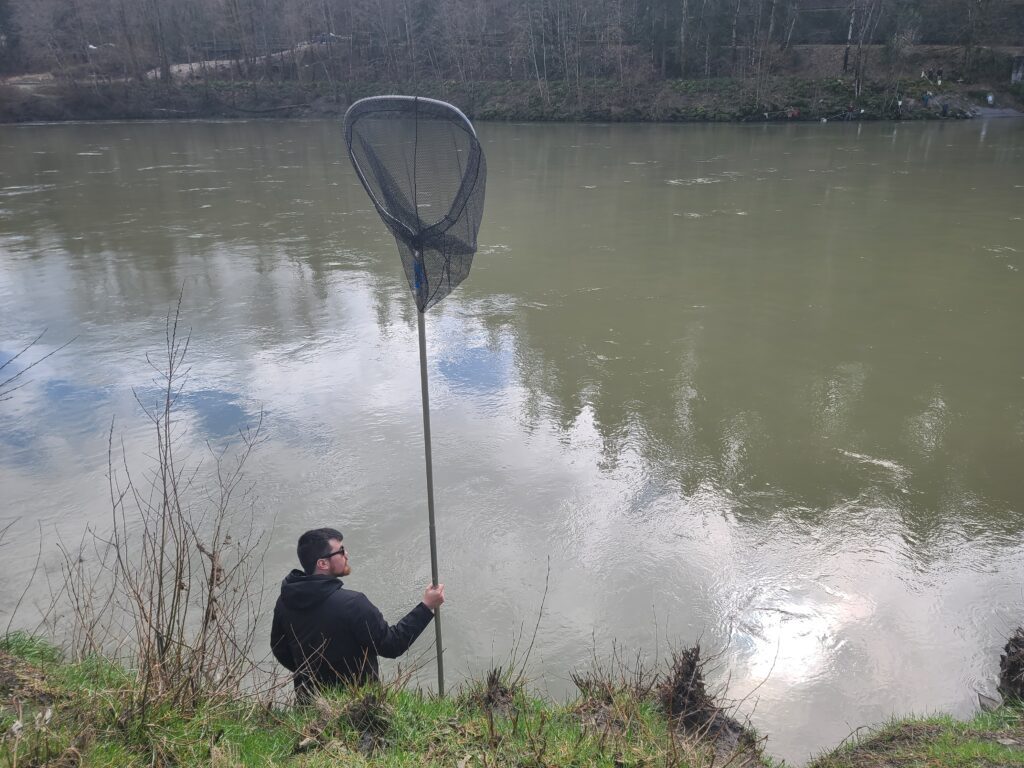
The most important advice I can give you is to make sure your net has a long handle and fine mesh. A typical landing net won't do the job. The handle isn't long enough to scoop down to the bottom of the river, and your smelt will slip through the wide mesh in the net. Here's another word of advice--get your net during the off-season and don't wait until the next dip is announced. Sporting goods stores can and do sell out when a smelt dip is announced, so if you wait, you might have to drive far to get one, or you can make your own.
If you're interested in participating in the next smelt dip, you're probably wondering where to go. During the last dip, the boundaries were between the Tenant Way Bridge and the mouth of the North Fork Toutle River. This stretch of the Cowlitz River has ample public shore access. You can find a map of popular spots on WDFW's smelt web page, or strike out on your own (but be mindful of private property). You can expect to have company, so it's a good idea to show up an hour or so early to stake out your spot. Longview, Kelso, and Castle Rock all have gas stations and restrooms. There's a dock at the boat launch in Castle Rock, if you don't want to get your feet wet or risk falling in the river while navigating the steep riverbank.
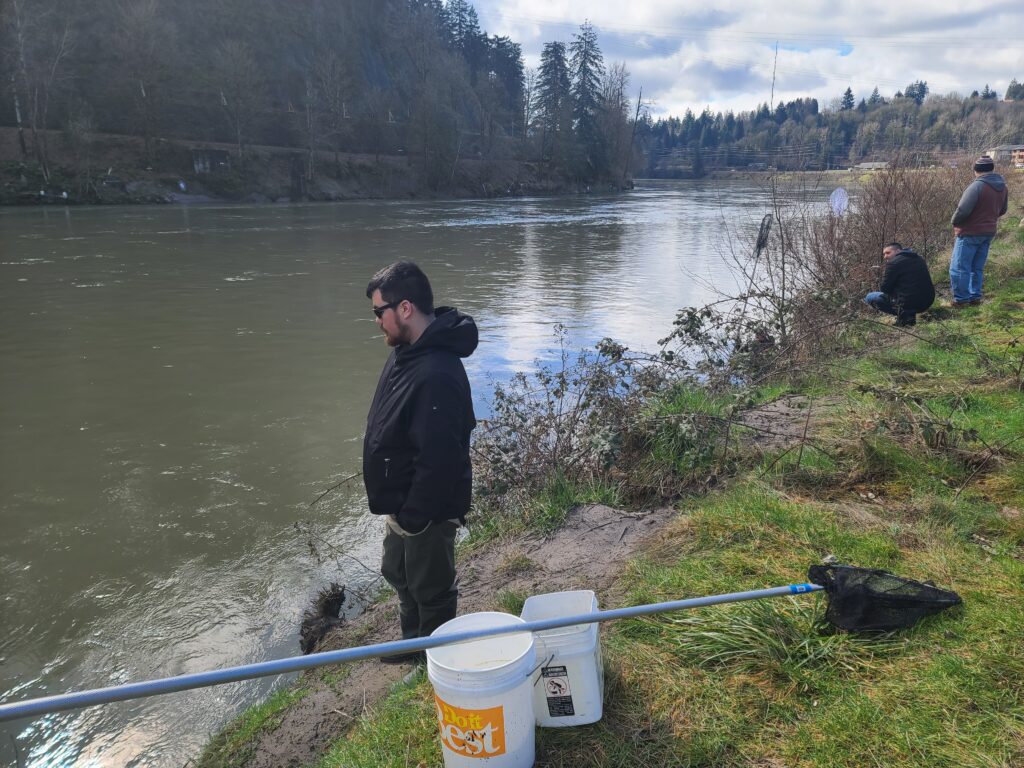
Once you're at the river, pick your spot. As previously mentioned, riverbanks can be steep, not to mention thorny. Be careful not to trip or slide- no fish is worth a fall in the river! You can wear a life vest to be extra cautious and put life vests on any kids joining the adventure. If the fish are in, one spot is as good as any. Dip your net in the river and sweep through it with one fluid motion.
You want to go quickly enough so that the fish can't swim out of the net. You should be able to feel them hitting your net. Don't be afraid to drag against the bottom if you need to. Resist the temptation to net as far away from you as you can. Sometimes the fish are right up against the bank! Deposit your catch carefully in the bucket and keep weighing them to ensure you don't exceed your 10-pound limit. Like any other fish, put your catch in an iced cooler on the way home so that their meat stays fresh and firm.
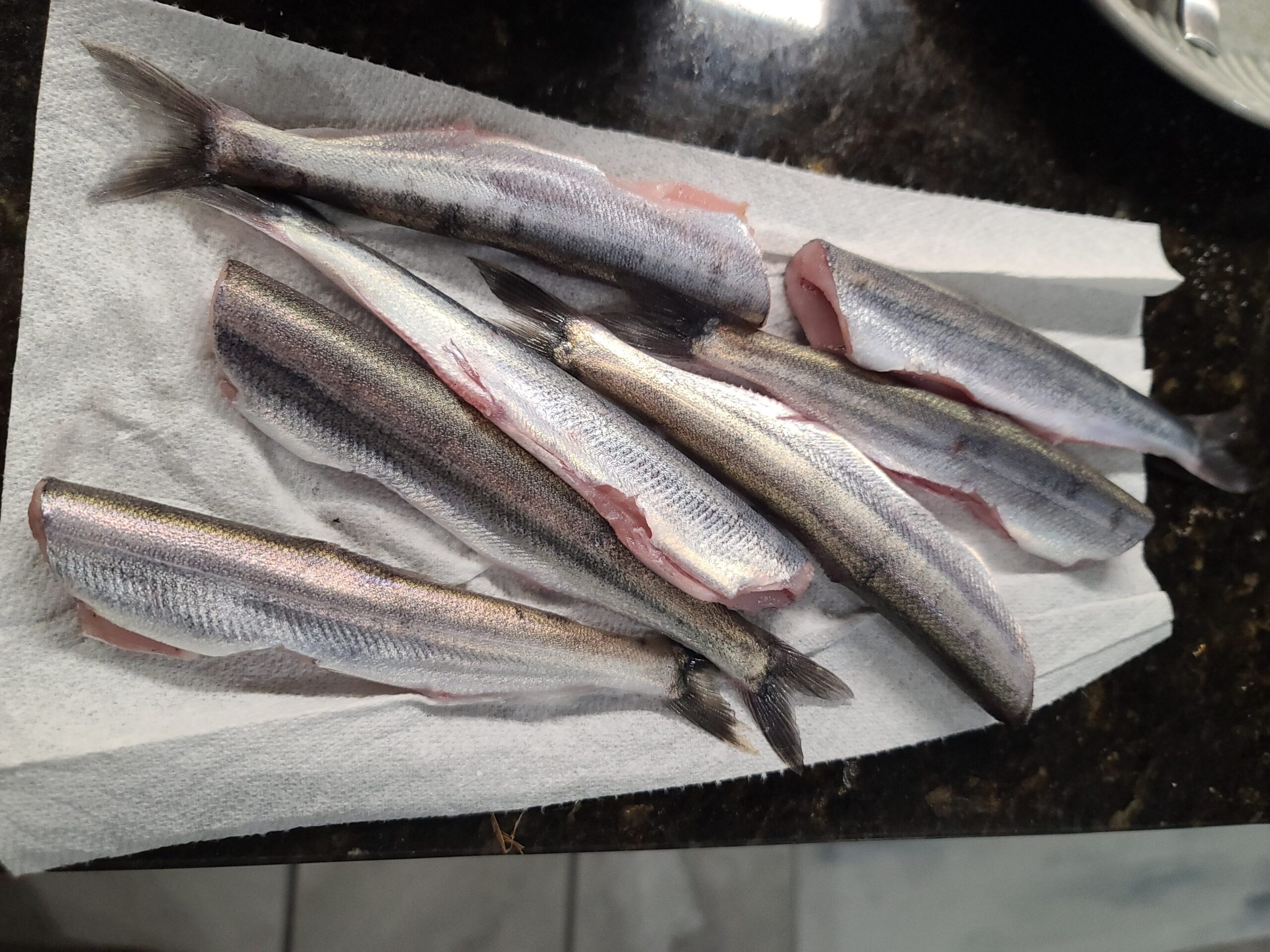
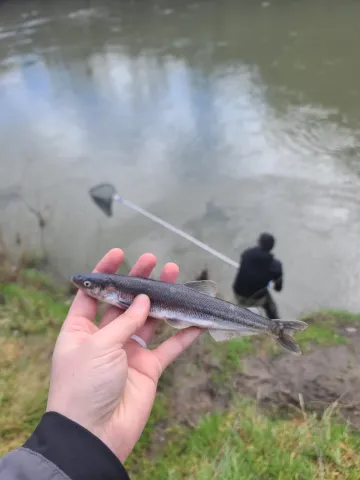
I'll leave you with some interesting facts about Pacific Smelt. Just like salmon, they hatch in rivers and spend their lives at sea. They return to their home rivers to spawn when they're between 2 to 5 years old. Again, just like salmon, they're an oily fish. They're about 15% oil! They're also called “candlefish” because they will catch on fire if you hold them up to a lighter.
Sadly, they're considered an endangered species. Around the mid 90's, their populations began to sharply decline. WDFW closely monitors their return numbers and determines if they are healthy enough to support a recreational fishery. This year, we were lucky enough to get not one, but two smelt openers. The reason that our smelt fishery is so limited is to protect their sensitive populations. They are susceptible to overfishing, so to ensure that future generations get to enjoy this fishery, it is tightly regulated and monitored.
Be sure to follow the rules! Don't exceed your 10-pound per person limit, and only net the section of the river that is open. Carry a watch or check your phone so that you don't start dipping until the time WDFW specifies. Most importantly, have fun!
/articles/cowlitz-river-smelt-dipping
Onward Hoh... River That Is
If ever there was a river world renowned for its beauty, versatility, and Gollum-like trophy steelhead, this is it.
The Hoh River, from deep within the Olympic National Park, sourced from Mt. Olympus himself.
Floating north and west with a full mountain embrace, collecting headwater tributaries like badges of honor. A collection of blue and white glacial waters swirling under a canopy of fierce and protected old growth, this braided channel river looks to be strategically created. An art unto itself. Its milky slate blue waters, glisten like the eyes of a newborn.
The Hoh River flows 56 miles from its headwaters to the Pacific Ocean. The South Fork Hoh River is 17 river miles in length and enters the main stem at the Olympic National Park boundary at RM 30. The upper section of the Hoh watershed lies entirely within the Olympic National Park. The middle section of the river flows through state and industrial forest and valley homesteads. The Lower Hoh River encompasses the lower third of the watershed, 16 river miles from Highway 101 to the Pacific Ocean. 750 miles of tributaries flow into the river below ONP. Of these, 250 miles provide fish habitat. Numerous spring-fed terrace tributaries feed the Hoh River.
The Hoh River watershed is home to four species of wild salmon, steelhead, and many other fish and wildlife species. Located at the mouth of the Hoh River, the tiny Hoh Indian Tribe or “Chalá·at” ("Those-Who-Live-on-the-Hoh River") are dependent on the fish and wildlife of the Hoh River for their subsistence and commercial economy. Protecting the watershed’s function is key to preserving these important resources, not only for the tribe, but also for fishing and recreational communities in nearby cities and towns, and up and down the coast.
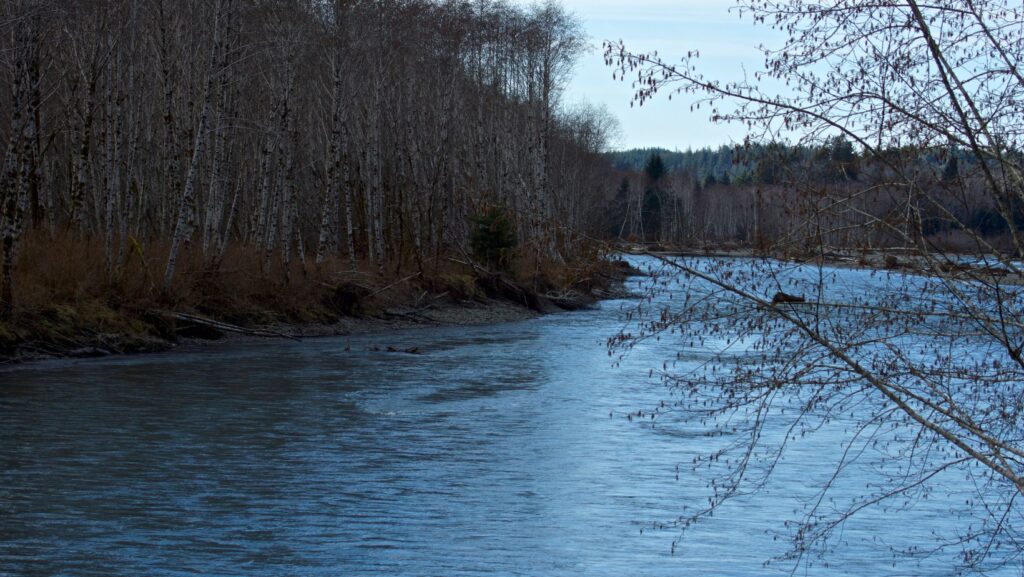
Despite this river's status as one of the healthiest in the country, the Department of Fish and Wildlife has enacted severe restrictions on coastal steelhead fishing due to “low returns.” It was specifically focused on the long-term decline of coastal steelhead in the Queets and Quinault watersheds, Quillayute River system, Hoh River, and Willapa Bay River system.
Between December 1st, 2023, and March 31st, 2024 there are opportunities to fish from floating devices on the Hoh Sunday through Tuesday only from the Morgan’s Crossing boat launch downstream to the Washington Department of Natural Resources Hoh Oxbow Campground boat launch, and Wednesday through Saturday only from the Hoh Oxbow boat launch downstream to the Olympic National Park boundary near the mouth.
Barbless single hook, catch and release only. This is a continuation of the WDFW implementation of the Statewide Steelhead Management Plan which requires the Department to prioritize the sustainability of wild coastal steelhead runs by focusing on healthy levels of abundance, productivity, diversity, and distribution.
While these regulations are creeping onto every river in the state, if you are like me, it isn't necessarily a deterrent. There is more than just catching to all of this. It is the gorgeous scenery, the fresh air, the sun on my face and wind in my hair. Even the rain, which you should expect.
Annual precipitation is 140 to 170 inches. The Hoh Rain Forest is one of the finest remaining examples of temperate rainforest in the United States. Giant Western Hemlock, Douglas-fir, Western Red Cedar, and Sitka Spruce dominate the landscape, while ferns and mosses cloak the trees and forest floor. This is a great reminder of why I am here, alive and a part of it all.
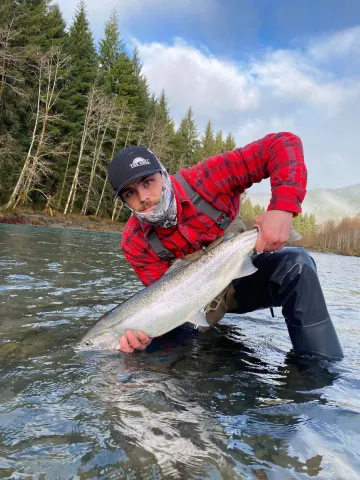
The Hoh River is what legends are born from, whether you are a conventional or a fly angler. From a bank or a boat, you are bound to have a great time. Prime fishing for winter Steelhead happens in February and March, though any time of the year the river is producing, depending on what you are fishing for.
If steelhead aren’t your thing, don’t worry – the Hoh boasts impressive salmon runs each year from late spring through fall and manages to sustain returning populations of both Chinook and coho salmon.
The early summer run of Chinook begins in May and is productive through about August.
The Coho run on the Hoh, like on all other Pacific Northwest rivers, occurs in the fall.
If you’re a salmon fan, fishing in the Hoh can be good from May through November, if the river stays open.
Resident trout are available in the river in addition to sea-run cutthroat that make their way up the river later in the summer and through the fall.
Where do you go from here? Do you prefer floating down the river with a seasoned guide? There are plenty of options. Hopefully, I'll have many more opportunities to meet some more awesome river guides but today I am going to throw a nod out to Pat Neal. (Hoh River Rafters)
With 35 years of experience, Pat has the Hoh River in his back pocket. He is a writer for the Peninsula Daily News and a published author. He is warm and funny, and made me feel completely at ease in conversation. One of my biggest hangups with float fishing is space and comfort, but I look forward to some solid adventures with this local gem.
If walking the banks is your thing, there are three DNR-managed campgrounds with river access and a lovely property called Hoh Valley Cabins ( Hoh Valley Cabins). The Peterson family are descendants of some old-timey pioneers; their family property covers about 500 acres and over a mile of riverfront with access to the river.
In this age of river closures and limited opportunities, we are lucky to have one of the last strongholds of Winter Steelhead right in our backyard. Observe where you can fish, do not encroach on tribal land, and always check the rules and regulations prior to embarking.
/articles/onward-hoh-river