/articles/categories/destination
Montana's Missouri River
By Mike Carey
My son Matt moved to Montana for college several years ago, and now lives in Great Falls with his wife. On our numerous trips to Montana my wife and I have driven past streams and rivers that just cried out “Fish Me”, but I have never had an opportunity.
Until this year, that is. Our schedules finally lined up, gas got cheap, and with a green light from my Better Half I threw my two person pontoon on top of the truck and we headed over to Great Falls. My target fishery was the Missouri River and its famed trout. To say I was excited was an understatement!
Let’s start with little background on the Missouri River. First off, the Missouri is the longest river in the United States and was the main route for expansion into the west. Besides fishing, what the Missouri river is most well-known for is the exploration by Lewis and Clark in 1804-6.
The expedition was commissioned by President Thomas Jefferson to find a water route across the newly purchased Louisiana territory to the Pacific Coast. Lewis and Clark were (besides a few trappers) the first white men to cross this land, map, and scientifically document the area.
Of course, the area had long been home to various Native American tribes, including the Missouri, the Osage, and the Sioux.
Once running wild and free, this river is now dammed in several locations, impacting the flow and original character of the river. The Holter Dam and Canyon Ferry Dam are two dams that regulate the flow of the Missouri from Wolf Creek all the way to Great Falls.
Because of the dams, river flows can be very predictable. In the spring, the river flows at around 5-7,000 cfs, around two miles per hour. The river running from Wolf Creek to Cascade is a drift boaters dream, with well-spaced put-ins and take-outs, developed and rough access points, and easy flowing water.
For the shore angler, there are numerous locations one can get out and fish prime stretches of water. For those new to the area, the fly shops at the towns of Craig and Cascade can offer all the advice and gear you could ask for, including rentals of drift boats and pontoons.

For our two days of fishing, Matt and I focused on a couple different drifts, which allowed us to see a good stretch of the river. On Saturday we drifted from Stickney Creek to Prewett Creek (11.5 miles), and on Sunday a mile north of Wolf Creek to Stickney Creek (7.6 miles).
The two drifts each had their pros and cons. Stickney Creek to Prewett offers by far the most scenic waters, with towering rocky cliffs and formations at every turn. Imagining this land as Lewis and Clark travelled through was truly inspirational for me. The sense of history was over-whelming.
The Wolf Creek to Stickney drift, on the other hand, is the entrance to the canyon area, and as such had more open fields lining the shoreline, slowly building to rock formations hinting at the canyons to come. It also offered more areas where the drift slowed down, and required a bit of work on the oars to move through.
The weather for our trip truly dictated our approach to fishing on our floats. I have normally found Montana weather to be inviting and pleasant in the spring, but on this trip we had cold, rain, and gusting winds that made for challenging fishing conditions.
My son has never fly fished and it became obvious early on that he would have a difficult time casting a fly line. As for myself, I was able to cast flies some of the time. I tried a variety of sinking nymphs, wooley buggers, scuds, and blood worms. It was tough rowing, casting into the wind, and helping Matt all at the same time.
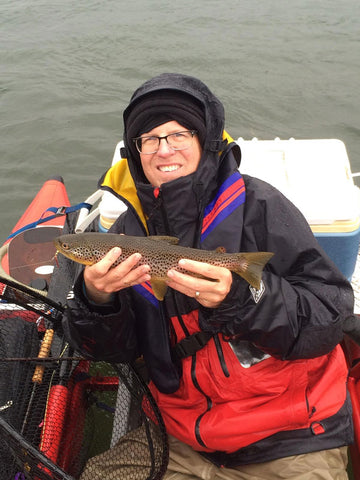
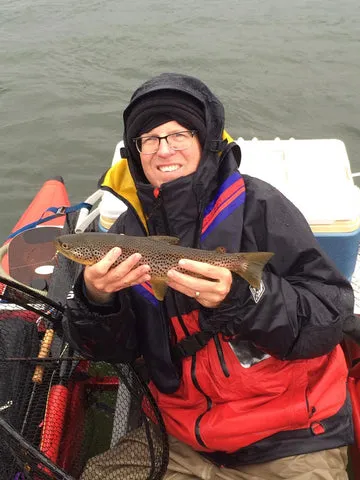
We decided to put aside the fly rods and cast spinners. So much good water and runs to fish! Matt scored the first fish of our weekend, a beautiful brown trout with bright spots and feisty as can be. His excitement at catching his first Montana trout warmed us up despite the cold, rain, and hard blowing wind.

Mile after mile flowed by, as we cast our spinners, catching a fish here, and a fish there. These Missouri river trout may be targeted primarily by fly guys, but they act just like trout anywhere else – they can’t resist a shiny number 2 quarter ounce spinner going by their face. Heck, with so many guys fly fishing the hardware anglers may have an advantage.
By the way, the stretch of the river between Helena and Great Falls is estimated to hold around 4,000 trout per mile. Cold, clean water, rich in nutrients for the rainbow and brown trout, the river has a healthy population of fish to target. And many of these fish are over 16”, and range into the low 20s.
From the Montana Department of fish and wildlife:
“Fish surveys this year indicate rainbow and brown trout numbers remain above the long-term average in the Missouri River between Holter Dam and the town of Cascade, says a state fisheries biologist.
State fisheries crews this fall estimated 5,194 rainbow trout greater than 10 inches long per mile near the town of Craig on the Missouri. Not only is that above the long-term average of 3,174 rainbows per mile, but continues a trend of above average numbers over the past three years: 6,034 per mile in 2011 and 7,312 in 2012.
This year’s population was bigger in size and slightly lower in abundance than the past two years, says Fish, Wildlife and Parks fisheries biologist Grant Grisak, which is typical as the current population reaches its maximum size.
“This year,” Grisak says, “87 percent of the rainbow trout in the Craig section were 15 inches long or greater, and 35 percent of the population was 18 inches long or longer.”
With such numbers come large crowds of anglers, both local and out of state. On our weekend we had the river to ourselves, which I decided was a fair trade-off considering the conditions. I think being a winter steelheader in the Pacific Northwest gave me an edge, at least for tolerating miserable conditions!
We didn’t catch huge numbers of fish, but did catch some real quality, 16-18 inch rainbows and brown trout. But more importantly, my son and I enjoyed a true bonding experience in a uniquely beautiful part of Montana.
/articles/montanas-missouri-river
Lunker Lake Chelan Kokanee
By Mike Carey
There has been speculation exactly why anglers are seeing such large and healthy kokanee in Lake Chelan. Site member Toni (Wannafishalure.com) recently contacted WDFW Fish Management and got these two responses:
From Larry Phillips, Fishery Manager
"My understanding of Kokanee (based on what I’ve read in the published literature) is that growth is closely related to density. More kokanee=smaller size. Because they are specialized feeders (almost exclusively daphnia which is a species of zooplankton), they can overgraze their forage base.
I suspect that in the case of Lake Chelan we had a couple of weak year classes prior to the year-class that supported last year’s fishery. The weak year classes may have been the result of high water or high predation which limited overgrazing.
This would have given the prey base a couple years to build and support much higher growth. Obviously this is a guess because I’m not the biologist for that area.
Recall that all kokanee are genetically identical to sockeye and most naturally occurring sockeye populations have an associated resident (kokanee) component. Also recall that several 20+ inch kokanee were caught in American last year……so Whatcom Lake (our state source for kokanee) also has high growth potential.
When prey abundance is high kokanee have the potential to get very large. Several other factor can affect growth but it typically comes down to the relationship between kokanee abundance, prey availability, and prey size. Other issues include predation, temperature, and turbidity."
From Travis Maitland, Fish Biologist
"Larry’s previous explanation to you of what has been going on with the Kokanee in Lake Chelan the last couple of years is “spot on”. I will only elaborate a bit more on a few points that I hope will help answer your questions.
Historical Lake Productivity: Lake Chelan is the textbook example of an oligotrophic body of water. Bodies of water like this tend to be relatively deep, nutrient poor, clear, light transmission is high and the euphotic zone is deep.
Even though light penetrates to a considerable depth, primary production of phytoplankton is limited by the lack of nutrients, all of which results in a biologically limited body of water.
Lake Chelan Kokanee history: Although details (Strain and numbers) of stocking history prior to 1933 are missing….we do know that Kokanee were first stocked into Lake Chelan in 1917. WDFW stocked only this initial naturally reproducing stock of kokanee back into the lake from the early 1940's until about 1957.
In 1957 Kootenay Lake stock kokanee were introduced as eyed eggs, and in 1966 Whatcom stock kokanee plus, Kootenay stock kokanee began to be stocked as eyed eggs and in later years as fry. Recently only lake Chelan stock (so, a conglomerate of Kootenay, Whatcom and what was originally stocked) are being stocked.
There are no records that I know of that point to the ocean going form (Sockeye) ever being stocked into the lake and no genetics work has been conducted to my knowledge.
Recent Year Classes
During the last couple of years, the Kokanee available in the fishery came off of relatively low adult spawning escapements….and by that I mean the parents of these fish were in relatively low abundance by the time they made it to spawn. As Larry also mentioned, this can also be caused or compounded by things such as predation or high water events that may have taken place on the spawning tributaries.
All of this comes back around to numbers. So, for what information we have at this point…I am comfortable in saying that the fish have grown to some larger sizes in recent years because they have been present in relatively lower densities with the same available food source, thus giving them the opportunity to grow larger. There is no evidence that suggest this is genetically driven.
I have been hearing a few good angler reports as well of good sized Kokanee already this year…..12”-16”.
I hope this has helped and please feel free to contact me if you have any further questions."
Best regards
Travis Maitland
Washington Department of Fish and Wildlife
Dist. 7 Fish Biologist
Wenatchee District Office
3860 Hwy 97a
Wenatchee, WA 98801
(509) 665-3337
-----------------------------------------------------------------------
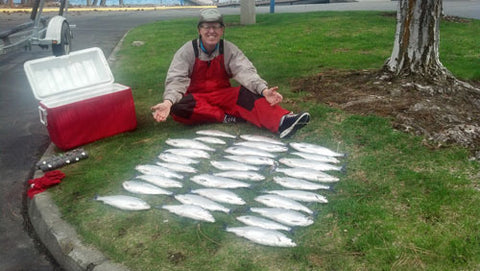
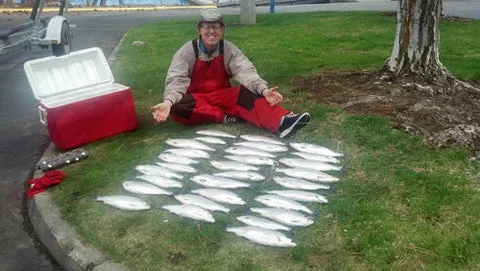
No doubt, the quality of the kokanee in 2013 was phenomenal and hopefully 2014 will prove a repeat. As noted above, fish are beginning to be caught. For my wife and I, last year April was red-hot into early May.
Anglers continued to catch fish into the late spring/early summer, but early spring was best. By mid-April the weather generally is pretty good in Chelan, and the crowds are light. The fishery is well worth the drive from east or west side to centrally located Lake Chelan.
/articles/lunker-lake-chelan-kokanee
The Washington Outdoors Report
HUMPIES, LAWSUITS AND TROUT
PINK SALMON NUMBERS ARE LOOKING GOOD
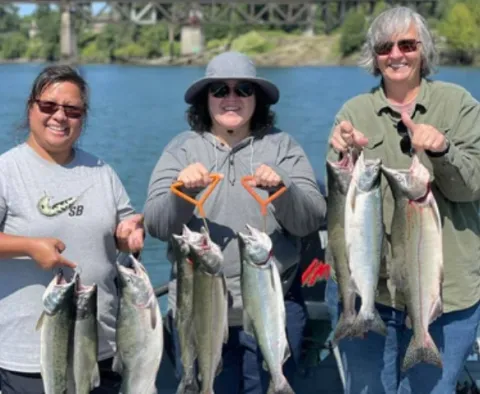
Odd numbered years are pink salmon years here in Washington State and 2023 is lining up to be a good one for anglers fishing for them in Puget Sound and its tributary streams. The Washington Department of Fish and Wildlife is forecasting a return of nearly four million of these smaller salmon, nicknamed “humpies”, for the hump the males develop on their back after entering fresh water to spawn.
The pinks show up in the Strait of Juan De Fuca as early as June and can be caught by both boat and shore anglers in Puget Sound throughout the month of August. By September, most of the pink salmon are entering tributary streams like the Skagit, Snohomish, Skykomish, Green and Puyallup Rivers, providing additional opportunities for anglers who target them with Buzz Bomb lures, jigs with squid bodies and spoons, the key to all of them is that they must be pink in color if you want to catch pinks with them!
Humpies are a fun fish to cut your teeth on as a first-time salmon angler and it’s not uncommon to catch a good number of them in a day of fishing. While many anglers save them for the smoker, they do taste very good when fresh, especially when grilled over a BBQ or pellet smoker.
LAWSUIT FILED AGAINST WDFW COMMISSIONER
On March 6th the Sportsmen’s Alliance Foundation, which is a pro-hunting and fishing organization, filed a lawsuit in Thurston County to prohibit WDFW Commissioner Lorna Smith from participating as a member of the Commission.
The basis for the lawsuit is that state law prohibits anyone from holding an additional elected or appointed office while serving on the commission. Smith currently serves on the Jefferson County Planning Commission which the Sportsman’s Alliance says is in direct violation of Washington Law.
Todd Adkins with the Sportsman’s Alliance says, "We view this lawsuit as the initial step of a long but important process to bring sanity and decency back to wildlife decision-making in Washington. It all starts here, but trust me, it won’t end here. The animal extremists are going to see a lot of the same in the coming weeks and months."
Lorna Smith is a controversial appointee to the Fish and Wildlife Commission. Since being appointed in 2021 by Governor Jay Inslee she was an instrumental voice in shutting down Washington’s long running spring bear hunt, despite the recommendation of WDFW staff members that it be allowed to take place.
When the Blue Mountain elk heard declined (primarily due to cougar predation), Smith suggested managing the herd as a smaller one instead of addressing the predation issues. She has also introduced the framework of a plan that would limit hunting as a management tool by the agency.
It is worth noting that Smith is not the only commissioner serving in another appointed or elected position. Commissioner Molly Linville (who generally sides with hunters in her decision making), serves on her local school board in Douglas County.
Eli Francovich, writing for the Spokesman Review, contacted both commissioners. Linville told Francovich that she was advised by legal counsel that serving on the school board was not a conflict of interest. Commissioner Smith told Francovich she was serving on the Jefferson County Planning Commission on a volunteer basis and in an advisory role when appointed to the Fish and Wildlife Commission. Smith continued stating she does not believe the statute does not preclude individuals serving in a volunteer position like she has been in Jefferson County.
LAKE LENORE FISHING TRIP
Last but not least, I made it up to Lake Lenore this past week after WDFW fisheries biologist Mike Schmuck told me the fishing there was very good last year and he expected similar results this season. I picked a cold, cloudy day to visit the north end of the lake which is where many of the Lahontan cutthroat trout tend to mill around in the spring prior to spawning.
Unfortunately, the trout were not yet in this part of the lake in good numbers. Two anglers who were leaving as I arrived said they each only caught one fish that day. While fishing, I did see one angler catch one trout and while I did get one good strike, I was unable to hook up and didn’t have any more bites that afternoon.
Lake Lenore is a selective regulation fishery and is primarily a catch and release destination where the trout average two to three pounds and can get up to six pound in size. Fly anglers in pontoon boats favor fishing chironomids under strike indicators while spin anglers can do well fishing spoons with single, barbless hooks.
The fishing at this scenic, desert lake north of Soap Lake should get better towards the end of March and peak in April. I plan to return to try again and will let you know how I do.
John Kruse – www.northwesternoutdoors.com and www.americaoutdoorsradio.com
PHOTO CREDITS:
Pink salmon caught on the Snohomish River – Courtesy Brianna Bruce, Livin’ Life Adventures
/articles/washington-outdoors-report
The Outdoors Roundup
By John Kruse
SOMETHING FISHY FOR DINNER
TJ’s Bar and Grill in Kettle Falls is in hot water after serving seafood they should not have been selling to their patrons. According to Captain Brad Rhoden with the Washington Department of Fish and Wildlife, during the summer of 2019 the owner of the restaurant, Terry Baxter, went on a recreational fishing trip near Bamfield, British Columbia. Baxter then brought the Chinook and coho salmon, as well as the halibut he caught, back home, and proceeded to serve these fish to customers at his restaurant.
Captain Rhoden states, “By law, a business selling fish to a consumer, such as a restaurant, is required to state the species of the salmon and whether the fish was farmed or wild caught. The Legislature created these laws so consumers can be confident the fish they are about to eat is what it says.”
As for selling recreationally caught fish in a restaurant, Captain Rhoden explained, “Washington law does not allow the edible portions of wild animals, game birds and game fish to be sold. Food fish such as salmon and halibut can be commercially sold in Washington as long as the fish were lawfully harvested during on open season/area by commercially licensed fishers. So, no recreationally caught fish can be sold, bartered or traded lawfully in Washington.”
The multi-year investigation by the Washington Department of Fish and Wildlife was prosecuted by the Washington State Attorney General’s Public Lands and Conservation Division last summer. On January 17th, Baxter’s business plead guilty to the crime of First-Degree Unlawful Fish Catch in Stevens County Superior Court. He received no jail time but will have to pay a $10,000 fine.
STATE PARKS HIRING PARK AIDES
Looking for a fulfilling, seasonal job working in a great outdoors location? If so, apply for a job as a park aide with Washington State Parks. They are hiring 305 seasonal workers to work from April through September at their parks throughout the state.
Duties include everything from registering campers to cleaning campgrounds and maintaining facilities and trails. Aides may also be helping out with interpretive and educational programs at parks around the state. You may be assigned to one specific park, or rotate your daily duties amongst several parks in close proximity to one another.
My son David worked as a park aide for two years in college, and really enjoyed his time during the summer months at Lincoln Rock and Daroga State Parks in North Central Washington. However, this isn’t just a job for college students trying to make money during the summer. It’s also a great opportunity for retired or semi-retired individuals who enjoy meeting people and spending time outdoors in the beautiful settings our state parks are set in.
Park aides earn anywhere from $16.61 to $19.09, depending on qualifications and experience. Senior Park Aides (with previous experience) earn more. You can fill out an application at www.governmentjobs.com. Simply type in “Park Aide” in the search bar, along with “Washington” for the location, and you’ll see what’s available.
FISHING REPORTS
COLUMBIA RIVER GORGE
Autumn Lawyer at Gorge Outfitters Supply in Rufus says they are doing pretty well catching walleye below John Day Dam. Most of the walleye have been caught using spinner worm harnesses tipped with nightcrawlers. A bright orange and black combo-colored spinner worm harness is the hot ticket. Several large walleye (up to ten pounds) have been caught in the last week.
Autumn says sturgeon fishing was also pretty good last week. Catch and keep sturgeon fishing remains open (for now) in both The Dalles and John Day pools. Be sure to check the WDFW and ODFW websites before going out, to make sure harvest quotas have not been met.
RUFUS WOODS RESERVOIR
Austin Moser with Austin’s Northwest Adventures has been catching triploid rainbow trout near the net pens at Rufus Woods Reservoir over the last several weeks. Austin says they have been catching limits of these hefty rainbow trout, averaging 4 to 8 pounds and going all the way up to 15 pounds in size. Moser’s clients have been jigging 3/8-ounce Maxi jigs made by Yakima Bait Company. While many anglers use bright colors, Moser has found natural colors such as black, brown and olive work best.
Bank anglers are having success as well, though it can be hit and miss. Most anglers fishing from shore are using Powerbait to catch their trout. It is worth noting that there is a $20 access fee to use the park near the net pens and also a $10 launch fee. Shore anglers also need to have a Colville Tribal fishing permit. To book a trip go to www.austinsnorthwestadventures.com. If you want to find out more about fishing or camping at Lake Rufus Woods Park, which is operated by the Colville Tribe, go to www.colvilletribes.com/lake-rufus-woods.
John Kruse – www.northwesternoutdoors.com and www.americaoutdoorsradio.com
/articles/outdoors-roundup-2
2023 Big Horn Show
By Marie Neumiller
The Inland Northwest Wildlife Council Presents the 61st Big Horn Outdoor Adventure Show
March 16-19 at the Spokane County Fair and Expo Center
Get hooked on the outdoors at this year’s event, sponsored by Lithia Spokane, Ziggy’s, Great Resort Vacations, and more. We are bringing you four adventurous days filled with outdoor recreation vendors, cooking presentations, family activities, and everything you need to start your next adventure.
The event will run four days with a special theme each day, and three after hours, 21+, VIP events:
- Hero Thursday, sponsored by WA Army National Guard, will feature special ticket prices for our service members. Thursday evening, we will be hosting a VIP dinner auction, catered by Longhorn BBQ, which will raise funds for the Inland Northwest Wildlife Council. Along with a special presentation and fundraiser for First Hunt Foundation’s “connecting heroes & hunters program”, a program aimed at giving veterans and first responders a renewed sense of purpose.
- Join us Friday March 17th for Campfire Karaoke! Sponsored by COHO Media this night will bring music, giveaways, and our sportsman’s lounge beer garden.
- Saturday March 18th is your opportunity to learn about preparing great dishes from your outdoor adventures. Show off your grilling skills at our SCA Steak cookoff and dutch oven competition. Saturday’s VIP after hours event will deliver great food from local chefs at our mini CRAVE date night featuring music by Jesse Quandt, and dancing led by lite feet line dancers. Bring your special someone to the Big Horn Show for a memorable date night! Date night is brought to you by US Army Recruiting.
- Sunday March 19th will be our annual family day, with a special family discount package and activities for the whole family. Fun activities include Les Schwab’s fishing world, Idaho Central Credit Union’s kid’s adventure pass, SCOPE’s Operation Family ID program, SCRAPS pet adoption drive, silver mine and more. These family features will be available throughout the show, with special prizes on Sunday.
Seminars
Each year the Big Horn Show brings seminars and special guest presentations to help you build your outdoor knowledge and give you new skills. This year we have another great lineup, including presentations like:
- Calling with Berry’s Game calls
- Dog Training with Quicksilver Kennels
- Large Carnivores of Washington with WDFW
- Chronic Wasting Disease presentation by WDFW
- Richie Harrod of Harrod outdoors
- Custom vs common rifles presented by Chris Hold
- Hunting public lands for waterfowl by Shelby Ross
Youth Activities
The Big Horn Show has activities for all ages, including our young explorers:
- Fishing Pond
- Silver Mine
- Kid’s Adventure Pass
- Operation Family Identification – presented by SCOPE (Saturday and Sunday only)
- Air Rifle Range
- And more!
Special Notes
The Inland Northwest Wildlife Council is a volunteer-led wildlife conservation non-profit based in Spokane WA. The Big Horn Show is our annual fundraiser with proceeds from the event supporting our wildlife conservation projects year-round. Local projects include disabled access to outdoor recreation, wildlife recovery, habitat improvement, CWD testing support, mentorship, hunter’s education, Spokane Kids Fishing Day, bat boxes, outdoor education, and more. We appreciate your support!
Interviews
Executive Director Marie Neumiller, President Ron Zubrick, and some of our presenters are interested and available for interviews for this event. Photos can be provided, and/or photo shoots and interviews can be arranged.
/articles/2023-big-horn-show
Catfishing in Washington
By Josh DeBruler
It was November 6th of 1902 at the confluence of the Ohio and Mississippi Rivers, where the great explorer, Meriwether Lewis, recorded in his journal that a prominent fisherman within their expedition had brought in a Goliath of a catfish that measured over 4 ft long and weighed in at 128 lbs.
Whether this accounting is of historical fact, or just generally accepted as American lore, the fact remains that Catfish get BIG. The record size catfish for the same river that Lewis and Clark’s men were dropping their lines in is currently a 104 lb.
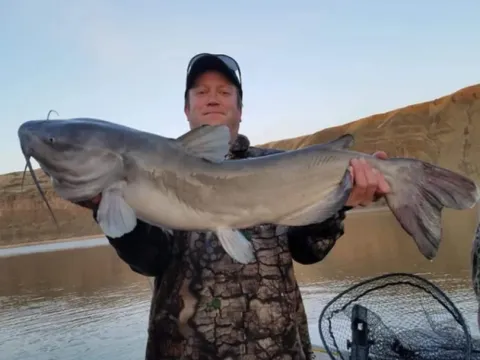
blue catfish, and though we wont likely see those types of numbers coming out of our Pacific Northwest waterways anytime soon, we certainly do see some formidable sized cats here in Washington State. In 2019 a 15 year old boy hauled a 37 lb. state-record channel catfish out of Lake Terrell in northwest Washington, beating the previous record by 1.5 lbs.
If you’re looking to hook into a big catfish here in Washington State, chances are you’ll be fishing for channel catfish. Channel catfish are native to much of North America, but they didn’t make their debut here in Washington till 1892, when a load of them were dropped off in Skagit county’s clear lake.
From that point forward, these fish were distributed throughout Washington State for both recreational angling opportunities, and more recently, for management of problematic forage fish. Although, they can be found throughout the state, most anglers familiar with the fishery would agree, your best bet for harvesting some of these fish would be to head to the Columbia river to fish it and its tributaries that head north from the Bonneville Damn, and meander up and across the eastern portions of the state.
Rivers like the Columbia, Yakima, Snake, and Walla Walla, all provide reasonably suitable habitat for these fish to spawn and maintain self sustaining populations. Conversely, lowland lakes that are stocked with channel cats, will only provide anglers with fishing opportunities that reflect both the frequency of the WDFW stocking programs and the pressure the lake receives from anglers. Channel catfish are not known to reproduce in most Washington lakes.
Where to fish in Eastern Washington (Eastside of cascades )
-Lake Umatilla
-Lake Wallula
-Lower Yakima River
-Lower Walla Walla
-Lake Sacajawea
-Lyons Ferry State Park (confluence of Snake and Palouse rivers)
-Roses Lake
Where to Fish in Western Washington
- Green Lake
- Clear Lake
- Silver Lake
- Lake Terrace
- Swofford Pond
- Lake St. Claire
When to fish
Fishing is most productive when catfish are spawning. This typically peaks around June and you can expect the bite to taper off as we move into fall. The spawning season also causes catfish to move out of the larger Columbia river and into its tributaries where the shallow waters provide better spawning grounds. Take advantage of this time to target catfish in these smaller waters, and if you can fish the confluences of the Columbia and said tributaries at this time, a bottleneck opportunity occurs, and this is where the fishing can become excellent.
How to fish them
Being that most techniques are fairly straight forward, fishing for channel catfish should be suitable for anglers of all different experience levels. You’ll likely find that the most challenging part will be getting on top of the fish in the first place. If you are fishing at night, you’ll find catfish feeding in the shallow waters near the shore, and though night fishing is excellent for channel cats, it’s also not a very suitable time for the typical angler.
For this reason, many anglers fish throughout the day, and do-so successfully. During the day, you’ll find most of your channel catfish in deeper waters beneath the column of warm water known as the thermocline. Typically, 15-20 ft down will get you past the thermocline and into the cooler waters.
Since these fish are bottom feeders, the goal should be to get your bait at the bottom where it can be detected by the catfish’s keen since of smell. There’s a wide variety of baits you can use. Many anglers opt for chicken livers, oily cut baits, earthworms, chicken skins, hot dogs, shrimp, corn, or dough balls made specifically for catfish. These fish don’t seem to be extremely particular about their food as long as it’s in front of them.
As far as rigging goes: a slip sinker rig is both simple and productive. From your main line, add your preferred slip sinker, a stop bead, barrel swivel, about 5-20” of leader, and a 2/0 to 3/0 hook. You can get the hook suspended a bit off the bottom by adding a poly ball or foam peg float a few inches back from the hook if desired (note this becomes ineffective if a substantial amount of current is present)
A slip bobber rig is also a popular and effective method to get your bait suspended off the bottom while being able to detect bites visually. Just add a stop knot to your mainline, then a bead, a slip bobber, slide sinker, barrel swivel, and 10-20 inches of leader before your hook.
There are plenty of other methods available for catching channel cats, but these should be all you need to get started.
/articles/catfishing-washington
Icefishing a School Bus Away
by Matt Carey
It’s human nature to think that we need to go to great lengths to find happiness, joy, fulfillment or satisfaction. It makes sense at first glance – the more time invested, the higher the payoff. In reality, we can find value in a lot of things that are right in front of us. A quick jaunt, a stone’s throw away, right around the corner.
Maybe the same can be said for fishing.
In my day job, I work as a principal for an alternative high school. Much of my day is dedicated to helping these kids realize the opportunities they have in front of them and how to access those people who can offer help when needed. To my students, a career, graduation, just getting to Friday, are all unknown hurdles in their lives. Imposing forces that take away from the goal of just getting through the day. With the multitude of stressors on their minds, recreation and leisure are often a fading thought.
One of these recent lessons presented itself with a school fishing trip to the Helena Regulating Reservoir not too far from town, maybe 20 minutes. When I go fishing personally, I’ll opt to fish at Holter Lake, about an hour’s drive or Pishkun Reservoir, nearly two hours away, when I feel the need to fish. Coming into the day, I had low expectations. I’m not using my own gear. I’ll need to supervise these kids and keep everybody engaged.
It’s just down the road, not much adventure there. I’ll probably get called back to the building for something. We went, as a school, on this same fishing field trip last year – with no success. Not a bite. Windy conditions. On the metaphorical pendulum that is fishing, that outing swung strongly towards the forgettable side.
Furthermore, this fishing “trip” isn’t anything like those days where we need to wake up at 4am to drive to the dock at first light or prepare a few different set ups if we decide to target different fish. How could I possibly have the same level of excitement and anticipation as a fishing trip out with my buddies?
The afternoon started off unassuming. The folks from Montana Fish and Wildlife talked to our students and staff about some general ice fishing information. How to bait a hook. How to open the fishing bail. How to know if you have a bite. Trivial information you and I take for granted. To kids who have never gone fishing, this information was captivating.
One student even asked to come closer to see the line drop to the ground when the instructor opened the bale demonstrating how the bait would fall through the water. The seemingly innocuous presentation had captivated at least one of my students. We made our way on the ice and walked for a good 15 minutes. Many of the kids, and the guy in charge of supervising everyone, didn’t have the appropriate footwear.
This made the icy trek all the more cautious. The freeze was still in full effect, and our guide for the day reported the ice was about 18 inches thick. More than enough to comfortably fish without danger. After a few hundred yards we had made our way to our fishing holes. A previous school was there in the morning, with no luck of course, and the gear was ready for immediate fishing. We were given primarily Swedish Pimple jigs with a maggot as our bait for the afternoon.
Kids and teachers wandering around finding what they’d hope to be their lucky spot. Remember how I mentioned last year’s conditions? Well, now picture a complete 180* (you couldn’t really expect to not get a lesson from a guy in education, right?). The sun shining with a few clouds painted across the skyline.
A calm breeze that was never overbearing, but enough to remind you that you are outside during a Montana winter. Mid to high 30-degree weather, necessitating a jacket or sweatshirt, but no need for snowpants or a full facemask gaiter. My Reel Obsession Sport Fishing sweater and Montana Grizzly hat combination was the perfect balance of “drip” (swagger or style to those of you not up to date on the newest slang) and functionality.
In a similar fashion to the weather, our fishing experience was nothing like last year’s. Within 5 minutes two different kids are pulling up perch. No state records, but a fun experience. Kids goading each other to kiss the fish, being caught off guard by the fish slime and calling over their friends and teachers. Some kids catching multiple fish, one girl catching 3 in our outing. After seeing such a lively bite, I figured why not, I’m here anyway, I might as well wet a line.
A silver and blue jig with a maggot ended up being my lure of choice. More so because it was the only one open at the time. Engaged kids, minimum screwing around, it was a winning combination. I dropped the lure beneath the ice, hit the bottom, reeled up a few feet and started jigging around 18 feet of water.
A few other members of Fish and Wildlife were with us, and I struck up a conversation about anything and everything you’d expect – what set ups have been working well, other lakes or reservoirs in the area, that kind of thing. Caught off guard, my rod tip gets absolutely slammed. My FWP counterpart exclaiming “that ain’t no perch! You’ve got a koke on there!”. As I’m reeling, he asks if I saw the fish on the fish finder.
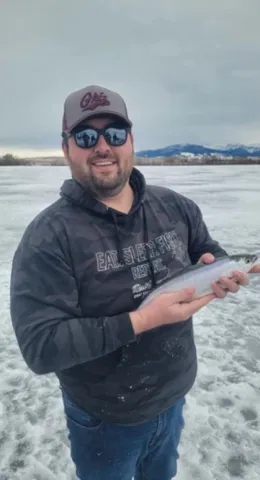
Sheepishly, I told him I wasn’t really paying attention and I was looking at everyone else catching fish. As I pull the fish out of the water, I see a solid 16 inch kokanee come out of the hole. This is a great fish and certainly not what I was expecting coming into the day. I ask for a picture and release my catch back into the reservoir for someone else to find.
I realized in that moment that even the mundane or trivial, we can find great joy and satisfaction. Are weeklong fishing adventures great? Of course. Can adventure and happiness be a school bus ride away?
Without a doubt.
/articles/icefishing-school-bus-away
Grant County Fishing Opportunities
By Mike Schmuck
Martha Lake and Upper Caliche Lake: These lakes, near the town of George, WA, should produce well in spring 2020. In addition to fingerling Rainbow Trout, both lakes received 1,000 11–13-inch Rainbow Trout in fall 2019 and these fish should be in the 14–15-inch range this spring. These lakes also received 1,000 (Martha) and 500 (Upper Caliche) catchable Rainbow Trout in April 2020.
Quincy Lake: Over the years this rather popular lake, located on the Quincy Wildlife Area, has provided anglers with good catches of 11–13-inch trout as well as the occasional carry-over fish that can often be in excess of 14 inches. Quincy Lake fished well in early March 2020 with several fish caught in the 18-20-inch range. WDFW hatchery staff will be stocking nearly 1,000 Rainbow Trout into Quincy Lake in preparation for the May 5th re-opening. These fish are just over a pound each and will provide excellent opportunities for anglers.
Burke Lake: Burke Lake, a next-door neighbor to Quincy Lake, underwent a chemical rehabilitation in the fall of 2019 in order to remove nuisance Yellow Perch and Pumpkinseed Sunfish. WDFW Hatchery staff stocked 3,000 9–11-inch Rainbow Trout into Burke Lake in late-February. Burke Lake will be receiving 1,000 Rainbow Trout in preparation for the May 5th re-opening. These fish are just over a pound each and will provide excellent opportunities for anglers. Burke Lake received very little fishing pressure in early March and should provide excellent fishing for the remainder of the season.
Quincy Wildlife Area walk-in-lakes: While Quincy and Burke Lake get the lion’s share of fishing pressure, there are several small walk-in lakes just west of these two popular fisheries. Crystal, Spring, Cup, Lloyd and Scout Lakes are not on many anglers’ radar—but they should be. These lakes receive annual stockings of fingerling Rainbow Trout from Columbia Basin Hatchery and often provide anglers with solitude and big fish.
In early March I talked to one angler who caught two 21-inch Rainbows from one of these lakes—I promised not to tell which lake they came from. Scout Lake is a mile north of the remaining lakes on this list and is 530 yards west of the H-Lake parking lot. Those looking to social distance should keep these lakes in mind.
Ping Pond (aka Oasis Park Pond): This 2+ acre pond located at the south end of Ephrata is open to Juvenile Anglers (under 15 yrs. old), Senior Anglers (at least 70 yrs. old) and Anglers with a Disability who possess a designated harvester companion card. WDFW hatchery staff stocked 30–40 Jumbo (3 lb.) Rainbow trout and 200 12–14-inch Rainbow Trout into Ping Pond on May 1 in order to give kids a fun opportunity to catch some nice fish.
Park and Blue Lakes: These lakes are two of Grant County’s top trout waters and both should fish well this spring. Catch rates were lower than anticipated on opening day 2019; however, this was likely due to high winds that kept many anglers off the water. Despite relentless winds, catch rates averaged 3 trout per angler on both lakes. Anglers should expect good catches of rainbow trout in the 12–14-inch range as well as some 2+ year-old ‘carry-over fish’, in the 15–17-inch range. Brown Trout and Tiger Trout are also stocked in both lakes.
Vic Meyers Lake: This 12-acre lake located in Sun Lakes State Park receives a fair amount of fishing pressure and produces Rainbow Trout to 17-18 inches. The lake has excellent shore access and is a good choice for anglers looking to get away from crowds.
Perch Lake: Another lake in Sun Lakes State Park, Perch Lake has limited shore fishing but is ideal for someone with a small boat or float tube. I visited Perch Lake numerous times in 2019 and never encountered an angler. I did, however, see a lot of trout rising in the evenings and believe this lake should fish well. Perch Lake receives 9,200 fingerling Rainbow Trout each year.
However, in 2020 we reduced this significantly due to low angler effort. Low harvest on these fish will increase food competition and limit growth for remaining fish. A lack of large fish in this population will further limit the popularity of this fishery.
Deep Lake: Deep Lake is a good choice for anglers looking for great scenery and good fishing. While not known for an abundance of large fish, Deep Lake produces Rainbow Trout in the 11–13-inch range, and a few carry-over fish close to 16 inches. Anglers wishing to troll, or simply fish a little deeper, can also catch Kokanee. Each year, WDFW hatchery staff stock Deep Lake with 13,500 spring fingerling Kokanee. In addition, Deep Lake also receives 15,000, 11–13-inch Rainbow Trout from Trout Lodge Fish Hatchery.
Warden Lake: Warden Lake is a popular trout lake, but in recent years it has been producing excellent catches of Yellow Perch and bass. Warden Lake receives 65,000 spring fingerling Rainbow Trout, 7,000 spring fingerling Tiger Trout and 15,000 6–9-inch Rainbow Trout each year. In early spring 2020, Warden Lake was stocked with 3,300 12–13-inch Rainbow Trout from Trout Lodge in late March. To provide more opportunity, WDFW hatchery staff stocked an additional 2,200 Rainbow Trout into Warden in late-April. Anglers should expect excellent trout fishing once lakes reopen.
Potholes Seep Lakes: Several lakes south of Potholes Reservoir can produce good catches of Rainbow Trout as well as Bass, Bluegill, Black Crappie and Yellow Perch.
Corral Lake: This lake is located near the southwestern end of O’Sullivan Dam just across the road from the MarDon Resort. Corral is a good choice for anglers that don’t mind a mixed bag of good size Rainbow Trout, Largemouth Bass or Black Crappie. Bring your boat to explore this lake fully—shore access is limited.
Pillar-Widgeon Chain: These walk-in lakes on the Columbia National Wildlife Refuge are consistent producers of quality Rainbow Trout. This chain of lakes receives spring fingerling Rainbow Trout and are a popular destination for anglers looking for a quiet day on the water.
Hampton Lakes: The Hampton Lakes have fished well over recent years. Lower Hampton Lake receives more angler effort and while catch rates are somewhat lower than on Upper Hampton, the fish caught there are larger. Since the 2014 rotenone treatment of the Hampton Lakes, Pumpkinseed Sunfish have recovered to a point where they are negatively affecting growth of fingerling rainbow trout.
Teal Lakes: The Teal Lakes, located along the Seep Lakes Road on the Columbia National Wildlife Refuge, are a popular fishery for anglers looking to catch good sized trout. Both lakes, while managed for trout, have carp, bass and sunfish as well. Consequently, fingerling growth and survival have suffered. South Teal Lake receives little fishing pressure, likely due to abundant aquatic weed growth and limited access to most of the shoreline.
Most of North Teal’s shoreline is accessible and anglers commonly catch very nice 13–15-inch rainbow trout all around the lake. Catch rates, on average, are lower here than on other more productive waters such as Blue and Park Lake; however, anglers can find they often have the lake to themselves, especially during the week.
Hutchinson and Shiner Lakes: Located on the Columbia National Wildlife Refuge in Adams County, are connected lakes with quality Largemouth Bass, Bluegill and Crappie. They are both best fished from a small boat, canoe, or float tube/pontoon boat. Anglers willing to put in a bit of extra work can row or paddle to the east end of Shiner Lake to target more naïve bass.
Katey & Janet Lakes: These two trout lakes can provide solitude and good catches of Rainbow Trout. Katey Lake was treated with rotenone in fall 2019 to remove Carp. In early April, WDFW hatchery staff stocked 200 11–13-inch Rainbow Trout into this six-acre lake. Janet Lake is a short hike west from Katey and can provide anglers with some larger Rainbow Trout. Most of the shoreline is accessible to anglers on both lakes.
East and West Sage Lakes: Similar to Katey, these two lakes were treated with rotenone in fall 2019 in order to remove Carp. The Sage Lakes produce large Rainbow Trout, although for the remainder of 2020 anglers will have to rely on slightly smaller hatchery fish that were stocked in early April. WDFW hatchery staff stocked each lake with 500 11–13-inch Rainbow Trout which should reach 14–15 inches by spring 2021.
Windmill, North Windmill, North-North Windmill, June, Virgin, Lois: Anglers need several days to explore these lakes located south of Warden Lake. This chain of lakes, managed for Rainbow Trout fishing and popular with fly angers, can produce some large fish.
/articles/grant-county-fishing-opportunities
10 Western Washington Opening Day Favorites
By Hannah Pennebaker
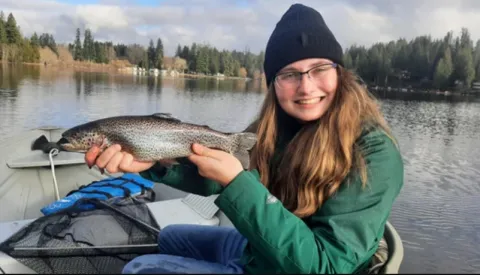
Is it that time of year already? That’s right, go dust off the trout rods and dig out those jars of dough bait! The 4th Saturday in April traditionally marks the opening day of many lowland lakes in Washington State. Many anglers anxiously look forward to it and count the days down on their calendar. WDFW stocks hundreds of lakes with thousands of catchable size rainbow trout in preparation for this event. Freshly stocked trout are often willing biters and scrappy fighters, perfect for kids or those new to fishing. Here’s a list of my favorite lakes to hit on opening day in Western Washington. See if your favorite is on the list, or maybe plan to try a new one this year!
Clear lake
Clear Lake will always have a special place in my heart; it’s where I learned how to troll for rainbow trout. I have many fond memories of warm spring days spent cruising around the lake, kicking back and watching the rods go off. Only about 15 minutes away from the city of Puyallup, this lake has an outstanding view of Mt. Rainier on a nice day, and it truly is a crystal-clear lake. 99% of it is private property, so bank anglers will probably do better at Tanwax Lake, just down the road. There is a pay to fish dock there and plenty of shore access at the boat launch on the south end of the lake. A word of warning, it’s best to fish Clear Lake early in the morning. By about noon, especially on a nice day, the lake can become a washing machine for pleasure boaters and jet-skiers. You can either troll or still fish on this lake. Green dough bait is always killer! The key is to troll slowly and keep an eye on your fish finder. This lake is surprisingly deep, but shallows up quickly, so be prepared to pull up your gear if needed.
Harts Lake
Harts Lake is unique simply for its wide variety of fish species. Come here for the rainbow trout, and stay for the channel catfish, brown bullhead, pumpkinseed, crappie, and bluegill. It is small and shallow: perfect for small boaters and kayakers. The rainbows seem to hug the boat launch during the early season, but spread out as time goes on. Try targeting the edges of the lily pads that surround the lake. There is a little tackle shop on the lake where you can buy worms or a cold drink. The owner is very nice and loves showing off the photos of customers with 15 pound channel catfish caught off his dock! You can pay to fish off his dock or try your luck off to the side of the boat launch for free.
American Lake
Located next to JBLM, this lake is renowned around the state for its plentiful jumbo size rainbow trout. There’s also a chance you may hook into a kokanee; the lake is planted with thousands of them every year. There is a good amount of shore access around the lake in the form of boat launches and parks, but check to see if they are military only first. You don’t want to be turned away at a military checkpoint like we were the first time we tried to fish there! The lake is large, so there is plenty of room to spread out and get away from other boaters. Finding the fish can be a little tricky, so don’t be afraid to pull up your gear and motor over to try new spots.
Rapjohn Lake
Don’t be fooled by the tiny size of this lake, it’s a great producer of rainbow trout throughout the season! The boat launch is pretty barebones, so don’t expect to launch more than a small boat or kayak here. This is one of our favorite lakes to take our inflatable boat out on when we don’t feel like gassing up the Smokercraft. Dough bait and eggs work very well on this lake, as do worms under a bobber. This is a very kid-friendly place to fish since the vast majority of fishermen use small aluminum boats powered by electric trolling motors or oars. There is a decent amount of shore access at the boat launch and kids can do very well casting out a chunk of green or orange dough bait.
Mineral Lake
Any list of the best trout lakes in Washington State would be incomplete without Mineral Lake. This lake boasts not only trophy rainbow trout, but brown trout as well. It is unique among Western Washington lakes in that it is stocked with thousands of fry every year, which grow to impressive sizes thanks to the rich forage available. WDFW also supplements the fry with catchable size rainbows and browns before opening day. There is a boat launch, tackle shop, resort, and a pay to fish dock off the side of the lake. The dock can get crowded with swimmers during peak season, so it’s best to get there early. It’s no secret how good the fishing at this lake can be, so expect to have company at the boat launch on opening day.
Riffe Lake
Riffe Lake might be more well-known for its land-locked coho salmon, but a few years ago thousands of triploid rainbow trout were planted there. These trout are reaching the 14 to 20-inch range, and they put up plenty of fight! The coho salmon are perfectly willing to bite rainbow trout gear, so expect to come home with some of those too. Trolling is the name of the game here. Try trolling faster in the morning, when the fish are more active, and slower in the afternoon. Small spinners such as Mack’s Wedding Rings take a lot of fish here. You can pull them behind lake trolls or small dodgers. There is some shore access near Mossyrock Dam and at Taidnapam Park. Most shore anglers fish pieces of shrimp or worms under a bobber. Be cautious when fishing Riffe, the lake is deep and wide, and afternoon winds can kick up to dangerous levels.
Black Lake
Black Lake is located near Olympia, and, like Harts Lake, boasts a wide variety of fish species. There is public shore access at the boat launch and park. The lake is long but shallow, so trolling can be difficult. Long lining in the early season can be very productive. This is one of my favorite lakes to cast out small spinners and spoons. The fish will gladly gobble up worms, corn, or dough baits as well. If you don’t have any luck with rainbow trout, you can always try targeting the vast amounts of crappie and bluegill in this lake.
Swift Reservoir
Though it’s more off the beaten path than the other lakes, Swift Reservoir shouldn’t be overlooked. If you do make the drive, you’ll be rewarded with unbeatable views of the surrounding mountains and forests. This is a peaceful, beautiful lake, and the fishing can be just as amazing. I highly recommend trolling on this large, deep reservoir. Wedding Rings pulled behind lake trolls are deadly effective. Don’t be afraid to tip your spinner with a piece of corn, worm, or shrimp. Try trolling near the dams to start out with. Launching can be difficult/impossible if the water level is drawn down too low, so make sure to call and check the water level before heading out (the phone number is listed on WDFW’s Swift Reservoir webpage).
Lake Meridian
Unlike Swift Reservoir, Lake Meridian is an urban lake, surrounded by houses. It can get crowded on a nice day! But this lake has good populations of rainbow trout and kokanee, and shouldn’t be overlooked. Most fishermen will anchor up and throw out their offering on a bottom rig with a sliding weight. There is a fishing pier and shore access at the boat launch. Every year, fishermen get some nice holdovers from the year before. Try fishing a bit deeper and increase the size of your offerings to target these larger fish.
Lake Sammamish
Though this lake is open year-round, April is a great month to fish it. This is Western Washington’s premier cutthroat trout lake! Small plugs stuffed with tuna, spinners, and spoons all work well here. Troll faster than you would for rainbow trout, and remember to target structure, such as points or coves. Switch up your techniques and tackle until you find out what the fish want that day. Cutthroat trout are highly predatory, but can be surprisingly fickle. Have fun catching these fish, they are incredibly athletic and often jump when you’re reeling them in!
No matter where you decide to fish, make sure to follow all the proper safety rules, and don’t forget to renew your fishing license. Check out our YouTube channel, Northwest Fishing, for videos on many of these and other opening day rainbow trout lakes. We hope to see you out there!
/articles/10-western-washington-opening-day-favorites
PNW Sportsmen's Shows
Trade show season is here and calling all sportsmen and women. It is the time to ponder and think about what changes we will make to our game this year, and wonder at the opportunities to be had this coming season. Trade shows give us sportsmen an upfront and personal glance into new products, new technologies, current trends, seminars, show specials, fishing ponds, tackle talk, gear, guides, lodges, food, and even more. It’s worth getting out to a show near you. The NW is home to competitive sportsmen and women, and the NW Trade Show circuit comes out swinging, just like its sportsmen. This traveling circus changes from city to city, each attracting local vendors, manufacturers, NW brands, and national companies.
The NW trade shows are built upon this premise: To Educate, Equip, and Execute make the sportsman and the adventurer. The NW was built upon this premise. The shows encompass this.
What to expect:
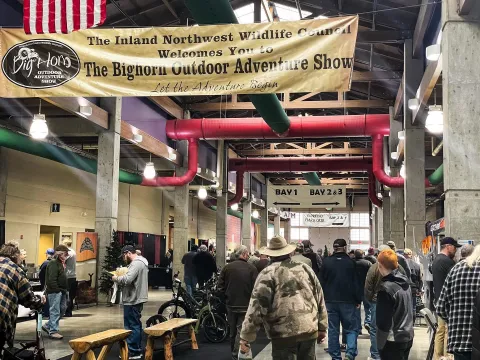
The Big Horn Show in Spokane is my favorite, and not just because it’s close to home. The Big Horn Show gets its name from its origin over 60 years ago, starting off as a competition for big game trophies using Boone and Crockett. It still brings in champion trophies, but alongside totes seminars, music, and some of the NW’s finest vendors and manufacturers. It’s a small city in a big town! Fly in! It's just a pond hop away. Proceeds go to INWC a 5013c.
Boise is home to Kyrptek. Making a presence with their camo apparel sale tent out front, Boise wears Kryptek proudly. They support the military and their local community. It’s Boy-see, not Boise, folks! Wear your boots! Buy a belt! It is also a pond hop away. Great access to the airport and nice hotels makes this a great weekend getaway. Buy luggage here to bring home your goods.
Tri Cities is sponsored by Griggs Ace Hardware! It’s a smaller show, but has all the fixings a show could offer.
Yakima! It’s not a big show and you will get to know people by the time you are through. It is a strong community. People here enjoy learning about new things going on in the industry, and I love that. The rifle range and the stories are prominent. The SunDome is fun, the people are friendly, and the tacos are muy bien. Bring the kids!
The Puyallup is a large show and brings in people far and wide: from Alaska to Nebraska, you will find it here. Stryker Rods comes in from Oregon, so pick up your NW manufactured rod while you have the chance. Buy an RV. Buy a boat. They have it in Puyallup. Book your hotel early for this one! Do the Puyallup!
Portland is the show that never ends. It goes on and on, my friends. Wear your Danner’s or your Nikes: you will get your steps in here. There is no sales tax in Oregon, so save 9% on top of the bargains already being offered. The beer flows in Portland, so be safe! Have fun! I wear my knife.
Wenatchee is home to Mack’s Lure. Go out and meet the legendary Bob Loomis and his younger self, Britton. Tell them Hillary sent you, and take a selfie! #NWFishing #MacksLure
The Big Sky Montana Sportsman’s Expo is here to stay. Can’t find their website? No worries! Check out their social media @montanasportsmansexpo. Big toys, big furniture, big EVERYTHING is in Montana. Bring a trailer. It’s worth the haul!
The BC Sportsman Show is just an hour and 45 minutes away from Everett. A lot is to be had in BC. Find a lodge and fisher’s package. Connect with hunters and outdoor adventurers. Meet manufacturers. Friends are to be made in BC and friends are to be kept, AYE? Buy a BOOT! Or a boat, it will be swell either way! Book a fishing charter for sure.
Redmond, Oregon. Don’t get this confused with Building 45 and the floating bridge. This is South. The traffic is much better, so hit the road and make the drive. Many people like to save on the sales tax in Oregon. The experience from vendors and guests is always the same, they say it is a great time. I have never been, but I trust Ed Iman, King of Walleye, when he tells me so.
If I missed any of your shows, please excuse me. I haven’t heard from you and can’t always be everywhere at one time. I would love to see what you are doing. Email NW Fishing!
Check your dates and pick your shows. Attending more than one is part of the fun! It’s a family and, like families, some family members won’t go to certain shows. You’ll see them at the next show, I bet.
Maybe I’ll see you there? Safe travels!
NW Trade Show Schedule
- Jan 27-29 Tri Cities Sportsmen’s Show-Pasco, WA
- Feb 1-5 Washington Sportsmen’s Show-Puyallup, WA
- Feb 15th-19th PNW Sportsmen’s Show- Portland OR
- Feb 24th -26th Wenatchee Valley Sportsmen’s show- Wenatchee, WA
- Feb 24th -26th Central Washington Sportsmen’s Show- Yakima WA
- Feb 24th-26th Montana Sportsman’s Expo-Kalispel MT
- March 2-5th Idaho Sportsmen’s Show- Boise, ID
- March 3rd-5th BC Sportsman’s Show-Abbotsford, BC
- March 9th-12th Central Oregon Sportsman’s Show- Redmond Oregon
- March 16-19th Big Horn Show- Spokane, WA
/articles/pnw-sportsmens-shows