August 2024 “Ocean Salmon Update”
When it comes to fall salmon, anglers consider August to be part of the time of year when pumpkin spice lattes and crisp mornings are the norm. The eighth month of the year is technically still summer but anyone who has headed to the ocean this time of year can feel the chill of an early fall coming on. Fog and rainstorms are normal, along with high winds and rough seas but then there are the days of bright sunshine and hot temperatures that remind us it is still summertime, even if only for a few hours in the afternoon. Much like the weather, salmon fishing can change in an instant… Mostly in the form of regulations.
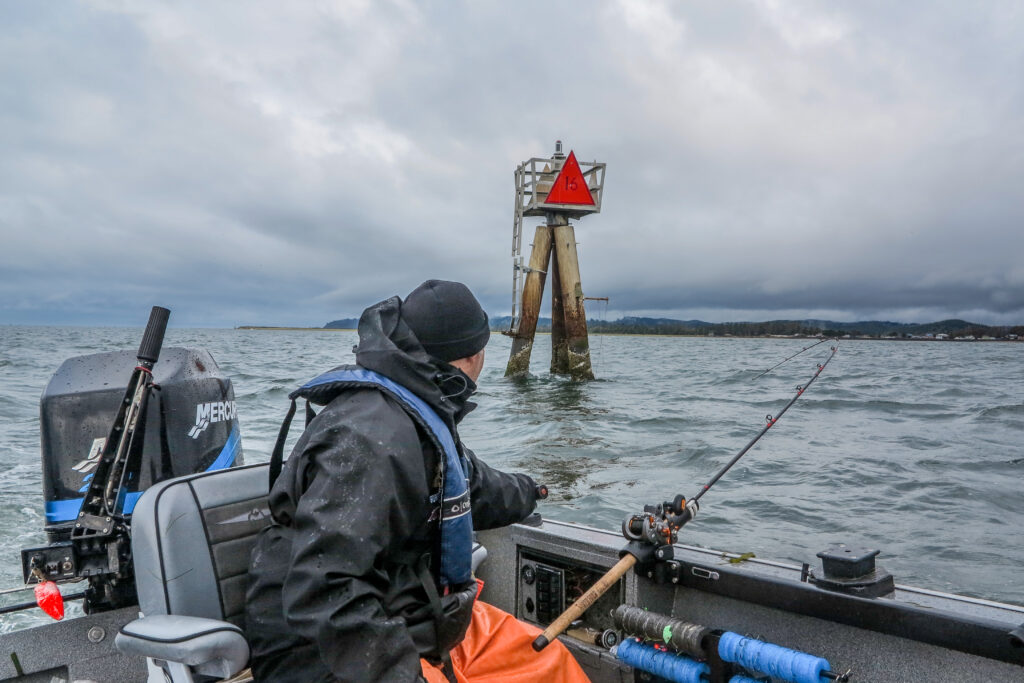
August ocean salmon fishing is all about the rules and emergency closures and openings. The fish are regulated by quotas and estimated returns to natural rivers so be sure to check the regulations and emergency rules daily and be ready to change your location to fish as often as you switch out your cut plug herring. Knowing the rules also means knowing where you are fishing.
Marine Area 1 is slated to be open for salmon fishing in August for both chinook and coho and this is where anglers will be targeting fish stacked up to enter the Columbia River. Known as Buoy 10, the famed August fishery at the mouth of the Columbia River continues out beyond this buoy marker but is considered Marine Area 1. Depending on sea conditions and bar crossing, fishing can be good out in the open ocean. Especially for coho as the chinook are mostly staging in the brackish water and rushing into the Columbia with each tide change. Coho will stay just offshore a bit longer as they prefer to enter the river in September and into late fall.
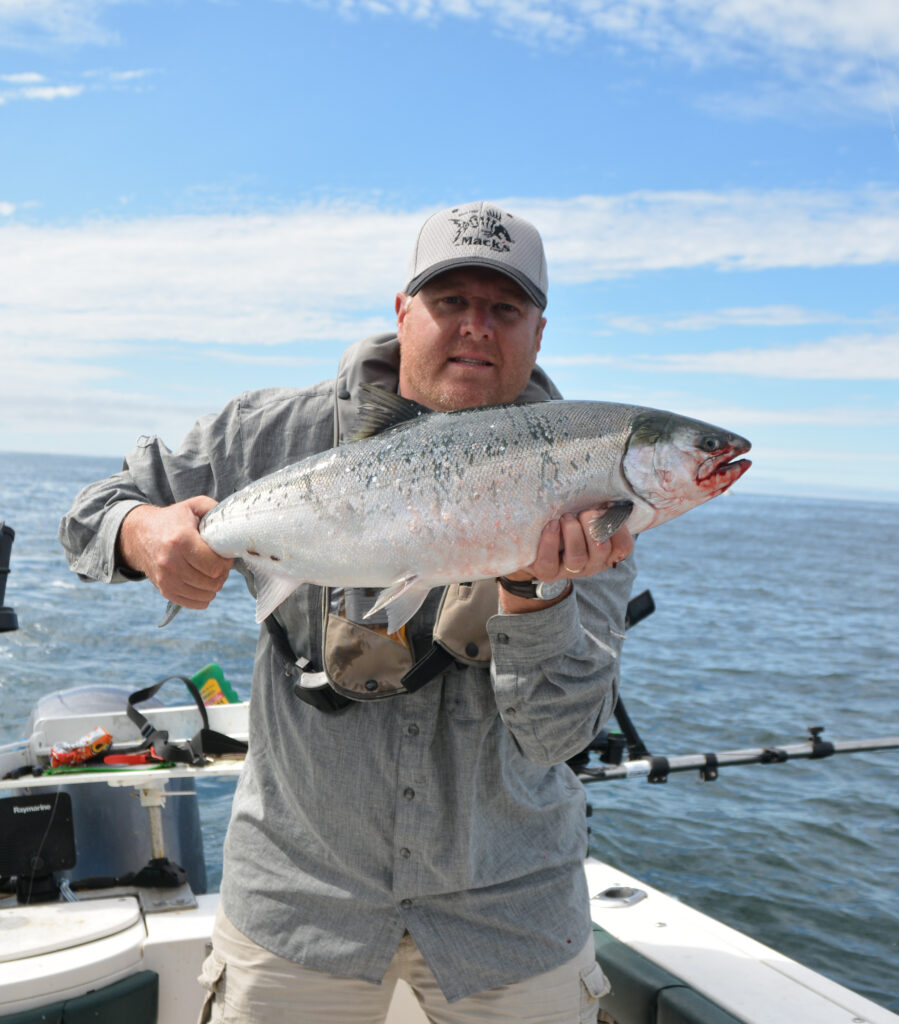
Keep an eye on the Buoy 10 rules and regulations as well as any emergency closures or adjustments. If you have the right boat and navigation skills to cross the deadly Columbia River bar, then Marine Area 1 could save your trip if they close or restrict the Buoy 10 fishery. The same goes for about every ocean area you need to know before you go.
Marine Area 2 gets a little more complex come fall. You can still hit the open ocean from the tiny town of Westport. Extremely popular in July when it first opens Westport becomes a mecca of salmon anglers come August. The complexity comes from the Marine Area itself which is broken down into three segments. Marine Area 2 is the open ocean and is slated to be open, but most likely for coho as the chinook quota gets eaten up quickly as the fish pass by heading to the Columbia or start to stage for Grays Harbor and Willapa Bay. This is where Marine Area 2 is broken down into sub-areas.
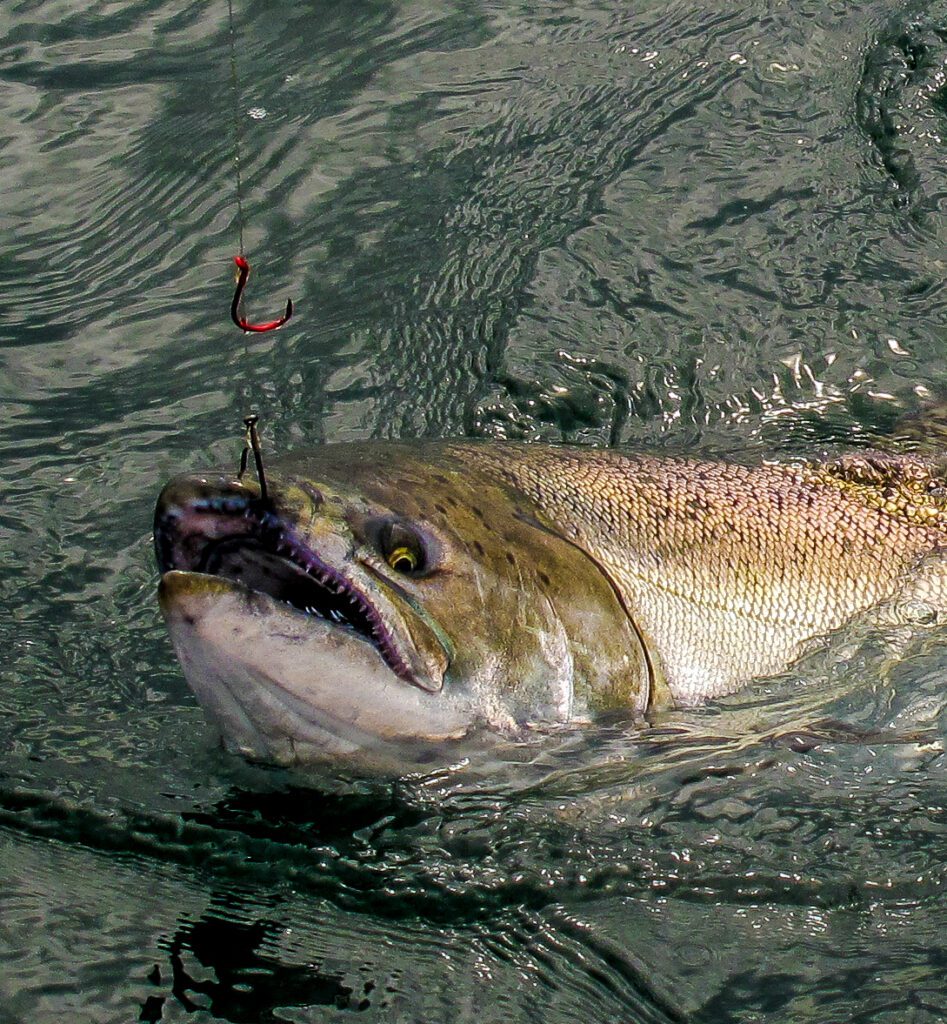
Marine Area 2-1 is Willapa Bay which has three separate zones known as zones 4, 5, and 6. Zones 4 and 5 are closed and zone 6 is most of the bay itself. A kelp and grass shallow water bay where salmon will stage for weeks before heading up the Willapa River and to hatcheries. Wild chinook must be released, and anglers can use two rods each with the endorsement. A dropper weight system is used since this is shallow water and the amount of eelgrass makes it hard to use downriggers. Watch your gear closely and change out baits often but it is hard to beat hooking a large chinook in shallow water which is why this fishery can be immensely popular.
Grays Harbor is Marine sub-Area 2 known as Area 2-2 with zones 1, 2, and 3. Zone 1, known as the Grays Harbor Control zone, closes in mid-August to salmon fishing, which allows fish to enter the harbor. Zone 2 is the Humptulips North Bay fishery zone and is limited to 1 fish, no wild fisher per day. The other zone known as the East Grays Harbor Zone 3 is mostly a coho fishery in front of the Johns River as all chinook must be released.
The Grays Harbor area is not exceedingly popular as you also compete with commercial and native fisheries but can be productive for those that try it. One of the most unique fisheries in the Grays Harbor area is the Westport boat basin fishery which is fishing in the marina where the fleets of charters and commercial boats are stored. Coho returns here thanks to a release effort with a recent addition of 50,000 late coho expected to return in October and November starting in 2026. For now, the fish arrive in late August and into September and can be caught right off the docks at Westport.
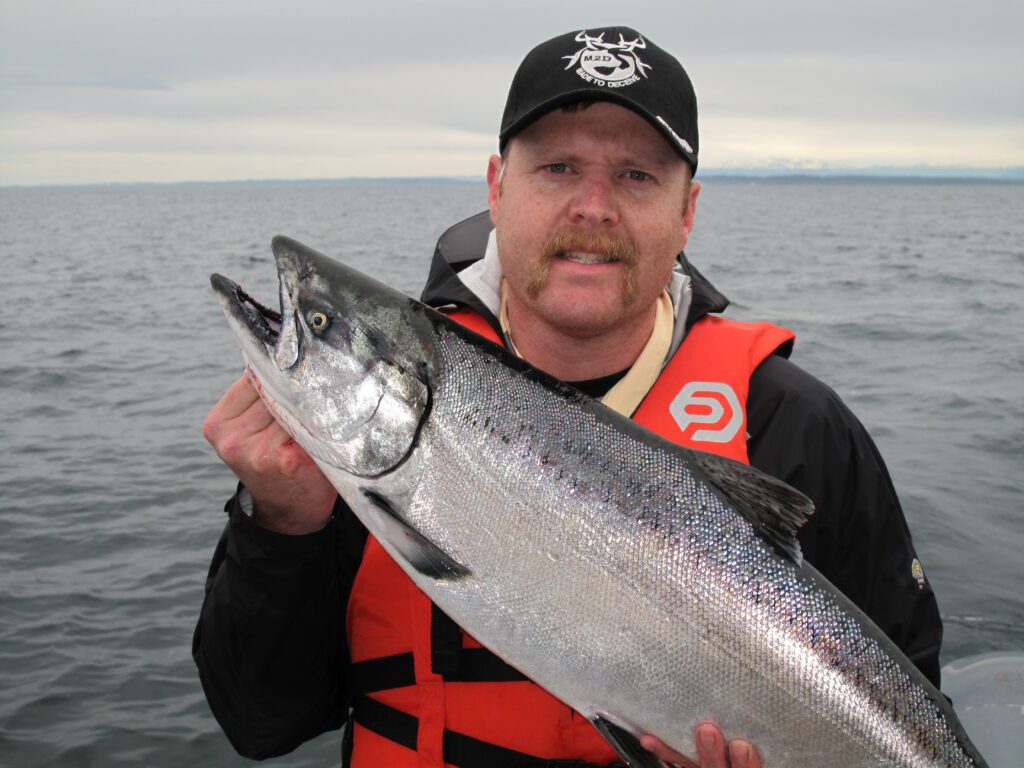
Marine Area 3 is known as LaPush and is very remote. With limited launches and extreme weather area 3 is mostly accessed on days with optimal ocean conditions. It is slated to be open in August for both chinook and coho, but this is one fishery that is often adjusted with an emergency rule. Chinook are prime and targeted in July which often means an August closure but coho here are making their way to the many rivers that have both robust hatchery returns and wild runs as well. Wild coho are not allowed to be kept keeping those runs going so be sure to only keep clipped silvers. This is also a staging area for chums and in the salt, they can be misidentified easily as their purple bars are light and sometimes even non-existent this time of year. Chums must be released so be sure to look at the fish closely and know what you have caught.
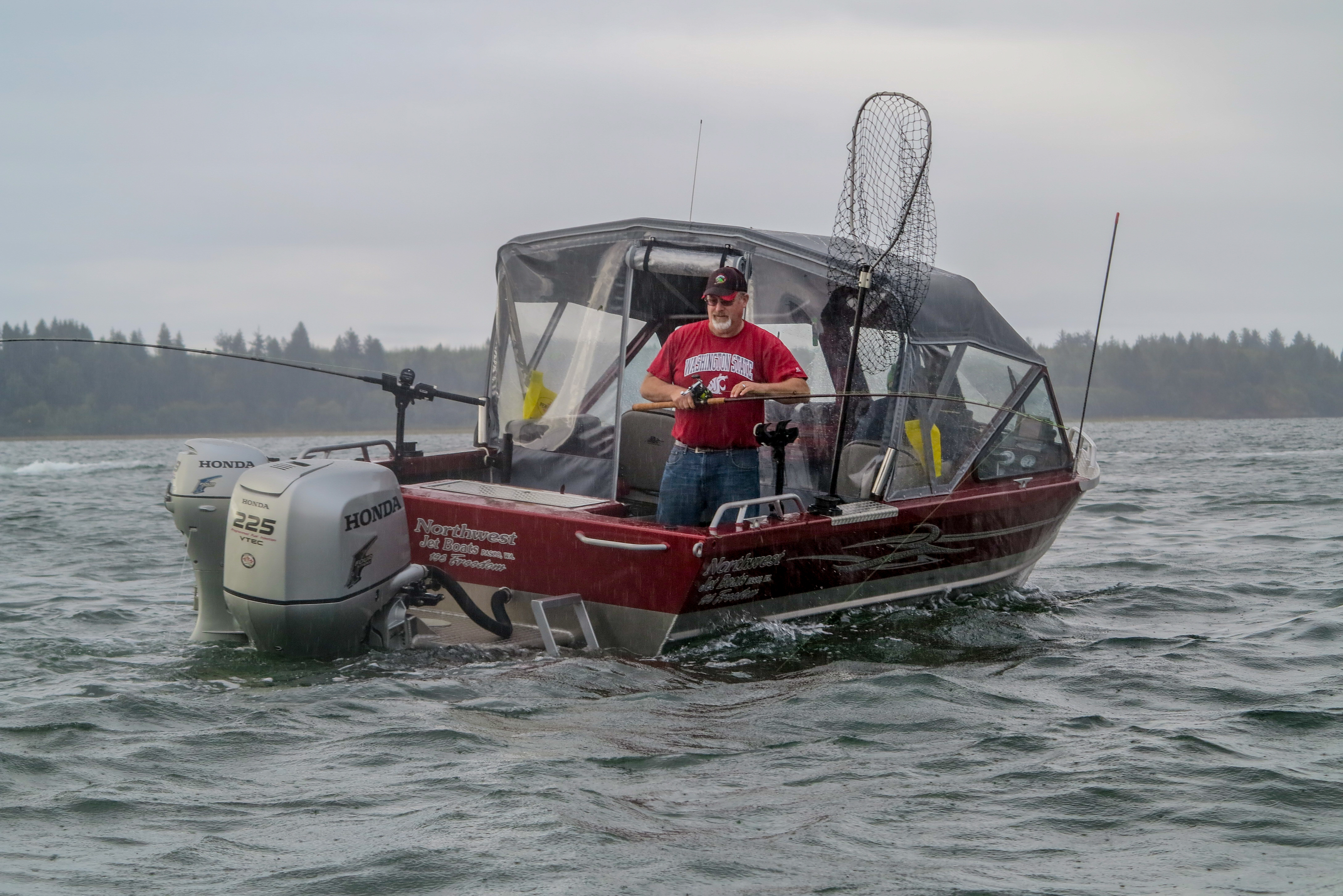
Marine Area 4, the last of the “ocean” areas had a rough start to the chinook fishing. As of July 11th, only 25% of the quota had been caught which normally that time of year the quota is getting close to being filled. I fished this area on July 12th and 13th, when the daily limit of chinook went to 2 per day and we did not hook a single adult chinook. The seas were rough and kept my little 18-foot boat limited to trolling along the kelp line and near shore but those that could make it further out did well. This indicated the chinook were here but out deeper than usual. Coho were being caught but not in respectable numbers which could indicate a later return this year which is great since area 5 to the east is slated to be open into October for coho. Come August the rules for chinook change in Marine Area 4 with it only being open west of the Bonilla-Tatoosh line. Coho is slated to remain open until mid-September in all Marine Area 4.
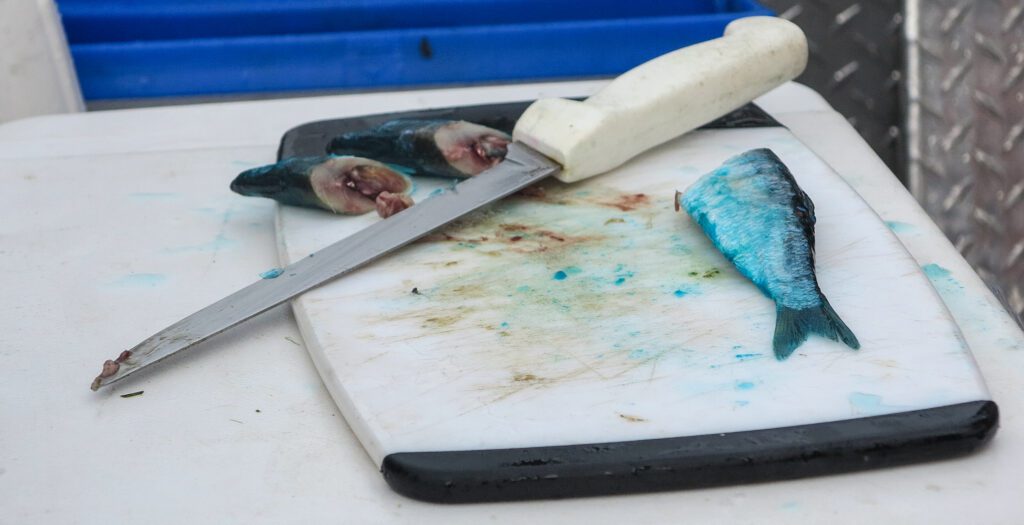
Regardless of where you decide to go, be sure to head out to the open ocean for some great fall salmon fishing. Of course, before you go be sure to check the emergency regulations as these fisheries are subject to quotas and can close quickly. They can also open or be extended as well and just maybe you will find a bonus opportunity out in the ocean. Either way, be ready for some cold, wet, and rough weather as well as bring sunscreen as afternoons are known to burn off the fog and remind us it is still summertime.
/articles/august-2024-ocean-salmon-update
The Aging Sportsman and a Place to Sleep
Ok, I’m sitting here in our group camp while the rest of the gang is out chasing walleye. I love walleye fishing; how did this happen? The progression is a long one and then the wife just had knee surgery and needed an extra hand. The table was set.
When I was a tater-tot my parents used to say that I came out of my mom with a fishing pole in my hand. Although it was likely a tall story, it is based on what turned out to be a lifelong obsession and pursuit of anything that swims. Both in elementary school and in high school if I was late or got caught skipping school it was because I was fishing. Once I could drive, I often went to school with a steelhead or 3 on ice in the back of my car.
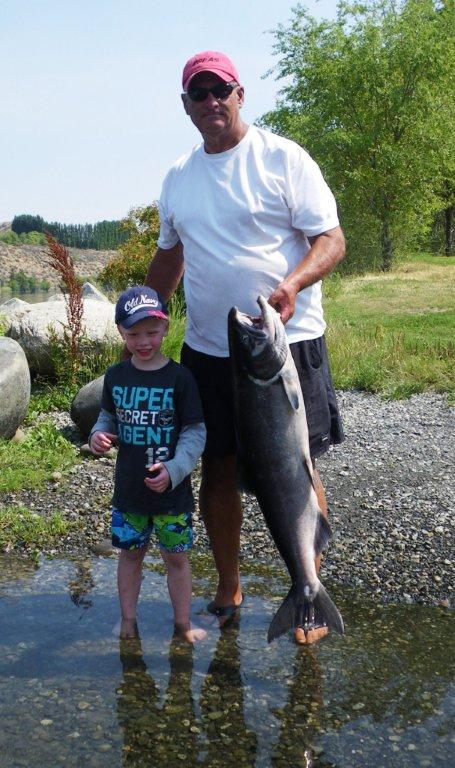
My adolescent preoccupation with fishing followed me through to adulthood. My early days of easy 3 steelhead days or immediate chinook limits just primed the pump. I was obsessed, if I saw a puddle somewhere I believed two things; First that there was a fish in it, and second that I could catch it. I think that I was well into my 40s before I realized that I may have to work for the next fish. Prior to that, I had an unwavering belief that I would hook a fish on every cast, anywhere around the world. I was lucky though; I lived and grew up in the PNW during the heyday of sports fishing.
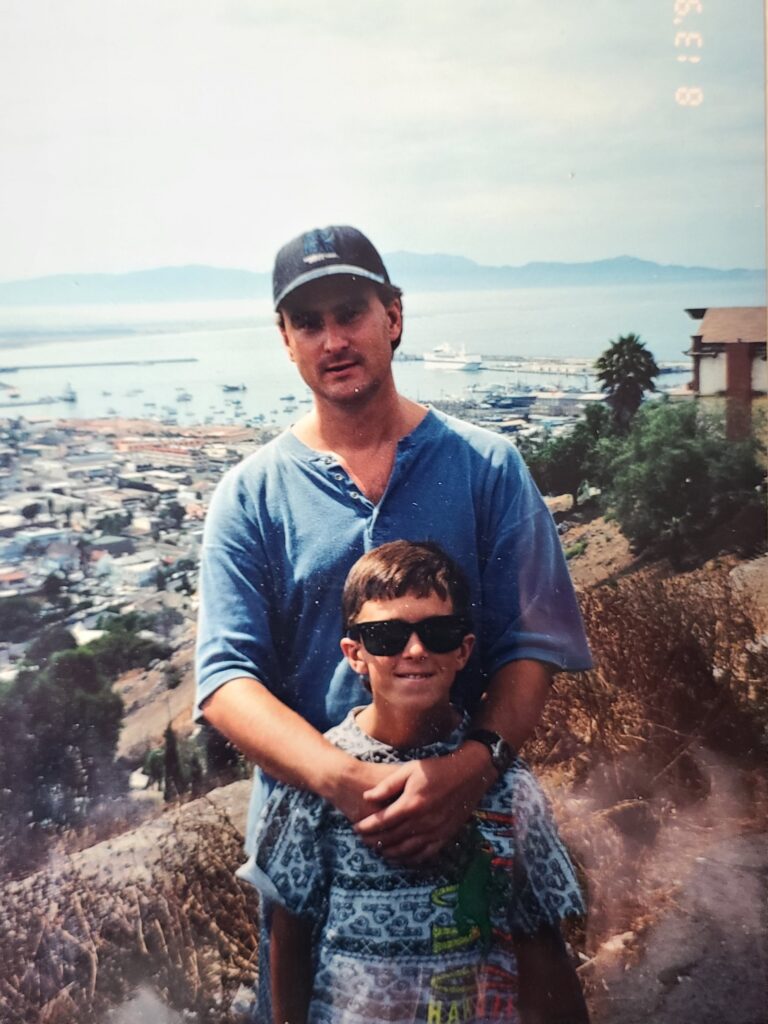
To that note: I have caught fish all around the world. During my suit and tie days I was fortunate, LOL or maybe it was unfortunate in that I spent a lot of time on the road. I traveled to many regions within the United States, Mexico, and other parts of the world. I always traveled with a 5 or maybe 7-weight fly rod and a travel spinning rod tucked in my carry-on. These being pre-internet days I would research the area that I was traveling to. Then put together a little travel kit for the road. People at home probably thought that I was nuts and the locals where I was fishing knew that I was wacko, “Fishing, do you always release your catch?”
My business travels brought me to a long-term assignment in Southern California. I was still traveling but my regional assignment had changed. Again, pre-internet I didn’t really know what the fishing opportunities would be. As it turned out, I had landed in a fisherman’s paradise. I owned a home in Orange County eventually moving to a small mountain community but I was always close to one fishery or another.
Living in Southern California a sportsman had quick and easy access to a wide variety of both inshore and offshore saltwater fisheries. I got heavily involved in the offshore fisheries, even deckhanding or running the galley on a couple of party boats. My addiction wasn’t limited to the salt, there were also many excellent freshwater options. Close to home there were a number of trout, bass, whisker, and panfish lakes. With some driving you could be fishing planted rainbows in many lakes or clear mountain streams, fishing for High Serria brown or golden trout. With a full tank of gas, the angler could be swinging a fly for a large chinook in a formidable coastal or central valley river. The long and short of it, I was in heaven. I had to earn a living but I was truly a fish-a-holic.
Why the trip down memory lane? I probably could have written this without the memory download but that said; I did spare you the sorted details of 40-plus years of fishing trips, I was setting the stage for an unexpected transition and the actual content of this article.
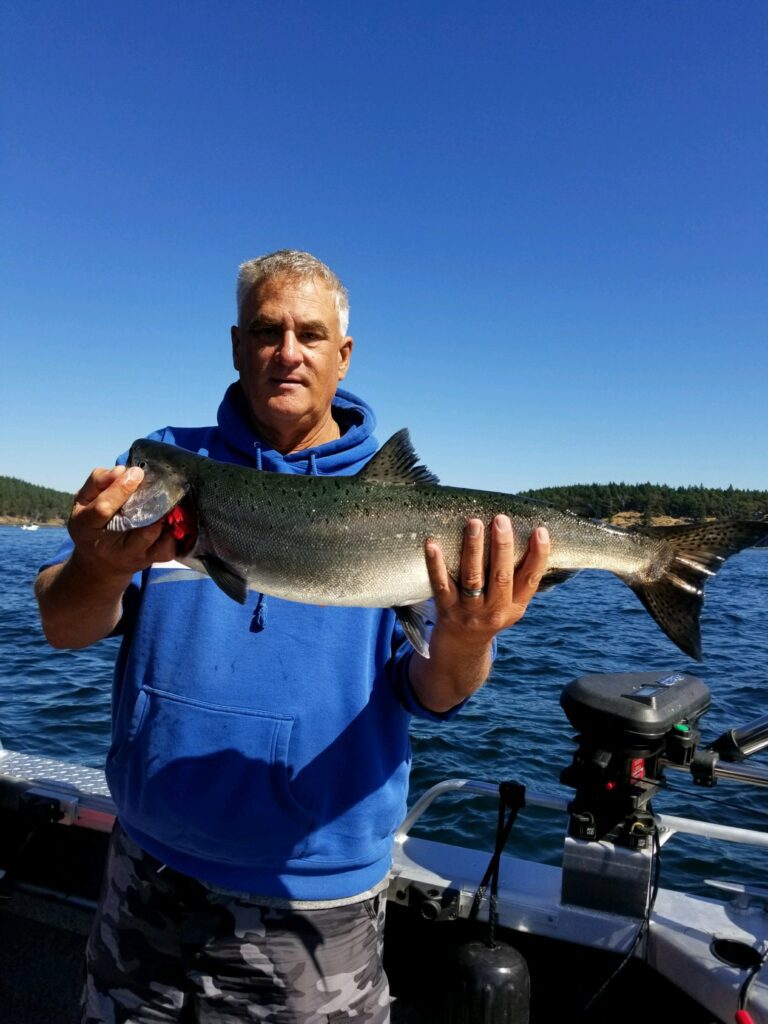
I can’t explain it, but in the last 5 or 10 years I have noticed that I’ve transitioned from an Eveready Fish-a-holic to being content writing about fishing or even sitting around a campfire yapping about it. Oddly during the same period, my ability to sleep pretty much anywhere seems to have gone the way of the dodo bird. Are the two connected, possibly? That would be a whole study of its own.
The glaring tie may be arthritis. Pretty much everything hurts all the time and daily activities are a chore. Fishing; holding a rod, tying knots, managing snaps, clips and downrigger balls require a focused effort these days. Then sleeping has become a serious problem. Gone are the days of a few quick winks in the driver’s seat while parked at a boat ramp. With the onset of arthritis and associated structural problems sleeping in a tent on the ground is completely out of the question.
Unfortunately, the fishing industry hasn’t taken a look at limited functionality due to arthritis. At my end, I try to set gear up so that even with hand strength or manual dexterity issues I can rig the gear with some level of confidence. Having most things pre-tied has been a huge help. The use of the commercial troll line snaps for the downriggers allows me to easily connect the downrigger balls. Keeping the boat organized, having a seat with good lumbar support, and having autopilot for the longer runs also helps. I already own a gazillion reels so I’m probably not going to go out and buy a complement of reels with ergonomically friendly handles but there are some out there. There are also ergonomically friendly aftermarket handles available for some reels. I think that the key is to sit down and really consider what your capabilities or personal limitations are and adjust your approach as required. Additionally, a good fishing buddy is a must.
Lifestyle versus reality. I’m in the process of assessing the reality of my limitations. Do I need my saltwater boat, and my drift boat, if not do I replace them? Simpler makes sense, then considering our local saltwater seasonal limitations, getting a smaller less maintenance rig may be the way to go. Although officially retired I am very fortunate and I have a retirement career. The money is nice but the job was a godsend. I just couldn’t do retired and I was going stir-crazy. Now I run a boat in Washington’s San Juan Islands, am outdoors and with the job being very physical it keeps me active. I mention this because it does have a downside, independent of the weather conditions I run year-round. I’m beat up at the end of the day and instead of fishing on a day off I typically need some recovery time. Eventually, I’m going to have to look at my overall lifestyle including a general lack of sleep and make changes.
As a sportsman, sleep is an interesting subject. In my younger days, the adrenalin of the next hook-up would keep me going for days and when I did need some shuteye, I could sleep standing on my head if I needed to. I probably don’t need any more sleep than I used to but I do need some comfort. Knowing that the whole tent thing and sleeping on the ground or leaning back in the driver’s seat for a power nap was behind me got me to wondering; where am I going to sleep?
Although a 5th wheel or other pull-behind trailer would be luxurious, at this point I still need to be able to pull a boat. Tents, out of the question, and a hotel bed doesn’t seem to align with most fishing trips. For many years our ARB shell, TruckVault, and a queen-size mattress served us well but it was time for a heated change.
I use the truck for work every day so a full-size hard-sided camper wasn’t going to work. We considered getting a motor home or some form of a van conversion but in the end, decided that they were not in the budget and worse we’re out of driveway real estate. Years ago, I did some catering for a series of offroad events in southern California and there were a ton of both ATC and Four Wheel Campers at the events. They are purpose-built off-road campers. Both manufacturers utilize a lightweight welded aluminum frame and are soft-sided pop-up campers.
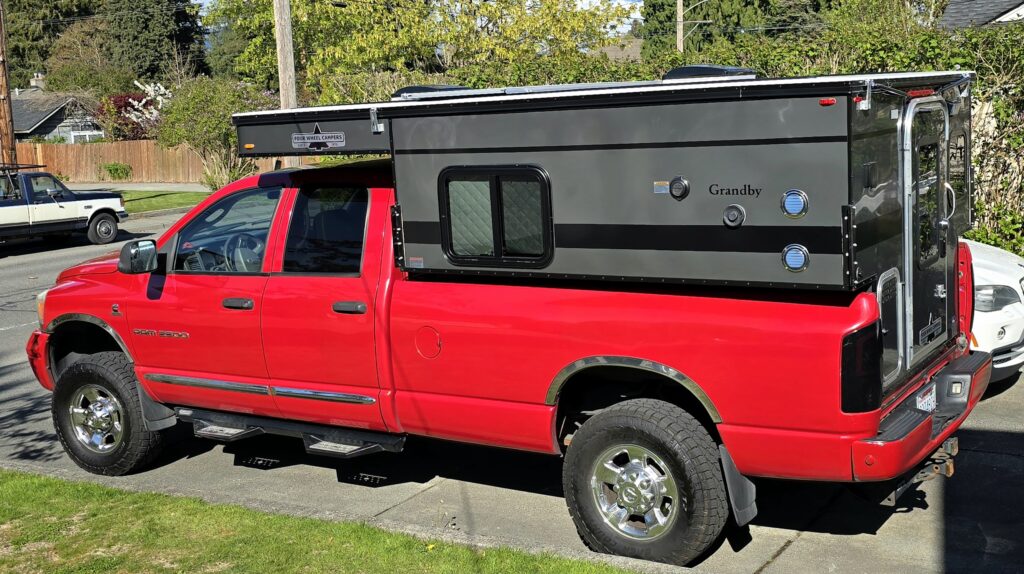
We decided to find a FWC and quickly determined that used campers to fit our full-size truck were few and far between. Order a new one? Well maybe; after researching the cost of the few newer used FWCs available as compared to the cost of a new one, ordering a new camper seemed like a solid financial decision. Add a level of customizations available and we were sold.
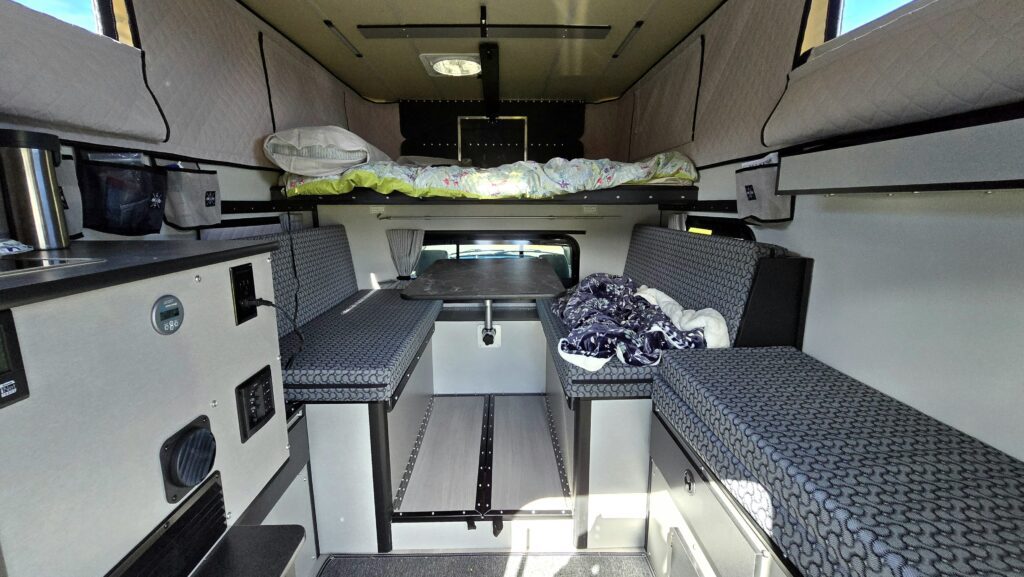
FWCs are available as topper, a basic shell model, a fully loaded slide-in camper and as a flat-bed camper with various options available for each model. We ordered a basic shell but customized our order with forced air heat, a larger bed, a forward dinette a flush mount stove top, an 8’ awning and shore power. Deposit made; the wait began. We expected the 4–6-month lead-time but after a couple months started getting antsy and second guessing our configuration choices. Eventually, our lead time transitioned to an install date and we were off to Mule Expedition Outfitters in Issaquah for the install.
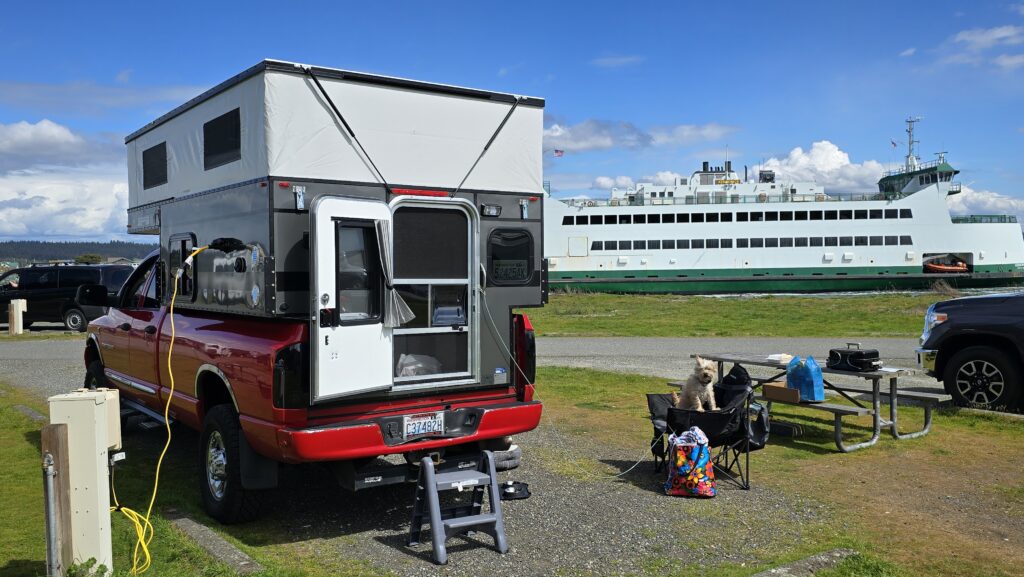
Our installation went smoothly and after a thorough walk-through, we were rolling. The first thing we noticed is that we didn’t notice anything. Our new camper was very well balanced and our truck carried the load well. When we got home, I did the fuel economy calculations and we got 21.4 miles per gallon. I was impressed, our mileage was way better than expected! Since then, we have spent 12 nights camping but I have not removed the camper from the truck. With maybe 10,000 miles behind us as a truck camper combo, the truck is consistently getting 20-22.1 miles per gallon, not bad for a ¾ ton truck with 350,000 plus on it!
To date, we are very satisfied with our customization choices and our Four Wheel Camper far exceeds our expectations. I have to say, I even proposed going camping without any fishing gear! 10 years ago, I would never have considered a camping trip that didn’t involve the boat and fishing gear. The way of the future or a phase? Only time will tell. In the meantime, I love telling fishing stories and we have a comfortable place to sleep!
/articles/aging-sportsman-and-place-sleep
Five Coastal Salmon Rivers to Check Out
Summer is upon us and for many of us, that means that our home rivers are closed to fishing to protect ESA-listed wild Chinook. As a result, we are looking forward to fall when we begin to see runs of Coho and Chum salmon flooding into our rivers with increasing opportunities to catch them. Fingers crossed!
It is anyone’s guess what WDFW will do and many of us are eagerly awaiting news concerning our seasons, emergency closures, and changes in general. Keeping this in mind, let’s look at five coastal river systems to check out that could present great opportunities.
Let’s start on the Northern Coast and work our way South. For the sake of this article, the focus will be from Forks in the North to Grays Harbor in the South. There are other coastal river systems South of Grays Harbor, but we are going to focus on the most popular systems.
Quillayute River System
The Quillayute empties into the Pacific Ocean at La Push, Washington. The Quillayute River is formed by the confluence of the Bogachiel River, Calawah River , and the Sol Duc River near the town of Forks, WA. The Dickey River joins the Quillayute from the north, just above the river's mouth at the Pacific Ocean. Though it is world-renowned as a winter Steelhead mecca, this system also receives returns of all five species of salmon. With spring and summer Chinook salmon returning in lower numbers than expected, the Quillayute river system, including the Bogachiel, Calawah, Dickey, Sitkum, and Sol Duc rivers, as well as Thunder Creek closed to all fishing on July 15. Historically this system produced great returns of spring and summer chinook, but like so many of our rivers, the runs are now endangered. The Coho and Chum will return in September and hopefully, there will be opportunities to catch and retain hatchery fish.
Hoh River
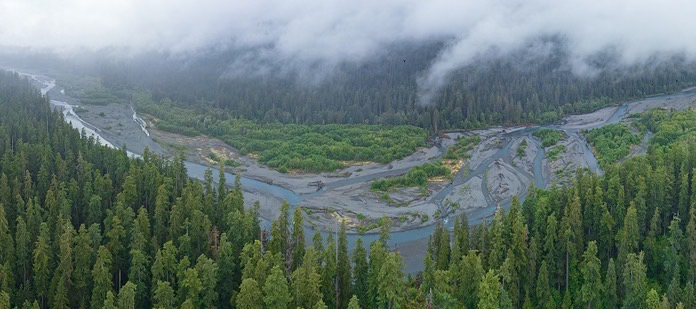
At 56 miles long, the Hoh River originates at the snout of Hoh Glacier on Mount Olympus and flows westward through the Olympic Mountains of Olympic National Park and Olympic National Forest, then through foothills in a broad valley, emptying into the Pacific Ocean at the Hoh Indian Reservation. The final portion of the Hoh River's course marks the boundary between the south coastal segment of Olympic National Park and the Hoh Indian Reservation.
Returns of Steelhead and Salmon make the Hoh River a fishing destination worth exploring. While there are fish in the Hoh River year-round, Steelhead are mostly targeted in the Winter, Chinook, and Coho are mostly targeted in August through November, and Dolly Varden and Cutthroat Trout are targeted anytime the water is in shape.
According to the 2024-2025 regulations, parts of the Hoh will open for Salmon fishing on September 16th, presenting some great opportunities to target Coho.
Queets and Quinault Rivers
The Queets and Quinault Rivers and their tributaries flow from the Olympic National Park into tribal lands. While opportunities exist in the upper reaches of these systems and within the park, they are most noted for their tribally guided lower sections. Note that the rivers are governed by WDFW, the Federal Government, and the Tribes, depending on where you are, so pay close attention to the rules.
The Quinault and Queets Nations have built some very robust hatchery programs, and they control the lower stretches of the rivers. Anglers can fish for all five species of Salmon as well as Steelhead and Trout. Fall Coho on the lower Quinault is a very fun fishery and can result in a freezer full of fish to last the winter. Note that you must book a trip with a tribal guide to fish the waters that lay within the reservations.
Humptulips River
The Humptulips River is located in Grays Harbor County, just North of Aberdeen and Hoquiam. Its main tributaries are the East Fork Humptulips River, about 20 miles long, and West Fork Humptulips River, about 30 miles long. After the forks join, the main river is approximately 20 miles long and provides some of the best salmon habitat in Washington. This river is not a secret and is often very congested, when open.
I will say that the “Hump” as it is called is one of my favorite rivers for fall Salmon fishing. It is renowned for its runs of Chinook, Coho, Chum, and Steelhead. As with other coastal rivers and due to low returns of wild Chinook, opportunities are limited. According to the current regulations, parts of the river should open in early September for hatchery Chinook and Coho. As this river can get very congested, it is best to know what you are doing and even better, book a trip with a guide.
Chehalis River System
The Chehalis River originates in several forks in southwestern Washington, flows east, then north, then west, in a large curve, before emptying into Grays Harbor, an estuary of the Pacific Ocean. The river is the largest solely contained drainage basin in the state. Both the Wynoochee and Satsop Rivers flow into the Chehalis between the towns of Elma and Montesano. While the Chehalis has many other tributaries, the Satsop and Wynoochee are likely the most popular and offer fantastic fall Coho fisheries. The mainstem Chehalis, near the mouth of these rivers, can be epic when conditions are favorable and some of the largest Coho in the state can be caught here. This system is also known for large limits of Coho allowed but check the most up-to-date regulations for specific details and don’t forget to look for emergency closures.
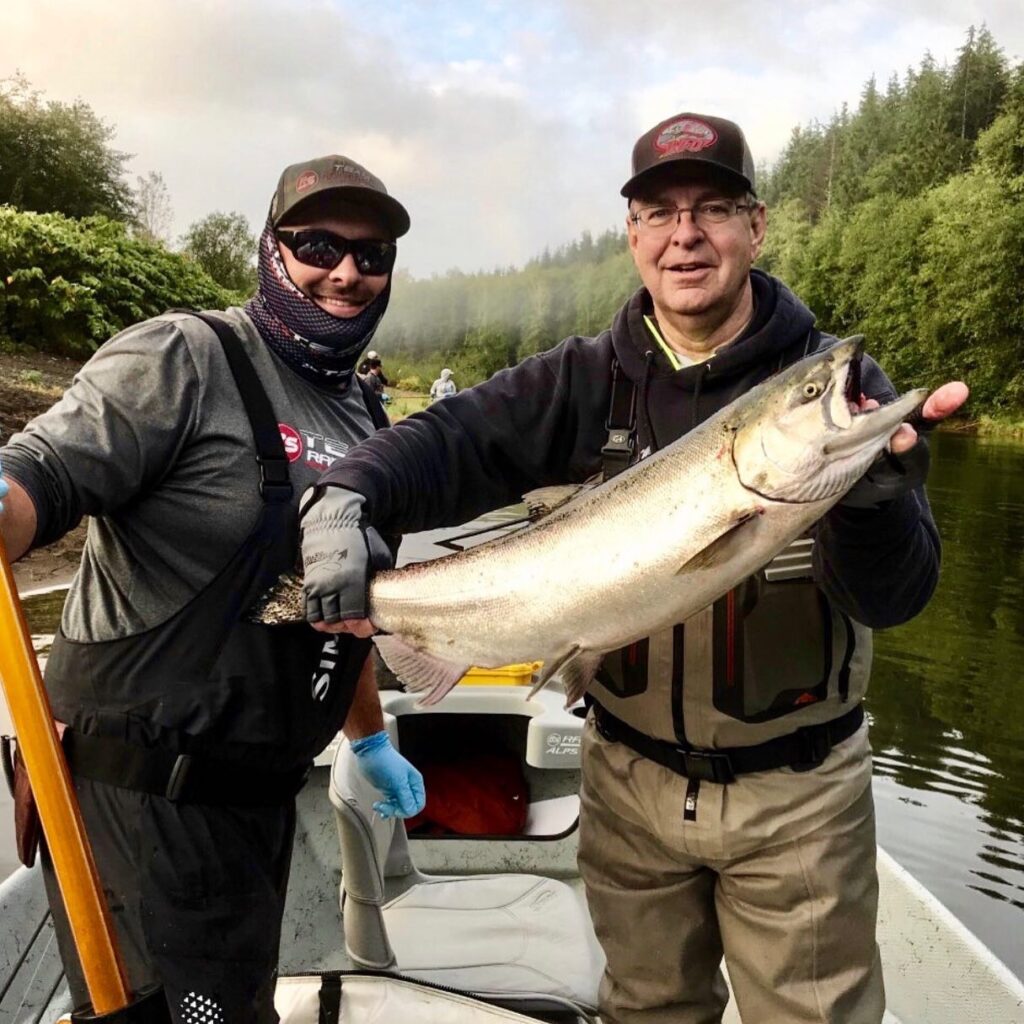
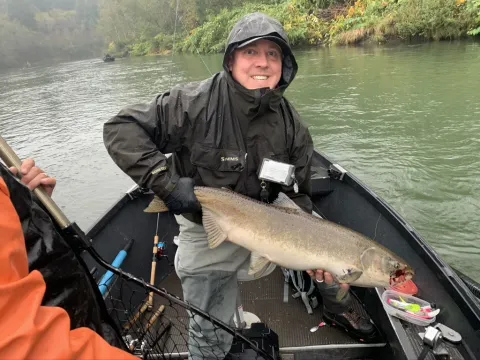
With all these rivers, please remember to check the regulations before you make plans or head out to fish. Things change often and it is very important to make sure that a river is open to avoid disappointment. Also, do yourself a favor and book a trip with a guide. I just cannot emphasize this enough. Your opportunities for success will greatly improve if you learn from a local guide and you are more likely to take fish home to eat later.
In closing, you are welcome to message me if you need to be connected to a guide. I am easy to find on Facebook (https://www.facebook.com/brent.knight.148) and am happy to help. Good fishing!!!
/articles/five-coastal-salmon-rivers-check-out
A Pizza The Fishing Action
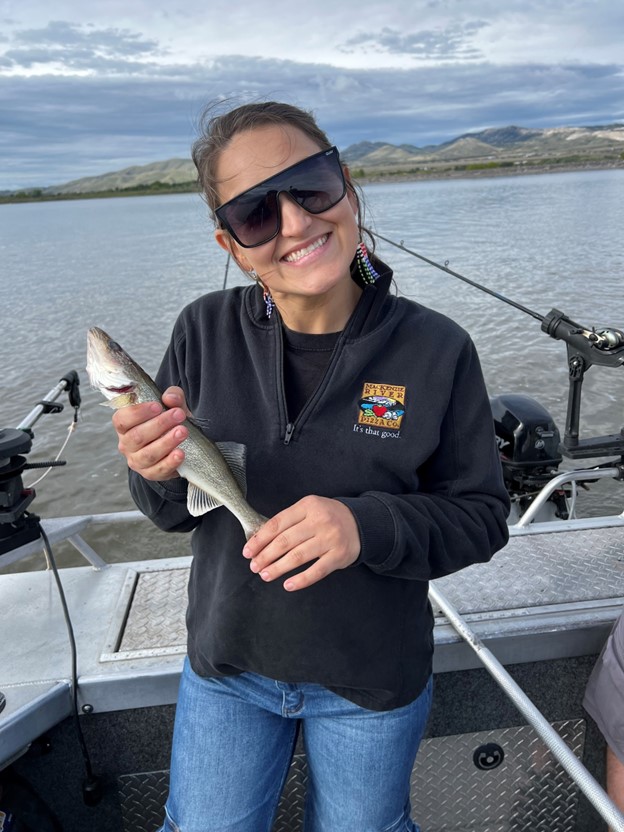
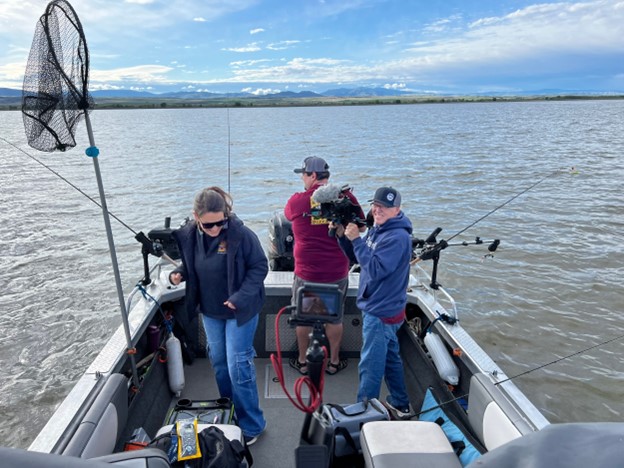
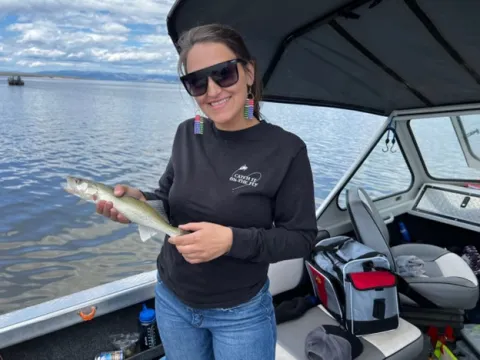
It’s great when strangers become friends, those who are passionate about something can share that passion with others and the feeling of joyfulness can be had by all. That was certainly the case on one of our recent fishing adventures here in the great state of Montana. I’m in the not-so-unique position of being an avid fisherman and also someone who enjoys a good slice of pizza. I am in the unique position of having been able to fish with some fine folks from Mackenzie River Pizza Co. and blend the two joys. Amanda Thompson, the general manager of the Helena, MT location, and Allison Collins, out of the Bozeman, MT location with some regional supervision duties, spent the day with Mike Carey and me on the picturesque Canyon Ferry Reservoir just south of Helena, MT.
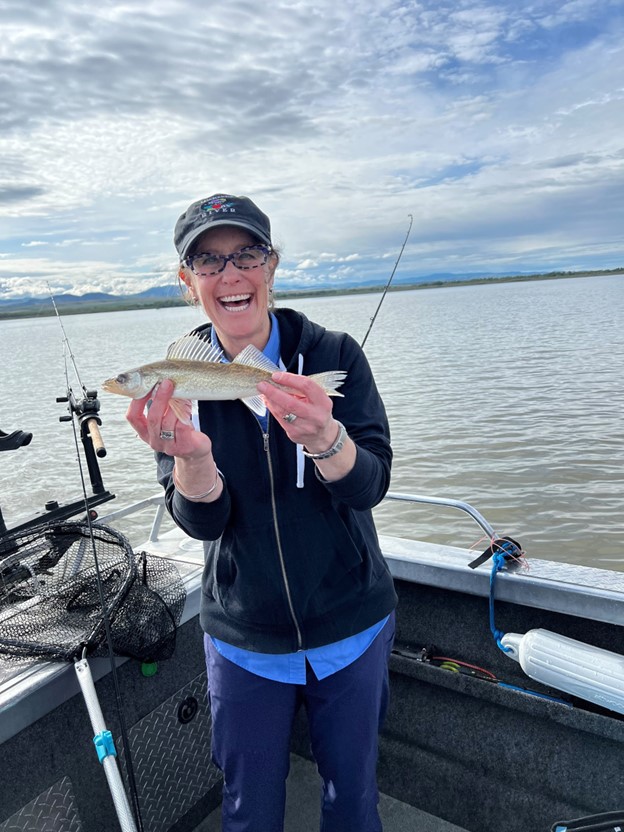
What I really enjoyed about the experience was the ability to share something I am passionate about with these two ladies who had never fished using the techniques we employed for the day. Allison had some experience with fly fishing (who hasn’t in Montana?) while Amanda was a little more green to the whole fishing experience. Both caught on tremendously quickly! Changing gear when needed or putting new bait on a hook quickly became an old hat for all of us. We trolled the southern portion of the reservoir for walleye using a combination of crankbaits and bottom bouncers. Each person picks out their lure of choice, which colors and patterns would hopefully work the best, and of course, goading the others for their poor choice of lure. After a little explanation and demonstration on how to ensure the weight had hit the bottom and the gear was set up properly, we were off and fishing.
The bite was steady all day. No huge fish, the regulations actually state only one fish over 15 inches can be retained, but the anticipation of the catch with the thrill of the familiar walleye “tug, tug” on the other side of a bottom bouncing set up more than made up for any lull. That, in combination with an abundance of beautiful weather, gorgeous scenery, and light-hearted conversation made for a really great fishing experience. It was one of those days with the perfect blend of sun and shade from the clouds overhead. Just as you felt maybe it was getting a little warm, a cloud would provide just enough coverage to keep you comfortable.
To the east, the mountains within the Helena National Forest loomed over Canyon Ferry, a reminder of just how imposing but welcoming the mountains can be. And of course, the friendly banter amongst everyone on the boat helped pass the time when we would have a period of little to no fish. We talked about everything from of course fishing and pizza, to getting our own young children interested in fishing, and hockey, our backgrounds that led us to Big Sky country, our jobs and the people we work with, and too many other topics to mention. We spent the morning and early afternoon on the water catching fish, even with a bonus rainbow trout thrown in, and decided to call it a day with preparation for a delicious meal in the restaurant.
One last note on the trout (you couldn’t expect an article based in Montana without a reference to a nice rainbow, right?) - it was fortunate enough to escape what was presumably an attack by an eagle or osprey at some point. It had two noticeable gashes on the left side of its body. A reminder that nature is always moving and present even if we are locked into the towns and cities with which we live.
Our time in the restaurant was as enjoyable as the fishing. I’ve been to the Helena location plenty of times and really appreciate the atmosphere and fishing themes in the restaurant. Something I had not known before talking with Amanda and Allison, is that each restaurant has its own driftboat as a decorative piece in the building. It’s hard to miss a hanging boat in a restaurant and even harder to not appreciate the craftsmanship it took to build it. Fly fishing and Montana-themed decor are abundant in the dining room and bar area.
From the lodgepole-style wooden tables and chairs to the dry fly engraved decorative glass that separates the booths. The restaurant has a warm and welcoming feeling with a carved wooden bear greeting you and asking you to wait for your hostess to seat you. An immersive dining experience to all things adventure. And of course, how could I not highlight the food?
The offerings are right on point with the Montana and fishing themes you’d expect. I had to order my all-time favorite pizza, the Madison, named after the Madison River in southwest Montana. Bacon, mushrooms, and ricotta cheese? I should’ve ordered two. And to wash down the pizza, exclusive to Mackenzie River, the Drift Boat Amber Ale. A little earthy, a little sweet, it’s just a great-tasting beverage to sip on while you’re enjoying some food and maybe watching a game, taking in the scenery, or chatting with friends. My other go-to menu offerings include the lodgepoles with pesto, trout dip with crostini, the stockman pizza, their version of a meat lover’s pizza (with steak strips!), or the Flathead pizza, named after of course Flathead Lake near Glacier National Park. Perhaps I’ll get some of that on my next visit.
The fishing adventure concluded with new friends sitting around the table breaking bread, sorry, pizza, with one another. I am grateful for the experience out on the water and in the restaurant. It’s something I hope you get to share with people in your life on a regular basis - a blend of recreation and comradery. When you get the opportunity, I can’t recommend enough a day of fishing with others concluding with some quality food at one of the great restaurants in our area. Interested in experiencing it for yourself? Mackenzie River Pizza Co. has locations throughout the northwest and beyond, check them out and taste for yourself. Did I mention you should order the Madison?
https://www.mackenzieriverpizza.com/
/articles/pizza-fishing-action
Drop-shot Technique for Bass
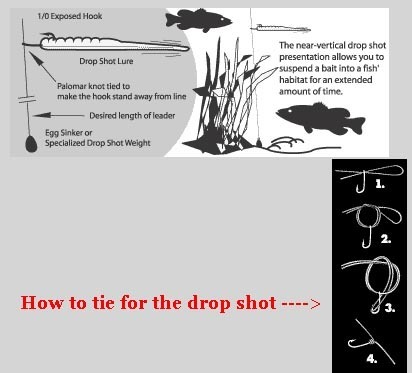
I am no expert by any stretch of the imagination, but I have grown fond of the Drop Shot technique in my short, four-season fishing journey. I have been using it for just over a season’s time. This is a very productive method to catch fish in a variety of states. In my first outing for smallies this season, I hooked and caught 3 smallies on three consecutive casts. It is the only method that has done this for me to date, and from the shore to boot. At the very least, I can share with you what I have learned through trial, error, and experience (which isn't much).
You don't need a Drop Shot specific rod. A medium-light to medium-action rod from 6'6" on up to 7' should work for you for now. If you find drop shotting to your liking, you can then opt to go with a Drop Shot specific rod of your choice. As a rule of thumb, a longer rod will enable you to have more line control and leverage; two big pluses in drop shotting.
I prefer spinning reels (a size 20 or 2500 reel is an excellent choice) because they require less work to give the bait a better (IMHO) descent than a baitcast reel. Sorry baitcast reel users, but the way a spinning drops the bait smokes a baitcast reel any and every day for drop shotting. To those who use baitcast reels exclusively, please note I said for drop shotting. There will not be a need to strip line off just to make the bait fall. With that said, casting reels can also be used. I just prefer a spinning reel. You may use whatever reel you want. Even a Barbie pole can get it done for drop shotting! However, I would opt for heavier line and a BC reel if I were to drop shot heavy cover.
Drop Shot Weight and Type
A 3/16 - 1/4 oz weight is a good starting weight. Going any lighter might make it harder for you to read what is going on until you get experience. As for the shape, I like to use either a teardrop or a cylindrical shape. I have not experimented with other shapes. Windier conditions and stronger currents might make you want to choose a heavier weight, but let’s not worry about that for now.
Line
Because you are drop shotting, lighter line is preferred if the cover you are fishing allows it. Go up in # strength if the cover dictates this. I like and use 6# fluorocarbon, particularly Seaguar's Invizx. This line kicks fanny. No doubt about it. The plus in going with fluorocarbon in a higher # test if needed is despite having a slightly thicker line diameter; the angler retains the benefit of fluorocarbon’s trait of near invisibility as advertisers so claim. Whichever line you choose, I think the fluorocarbon line of your choice will be fine.
Baits
Keep an open mind here. Many baits of a variety of shapes can be used. The general rule of thumb is a tendency to use smaller baits since we are "finesse" fishing (translates to downsizing in general). The typical length of a drop shot bait usually ranges from 3" - 4.5" but this is NOT set in stone. Roboworm, Senkos, Sniper Snubs and Bolts (these two are locally made baits), Reaction Innovations Flirts, and heck, even Baby Brush Hogs and Tubes can be used. Think out of the box. I have used longer worms too. This season, the 4.5” Roboworm (in Aaron’s Magic) and Sniper Snubs in Watermelon and Dark Brown have been so effective that to date I have not seen a need to try something else or other colors. It might be different for bass in other waters. If you wish to know, so far the most effective baits for me have been, the snubs and roboworms.
Hooks/Knot
I prefer to use size 1 or 2 (mostly size 2) Gamakatsu Split Shot/Drop Shot hooks, or Owner Mosquito hooks. I attach the hook to the line with a Palomar knot and after it is tied, I insert the extra line (tag end) through the hook's eye before attaching the weight. I have heard good things about size 4 Gamakatsu hooks, but I have not yet had a chance to try them yet.
Leader Length (Distance from the hook to the weight)
The best way to figure this out is to experiment. I have had success with leaders being as short 4-6" to nearly but not quite 2'. Because drop shotting is not limited to a purely vertical presentation, a longer leader is a good idea if you wish to work it somewhat like a Texas or Carolina rig. The longer leader length (which I define here as the distance between the weight and your hook, perhaps 18" as a ballpark figure) will enable you to keep the bait off the ground with the shallow angle that will result from a long cast. For a more vertical presentation, a shorter distance from the hook to the bait can work.
Imparting Life to the Lure
Despite the initial perception of working this lure, it is not all about jiggling and wiggling the bait. An angler can indeed work the bait this way, but I can tell you from personal experience, that wiggling and jiggling has accounted for the fewest number of catches.
So what should one do in addition to the wiggling/jiggling tactic?
Keep the weight on the bottom for the most part and leave enough slack to let the bait sink on its own weight. Then, when you think the bait is near the bottom lift/twitch the rod just enough to move the bait a little (without moving or minimizing the movement of the weight on the bottom) and repeat. In effect, what you are doing is working a semi-slack line and this is what is imparting action to the bait. No hits? Repeat if you wish, or add a little dead sticking to the mix or, drag your bait to the next spot. All are good choices. The dragging of the weight from one spot to the next also imparts life and action to the lure and can help to draw a strike. In addition, working with the slack and dead sticking have been far more effective for me compared to wiggling and jiggling the bait to death
Not sure what the bait will do? Find some shallow water and drop down your bait. The depth should be one where you can see all the way to the bottom. Once the weight is on the bottom, let your bait fall by lowering your rod. Before the lure hits the bottom, raise the rod’s tip enough to bring the lure up, and do your best to keep the weight in place. Watching this will give you an idea of what will likely be happening when you are not able to see the bait with your own eyes. Visualizing what the bait is doing when I can’t see it helps me to focus on what I am trying to do, and that is catching fish.
The Strike or Hit
This can vary depending on the activity level of the fish, the quality of your set up to a certain extent, and the line you are using. More sensitive rods do a better job of transmitting what is going on to you. I have had the blessing of drop shotting with my Berkley Cherrywood Rod, which is decent and not too shabby, but comparing it to my Lamiglas Certified Pro Drop Shot rod is something else. Here is my analogy. If the Cherrywood provides stereo sound to me while watching a DVD movie, the Lamiglas gives me the sound in THX, for the full cinema experience. The latter rod is not necessary to enjoy drop shotting, but it makes it a lot easier to feel and detect the subtle strikes.
The line you use also can influence the feel of the strike. My experience working with both mono and fluorocarbon is that the latter always seemed to give me a better picture. We all know now that although FC line can have as much or more stretch than a comparable monofilament line, it is likely that its density still enables it to beautifully transmit information from the end of our line, to the rod and to our hands.
The hit or strike can feel like:
1) A mushy tug or tick, which could translate to a complete inhalation of your bait or the fish attacking the lure from the hook's side.
2) A nibble or nibbling, that transmits vibrations through the line to you. Sometimes you can see or feel the line vibrate through your semi-slack line. More sensitive rods tell you this much better and more clearly. I believe when the hit is like this (my best guess anyway as I visualize the strike), it is possible that the fish might have taken the lure from the side opposite the hook and the nibbling/vibrations you feel is the fish taking in the bait into its mouth, eventually getting to the hook.
3) Bam! It's on!
The Hook Set
For one and three, just reeling up the slack and adding enough tension to make the line taught is sufficient for most cases to drive the light wire hook home. For case two, you have to wait until the fish gets to the hook and then do as mentioned above. If you don't, you will pull the lure from the fish's mouth. Since it didn't get to the hook, there is no way the fish can get hooked.
I have written this based on the experience I gained from drop shotting. Take it for what it’s worth, an opinion at best. I will close by giving you a final warning:
WARNING: Drop Shotting is as addictive as it is effective.
Good luck and go get’em!
/articles/drop-shot-technique-bass
FORT PECK RESERVOIR’S PLETHORA OF FISHERIES
Big lakes often mean big opportunities and Fort Peck Reservoir, located in Northeast Montana, qualifies in that regard. This huge impoundment of the Missouri River was formed when Fort Peck Dam was built in the 1930s. The lake is 134 miles long and with 1520 miles of shoreline, it is larger than the length of the California coast.
There are fifty different species of fish swimming in the waters of Fort Peck Reservoir, and one of the most important is the cisco, introduced as a forage fish for walleye and lake trout by Montana Fish Wildlife and Parks in 1984. The cisco population is thriving now and so are a variety of species that feed on them.
Today anglers flock to Fort Peck from spring into the fall for a variety of fisheries. The most popular of them being walleye, which can grow to a huge size here. Jason Mundel is a top walleye tournament angler in Montana who hauled in a 17.76-pound behemoth earlier this year, just missing the state record of 18.02 pounds. Mundel says he is certain the big female was over the limit when he netted it but when it was brought into the boat it began rapidly squirting eggs all over the place. By the time Mundel was able to weigh it and photograph the weight, it was down several ounces, to the still impressive weight of the big hen. He then released to finish spawning.
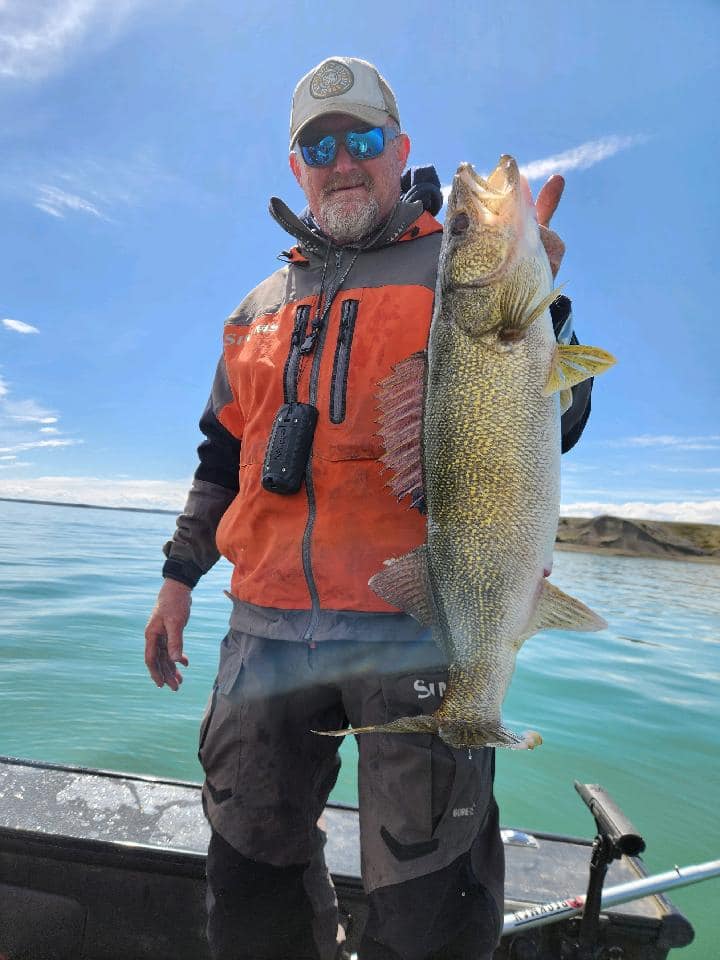
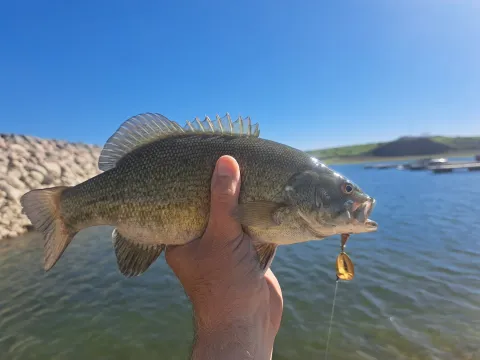
Mundel lives near Fort Peck and spends lots of time fishing in the reservoir (147 days last year). He likes to work long primary points and secondary points and uses sonar to find schools of Cisco. Once he finds the bait fish, he usually finds several different species in the same area feeding on them including walleye, northern pike, and smallmouth bass.
Mundel likes to cast paddle-tail jigs to the fish in the spring and will transition to trolling spinner worm harnesses behind bottom bouncers as the waters warm up over 55 degrees. The northern pike as well as the walleye are often caught with live bait. You are not allowed to use the ciscoes found in the lake for bait, but you can use fathead minnows, creek chubs, and shiners which he will simply fish in a dead-stick fashion, dropping them towards the bottom (but not on it) from the side of the boat. As spring turns to summer topwater baits can be very effective for both the smallmouth bass and pike.
Lake trout are another option. In the spring they will be found in relatively shallow water (15 – 20 feet deep) feeding on the ciscoes along with the bass, walleye, and pike. As the waters warm though, the Mackinaw head to deeper water. The Mackinaw run big here, up to 38-inches, according to Mundel.
In these deeper waters, you will also find Chinook salmon as well as coho salmon, all stocked in the lake from a hatchery below Fort Peck Dam. Mundel will troll using downriggers and flashers in front of his bait or lures to catch all three species.
The salmon can get big here. The state record Chinook a 32-pound specimen, as well as the state record coho, a 4.88-pound salmon, both caught out of Fort Peck Reservoir. Speaking of state records, the current record smallmouth bass, sauger, saugeye, shortnose gar, and freshwater drum were also caught out of this big lake.
The primary access points for most anglers are near Fort Peck south of Glasgow which is almost all paved. Another option is Hell Creek Marina north of Jordan where you’ll travel 25 miles over gravel roads to get to the marina. There are campgrounds and boat launches at both locations. Additional access is available from Glasgow, Malta, and Highway 200 near Jordan though these roads can involve lengthy routes over gravel.
If you are looking for places to stay, eat, recreate and more in Montana’s Missouri River Country check out the local tourism bureau’s website at www.missouririvermt.com and be sure to ask for a free travel guide while you are there.
FORT PECK INTERPRETIVE CENTER
If you are fishing out of the Fort Peck area, you really need to make the time to visit the Fort Peck Interpretive Center. This first-class museum is operated by the U.S. Army Corps of Engineers and tells a variety of stories.
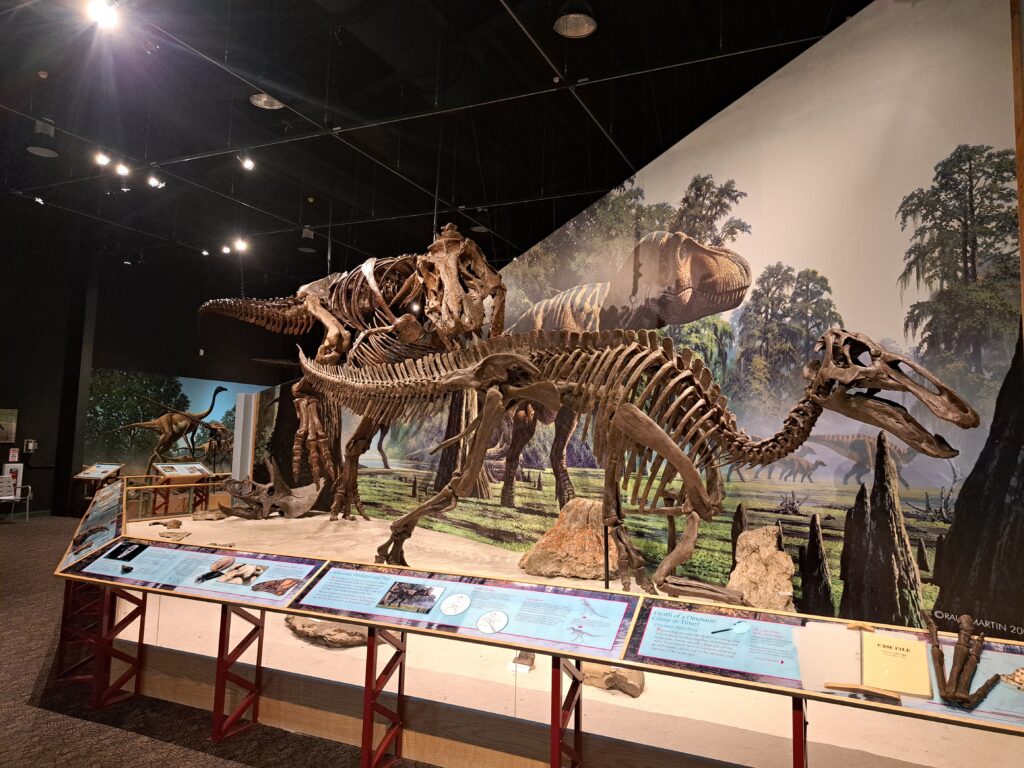
The biggest attraction is the story of the reptiles that lived here 65 million years ago. The Interpretive Center is part of Montana’s Dinosaur Trail. Two fossilized Tyrannosaurus Rex skeletons have been found near here. One is now on display at the Smithsonian Museum and the other can be seen at the Museum of the Rockies in Bozeman but replicas are on display here. Several other fossilized skeletons and replicas of dinosaurs and prehistoric marine reptiles can also be seen here.
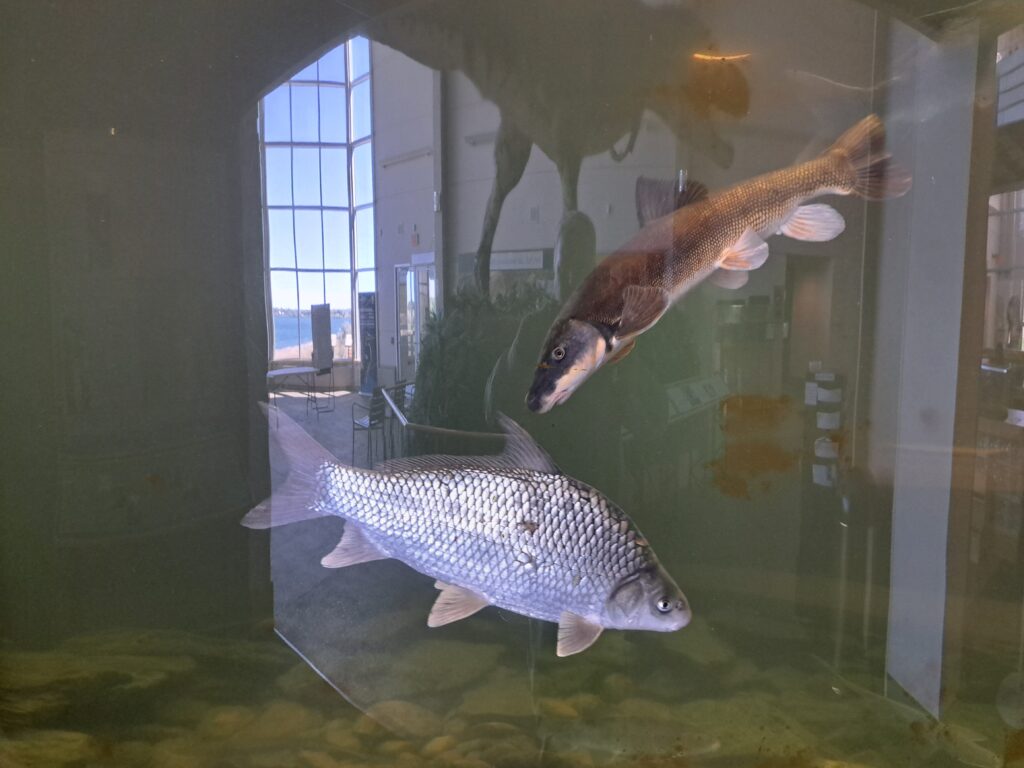
The fish and wildlife found in and around Fort Peck Reservoir and the Missouri River are also on display. Fish can be seen in two large glass tanks and taxidermized animals can be viewed in an impressive diorama.
Finally, the Interpretive Center tells the story of how the dam, called the largest hydraulically filled earthen dam in the world, was built and how the community of Fort Peck came to be. The interpretive center is open from Thursday through Monday from 9 AM to 4 PM between Memorial Day and Labor Day weekend. There is also a nice campground and up to a two-mile-long nature trail adjacent to the Center.
John Kruse – www.northwesternoutdoors.com and www.americaoutdoorsradio.com
/articles/fort-peck-reservoirs-plethora-fisheries
Holding Onto Hope: The Complicated State of Salmon in the Pacific Northwest
Well before the Pacific Fur Company set up their first trading post in Astoria, Oregon, Before the earliest fish canneries on the Columbia River began popping up in the mid-1800s, the Pacific Northwest and its people have been defined by a culture of sustenance and heritage that is deeply steeped in the very existence of the pacific salmon.
The rich abundance of salmon didn’t just sustain the indigenous communities of the northwest, it allowed them to thrive and aided in developing rich cultures over the millennia. It was, and is, the cornerstone of art, sustenance, ritual, and community within nearly all of the Pacific Northwest First Nations people. This history of Northwest salmon harvesting dates so far back (an estimated 10,000 years) that it forces us to consider salmon as a sport and commercial fishery, as something that exists only as a small blip in time—200 years, to be exact. Furthermore, it's within that 200 years that many northwest salmon populations have been pushed to the brink of extinction.
So where did we go wrong? And is there any fixing a fishery that has changed so dramatically over the years? To look at the details within context may be a good place to start, and perhaps this article can help us navigate through the weeds of a topic that has historically sown divisions between anglers, commercial fishermen, tribes, and fish and wildlife agencies.
Historical decline of salmon
It’s no secret that salmon runs were once much healthier than they are today. Though the state of Washington didn’t start record keeping on fisheries until 1935, we have plenty of scientific and anecdotal evidence that depicts a long history of vibrant salmon runs which looked significantly different than they do today. Lewis and Clark noted the great abundance of salmon observed by their party on the Columbia River, early settlers took advantage of the fish for sustenance use, and soon, savvy entrepreneurs seized what was viewed as a highly profitable market opportunity. Taking advantage of the great numbers of salmon in the Columbia, early commercial fishing companies constructed fish wheels—a large ferris wheel like trap that scooped considerable amounts of salmon out of the water. It’s said that some of these fish wheels were known to harvest up to 70,000 salmon per day.
Dams
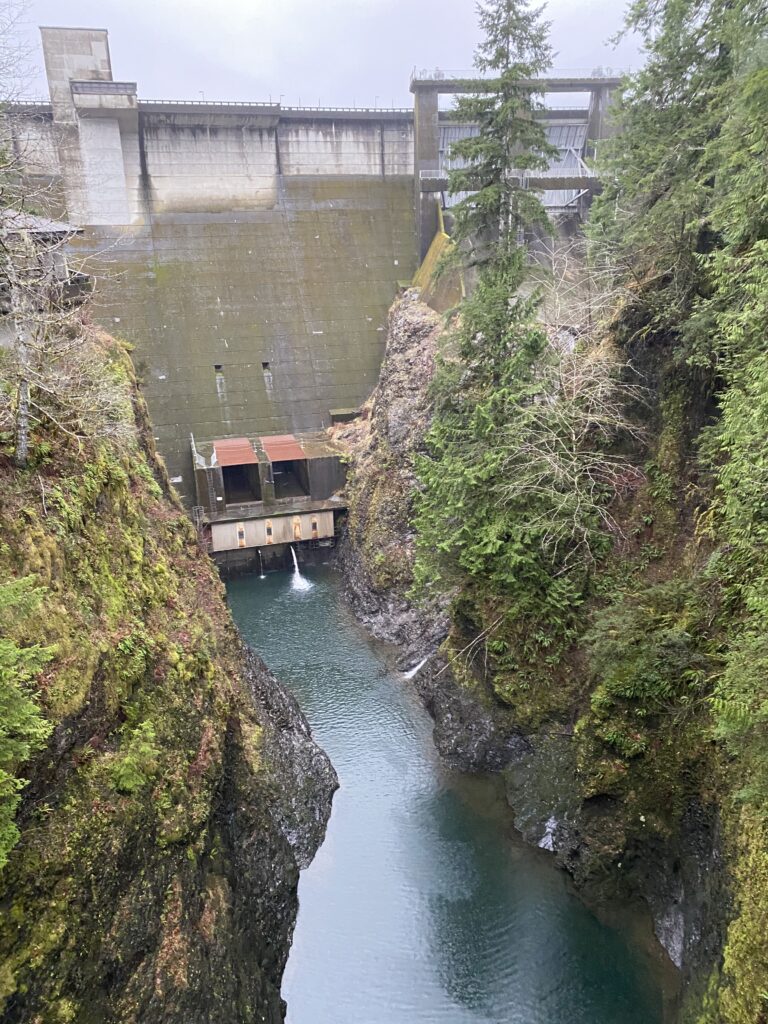
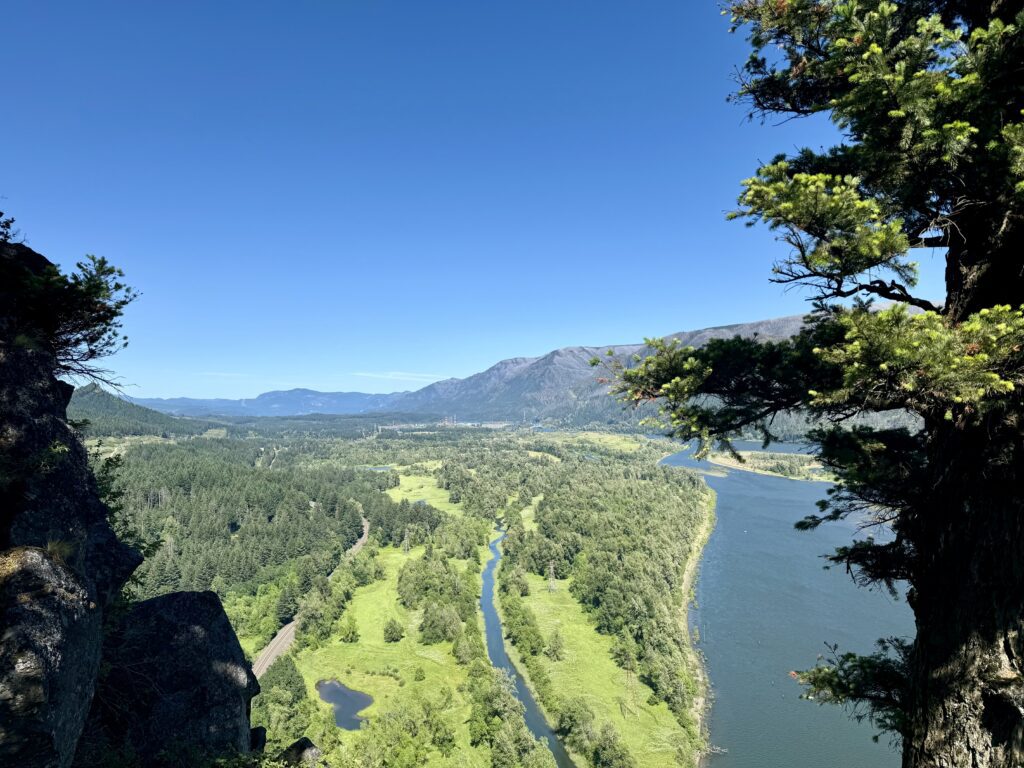
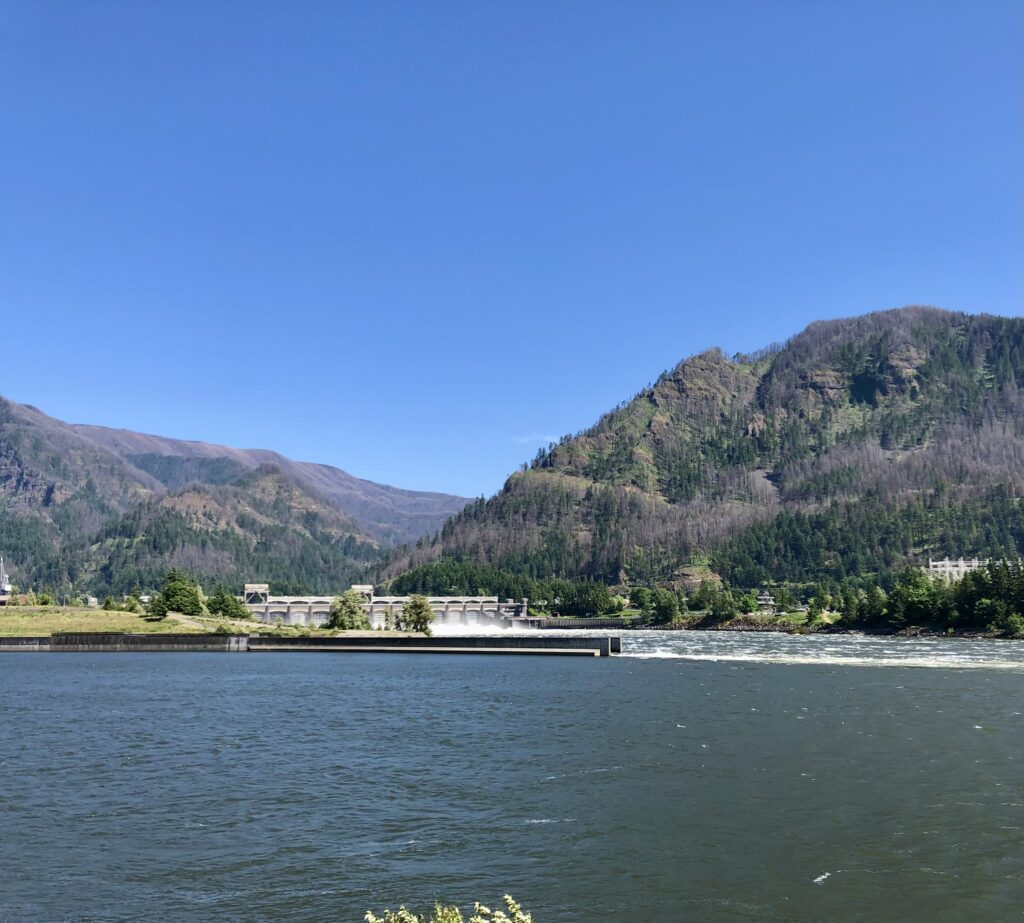
Then came the dams. A number of dams were erected throughout the northwest for the purpose of hydroelectricity, a zero-emissions source of power. All these dams, in some form, inhibited salmon and other fish from reaching miles of prime spawning habitat while also disturbing their natural habitats in several ways. On the
Columbia—the Grand Coulee and the Chief Joseph Dam, on the Snake River—the Lower Granite, Little Goose, Lower Monumental, and Ice Harbor Dam. These dams are likely the most contentious, but other smaller dams up the Snake River have effectively eliminated salmon returns at the furthermost portions of the Columbia River basin, specifically, northeastern Nevada. Historically, salmon would make a 900-mile journey from the Pacific Ocean, up the Columbia River, up the Snake River through eastern
Washington and Idaho, then finally arriving at their spawning grounds in the Owyhee River, where Shoshone-Paiute tribes would spear a portion of these fish for sustenance.
Deforestation
Whether it be for commercial timber harvesting or development, deforestation has created a multitude of problems for salmon habitat. When land is cleared around streams, the natural ecosystems become compromised, and the various organisms that salmon feed on diminish or disappear. Aside from the loss of food resources, the natural shade produced by the canvas of the trees diminishes or disappears as well. Without shade from trees, streams are subjected to an increased amount of sunlight, thus increasing the temperature of the water. Salmon are incredibly sensitive when it comes to water temperature, and drastic increases or decreases in temperature affect metabolic rate, cause salmon to seek out colder water upstream, and increase vulnerability to predation. In a nutshell, altered ecosystems due to altered habitats complicate the survival and reproduction processes of salmon.
Development and pollution
Water pollutants are believed to have a detrimental effect on salmon health, size, mortality, and reproductive success. Though the effects of pollution and salmon survival can be hard to quantify, it is well-accepted amongst scientists that pollutants from a variety of sources like storm runoff from vehicles or improperly disposed industrial waste, are contributing factors to the decline in salmon stock.
Positive trends
On the West Coast, there are currently 17 salmon populations listed as threatened or endangered under the Endangered Species Act. These populations range from California to Washington State and include (but are not limited to) the Lower Columbia River Coho, Snake River Sockeye, Hood Canal chum, and Puget Sound Chinook salmon. Though these facts might not inspire optimism at first glance, it’s important to note that “threatened” doesn’t necessarily mean these populations aren’t on an upward swing in terms of recovery. For example, the Lower Columbia River
Coho has steadily been making progress toward the federally approved recovery goal.
Hood Canal Summer Chum and Snake River Fall Chinook are both currently approaching that set goal. Yet, more needs to be done.
Dam removal
Enter damn removal. Dam removal works for salmon recovery, but there are many issues created by the removal of dams. For example, on the lower Snake River, dams create vast amounts of clean energy, and reduce water velocity, thus allowing easy movement of barges for agricultural product transportation, and they help provide irrigation for swaths of agricultural land. In short, they are a huge part of local economies and infrastructure alike.
These inherent issues with dam removal were finally addressed in what was a culmination of years of lawsuits and litigation and is believed to be the most comprehensive salmon recovery plan to date. In December of 2023, The Biden-Harris administration came to a historic agreement when they signed a Memorandum of understanding between Columbia River Basin Sovereign tribes, the state of Washington, the state of Oregon, and environmental groups. This 1-billion-dollar settlement agreement is a 10-year federal partnership with tribes and states that prioritizes salmon restoration and recovery, while also allocating funds to research on other infrastructural needs that will be an inevitable byproduct of the removal of the 4 Lower Snake River dams.
Ultimately, it is up to Congress whether the dams will be removed, but the groundwork is now in place to make these possibilities viable. This is a huge and unprecedented leap in the right direction for salmon recovery.
Hatchery programs
Hatchery programs are a lot of things…
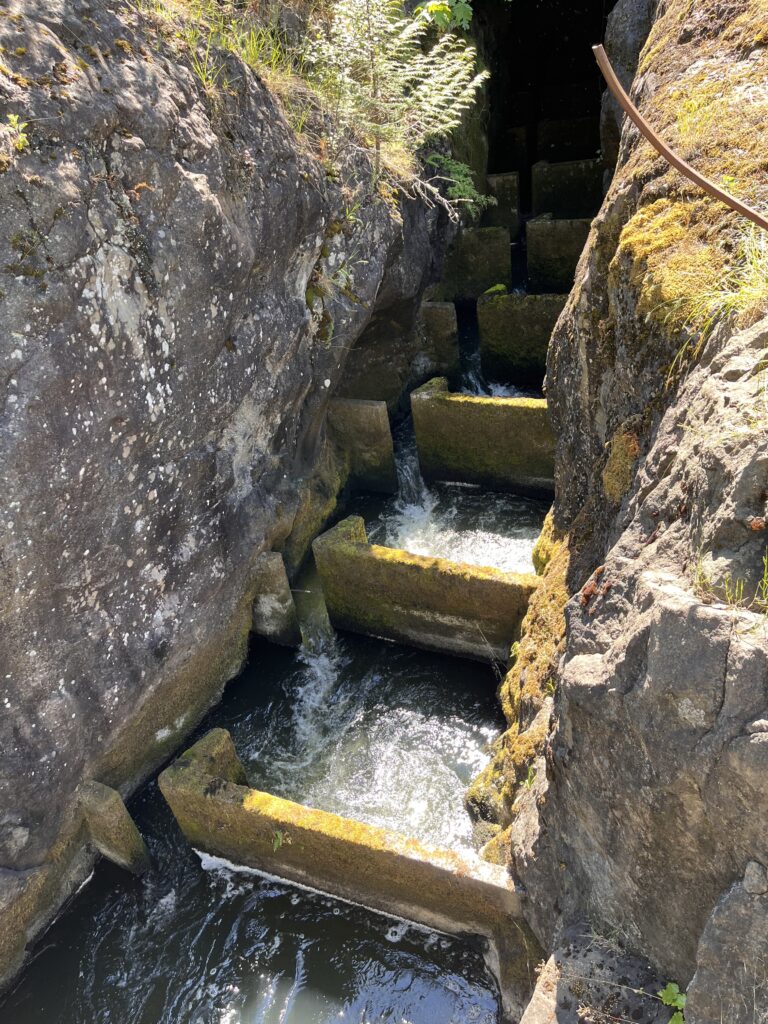
They were once believed to be the solution to the impact commercial overfishing had on salmon numbers, they were offered as an answer to the devastation caused by the damming of waterways, and they were a mechanism to uphold the treaty rights of Washington indigenous tribes under the Boldt Decision of 1974 (decision granting Washington tribes fair and equal share of fish harvest). But despite the best efforts of hatchery managers, these hatcheries have often fallen short of the goals that had been set forth.
Much research has been conducted on the efficacy of hatchery programs, and the findings have often been bleak. One important example is the Columbia River. A journey to the Pacific Ocean down the Columbia River has always been a perilous task for young salmon, and naturally, many don’t complete their journey. Throw in a myriad of dams, warming slack waters behind these dams, and an increase in invasive predators, the journey becomes even more fraught with danger. To compound the problem, salmon bred at hatcheries are losing their genetic diversity, and fast. Without the highly developed genes of their native counterparts, the fish become weaker, and survival rates drop.
This is not to say hatcheries don’t create a positive impact on a declining salmon population. After all, most Pacific salmon returning to our rivers today are hatchery salmon. Amid the new Biden administration commitment to salmon recovery, 60 million dollars is being invested in NOAA fisheries to facilitate improvements to current fish hatcheries, many of which were on the brink of failure. Furthermore, many West Coast hatcheries are implementing new techniques within their facilities to improve salmon survival rates. These techniques include changing the way fish are fed so that the process will more closely mimic natural feeding, including natural features in the tanks where fish are being stored, and breeding hatchery-salmon with more wild-salmon to increase genetic diversity.
Habitat restoration
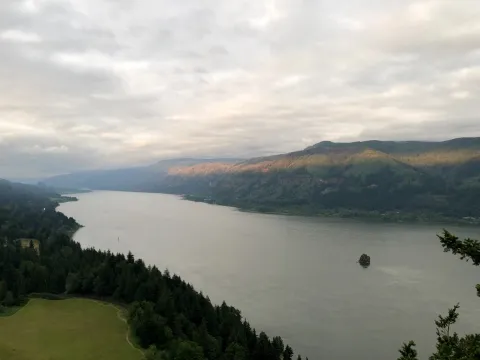
To date, 474 acres of wetlands, 9,257 acres of estuaries, and 31,564 acres of waterway have been restored in Washington state through collaborative efforts between the Department of Fish and Wildlife, NOAA, The Nature Conservancy, various nonprofits groups, and volunteers. Working to improve the waters and land that create salmon habitat is a vital component of the comprehensive approach needed for a task as complex and crucial as salmon recovery.
Resources
Below, you will find a list of volunteer opportunities for salmon habitat restoration. Together, we can all do our part in protecting a resource that is so important to our communities, our families, and future generations.
- Mid-Columbia Fisheries Enhancement Group midcolumbiafisheries.org
- Skagit Fisheries Enhancement Group skagitfisheries.org
- Washington Department of Fish & Wildlife wdfw.wa.gov>get-involved
- Coast Salmon Partnership coastsalmonpartnership.org
- Sound Salmon Recovery soundsalmonsolutions.org
/articles/holding-hope-complicated-state-salmon-pacific-northwest
How to Catch a Cone Licker
Fishing Lake of the Woods in Southern Oregon
You know what a cone licker is. You see them in places like Seaside and on the sand at Diamond Lake and they have cone lickers at Lake of the Woods in southern Oregon too. These are the poor folks whose mommas and papas never taught them how to fish. They like to go to the lake too, and they are the ones who, if you bump into them on their floaties, ask "Didja catch anything?" Or, "What kind of fish are in this lake?" It's not a sin to be a cone licker. It wasn't their fault they were born in Sacramento.
There's another kind of cone licker. They are the big trout that eat a steady diet of midge larvae and are particularly susceptible to a pattern called the Ice Cream Cone.
Lake of the Woods is a classic fishing lodge destination for the whole family. It's got something for everybody - a well-stocked marina store with boats and paddleboards to rent, a gift shop, cabins to rent, campgrounds, a great restaurant with a view of the lake, and a bar on the second floor with even better views.
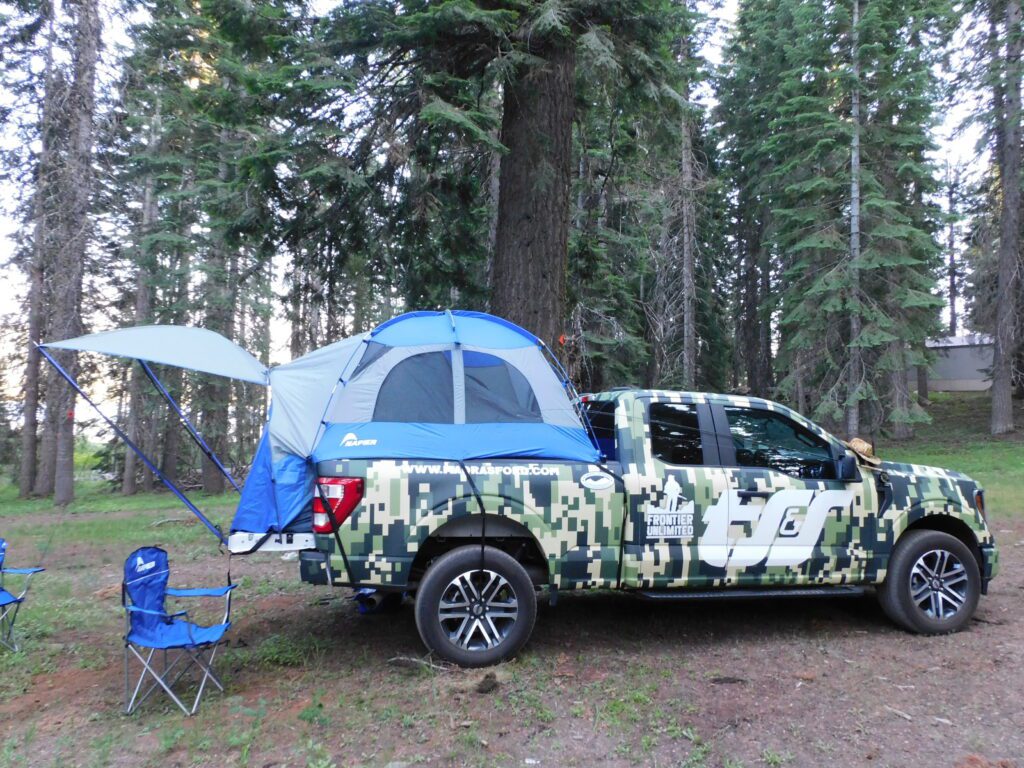
I set up the tent in the back of the F-150, a roomy two-man tent from Napier ( napieroutdoors.com ), specially made to the Ford's dimensions. Then I went down to the lakeside to look at the boat I had rented for the morning.
I knew exactly where I was headed, remembering it from the last time I had fished Lake of the Woods, which was too long ago. We were going to still-fish, having brought spinning rods and fly rods and a selection of jar baits and chironomids.
Soaking in the vacation vibe at Lake of the Woods, I could not help but smile. A lot of people are looking for exactly this kind of American experience. They just don't know where to find it.
FISHING CHIRONOMIDS
Set up the rod with a tapered leader down to 4X tippet. Affix a Thingamabob indicator well up the line and tie on a No. 8-10 Ice Cream Cone chironomid pattern. With another 12 to 18 inches of tippet add a second Ice Cream Cone tied off the bend of top fly.
Casting a two-fly rig is not an art form. The main thing is to put the flies at the depth of the feeders, keep slack out of the line, and watch for the indicator to indicate. The fun thing about this type of fishing is that some of the biggest fish move the indicator the least. Keep the rod tip low, touching the surface of the water, and be ready to set the hook. Like a rattlesnake.
Finding the feeders is the main thing with fishing chironomids. One trick is to drive the boat over the place you will fish then with a hemostat clamped to the bottom hook, gauge the depth of the water. Then adjust the float so that it puts the bottom fly something like 18 inches off the bottom. That puts the top fly 36 inches off the bottom. Pay attention to which bug gets bit the most and reset the rods accordingly.
You might have heard of the big bait-big fish principle. That doesn't apply to midge larvae. Big trout eat a whole of a lot of these tiny things.
WHERE TO ANCHOR UP FOR TROUT
A large mountain Stillwater in a forested setting, Lake of the Woods is fed by several creeks but gets the majority of its water from groundwater seepage. The deepest water is found along the western shore where the depth is reported as 50 to 55 feet. There is a good mix of shallows where weeds and bugs grow and colder water deeps and rocky ledges, which makes for interesting fishing.
The resort is situated on the eastern side of the lake on the north shore of Rainbow Bay.
One of the best spots for trout is just outside of the marina. Anchor up anywhere within 100 to 150 yards of the marina and within casting distance of either the east shore or the west shore. Anywhere out in front of the marina can hold trout.
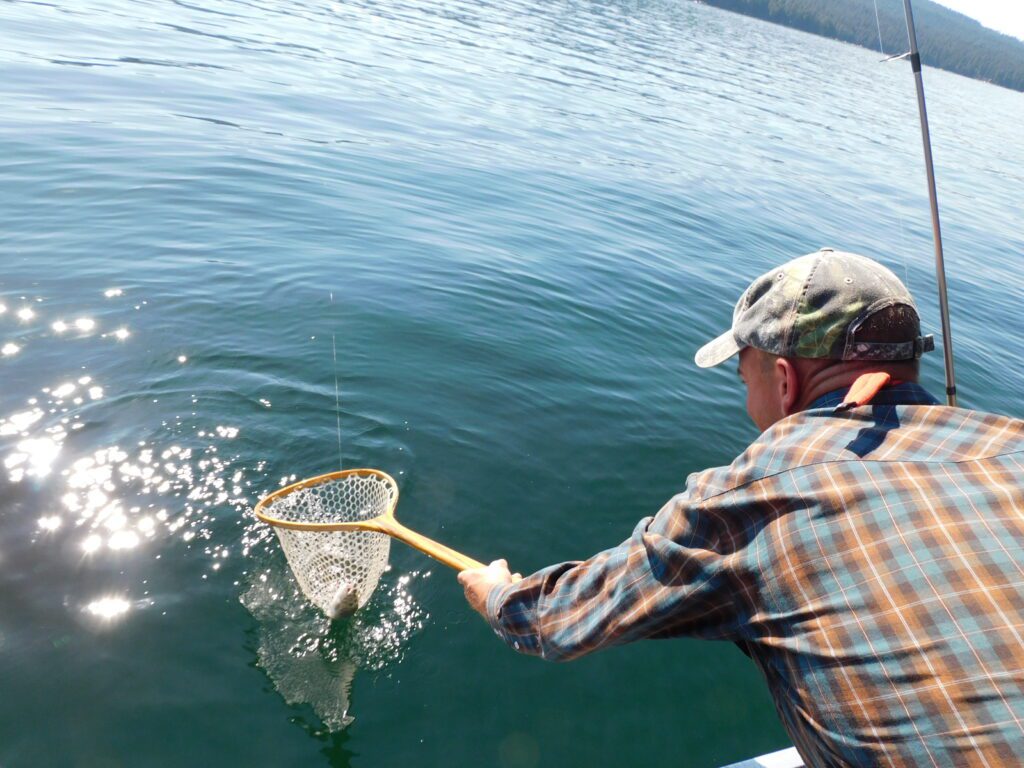
The other great trout area is along the west shore where a deep ledge makes for a great spot to anchor up or troll for rainbows and/or kokanee and the browns that hunt them.
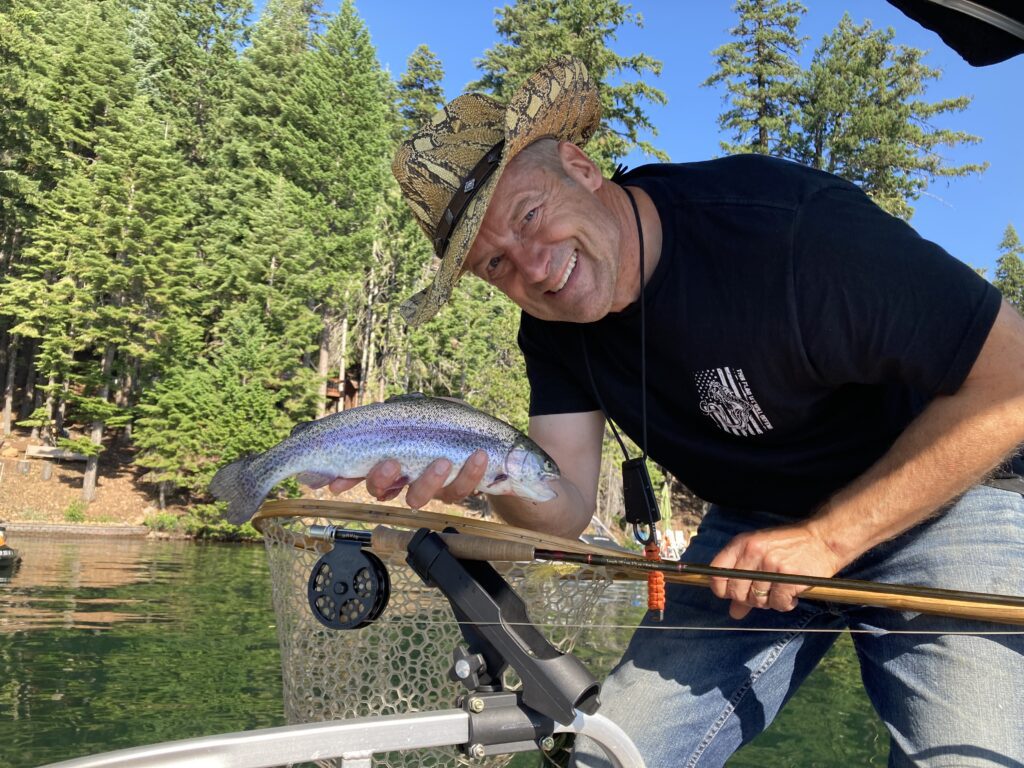
We caught nine trout, a catfish, a perch, and a couple of smallmouth bass in a couple of hours on both fly-fishing gear and spinning gear.
Standard trout rules apply for the Southeast Zone with a limit of 5 trout per day (only 1 trout over 20 inches) and 25 kokanee per day in addition to the trout limit. There is a 5 bass limit with only 1 bass over 15 inches. Angling is allowed 24 hours per day.
This lake is capable of growing hatchery trout big and holding them over. Trout can be caught year-round, but spring and fall are peak seasons for rainbows and browns. Trolling is popular on the lake, but still-fishing can fill out a limit faster, at least in my opinion.
Looking for a family fishing tradition to start? It's hard to beat Lake of the Woods with something for the whole family, even those cone-licking cousins who grew up in Sacrapimento. Heck, you might even teach them to fish.
# # #
For a copy of the Fishing Central Oregon book, send $29.99 to Gary Lewis Outdoors, PO Box 1364, Bend, OR 97709 To contact Gary Lewis, visit www.GaryLewisOutdoors.com
Directions: From Klamath Falls travel 35 miles west on State Highway 140; from Medford, take State Highway 62 north to Highway 140 then east 45 miles. From Ashland, travel 35 miles east on Dead Indian Memorial Road.
/articles/how-catch-cone-licker
Madison River Shoulders
Mountains come out of the sky and they stand there. Snow-covered peaks create a breathtaking backdrop as we work our way down the fast-flowing, slightly off-color river. I could say a whiter shade of pale, but I’d be pushing the 70s music lyrics references a bit too much.
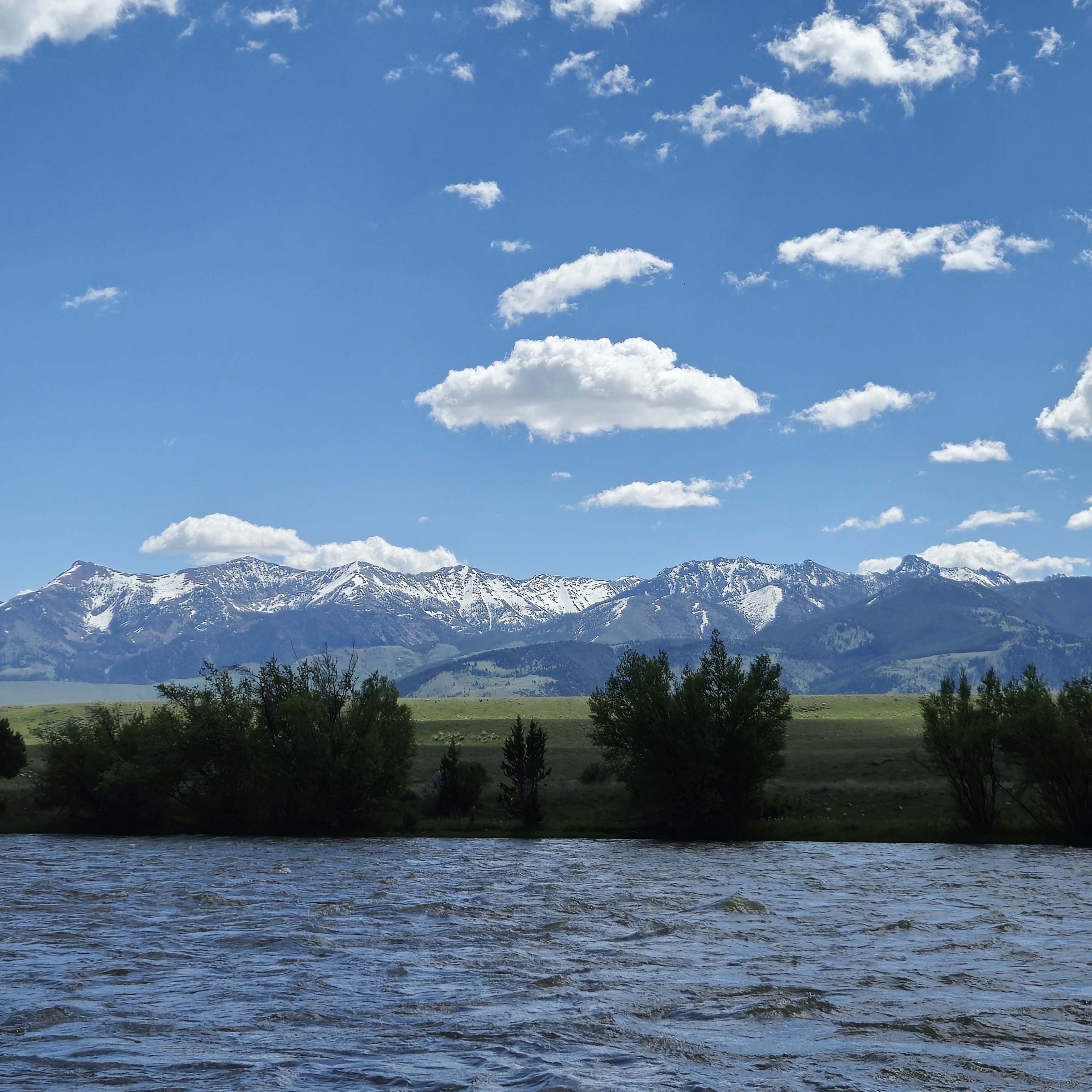
Matt and I are floating the Madison River, Epic, Historic, Blue-ribbon… pick your adjectives. At first glance, I wondered “Where do you even fish this?” To the untrained eye, the river looked uniform from side to side, a fast-moving, rocky, never-ending flow of energy.
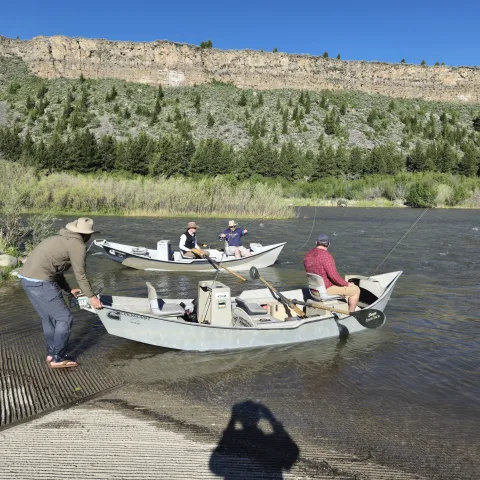
Hunter and Sam, our guides from River Borne Outfitters, had briefed us on the strategy to fish for this untamed wild river. “Today you’re going to be fishing buckets” Hunter elaborated, “When the water is running this fast, you want to target the small back eddies, slicks, and close to the shore. You’ll see the holding water better as the day progresses. It requires some accurate casting but it’s not that hard. The fishing can be really good, but I’m a bit worried about the color of the water.”
For my part, I was glad to be fishing and not rowing. We rapidly drifted past large boulders that would easily have flipped a less skilled rower. “That’s why you fish with a guide”, I thought.
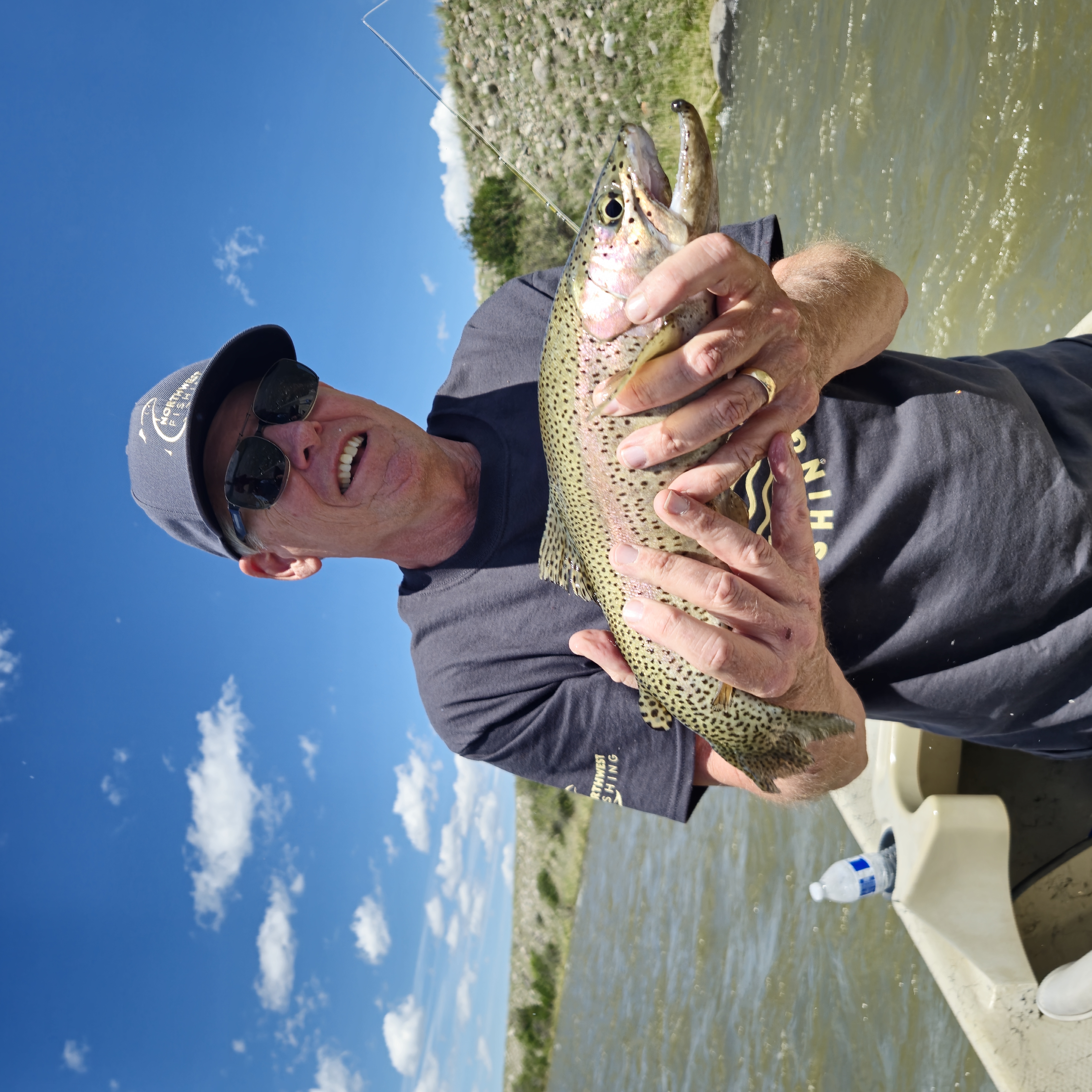
Suddenly Matt called out “Fish on!”. I looked back and his rod was doubled over with the weight of a solid fish, which revealed itself with a series of impressive jumps, clearing the surface a good three feet. A chrome bright, wild (that’s the only kind of trout in the Madison) rainbow was giving Matt a good battle. He skillfully took his time and brought the glistening 18-inch fish to the net. Scooping him up, Hunter let out an excited “skunks out of the boat” and it was the start of a memorable day on one of Montana’s most amazing and wild rivers.
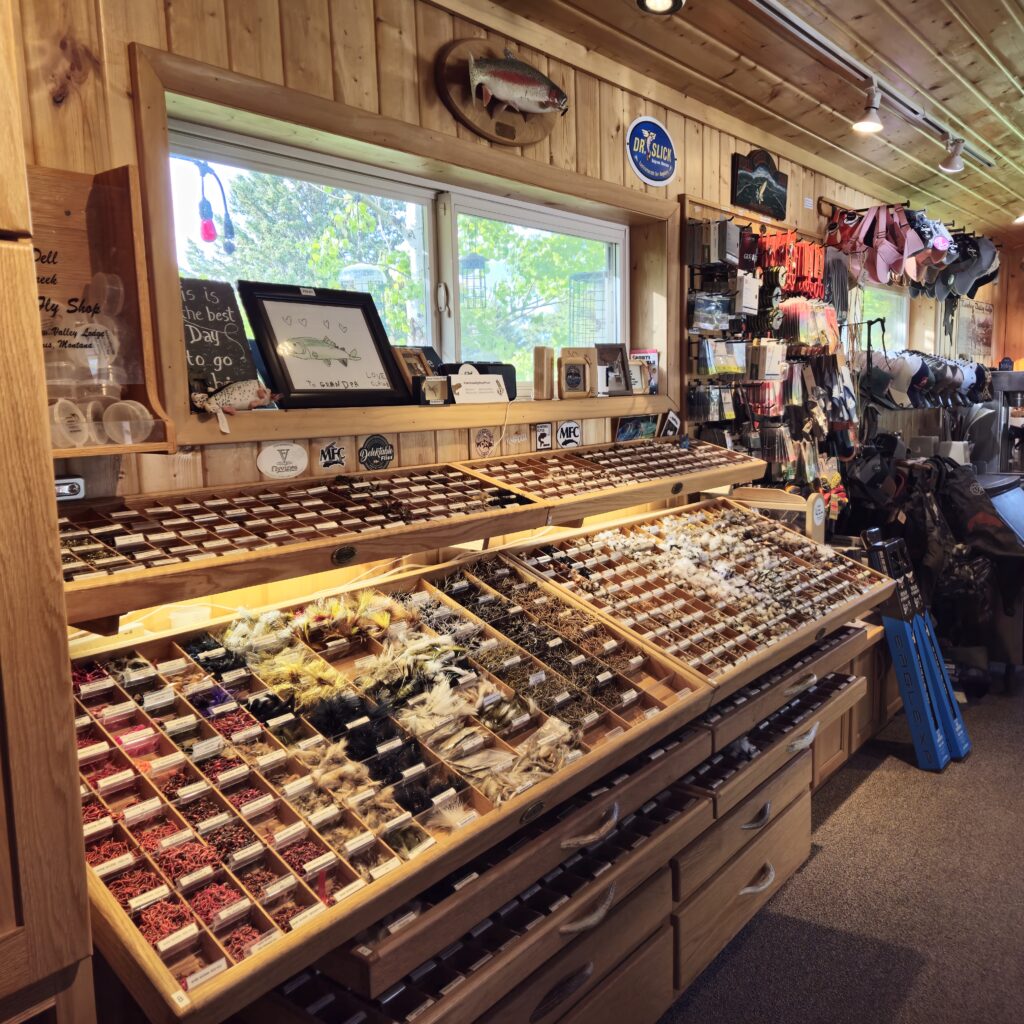
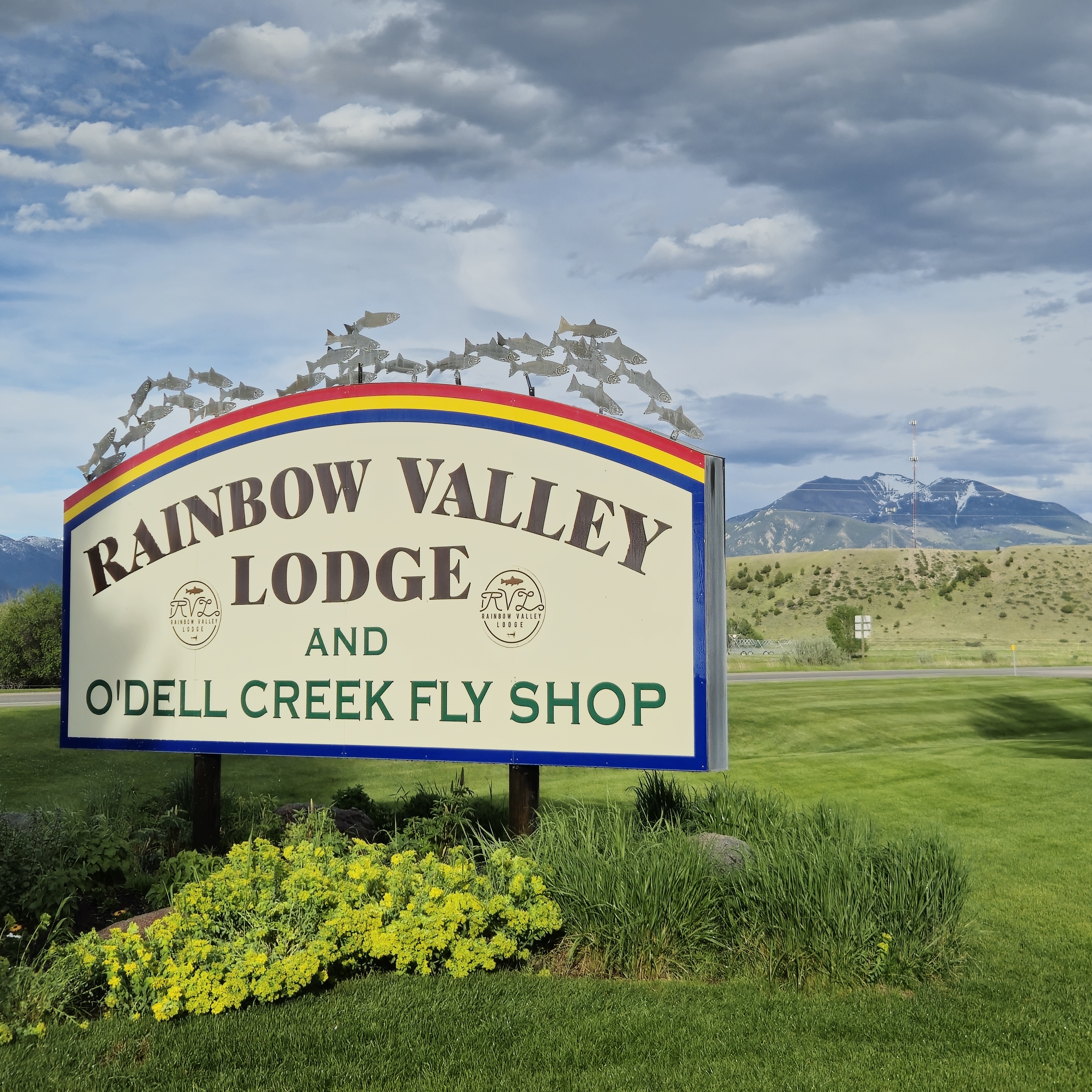
We had arrived the previous day at the invitation of Ed and Jeanne Williams, owners of Rainbow Valley Lodge. Ed and Jeanne had moved from California to Ennis, Montana over 35 years ago and taken over the lodge, growing it over the years into a destination for the rich and famous, and the average person. The two of them radiated an aura of enthusiasm and hometown friendliness that I have come to treasure over the past two years of living in Montana. We felt as if we had new friends we could return to year after year, and indeed, many of their guests expressed the same feelings to us. Not the largest lodge in Ennis, but certainly the most homey and one you’d want to return to year after year. Heated pool, rustic pine wood interiors, and beautiful flowers everywhere give you that “western feel” you are looking for when traveling to Montana’s fishing destinations. The impressive collection of fishing memorabilia in the lobby could keep an angler’s attention alone, not to mention their well-stocked O’Dell Spring Creek Fly Shop. The evenings are a gathering of guides and guests, chatting about the day’s fishing adventures and making new friends and acquaintances.



“Shoulder Season” is the term Ed had shared with me about the lodge’s seasons. Spring and fall anchored a full and busy summer of guests coming through Ennis to fish the famous Madison and use Ennis as a base camp for the 70-mile drive to Yellowstone National Park. Ennis is the last major town on the road to the north Yellowstone entrance. As such, come the end of the school year it rapidly fills up with tourists and summertime adventurers streaming to visit America’s most iconic national park. Anglers stream in as well, as the Madison River shares its impressive fishing with fishermen from near and far.
While the summer is a busy time for the lodge, spring and fall are another matter, and visitors can experience a slower and more relaxed pace if they’re willing to take a few chances. For us, the weather was outstanding with a day in the upper seventies and sunny. The recent warm-up had increased river flows to over 2,500 cfs (cubic feet per second), which had us drifting at a solid pace, but not too fast to catch fish. And as we found out as the day progressed, the visibility at about 18 inches was just fine for fish catching.
Soon after Matt’s nice start to the day, I watched as my strike indicator ducked under the water. I gave a quick tug and felt the heavy pressure of a nice fish. Unlike Matt’s fish which had treated us to a fun aerial display, my fish was a bulldog, the sign of a nice brown trout. Headshakes and hard runs kept me focused and I worked the fish back to Hunter’s waiting net. He skillfully scooped up the brown-speckled fish and after a quick measurement, we released a nice 16-inch thick brown trout.
Our setup for the day was a quality 5-weight Orvis rod and reel, floating line, and 8-foot leader. A pair of size 8 girdle (stonefly) bugs tied 18 inches apart were the fish enticement, and bites were monitored by orange strike indicators (all the better to see in the early morning sunny glare). Our instructions – when in doubt, set the hook!
While “bucket fishing” requires a degree of accuracy, it is a technique that lends itself well to intermediate and even beginner fly anglers. The casts are not terribly long, and if you miss the sweet spot of the “bucket” there is enough underwater structure that you still have a good chance of getting a hookup. While the Madison does not have the fish numbers of the Missouri, there are still plenty of fish to be had, and Sam explained that guides only promote catch and release on the river, so numbers have remained very consistent over the years.

As I noted earlier, this river, at springtime flows, in my opinion, would be a degree of difficulty I would not recommend to beginners behind the sticks. There were more than a few large boulders that could easily pin or flip a driftboat. So, if your rowing skills are marginal, leave the boat at home and hire a guide. Or wait for the slower flows of summer, but plan on having to share the river with a whole lot more anglers.
We continued the float catching fish at a regular pace, beautiful rainbows and brown trout, and an occasional whitefish. We didn’t catch any of the great white buffalo, AKA arctic grayling, but Hunter assured us they were in there. Brent, our film crew for the weekend, even caught his first trout on the fly with the help of his guide, Sam. The big fish of the day was Matt’s 20-inch brown he caught at the end of the day (what a way to finish!).

If you’re looking for the true western trout fishing river experience, keep the Madison River in mind, and don’t be afraid of fishing those shoulder seasons. You’ll find more than a few big-shouldered trout willing to share their day with you.
Rainbow Valley Lodge, Ed and Jeanne Williams, 800-452-8254
River Borne Guide Service, 406-581-2953, guides Hunter Schumacher and Sam Hall.
/articles/madison-river-shoulders
Backcountry Trout
All winter long we kept hearing about the Pacific Northwest's lack of snowpack and how it would affect our summer. A call for a drought, possible bad wildland fire season, lack of drinking water, and all the “doom and gloom” news agencies use to sell us fear. Sure, the snowpack is low but spring rains came and filled our reservoirs so the threat of a significant wildfire season is still lingering but what I kept hearing all winter and spring was how the backcountry would be snow-free very soon.
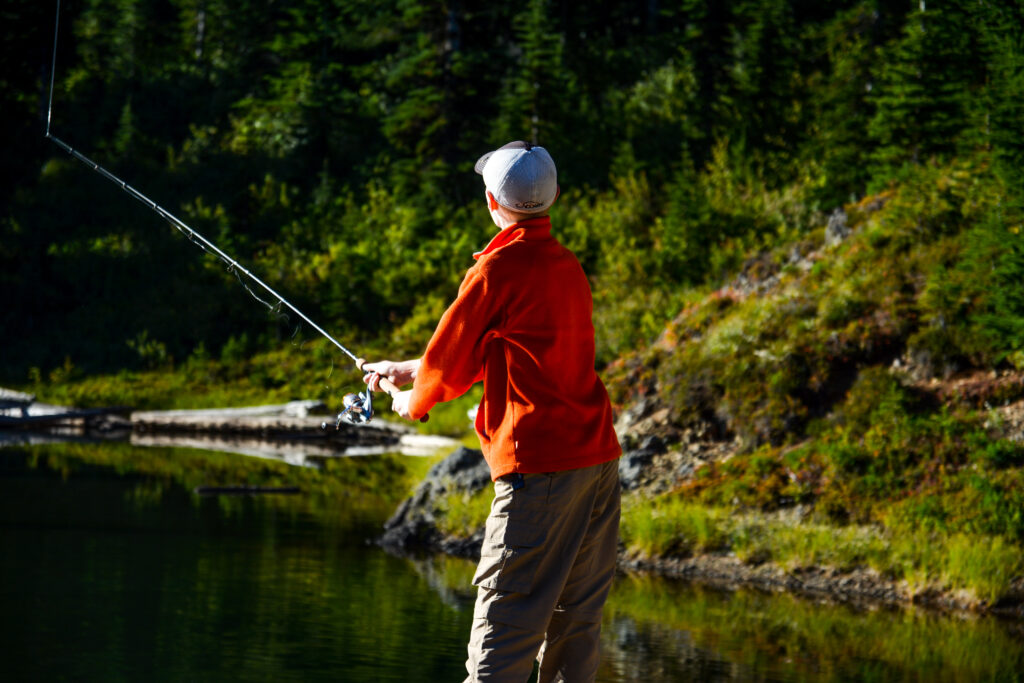
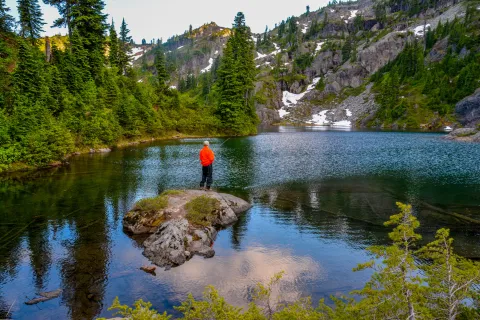
My normal backcountry fishing trips usually start around the 4th of July and continue well into late fall. However, this year the trails will likely be open and navigable, streams will be receding, and lakes will be ice-free come mid-June and that means it is time to strap on the boots, load the tent into the backpack, and grab the lightweight fishing gear.
Before you load up the pack and throw it in the small tackle container it is best to check mountain conditions. Even in June, you should always be ready for some chilly weather and high stream crossings. The SNOTEL Washington website provided by the U.S. Department of Agriculture will give you up-to-date data on current snowpack. Then do a quick search for river levels at the USGS website to let you know how much of that snow is melting.
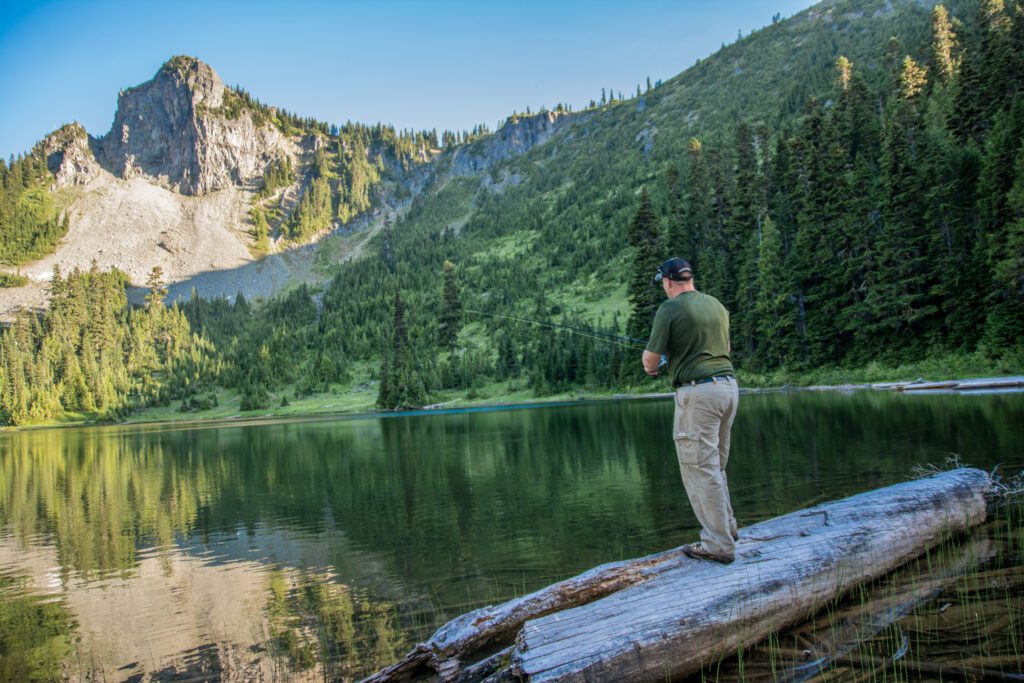
Once you figure out if the lake you are trying to get to is not only ice-free and if any streams you might have to cross to get there are safe to wade then one last web check for trail conditions at websites like the Washington Trails Association can provide you with important information such as any hazards on the trail, or if downed trees and other useful tidbits have blocked the trailhead. The main reason you want to research before you go is that June can be an interesting month for those trying to get to the backcountry. South-facing slopes will be open and snow-free but any north-facing slopes might still have lingering snow and making it impossible to get to the lake.
As the month wanes on most of the high country will be opened up and access will not be as much of an issue. Bugs will be hatching and though that makes for great fishing it also means a bit of an annoyance. Last year my son and I hiked into a relatively low “high mountain lake” that was at about 3,000 feet elevation. Fish were jumping and we soon found out why. Mosquitos flocked to our skin and swarmed us to the point that Deet was not going to be enough. Luckily, I had brought along Thermacells for both of us and plenty of extra butane cartridges and chemical pads that keep the bugs away. I also had a quick lesson on Thermacell's and that if you choose to strap them onto your pack to be sure that the vents do not become blocked as it can overheat and even melt the nylon on your pack.
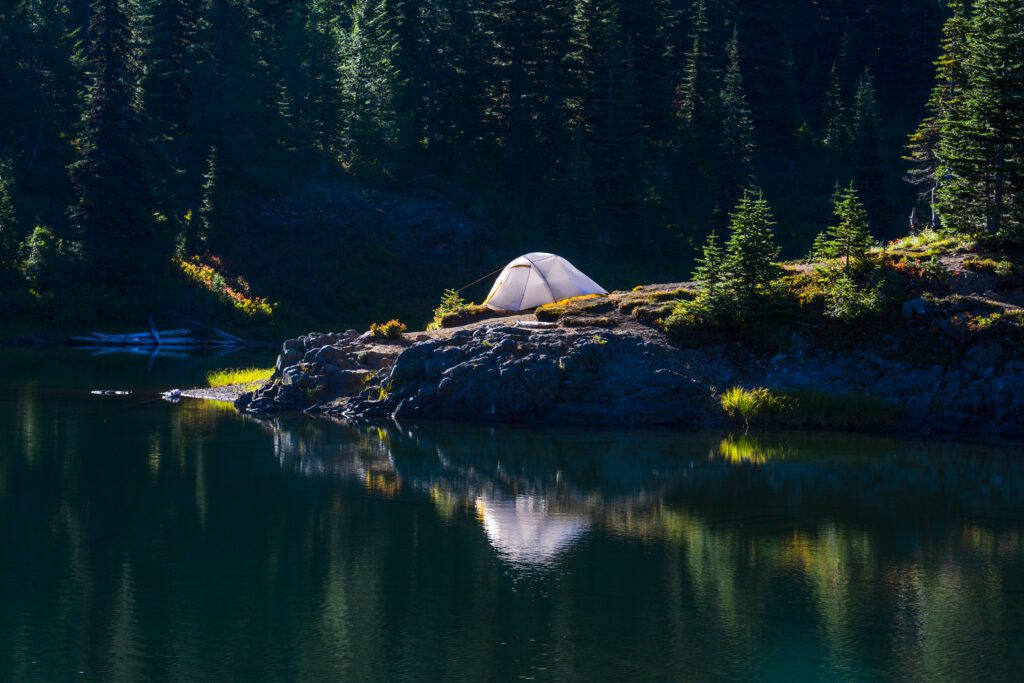
Long-sleeved shirts, lightweight hiking pants, and head nets will help with keeping bugs away and make for a more comfortable day of hiking and fishing. A lightweight double wall tent is also an excellent choice so you can make a quick bug-free area to sit and eat lunch or just rest and get away from the bugs for a bit. Being double-walled means the inner wall is a mesh material and you can leave the rainfly off if the weather is nice or put it on if the clouds come up.
Weather is another factor for June’s high-country adventures. Cool mornings and warm afternoons often mean thermal winds. Welcome the breeze as it will help keep the mosquitos at bay but also be ready if an afternoon thunderstorm approaches. Rain and even a snow shower is common in June in higher elevations as it is still springtime up in the mountains. Keep in mind that if you hike into a wilderness area fires are often not allowed so drying out can be a challenge.
When it comes to finding the right lake be sure to check out the fish and wildlife website and other resources. For those of us in Washington the WDFW has a tab for “high lakes” and there you can find a list of lakes which include their location by GPS as well as their elevation and size. It also will have directions to the trailhead or lake itself and even a stocking schedule on when it was last stocked. These lakes are often supplemented with fish that are hiked in by volunteer groups and periodically restock the lake. Some lakes have natural production if there is a cold creek that trout can spawn in or if they have brook trout, which is a member of the char family and can spawn in the lake itself.
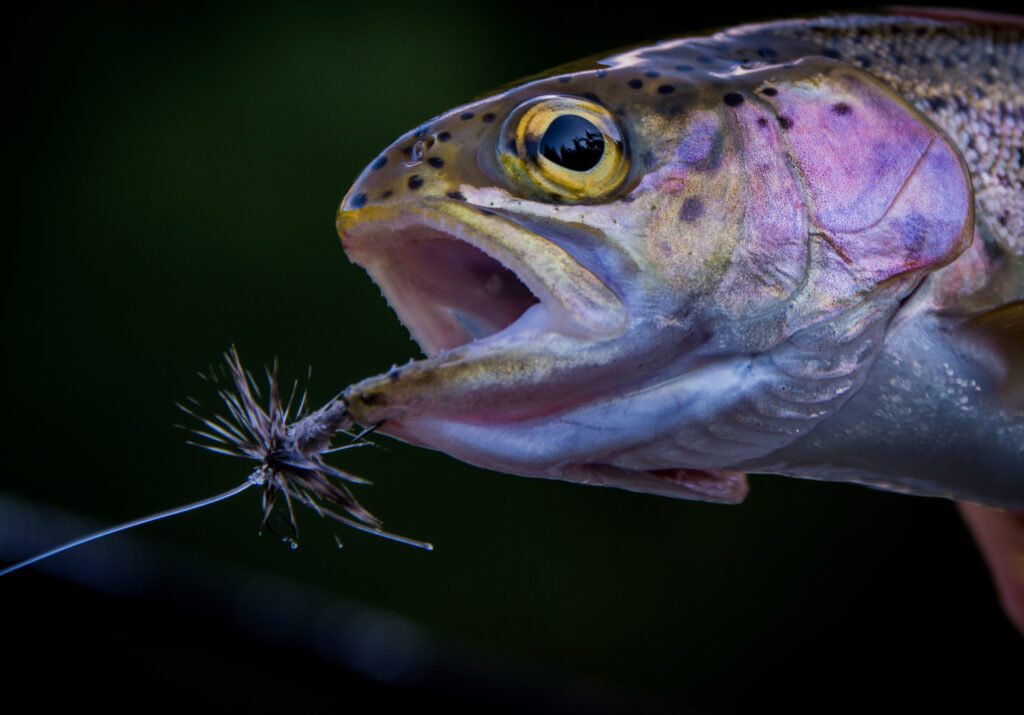
Backcountry fishing is often done in solitude. Once you find a few of these high mountain lakes you will soon realize which ones are popular with other hikers and anglers and which ones are “secret”. If you find a lake that is full of trout, and nobody around, then do yourself a favor and keep it a secret. These lakes cannot take much pressure and if you post your trip on social media and include the lake, trail, or even a nearby mountain then soon the lake will get new visitors and the next time you go there it might be void of fish.
Then again, there are several lakes that are already popular, and those lakes tend to get regular re-stocking of fish so if you find other anglers do not feel bad about it. Same with harvesting a fish or two for dinner, these lakes either had or have a natural way to repopulate them with trout or were sterile to begin with and the fish were introduced into the lake for the specific reason to be caught. This does not mean you should catch a limit of trout to take home as there are plenty of lowland lakes to do that with. Instead, catch and release using artificial flies and lures is a wonderful way to spend the day. When it’s time for lunch, you can eat what you caught.
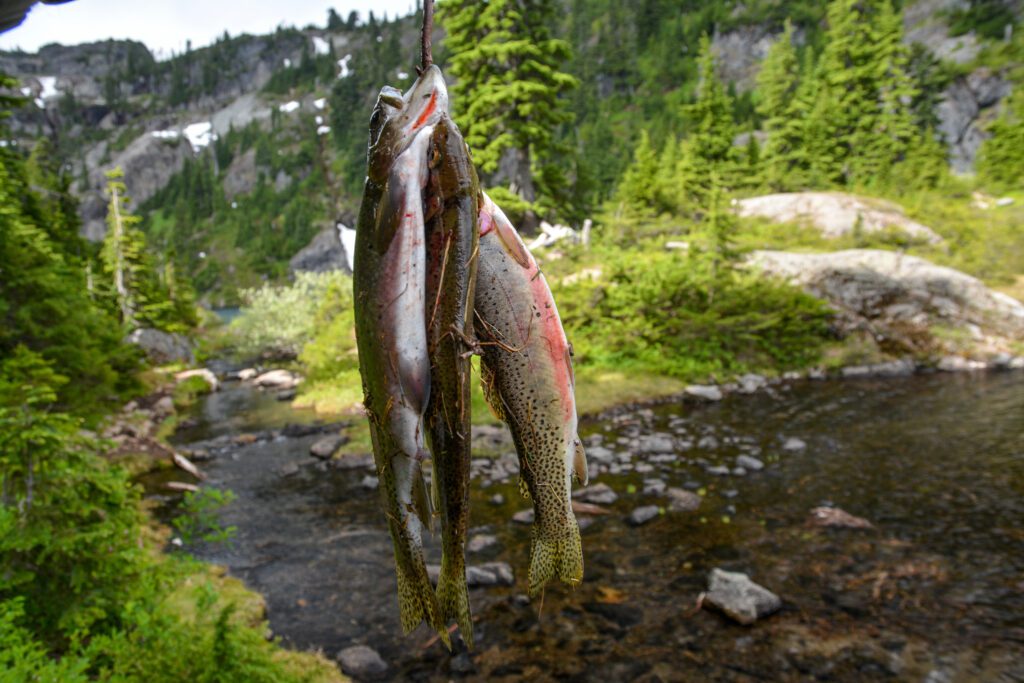
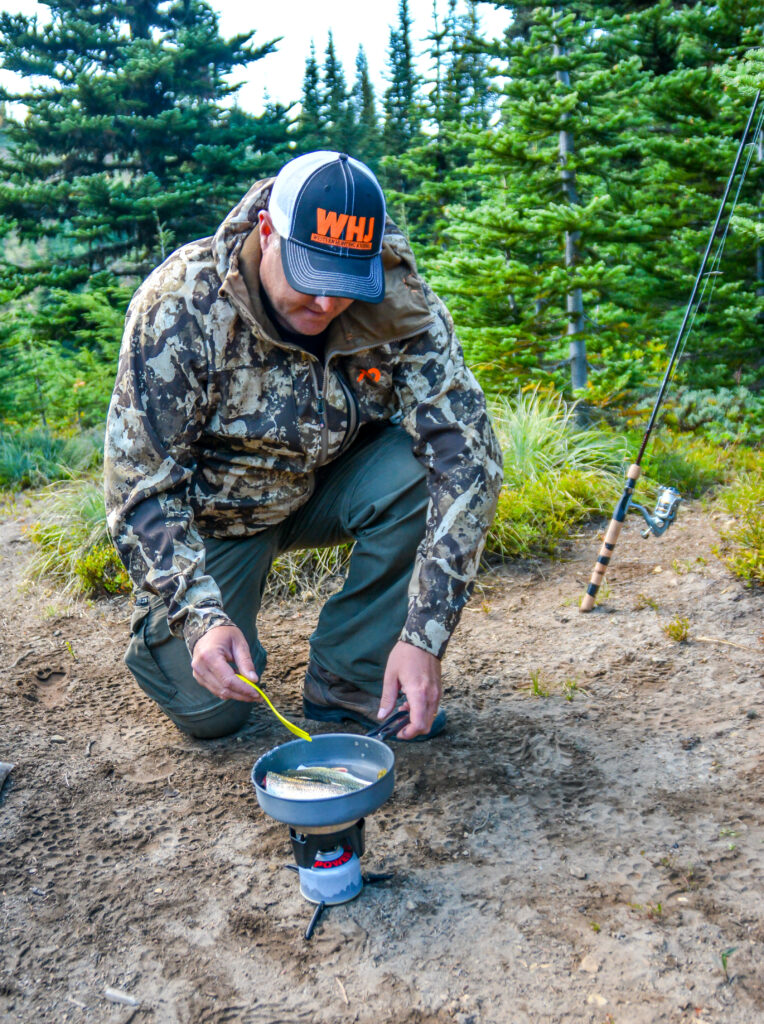
When it comes to cooking your catch, again, know the rules if you can have a campfire or not. A small titanium frying pan and a butane stove is a great way to cook up some fish. If fires are allowed, then packing a small piece of tinfoil is lightweight and makes cooking the fish easy or you can make a skewer and cook it open over the rising heat of the flames. High mountain trout make a great lunch, probably because of the work it takes to get to these lakes as well as the views as you sit along the shoreline.
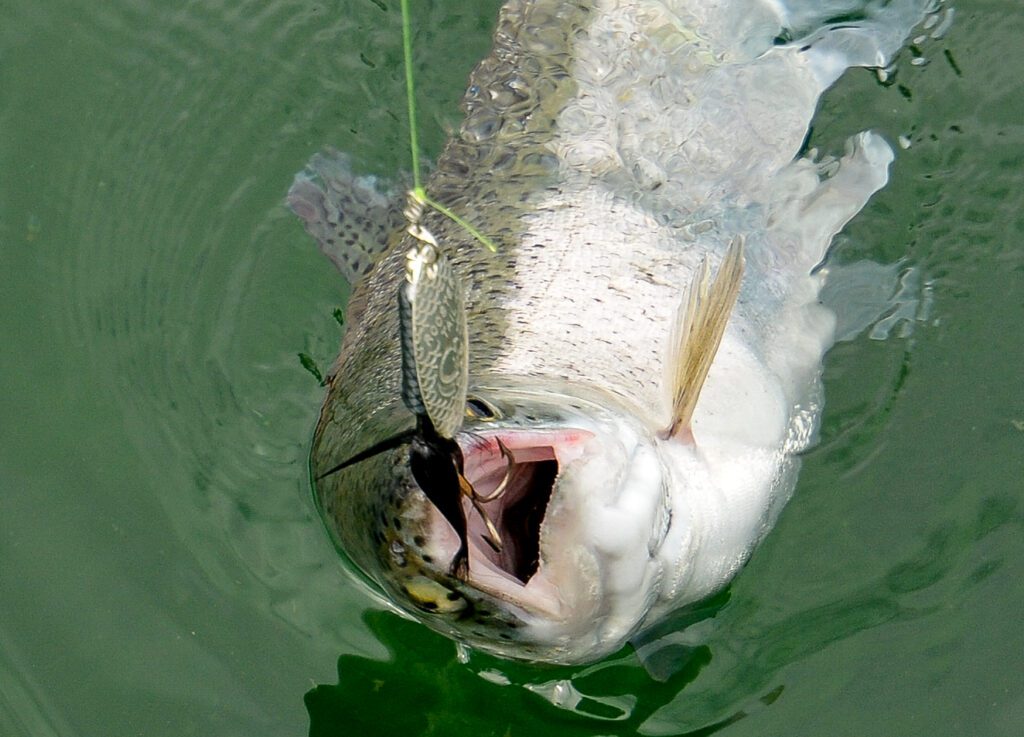
One of my favorite ways to fish high mountain lakes is with a lightweight fiberglass spinning rod. This rod is nearly indestructible and can take a beating while strapped to my pack. The spinning outfit allows the angler to cast lightweight lures such as Roostertail's and other spinners, but you can also use a plastic bubble style bobber and a dry fly. Fly fishing is a lot of fun and a lot of the lakes will have gradual shorelines as they are remnants of large ice fields. Other lakes might have a scree field where you can climb out on the rocks but be aware of your back cast and that rocks can shift.
In the early part of the month it might still be a bit chilly to wade, but by month's end a day out swimming and wading in the cool water also means being able to cast further. Regardless if you use a fly rod or the spinning rod with a bubble bobber very few things can beat a rising trout taking a dry fly. Most of these fish will be small and malnourished due to long winters and not much bug activity in the chilly water. This means using small dry flies such as a size 12 elk hair caddis or a size 14 mosquito. Light leaders in 4 to 6-pound monofilament will suffice and keeping the mainline light, around 6 to 8-pound test will help with casting long distances.
June offers the first chance at getting up to the backcountry. Lakes will become active with hungry trout and snow will melt from the trails. Load up the pack, be ready for changing conditions and strap on the trout rod. It is finally time to head to the high mountain lakes for some great fishing with incredible views.
Cooking Backcountry Trout
When it comes to a shore lunch along the banks of a high mountain lake it is hard to beat fresh trout. To make things easier pre-mix a spice shaker with some flour and your favorite spices, salt and pepper. This will help with adding flavor to the fish and keeps the mess down. Clean the trout and then butterfly it, cutting along the backbone from the underside, keeping the skin intact. Then simply shake the flour and spice mixture onto the flesh of the fish. When it comes to frying the fish, take along a small jar of coconut oil as it will remain solid at room temperature.
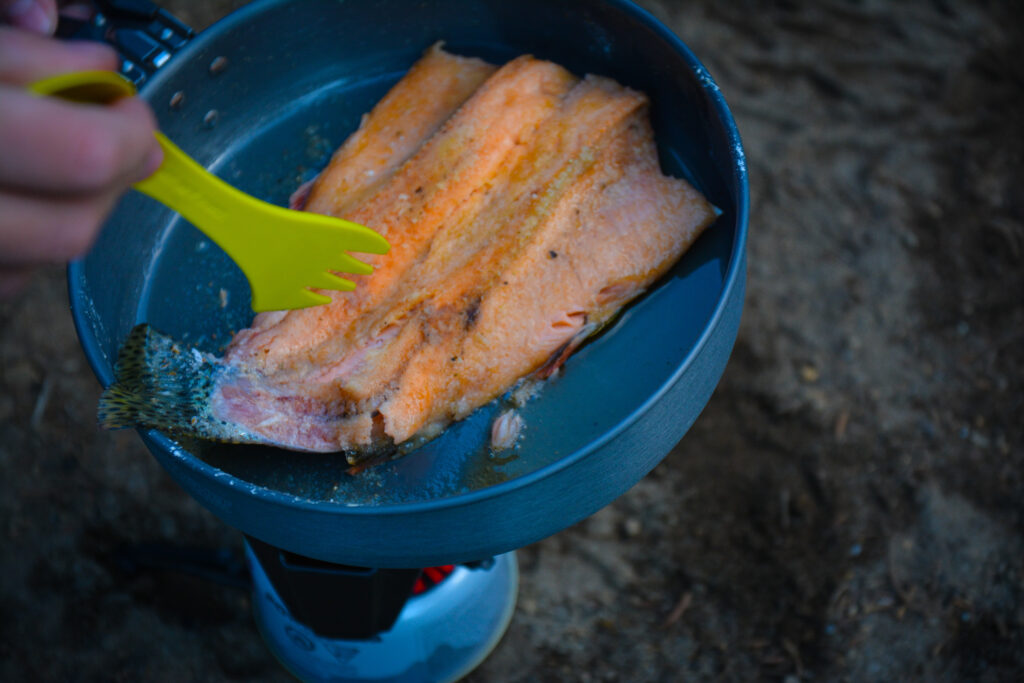
No worries about it leaking or spilling into your pack on the hike up to the lake. Scoop some out and put it in the frying pan and it turns into your standard frying oil and adds to the flavor. Once you are done cooking and the pan cools the oil turns back into a solid and can be scraped out of the pan and if you clean your pan in a nearby creek it will not mix with the water or stick to any rocks, though you should not clean anything in a creek. The coconut oil can be easily wiped out with a paper towel and stored in a zip-loc bag and can be used as a fire starter if needed much like paraffin waxed paper.
Another fun way to cook backcountry trout is to butterfly it just like described above and then use green sticks to skewer it. Build a small fire (where permissible) between rocks or make a rock oven and once the fire dies down place the skewered fish over the hot coals. Season with your favorite seasoning salt and let the heat cook the fish. Easy and no dishes to clean up afterward.
/articles/backcountry-trout