Summer Salmon are Coming! by Mark Yuasa
That means it’s time to get all the salmon fishing gear in order and begin thinking about the kickoff to several salmon fisheries planned to open in June.
While the tentatively proposed 2026-2027 salmon fishing season package was finalized in mid-April, they won’t be officially adopted until sometime in mid-June.
The rules set by the Washington Department of Fish and Wildlife (WDFW) were submitted to the National Marine Fisheries Service within the National Oceanic and Atmospheric Administration (NOAA) Fisheries in early May.
NOAA Fisheries implements the actions through its regulatory channels under the Endangered Species Act and the Magnuson-Stevens Fishery Conservation and Management Act. Proposed fisheries are not finalized for the 2026-2027 salmon season until NOAA Fisheries approves them.
As part of the North of Falcon process, WDFW is hosting a virtual public hearing on Tuesday, June 9, from 10 a.m. to 12 p.m., and will take additional public comments. Go to this link https://wdfw.wa.gov/events/north-falcon-public-hearing-20260609 to register for the public hearing. Pre-registration is required. Final regulations will be adopted subsequent to that hearing and signed off by the WDFW Director by around mid-June. For a list of the proposed fisheries, go to https://wdfw.wa.gov/fishing/management/north-falcon/summaries. The 2026-2027 fishing regulation pamphlet will come out online around June 18. Printed copies should arrive at license dealers and at WDFW offices by June 26.
In the meantime, before rushing out the door, salmon anglers should check on any early-season summer fishery openers by going to the WDFW website (https://wdfw.wa.gov/) to see what areas are scheduled to open and for any possible emergency fishing rule changes or closures.
Where to Go in June
A much-anticipated early-summer salmon fishery occurs in Marine Area 10 (Seattle-Bremerton Area), which is scheduled to be open daily for a coho beginning June 1. Look for coho averaging 2 to 4 pounds in the shipping lanes off Jefferson Head, from the westernmost Kingston boundary line south to Presidents Point, from the Edmonds oil docks south to Richmond Beach, West Point south of Shilshole Bay, along the east side of Bainbridge Island, and the tide rips off Blake Island, Restoration Point, and the northside of Vashon Island west to Southworth.
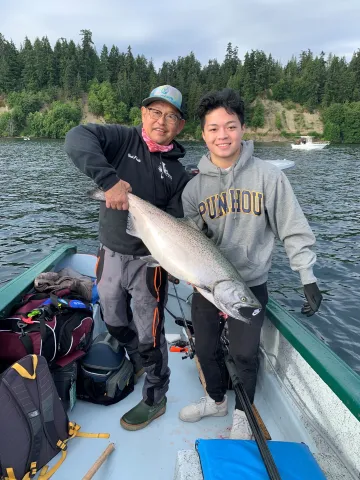
If your preference is a chance at catching an early-summer hatchery Chinook, then look no further than Marine Area 11 (Tacoma-Vashon Island). Fishing is scheduled to be open beginning June 1. These fish usually consist of a mix of resident and mature migrating Chinook averaging 7- to 15-pounds with some in the 20-plus pound category.
WDFW will monitor the June Marine Area 11 Chinook fishery, and it could close sooner in order to stay within the quota and/or other guidelines. The Chinook catch quota for the June fishery is 1,423, with a total unmarked encounter of 820 and a total sublegal encounter (Chinook under the 22-inch minimum size limit) of 2,186. The Marine Area 11 Chinook fishery is managed under two separate summer quotas, and a second window of opportunity is tentatively proposed to begin on July 23.
Look for salmon off Point Defiance Park in Tacoma from the Clay Banks to Owen Beach; Slag Pile off the Tacoma Yacht Club, outside of Gig Harbor on the “flats” area; northeast side of Vashon Island; Colvos Passage; outside of Quartermaster Harbor; and the southwest side of Vashon Island at Point Dalco. In the northern sections of Marine Area 11, try Dolphin Point and Point Robinson on the east side of Vashon Island, south of the Southworth Ferry Landing, and Apple Tree Cove to Redondo Beach.
If Marine Area 11 is slow or closes sooner than expected, another option is south of the Narrows Bridge in Marine Area 13 (South Puget Sound). Locating schools to baitfish is key to raising the bar on success for salmon at Gibson Point, Fox Island Fishing Pier, Hale Passage, Johnson Point, Anderson Island’s east side, and Point Fosdick. Marine Area 13 is scheduled to be open year-round for salmon. Anglers should check the WDFW website or the 2026-2027 regulation pamphlet for details.
Another good Chinook option is the Tulalip Terminal Area Fishery (Marine Area 8-2), which is open Fridays through Saturdays of each week and has a harvest quota of 600 Chinook. The popularity of this fishery has generated some decent action in the past few summers. The WDFW will monitor the Tulalip fishery, and it may close sooner to stay within the harvest quota.
For saltwater anglers without a boat, there are a good number of viable year-round fishing piers to catch salmon. They include the Edmonds, Fox Island, Mukilteo Ferry Landing, Seacrest in West Seattle, Dash Point Dock, Point Defiance Park Boathouse, Les Davis, and Des Moines piers.
If you prefer a freshwater salmon fishery, then make plans to head to the Skagit River (areas open vary depending on the species, hatchery Chinook or sockeye); Cascade River from the mouth to the Rockport-Cascade Road Bridge (opens beginning June 3 on Wednesdays through Saturdays only); and Nooksack River North Fork from Highway 9 Bridge to yellow marker at upstream end of the Kendall Hatchery property open through June 30. Anglers are advised to check the WDFW website for river sections open to salmon fishing and for any possible emergency fishing rule changes or closures.
Ocean Salmon Fisheries on Tap
Later this month – June 20 to be exact, which also coincides with the official first day of summer – many salmon anglers will head to the coast for the Chinook and hatchery coho ocean fishery. The recreational Chinook quota is 54,000 (up a tad from 53,750 in 2025) and a hatchery-marked coho quota of 102,900 (up from 99,720 in 2025).
Marine Area 1 (Ilwaco): Open daily beginning June 20 through Sept. 30, all salmon. The daily limit is two salmon and one Chinook only. The subarea guideline is 16,780 Chinook (16,600 in 2025), and the subarea quota is 51,450 marked coho (49,860 in 2025). Columbia Control Zone closed.
Marine Area 2 (Westport-Ocean Shores): Open daily beginning June 20 through June 28 for all salmon except coho, and the daily limit is one salmon; release all coho. Fishing is then open seven days per week from June 29 through Sept. 30, for all salmon. Beginning June 29, the daily limit is two salmon, and only one may be a Chinook. The subarea guideline is 21,910 Chinook (22,270 in 2025), with a subarea quota of 38,070 marked coho (36,900 in 2025).
Marine Area 3 (La Push): Open daily beginning June 20 through June 30, all salmon except coho, and the daily limit is one salmon; release all coho. Open seven days per week from July 1 through Sept. 30, all salmon. The subarea guideline is 2,200 Chinook (2,280 in 2025), with 2,680 marked coho subarea quota (2,590 in 2025). Beginning July 1, the daily limit is two salmon. Beginning Aug. 1, no chum retention.
Marine Area 4 (Neah Bay): Open daily beginning June 20 through June 30, all salmon except coho, and the daily limit is one salmon; release all coho. Open seven days per week from July 1 through Sept. 30, all salmon. Beginning July 1, the daily limit is two salmon. The subarea guideline is 13,110 Chinook (12,600 in 2025), with a subarea quota of 10,700 marked coho (10,370 in 2025). Beginning Aug. 1, no Chinook retention east of the Bonilla-Tatoosh line and no chum retention.
Species and size restrictions are dependent on the marine area. WDFW fishery managers will monitor the number of salmon caught in-season and may close areas earlier than scheduled if quotas or guidelines are met. In-season management may be used to sustain season length and keep harvest within the overall Chinook and coho total allowable catch.
Looking Ahead
While this column is focused on June fisheries, those looking ahead to July can look at the Strait of Juan de Fuca Marine Area 5 (Sekiu and Pillar Point) and Marine Area 6 (East Strait of Juan de Fuca) west of a true north/south line through the #2 Buoy immediately east of Ediz Hook, which are both planned to open beginning July 1 for hatchery Chinook and hatchery coho. Marine Area 7 (San Juan Islands) and Marine Area 9 (Admiralty Inlet) are planned to open July 16-18 for hatchery Chinook and hatchery coho. Marine Area 10 (Seattle and Bremerton Area) is scheduled to open on July 23-25 for a hatchery Chinook directed fishery and is also open daily for coho through Nov. 15. Marine Area 12 (Hood Canal) south of Ayock Point is proposed to open on July 1 for coho and hatchery Chinook.
Each marine area could close sooner for Chinook fishing if specific catch quotas or guidelines are met. Check the WDFW website or the 2026-2027 regulation pamphlet for areas where Chinook must be released or are closed to salmon fishing, and for other specific rules.
(Mark Yuasa is a Washington Department of Fish and Wildlife Communications Manager and longtime local fishing and outdoor writer. Contributed by Mark Yuasa, WDFW.)
/articles/summer-salmon-are-coming-mark-yuasa
Washington Saltwater Salmon Opportunities
The list of saltwater salmon fishing options in early summer are far and wide, and in this column, I’ll break down the path to success around Puget Sound and off the Washington coast.
One important factor to keep in mind, when planning a fishing excursion is that the entire 2025-2026 season package won’t be officially adopted until sometime in early to mid-June. What tends to happen is that these early-season summer fisheries will require emergency opening approvals, so anglers should regularly check the Washington Department of Fish and Wildlife (WDFW) website (https://wdfw.wa.gov/) for possible updates and changes.
Back in mid-April, the Pacific Fishery Management Council held meetings in San Jose, California, and the 2025-2026 tentative statewide salmon fishing seasons were adopted by the Council. The season recommendations set forth by WDFW are then moved forward for federal approval by NOAA Fisheries.
While we wait for the ink to officially dry on the approval process, let’s visualize the possibilities of where to go and wet a line in the upcoming weeks, as well as a few pro tips to improve your chances of hooking a fish.
Since no salmon fishing season mirrors another, anglers have learned to become more adaptable to the constant ebb and flow of change. First off, anglers should be mobile and willing to move from location to location to maximize their time on the water.
Don’t focus all your time on one specific area. By doing a little bit of homework and reading this column below, you’ll likely find more choices by going outside of the box. Second, since many seasons are driven by catch quotas/guidelines, it is wise to go sooner rather than later.
Next, build a communication network to stay informed about the latest fishing trends, including the WDFW website and blog posts. Many other social media platforms can be used to gather this kind of information. Attending fishing seminars is another good avenue to gain more knowledge.
Other tips include reading blogs and watching YouTube videos from fishing influencers, especially publications like this magazine, which provide a plethora of information.
Where to go in June
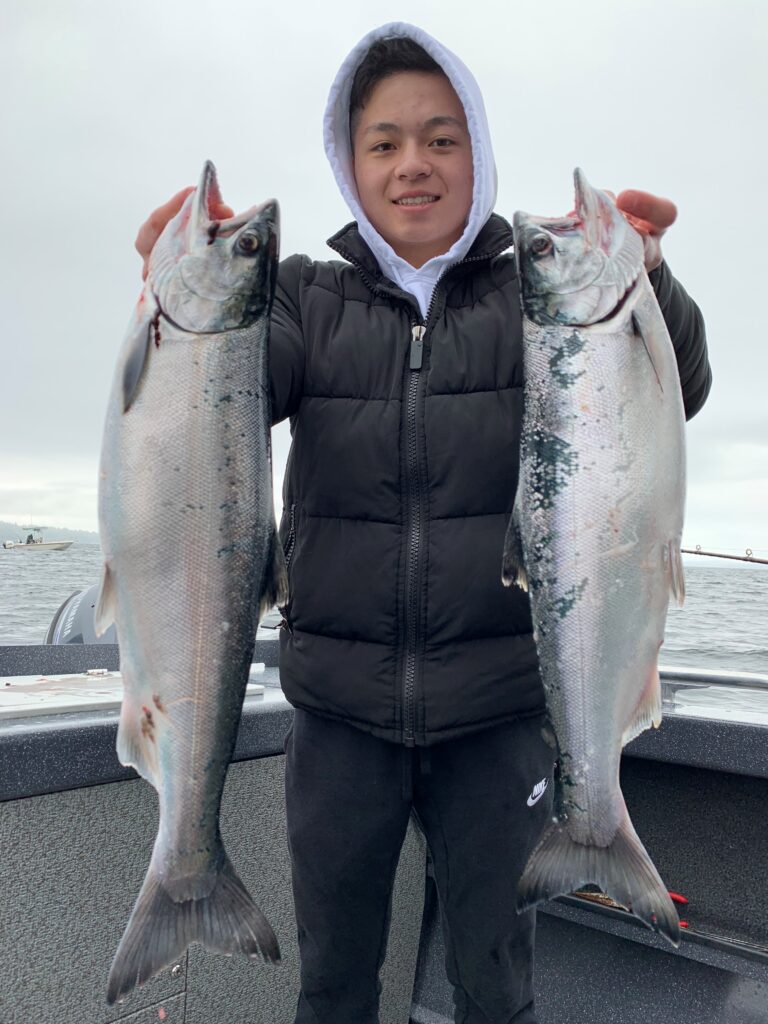
For the past several summers, Marine Area 10 (Seattle-Bremerton Area), mainly the northern portion, has been good for early coho and is open daily beginning June 1. The resident coho average 2 to 4 pounds, along with a few larger ones, and are fairly snappy. Their bright red-orange meat is excellent for the BBQ grill. This is due in part to the abundant schools of krill: small, microscopic, shrimp-like crustaceans found in Marine Area 10 during the summer.
Most will target coho in the shipping lanes off Jefferson Head to the Kingston-Apple Tree Point boundary line, and from the Edmonds oil dock to Richmond Beach. Other locations worth a try are Point Monroe off the north side of Bainbridge Island, West Point south of Shilshole Bay, Blake Island/Southworth area, and the entire eastern side of Bainbridge Island.
If you’re looking to catch an early summer hatchery Chinook, then Marine Area 11 (Tacoma-Vashon Island) is an option and open Wednesdays through Saturdays only from June 4 to 30. These hatchery kings average 8- to 15-pounds along with some topping exceeding the 25-pound mark.
WDFW will regularly monitor the Marine Area 11 fishery and could close sooner if the quota or other guidelines are attained. The Chinook catch quota for June is 1,423 (1,423 in 2024 and 2023, 580 in 2022, and 431 in 2021) with a total unmarked encounter of 818, and a total sublegal encounter of 1,601. The Chinook fishery is managed under two separate summer quotas, and a second window of opportunity happens in late July. Commencement Bay east of the Cliff House Restaurant/Sperry Ocean Dock boundary line is closed to salmon.
Those who fish for salmon regularly in Puget Sound marine areas – especially in the Tacoma region – know that dogfish can be an issue in the summer.
To avoid pesky schools of dogfish, anglers will jig or troll with downriggers and meat liners using plugs, spoons or a plastic hoochie squid. If you drop a whole or cut plug herring, make sure you’ve got plenty of extra leaders tied. The sharp teeth and abrasive sandpaper-like skin of a dogfish will fray leaders. Lesson learned, I’ve burned through more than a dozen in a matter of a couple of hours.
In Marine Area 11, look for Chinook lurking around the Clay Banks to Owen Beach at Point Defiance Park in Tacoma, the Slag Pile off the Tacoma Yacht Club, the “Flats” outside of Gig Harbor, Quartermaster Harbor, and Point Dalco on the southwest side of Vashon Island.
In the northern part of Marine Area 11, try Dolphin Point and Point Robinson on the northeast side of Vashon Island, south of the Southworth Ferry Landing, Colvos Passage, Dash Point, and Apple Tree Cove to Redondo Beach.
Keep in mind that the salmon fisheries mentioned above for Marine Area 10 and Marine Area 11 are only for June, and that additional salmon fishing opportunities will occur in both areas. Anglers should check the WDFW North of Falcon webpage for additional season information.
Another June option for hatchery Chinook is south of the Tacoma-Narrows Bridge in Marine Area 13 (South Puget Sound), which is open seven days per week. Look for fish are Gibson Point, the concrete dock off Fox Island’s east side, Hale Passage, Johnson Point and Point Fosdick.
The Tulalip Bubble Fishery (Marine Area 8-2) is open through Sept. 1 with fishing allowed from 12:01 a.m. Fridays to 11:59 a.m. on Mondays of each week, and closed June 21. Before going, anglers should check the WDFW website as intermittent closures may be needed to ensure the hatchery is meeting spawning escapement goals. Fishing is also open Sept. 6 to 21 and allowed Saturdays and Sundays of each week. The bubble fishery is open within the terminal boundary only – closed east of a line from Mission Point to Hermosa Point – and can be decent for summer Chinook in the 10- to 20-pound range, and is mainly a trolling or jigging show.
You can jig drop down a glow, chartreuse, pearl-white, green-nickel, blue-pearl or blue-gold pattern in three to six-ounce sizes depending on the current and wind. Remember, store-bought jigs have a treble hook, and they’re illegal for salmon in all marine areas. Only single-pointed barbless hooks and one fishing line with up to two hooks may be used.
Trolling is the popular method with downriggers and a flasher combined to plug, spoon, and/or a plastic hoochie squid. Before or at daybreak, the fish tend to be found from the surface down to 90 feet, and as the sun rises, they’ll go deeper up to around 100 to 175 feet.
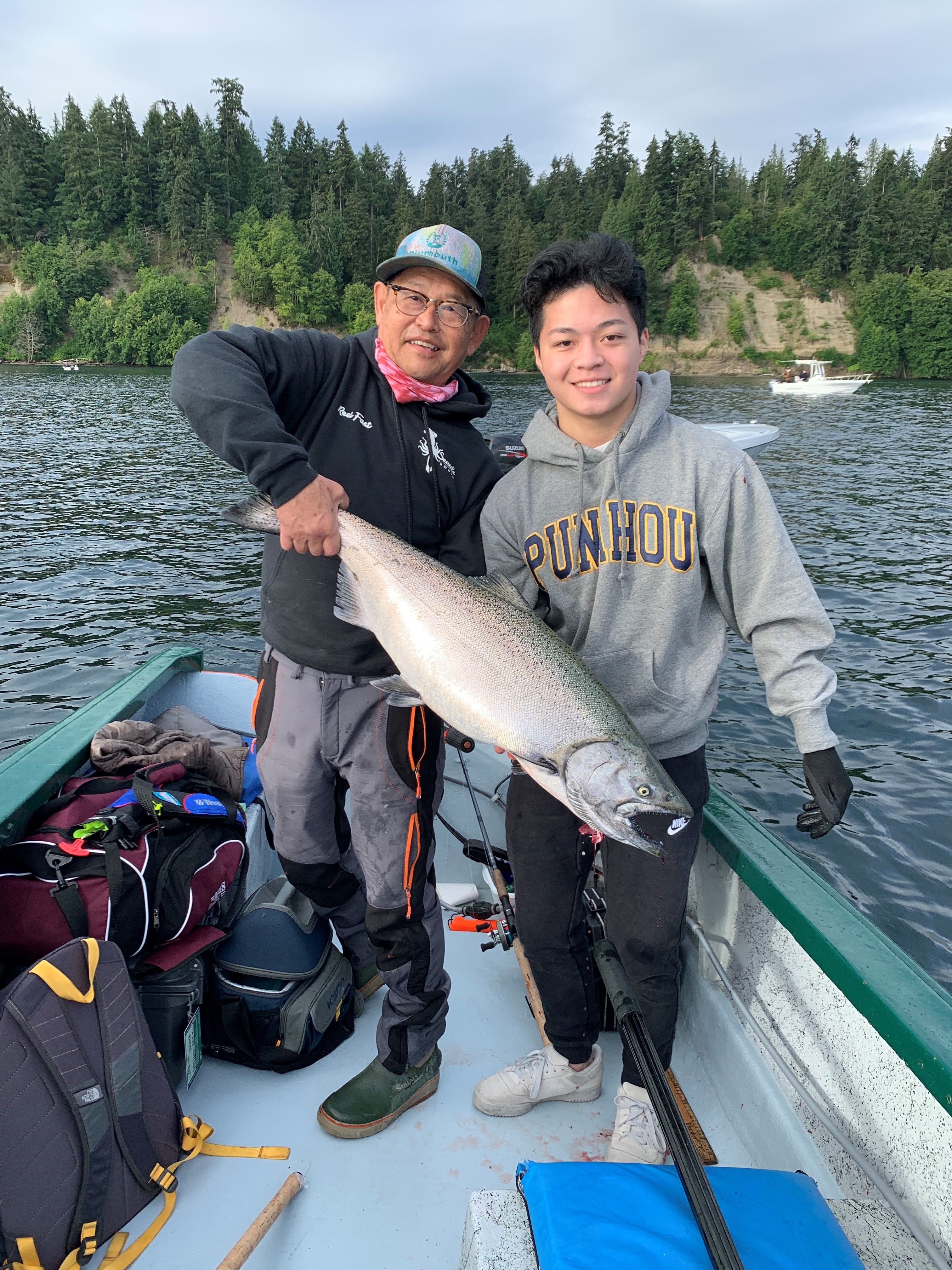
Many anglers are making plans to visit the coastal ports where Chinook and hatchery coho fishing get underway in late June. The ocean salmon season includes a recreational Chinook quota of 53,750 (41,000 in 2024) and a hatchery-marked coho quota of 99,720 (79,800 in 2024).
Marine Area 1
(Ilwaco)
Is open seven days per week from June 25 through Sept. 30, all salmon, with a subarea guideline of 16,600 Chinook (12,510 in 2024) and a subarea quota of quota of 49,860 marked coho (39,900 in 2024). The daily limit is two salmon and one Chinook only. Columbia Control Zone closed.
Marine Area 2
(Westport-Ocean Shores)
Is open seven days per week from June 21 through June 28, with a subarea guideline of 22,270 Chinook (17,430 in 2024), and the daily limit is one salmon, release all coho. Open seven days per week beginning June 29 through Sept. 15, all salmon, with a subarea quota of 36,900 marked coho (29,530 in 2024). Beginning June 29, the daily limit is two salmon, and only one may be a Chinook.
Marine Area 3
(La Push)
Is open seven days per week from June 21 through July 3, with a subarea guideline of 2,280 Chinook (1,630 in 2024), and the daily limit is one salmon, release all coho. Open seven days per week beginning July 4 through Sept. 15, all salmon, with 2,590 marked coho subarea quota (2,070 in 2024). Beginning July 4, the daily limit is two salmon. No chum retention beginning Aug. 1.
Marine Area 4
(Neah Bay)
Is open seven days per week from June 21 through July 3, with a subarea guideline of 12,600 Chinook (9,430 in 2024), and the daily limit is one salmon, release all coho. Open seven days per week beginning July 4 through Sept. 15, all salmon, with a subarea quota of 10,370 marked coho (8,300 in 2024). Beginning July 4, the daily limit is two salmon. No chum retention beginning Aug. 1. Beginning Aug. 1, Chinook non-retention east of the Bonilla-Tatoosh line during the managed ocean fishery.
WDFW fishery managers will monitor the number of salmon caught in season and may close areas earlier if quotas or guidelines are met. In-season management may be used to sustain season length and keep harvest within the overall Chinook and coho total allowable catch.
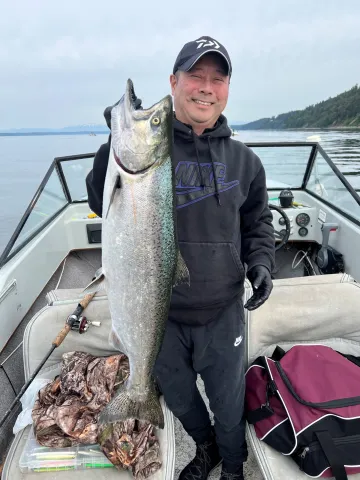
Piers open year-round for salmon in Puget Sound include the Edmonds Marina (usually a good place for early summer kings in June), Fox Island, Mukilteo Ferry Landing, Seacrest in West Seattle, Dash Point Dock, Point Defiance Park Boathouse, Les Davis, and Des Moines.
Note: The salmon daily catch limits, species and size restrictions, and other regulations vary for each marine area. Emergency closures or adjustments to marine area seasons are also possible. Anglers should check for details on the WDFW website or the 2025-2026 regulation pamphlet.
(Mark Yuasa is a Washington Department of Fish and Wildlife Communications Manager and a longtime local fishing and outdoor writer.)
/articles/washington-saltwater-salmon-opportunities
Silver Salmon River Lockjaw Strategies
Standing at the river's edge and surveying the waters, a loud splash disrupted the silence of the day. Coho or silver salmon are known to roll and jump often, and this gives away their location. This fish was in heavy cover where downed logs had created a log jam and there was no way to get to it without risking gear being lost to the sunken trees. But it meant that fish were in the river and that was good enough to load the tackle into the drift boat and launch for a day of searching for more coho.
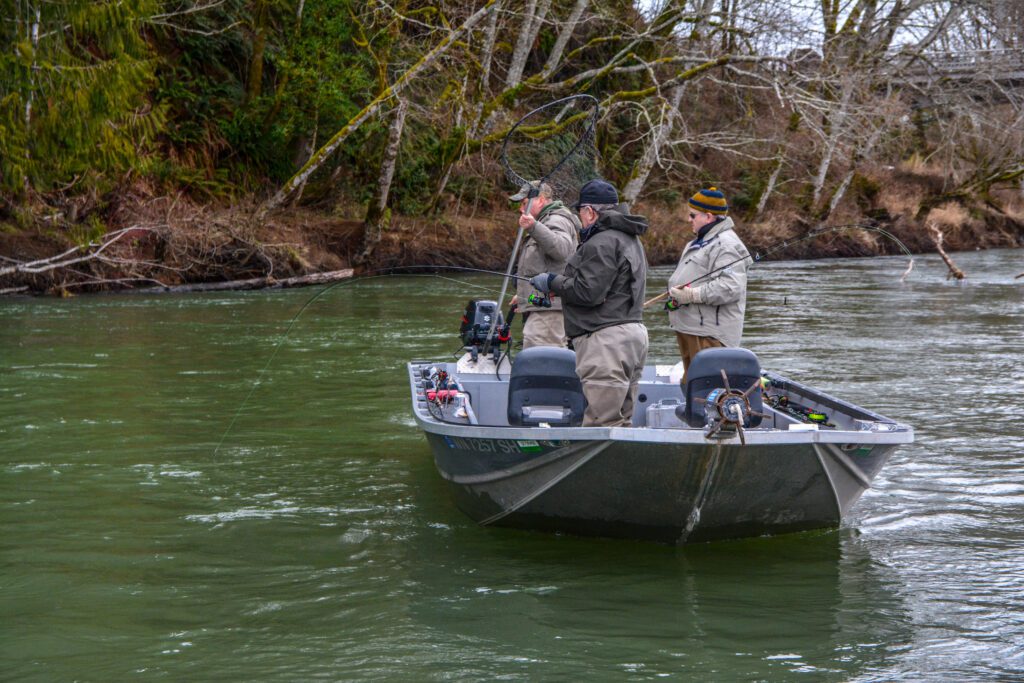
Rowing down the river, which was calm and quiet, we came to a large back slough. The water here was stacked up from the previous winter's floods that cut the side channel deep but now the water was shallow at the outfall creating a lake of sorts. This is known as “frog water” and coho prefer to sit here and rest until they regain energy to continue upriver. With a lot of fish holding in the stagnant waters, one would think these fish are easy to catch but anglers often forget that these are resting fish and that means they are lazy and often lockjaw.
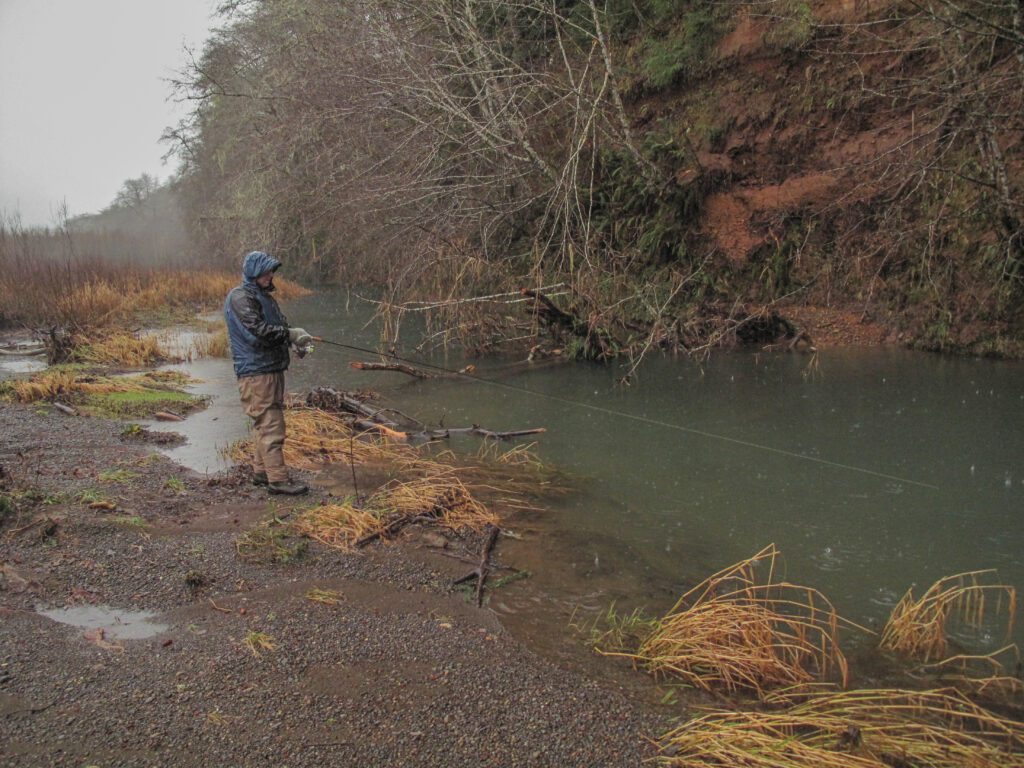
The term “lockjaw” means salmon unwilling to bite. Unfortunately, when anglers come upon a dozen or more fish that are lockjaw the temptation to snag becomes overwhelming. Not only is this illegal but also it hurts the runs of coho because these are resting fish and when snagged they exert energy they are trying to use to head upriver and spawn. When a fish becomes too tired to move it simply dies because water needs to flow through the gills and if the fish cannot move and it is released into slow or stagnant water it will suffocate and die.
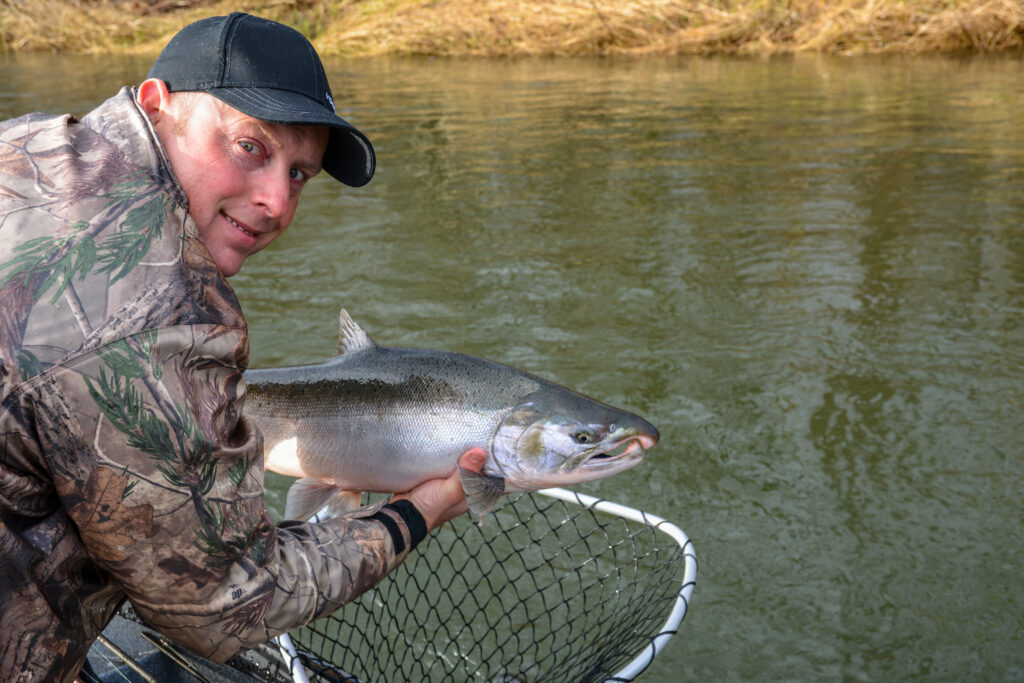
So, how do you get fish to bite when they are all lockjawed? The answer is simple and that is to find fish that are not lockjawed. Seems silly to say that but it is true, you will not get a lockjawed silver to bite. This does not mean giving up fishing for the day but instead knowing that there are biting fish, or a bite might turn on throughout the day. Back to the stagnant waters of the slough.
These fish are resting but that also means they will get their energy back and will bite. If you have ever thrown a spinner or twitched a jig in this water when it is clear enough to see the fish, then you will notice a fish or two out of the school will start to give chase. These are fish that are done resting and have energy and are just waiting for the right conditions.
The right conditions can be anything from enough time to recover to a shot of rain bringing up the river just enough to make it easier for them to migrate. Anglers often head to the river early to get the “early morning bite” but what is really happening is the water has cooled off from a brisk fall night and the fish are more active. As the day heats up the water also warms, and this means less dissolved oxygen and therefore tired salmon. One way to beat the lockjaw is to fish on cool days, after it rains, or early in the day.
Sometimes, our schedules do not line up with the perfect conditions and anglers can only hit a river when the conditions are all wrong for active fish. You can still beat the lockjawed effect by looking for parts of the river where the fish are active. For coho this can be a deep hole where the water is cooler, and boulders churn the flowing water creating dissolved oxygen. Same with riffles and holding areas in the shade. One hot fall day we were floating a coastal river and working on our sunburns when we came across a long stretch of water.
The current was moderate, and the bank had overhanging trees. Peering into the shadows we saw coho stacked up in the shade, swaying their tails in the current and we thought they were just resting. Tossing a jig and a few quick twitches later a fish slammed it hard and erupted out of the water. These were not lockjawed fish but ones that were just staying out of the bright sun and being protected by the overhanging branches. They were also not in “frog water” but instead in a moderate current where they could sit and let the water run through their gills.
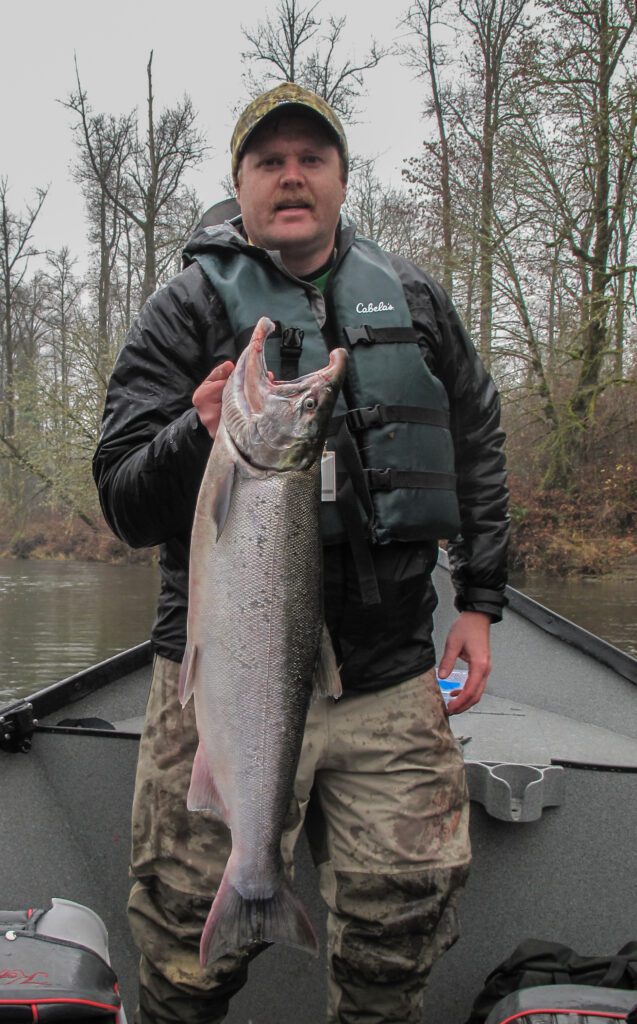
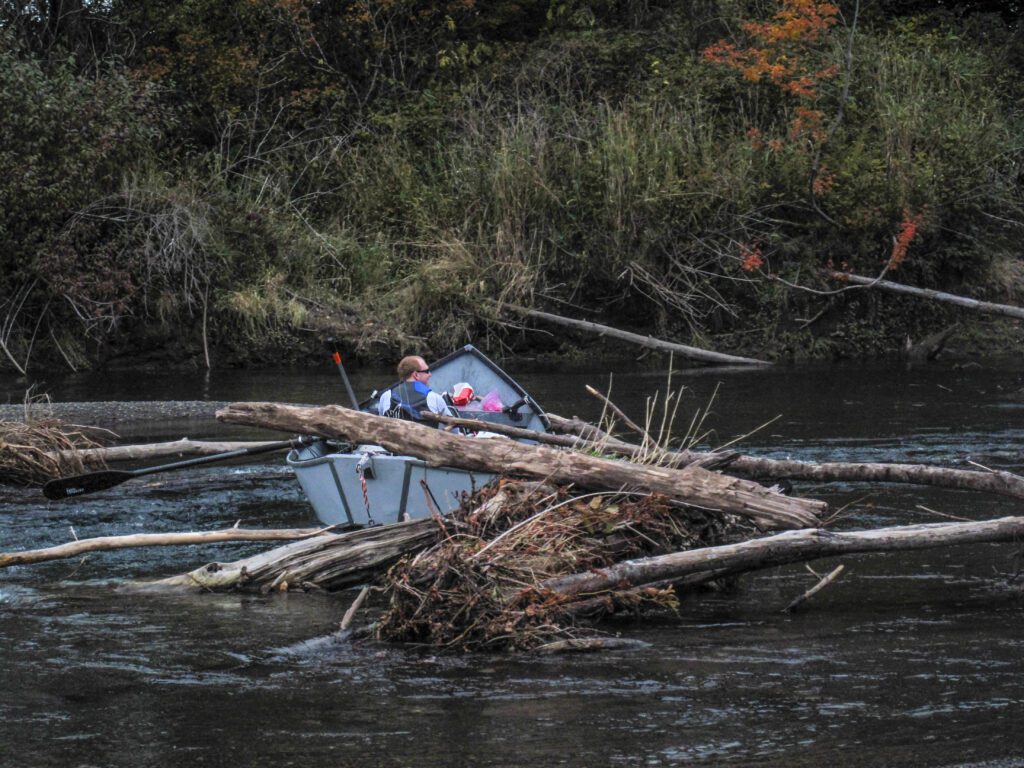
Log jams are notorious places for coho and for eating gear. It is the hardest place of all to catch salmon. Look for deep holes often created by the log jams and watch the fish, or when you see the splashing and rolling as this often means fish are active. A tired fish will sit and rest, but an active fish will be splashing and rolling as it uses energy to do this. Why salmon do this is still unknown with several theories but one thing that is known is that fish that are active are not lockjawed.
Be careful parking the boat over a log jam in current but if you find one that is in a soft part of the river then you can oftentimes move the boat over and tie up to the log jam. The key here is to let the hole rest because it is likely the fish moved out once you put the boat over them. Coho like log jams because it is covered and they feel safe from predators here; the boat will become part of that cover once the commotion stops. Several times we have looked over the edge of the boat and seen coho underneath, sitting there just like they do in other cover.
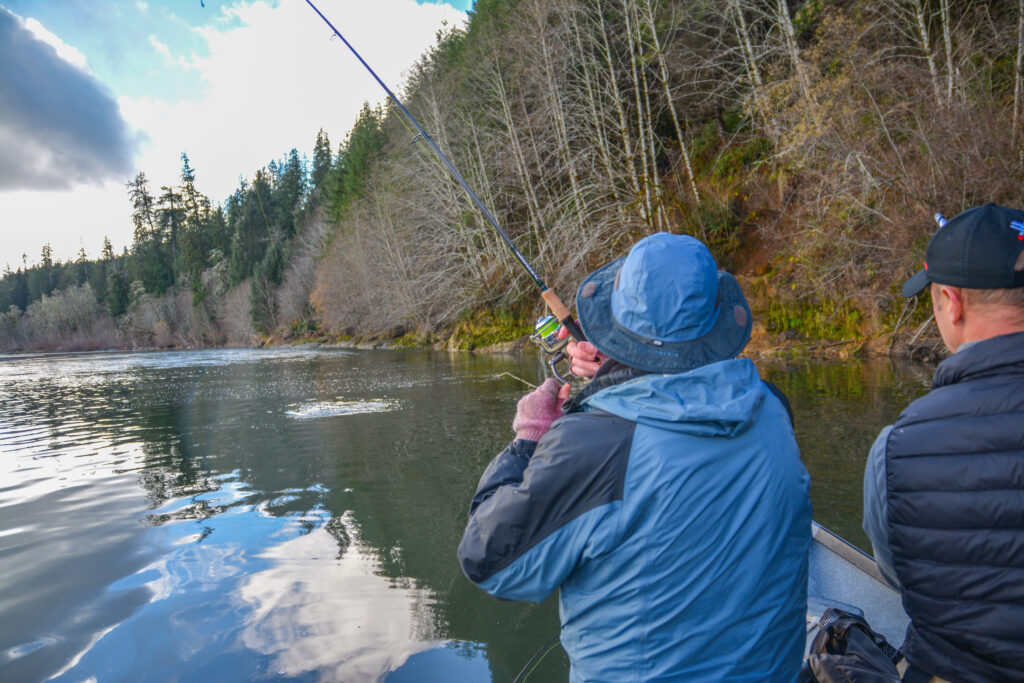
Techniques vary and sometimes you can get a “lockjawed” silver to bite–though the fish was just resting and is now recovered-by using a bait that it simply cannot resist. Such techniques are often the presentation of bait like cured eggs. If you have ever hoverfished, then you have caught resting fish using eggs. This technique which is extremely popular in the Columbia River Gorge is done at tributary mouths where the colder water from the tributary is dumping into the warmer Columbia. The fish will stack up here to rejuvenate in the cooler water and the bite is often very subtle. Floating eggs under a bobber is a top technique to get resting coho to bite. Back to the frog water slough, it is best to float fish it first and see if there are any resting but willing biters in there.
Twitching jigs and swinging spoons or spinners are for active fish. Use these techniques where fish that are more active, such as in runs, riffles, and deep holes. Yes, they also work in stagnant waters but again you will notice that out of the entire school of fish, only a few will chase down the lures. This means having patience and knowing that the fish will eventually get their strength back and bite.

Same with moving fish, be ready for a long lull in action and then all a sudden the “bite” is on. It is likely fish moved upriver and to your location. One cold November day we were fishing the Satsop River and anchored by a small back eddy along a cut bank. We stayed there all day long twitching jigs and occasionally, a pod of coho would make their way upriver. This was announced by one of us hooking a fish and then it would be “on” for a few minutes with everyone catching a fish or two and then the coho simply moved on.
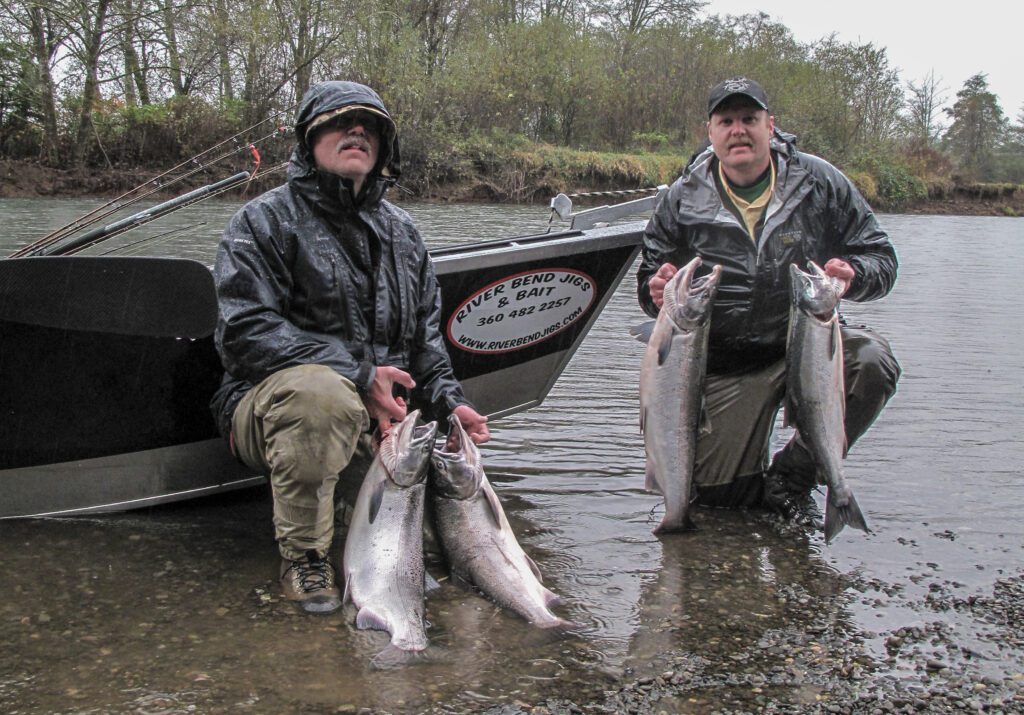
Lockjawed coho are hard to catch and the best way to catch them is to look for fish that are willing to bite. Knowing when they are lockjawed and not harassing them is the best technique you can do to catch more fish. Find willing biters and leave the tired fish alone. Wasting time on them only hurts the run and will cause you to become frustrated. When you make your way to the edge of the quiet river, pause and look around, listening for the splash of a coho. These are the fish you can catch.
/articles/silver-salmon-river-lockjaw-strategies
British Columbia Tuna Time
Timing is everything, especially in fishing. As fishers, we do our best to utilize our logarithmic skills to factor bait, tackle, gear, equipment, safety, weather, time, and environment. Sprinkle on a little bit of hope and you may have a recipe to catch the infamous Canadian Tuna like we did last August in Zeballos, BC in Zeballos, BC with Reel Obsession Sport Fishing.
Nearly a year in the making, last August, we headed out of Spokane to Vancouver Island. Me, Rob, and our two daughters, Cameron and Sarah, headed out on the 700 mile-2 day trip to Zeballos. We had our passports, bibs, maps, lodging itinerary, ferry tickets, snacks, coolers and a navigation plan. We set out to BC hoping to catch the infamous BC Tuna.
Our hopes multiplied as we left Spokane. Rob had been on the horn with Adrian of Reel Obsession and the scuttlebutt was that our timing was right for Tuna. We planned on fishing for Salmon, Halibut, and Bottom fish and the idea of Tuna was a BONUS. All factors were adding up to ideal conditions. The water temperature was right, and the weather was cooperating. Adrian and his fleet were in the Tuna between 20 and 40 miles out when we left Spokane. Our imaginations ran wild as we drove. Would we get there in time?
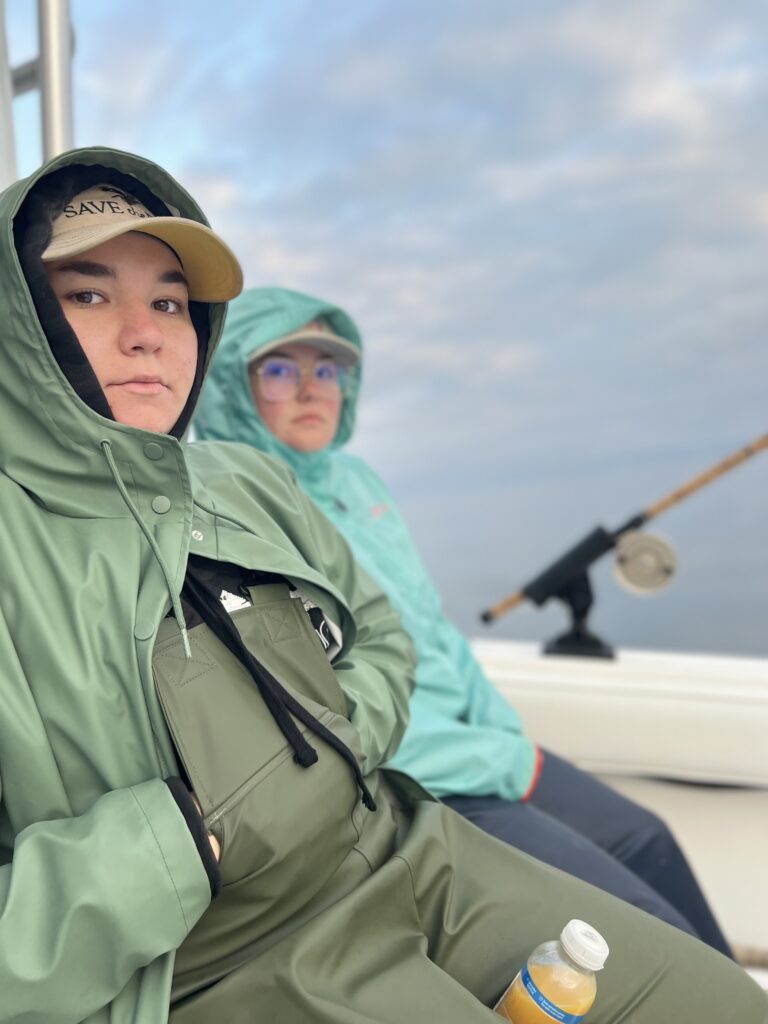
Now, our girls are seasoned on the Salt, and they can travel independently abroad. They were ready for this trip. Their skills would be put to use and pushed. Their mental toughness was developed. They had their own gear, and their stamina was up. The time was right for them to go 40 miles out to sea for a long grinding day of hauling in up to 20 tuna per person as the limit.
It took a while at the border. We were the last truck that loaded the ferry on the last boat of the night. (Planning for this is key. Any delays may affect your ferry sailing)
We got into Nanaimo late and grabbed a hotel. We set out early for Zeballos on the 4-hour drive. We hit a few stores on the way. Zeballos has one small store that is open with limited hours and limited supply, grab your niceties on the way.
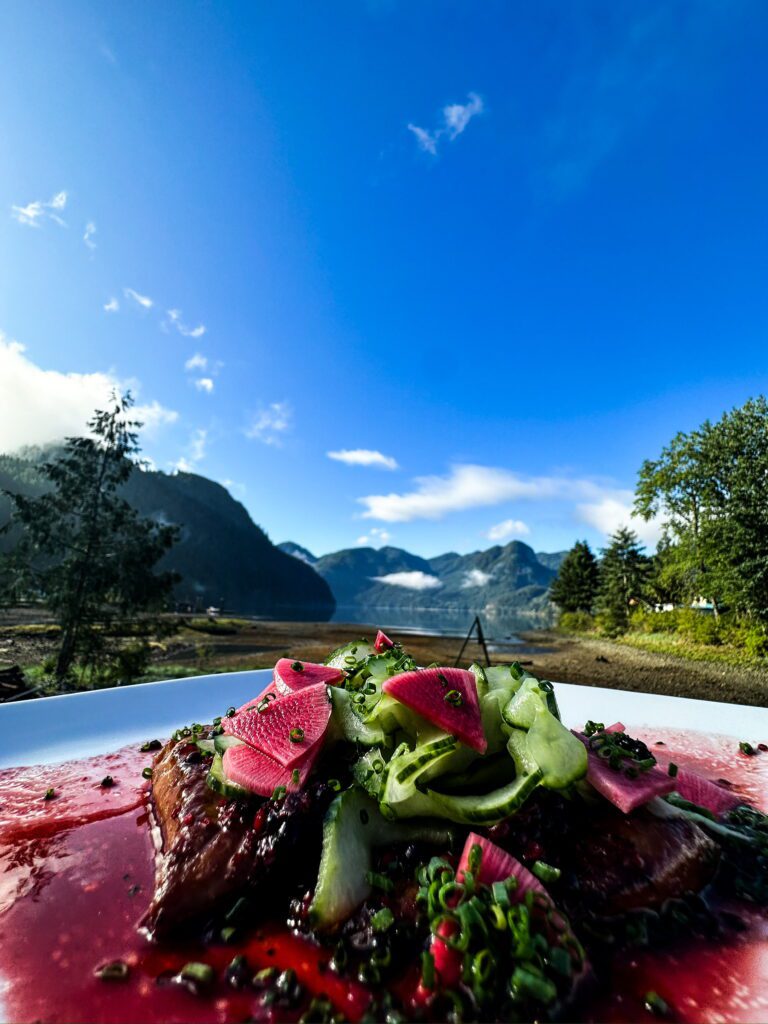
Angie, Adrian's wife and Operations Manager, had everything dialed for us upon arrival. Our rooms were great. The main lodge was bustling. Folks gathered around the firepit with a glass of wine to soak up the views while being contentful waiting for dinner. Sitting down for dinner, the buzz was in, the Tuna were still here! We would be getting our shot at the Tuna Dance!
The morning was met with a communal breakfast and lunch coolers to tote. The scene of the fleet of boats heading out together was a sight to revel in. My girls soaked in the scenery as they gazed with wonder at the open sea. We went 40 miles out. Not all the fleet, but a handful of us Reel Obsession boats were working together over the horn. The radio chimed pleasantries rarely heard over the com in Washington waters. Like, “Lookin’ good aye?” and “Great job, aye!” BC fishers are some of the nicest, hardworking folks I’ve met.
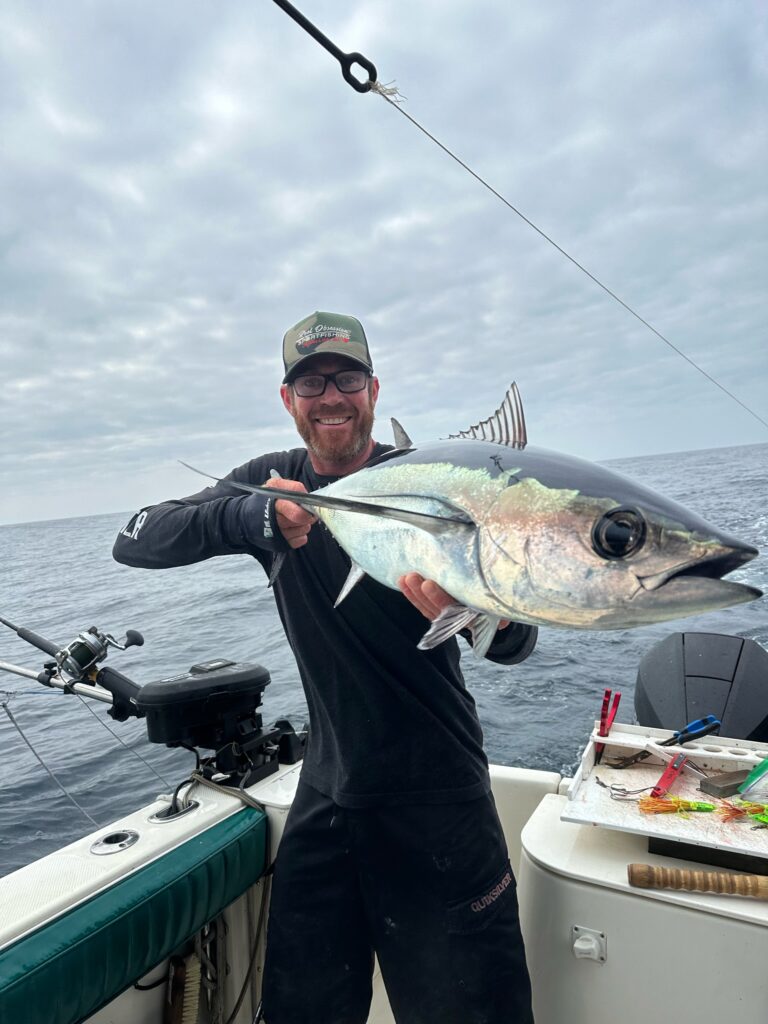
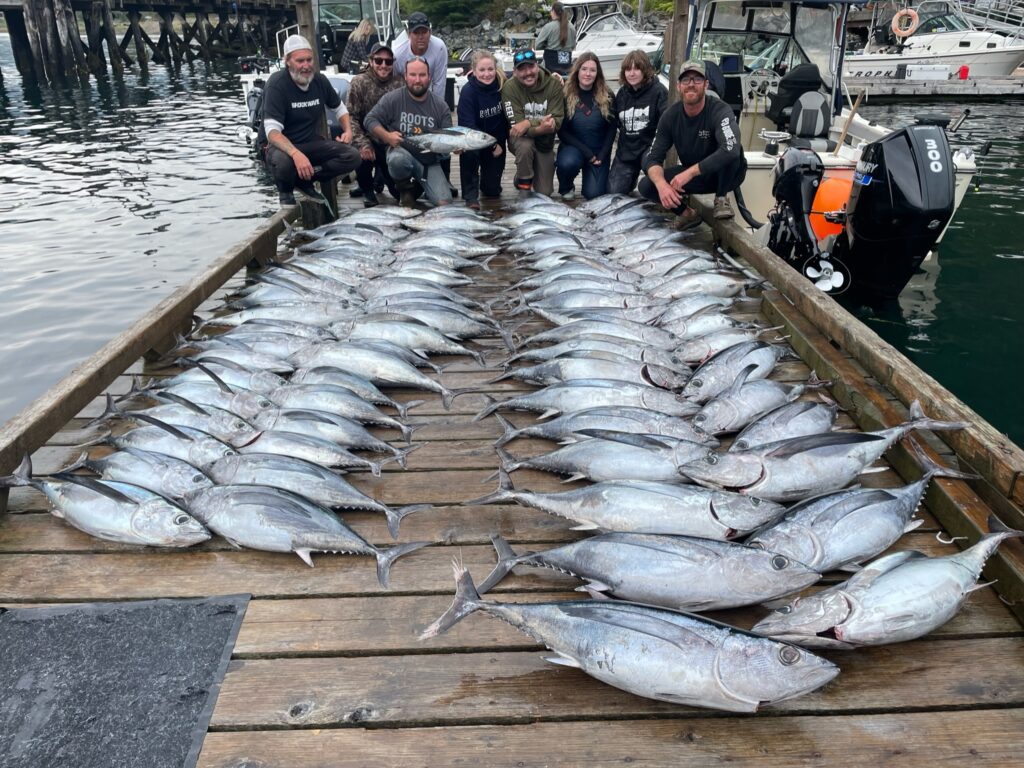
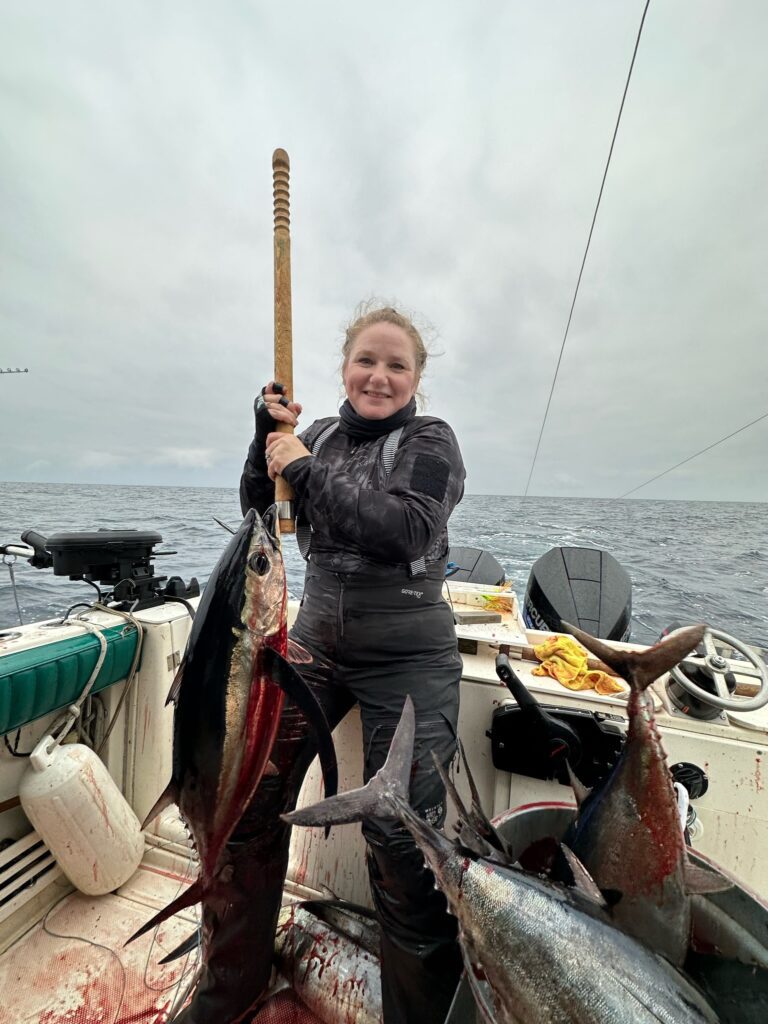
We get to the grounds and Adrian shows the girls the ropes. Essentially, he shows them how to dance for Tuna in a brief 2-minute tutorial. We started to move as a team. We were trolling at about 7 knots fishing with rods and reels and hand lines. Level lines and hand lines are productive and fast; and less awkward than a rod and reel when trolling. “The hand lines help keep the trolling speed up.” Adrian had said. The girls got into it. The handlines helped keep their stamina up. We grinded all day, with not a moment to spare. Adrian was incredible at teaching the girls new techniques, picking up slack when the girls felt a wave of fatigue. Rob and Adrian pulled in the extra slack that day. Mentors are good like that. We grabbed snacks as our energy slowed. Angie and the staff had prepared a delicious lunch for fuel and endurance. We brought in around 40 Tuna! It was incredible! It was rigorous, it was hard, it was fun and It was the time of our lives!
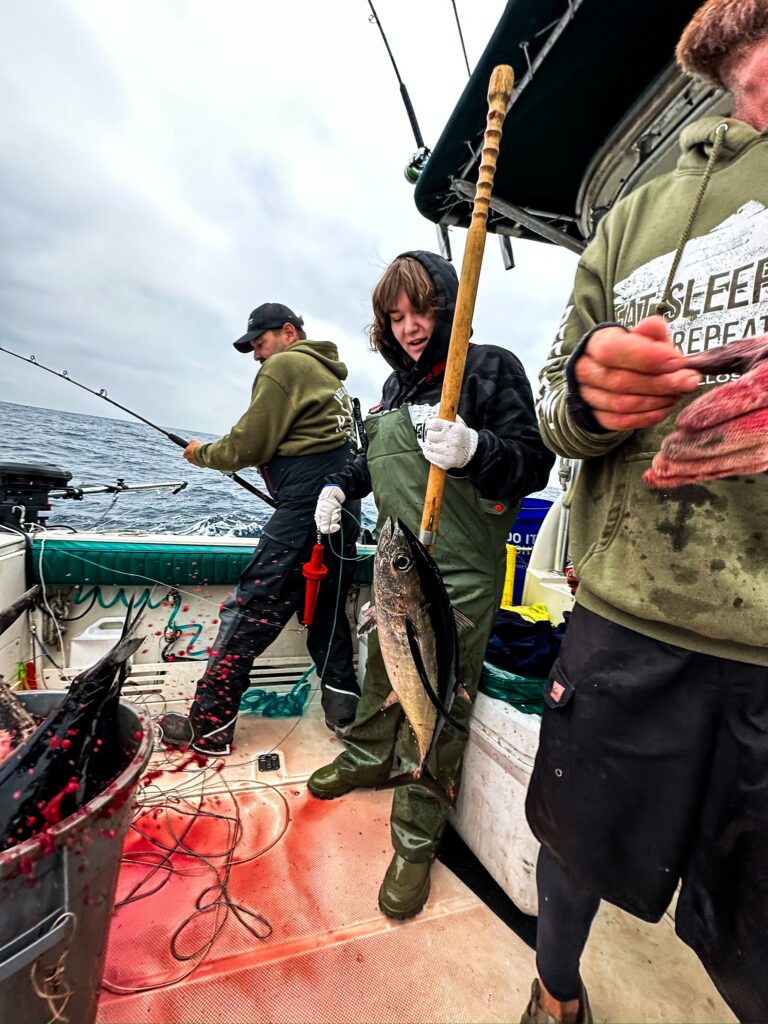
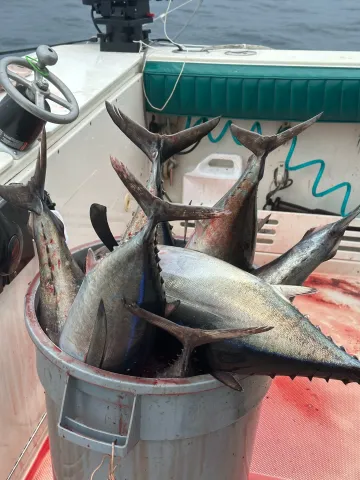
We headed in with the other “Reel” boat that was out. We got to the dock, exhausted. Ange and her team were waiting for us to offload and begin processing. They laid out all the tuna from both boats for some pictures. It was glorious! We headed up to the lodge to get cleaned up and ready ourselves for dinner while the Reel Obsession Crew got to work.
We fished for 3 more days. The fishing was great. The girls wanted to fish for halibut, so we fished in the rain at 300 ft and let them do most of the reeling. We caught our fair share of salmon and some bottom fish. Each day the crew would do the same and offload our catch and get to work while we sat reminiscing about the day in comfort as we soaked in the company and scenery.
We headed out early in the morning with our fish packaged and ready to go for the border. We spent an extra day in Vancouver to play around. We headed home the next day in a straight 8-hour shot. Looking back, Sarah recalls, “The food, scenery, and the people are extraordinary! Zeballos is Awesome!” I agree with her. It was the time of our lives!
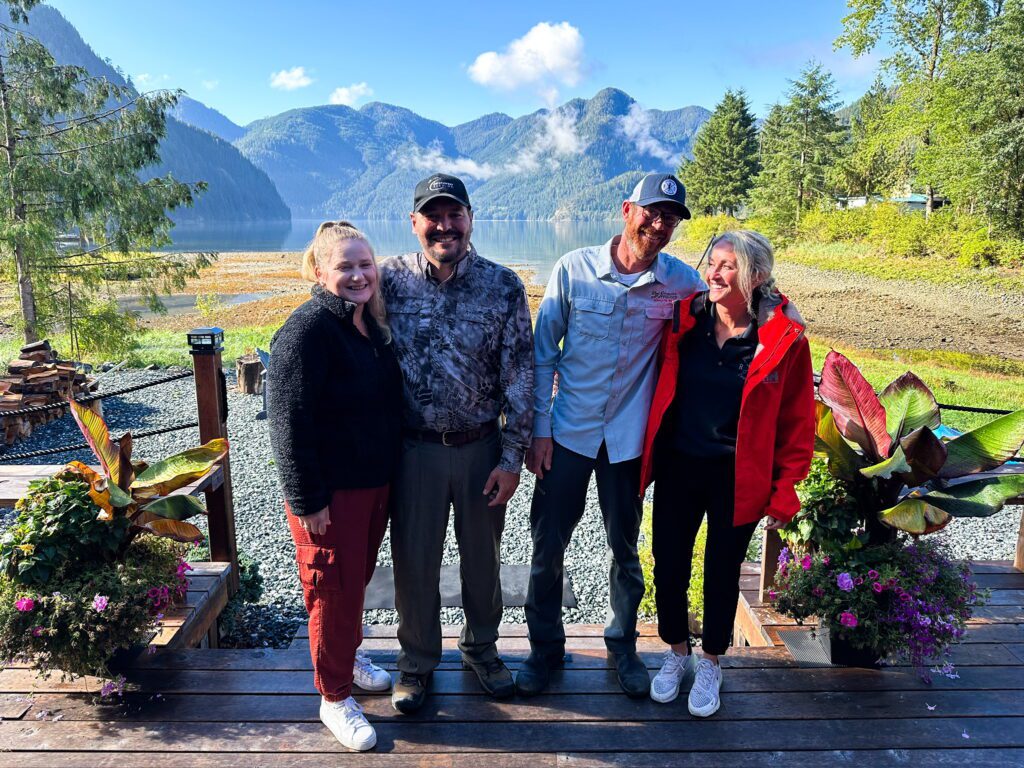
*Reel Obsession is a Family Operation. Adrian, and his wife Angie, own and operate the Lodge alongside their two children. Angie runs the land part as the Operation Manager and Adrian runs the Marine side as Operations Manager. Keegan, their son works on the docks and in processing and Kenzie helps serve and operations in the Lodge.
*Reel Obsession is an All-inclusive Fishing Vacation Lodge. Packages include lodging, all meals, snacks, beverages, and guided fishing. They are a licensed processing facility and process and vacuum seal all our fish.
“It’s always a halibut and salmon trip but if the water temps are right, then we can get out for tuna!“ -Adrian O’Connell
/articles/british-columbia-tuna-time
The Other Red Meat
It has been an awesome year for chasing salmon out on the salt, but if you are a Marine Area 7 (San Juan Islands) fisherman you may be thinking now what? MA 7 chinook is closed for the year. At this point, there are limited fall chinook opportunities for our Western Washington salmon slayers. Then halibut, although the fishery is open through September 29th most of them are out in the open ocean doing halibut things. Lingcod are closed for the season and our rockfish fishery continues on a long-term conservation closure… What do we fish for? Why not chase San Juan Island coho, the other red meat?
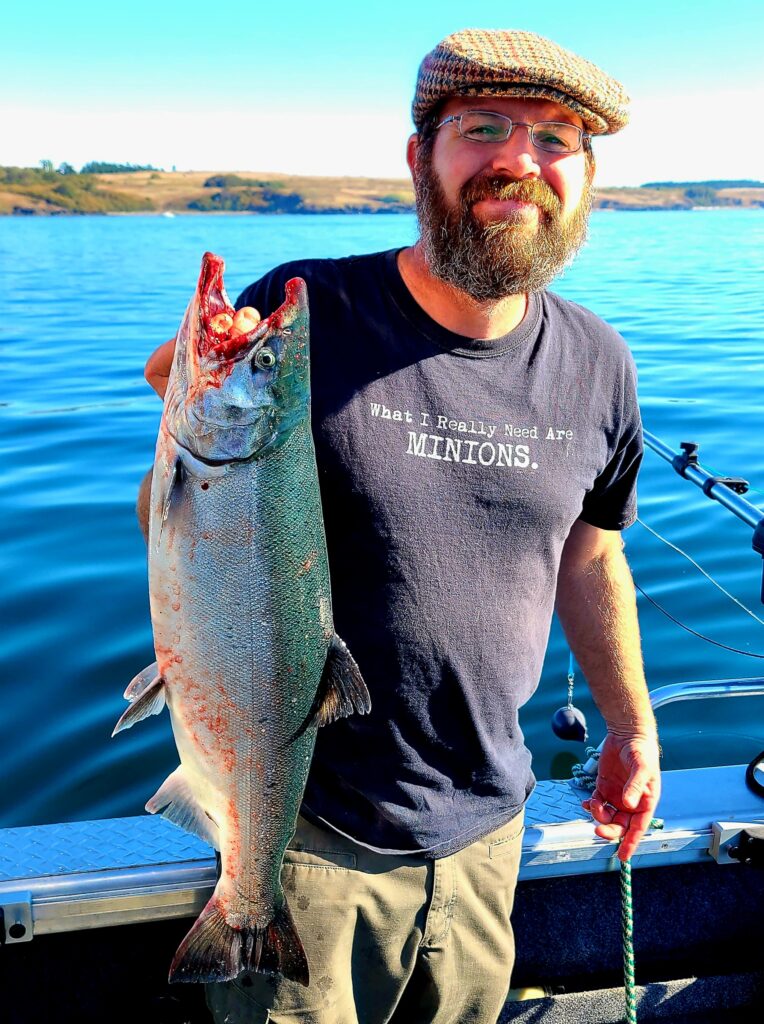
As always review the regulations and Emergency Regulation notices before heading out but the current season is modeled as being open as follows:
8/1-8/31 2 coho no minimum size, release wild fish
9/1-9/29 1 coho
When heading out to hunt San Juan Island Coho, make sure you are aware of the southeast MA 7 closure, and if you plan to fish the banks be cognizant of your actual location. Know where the Canadian border is and where both the MA 7 and MA 6 boundaries are.
Regarding regulations; this year there has been an increase in the number of WDFW staff Safety and Security Incident Reports filed for harassment of WDFW personnel. The Safety and Security Incident Reports relate to negative interactions with anglers and were submitted by Puget Sound Sampling staff over a two-month period this summer. The negative interaction makes WDFW recruitment and retention difficult and staff have quit their job over the treatment they've received this summer.
RCW 77.12.071
Sampling of fish, wildlife, or shellfish by department employees.
- (1) Department employees, in carrying out their duties under this title on public lands or state waters, may:
- (a) Collect samples of tissue, fluids, or other bodily parts of fish, wildlife, or shellfish; or
- (b) Board vessels in state waters engaged in commercial and recreational harvest activities to collect samples of fish, wildlife, or shellfish.
- (i) Department employees shall ask permission from the owner or his or her agent before boarding vessels in state waters.
- (ii) If an employee of the department is denied access to any vessel where access was sought for the purposes of (b) of this subsection, the department employee may contact an enforcement officer for assistance in applying for a search warrant authorizing access to the vessel in order to carry out the department employee's duties under this section.
- (2) Department employees must have official identification, announce their presence and intent, and perform their duties in a safe and professional manner while carrying out the activities in this section.
As a participant in our recreational salmon fishery, please remember that the department is required to monitor the fishery. If they do not have the staffing or there are safety concerns, they may have to close a given fishery because they are unable to monitor it as required under the Federal Fisheries permit.
Once you’ve sorted through the regulations and generally know where you are going, what’s the game plan? During Coho season a good chunk of MA 7 will have coho available. Many of the points along the SW side of San Juan Island produce tide rips that will concentrate bait. Find the bait and coho will be there. This time of the year coho put on the feed bag and fatten up for their spawning rituals. Instead of naming off several already busy point fisheries think bait.
Generally, coho will be found anywhere there is bait. Meter around offshore from the point fisheries and look for bait. Study your charts and note any high spots or ridges that will create a current break and have a look.
You don’t need to find a boiling tide rip, even a subtle rolling seam along an otherwise glassy sea will hold bait. Look for seabirds, a bunch of diving birds sitting on the water means deep bait. a flock of gulls, either floating around or on the wing usually means shallow bait, so continuously keep a lookout for birds.
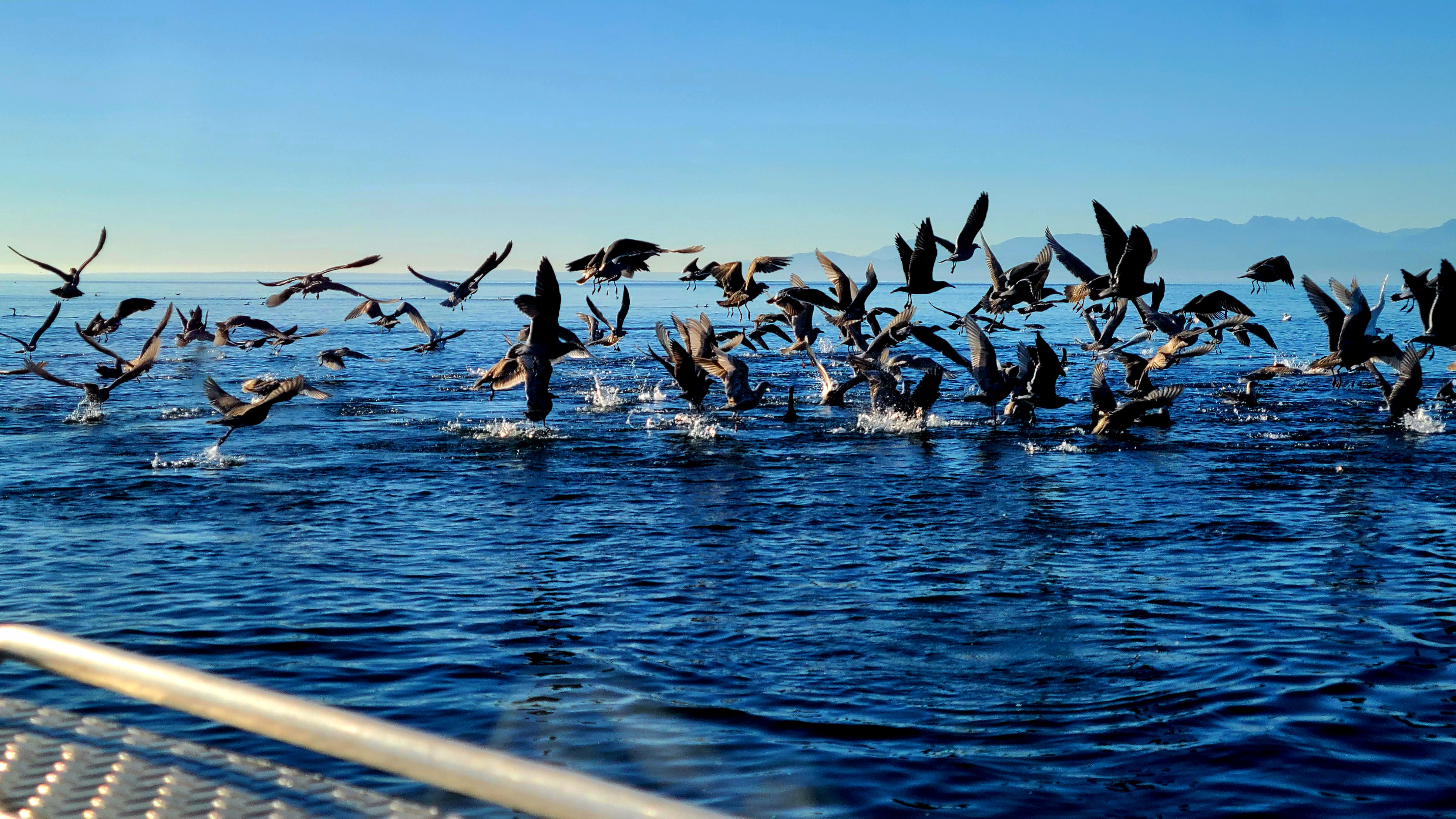
They are kind of the blue light special for coho fishing. Although fishing with the flotilla puts a lot of coho on ice each year, consider finding fish outside the masses. The key to locating coho is locating the bait, find the bait and you will find coho.
One previous September morning, after a quick stop at Holiday for nonethanol and a freshly made breakfast burrito I was off to Cornet Bay. On arrival, I found the bay glassy calm with no wind and was in the water in no time. Fishing with good friends we had agreed to meet at 5:30. I visited with my dock mate and readied the boat and gear for our adventure.
5:30 sharp a set of headlights signals my guests' arrival and we were on the way shortly thereafter. We were handed a gift; the water was dead calm as we motored our way through the predawn darkness. We planned to fish for coho in the Eagle Point area along the south side of San Juan Island. The point was really crowded so I headed offshore to look for bait.
We found a very subtle current break with a number of diving birds sitting on it. Although I had three downriggers onboard, one had problems so we were running 2 and focused on chasing meter marks. We would be rotating through hookups. With very few other boats around we went gear down and started the hunt.
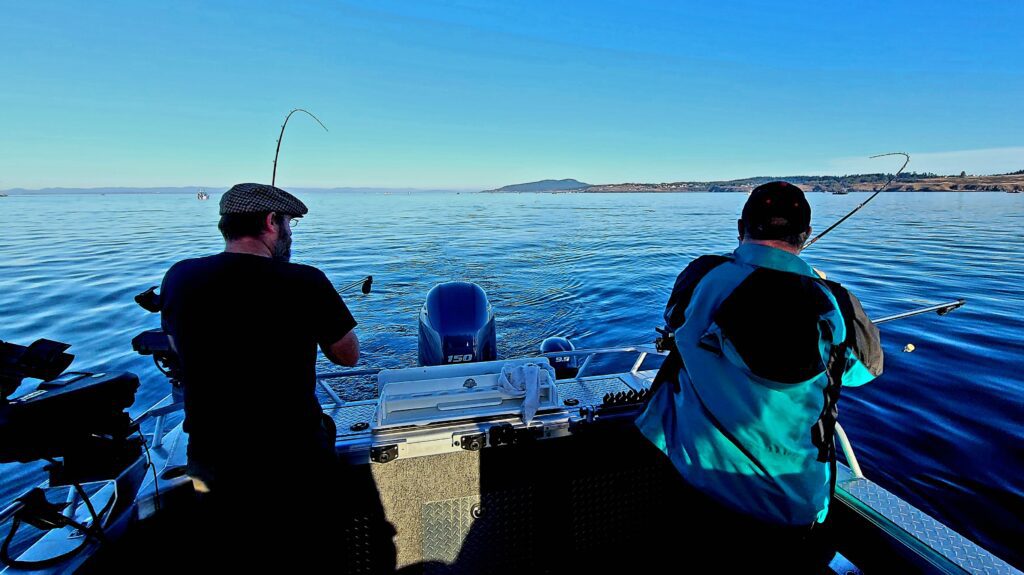
Running only two downriggers turned out to be a blessing because we were on fire. Every hookup turned into a double. Enjoying nonstop action, we had two people fighting fish and one on net duty (2 nets onboard) as we cycled through our rotation. When it was over we had lost about 10 or 12 fish, released a number of fat wild fish but still got easy limits of 8# - mid-teens coho.
It was a stellar day of coho fishing and other than some sore arms my guests had an absolute blast. It was one of the best coho days I have ever experienced. Although I was the skipper, I give credit for our success to a handful of diving birds sitting on a tide rip.
Although many coho are caught on the surface with a cut-plug herring or on trolling flies MA 7 coho are a downrigger show. While most days there is a butt crack of dawn surface bite and occasionally during the day you’ll get a fish with weight or a diver running at 33 pulls, downriggers are a must. Downriggers allow you to target feeding fish.
Regarding gear, probably not a popular opinion, but I think that MA 7 coho are brainless feeding machines. Once they move into the inner sound, they are more selective maybe even smart. In the straights, they focus on their next meal. We have caught coho that were either barfing up small herring or had a number of herring tails sticking out of their mouths, yet they had just snarfed down a hoochie/flasher rig.
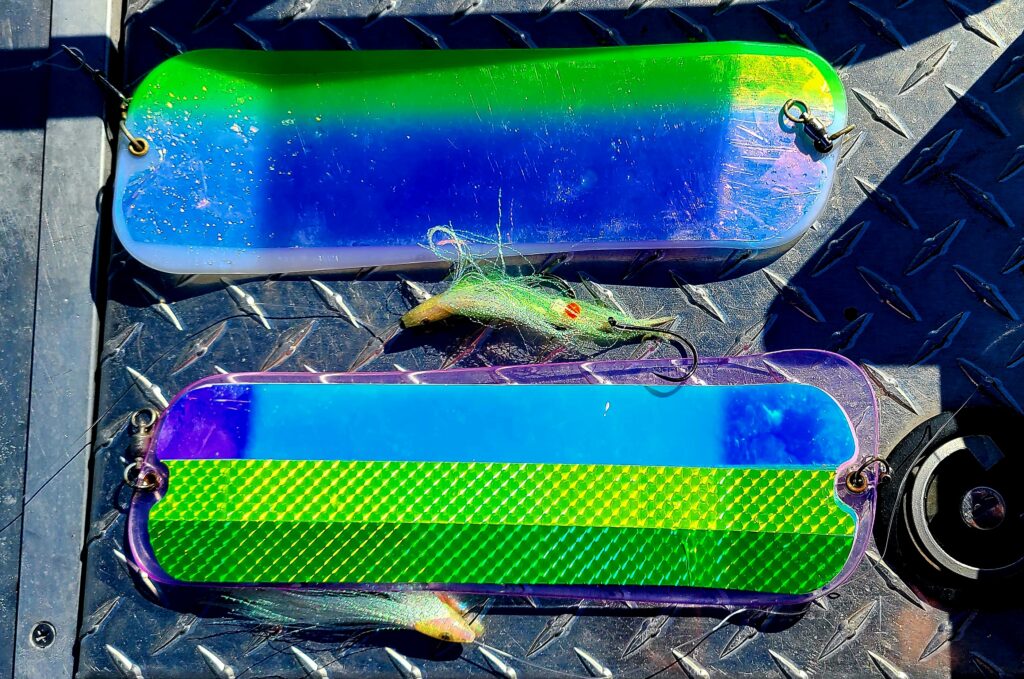
You can’t go wrong with a flasher/hoochie of a flasher/spoon combo. Some version of green or chartreuse would be my starting point but if presented correctly almost any color will work. Many other lures will work too. Consider an Old Goat Lure, a herring or anchovy in a helmet, hoochie/Wigglefin Action Disc combo or even a spinner/bait rig. While coho fishing I always run 11” flashers and the color will vary depending on what the fish want the day that I am fishing.
The day that I took my friends out we found huge schools of small bait so we sized our flies and spoons accordingly. We were running 32-34” of 30# fluorocarbon leaders with a 20’ setback from the clip. All our fish were caught with between 60’ and 140’ of cable out while trolling at 3.2-4.0 mph. The flies we were using were 2 barbless hook rigs and I tipped the lead hook with salted herring strips. The spoons were lathered up with either anchovy or herring goo and also ran on 32-34” leaders.
I want to address the MA 7 weather. I work 5 to 6 days a week on the water in MA 7. While working in the San Juans last year I encountered a significant squall line of thunderstorms. Basically, the weather went from summer boating weather to “what the heck” in minutes. It was windy, pouring icy rain/hail, and very dark. Then the thunder was relentless and deafening.
Coho season falls while our typical summer boating weather is transitioning to an unsettled weather pattern. Most of the time the sea conditions will be very pleasant. But be aware of and prepared for changing conditions. If the forecast is questionable don’t go, or at least proceed with caution. A 15-mph wind against a running tide can be uncomfortable or even dangerous.
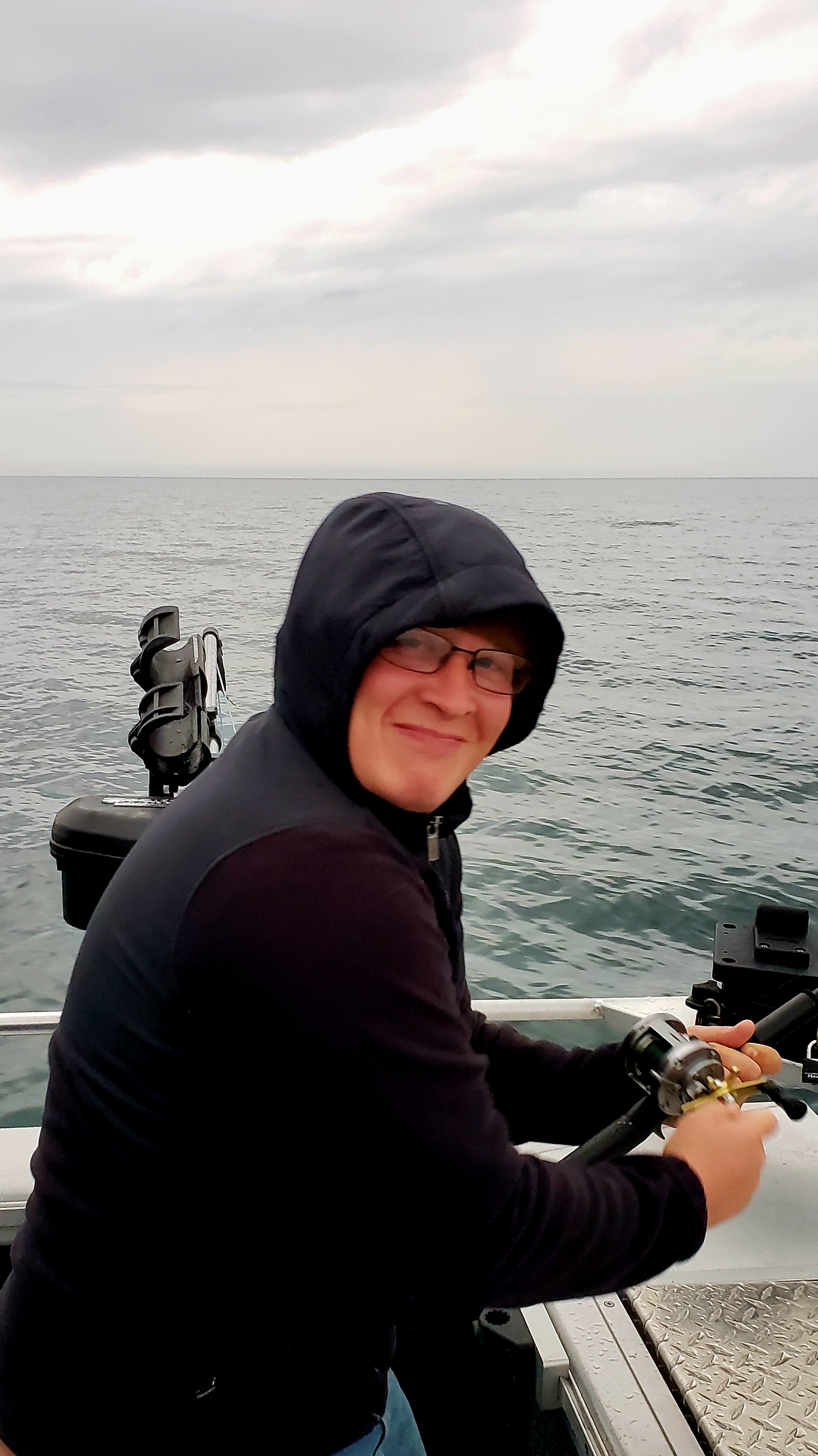
Especially as you depart/approach Deception Pass/Cornet Bay, a key launch area for MA 7 coho. Know the limits of both your boat and crew, and have properly fitting life vests for each person on board and the required safety equipment. Make sure that you have adequate fuel on board, with the longer runs to the fishing grounds and the potential for inclement weather this is not the fishery to play chicken with your fuel gauge. Always err on the cautious side.
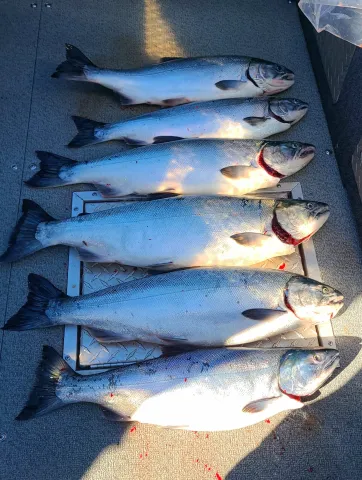
Have a game plan for caring for your catch. It will be different for each skipper but have a fish bonker, a bleed bucket, or divers clip and ice available. Once you determine you have a legal fish in the net, stun it to prevent bruising. Then tear or cut a gill, bleed the fish, and get them on ice as soon as they are bled out. Coho are excellent table fare when properly cared for.
Good luck in your quest to catch a box full of San Juan fall coho. It is an ideal family fishery. They are relatively easy to find, usually hungry, and have some serious shoulders. Pack plenty of snacks (no bananas), watch the weather and think safety. Good times and you will find your freezer full of the other red meat, San Juan Islands coho!
/articles/other-red-meat
Bright Salmon on a Sandbar
An up-close epicurean angler perspective on the making of a Travel Channel special with Chef Andrew Zimmern.
It mattered to me. It mattered to Josh. It mattered to Andrew Zimmern, the host of Bizarre Foods on the Travel Channel.
On the Columbia, where the chinook blast upriver on swells of tide from the mouth of the river up past Washougal and then seek out the 12-16-foot deep travel corridors close to the banks, the hot salmon bite happens in the first hour.
It didn’t matter to the 17 other people on Zimmern’s crew.
Zimmern was following the Lewis & Clark trail with a perspective on the types of foods the explorers might have encountered. He chose September when the fall chinook salmon (also called king salmon) run is in full swing.
We started in the second hour, on a Tuesday in September, after camera operators, directors, drivers, handlers, drone techs, and a bodyguard were breakfasted, caffeine’d up, and constitutionalized.
Josh Cooper, stood, his hand on the tiller, his eyes on the water ahead. We idled away from the Rowena launch (Mayer State Park, west of The Dalles). Ahead of us, 64 other boats were on the fish. Rods bent and nets flashed as we took our place in the throng of watercraft.
Cooper, who makes his home in Vancouver, WA, our captain for the day, is one of the best anglers on the river. But sometimes that’s not enough. The bite was over when we dropped our baits.
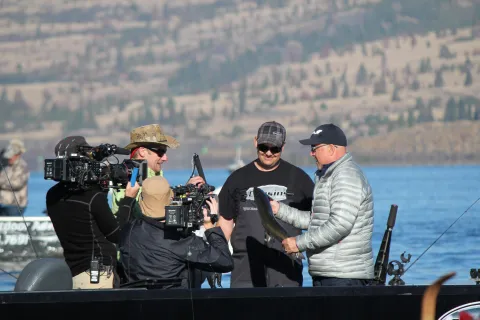
With us, on Josh's 26-foot Motion Marine Fishing Machine were two camera operators and a sound technician. A camera boat trailed in our wake with the director and additional camera operators. A drone operator and his team staged on the Washington side of the river near the mouth of the White Salmon. The bodyguard stayed on the beach.
Zimmern is no stranger to a fishing rod, but he hadn't fished for Columbia chinook before.
We showed him the baits, hoping he wouldn't gobble them or try to get us to eat them.
We call this hover-fishing when the fish stack two feet off the bottom and we drift our baits into a bio-mass of salmon, as drag-free as possible.
I looped a cluster of cured salmon roe and a sand shrimp tail on a blood-red Daiichi hook. We drizzled Pro-Cure Tuna on the potpourri in case our prospective salmon had cultivated palates.
To hover-fish, the procedure is to start at the top of holding water and run the boat a bit slower than the top currents, the baits "hovering" off the bottom.
Zimmern's rod had a Daiwa line-counter. Without digital advantage, I dropped the lead weight to the bottom and then cranked up two turns.
We tried to follow the contour of the river bottom. When it sloped up, we reeled up, when the water deepened, we dropped weights down to touch, then cranked up two turns.
Fish bit. They flared their gills, inhaled to sample the salmon eggs and shrimp then spit the baits.
Josh missed one. Andrew missed two and I missed a fish.
In the east, the sun climbed higher. Our chances diminished. A drone like an angel flew overhead and three hundred pairs of eyes on 65 boats looked to the heavens.
Then it happened! A fish bit and the hook stuck.
Andrew arced the spine of the rod against His Majesty, the king salmon. After a few tense minutes, a seven-pounder thrashed in the net.
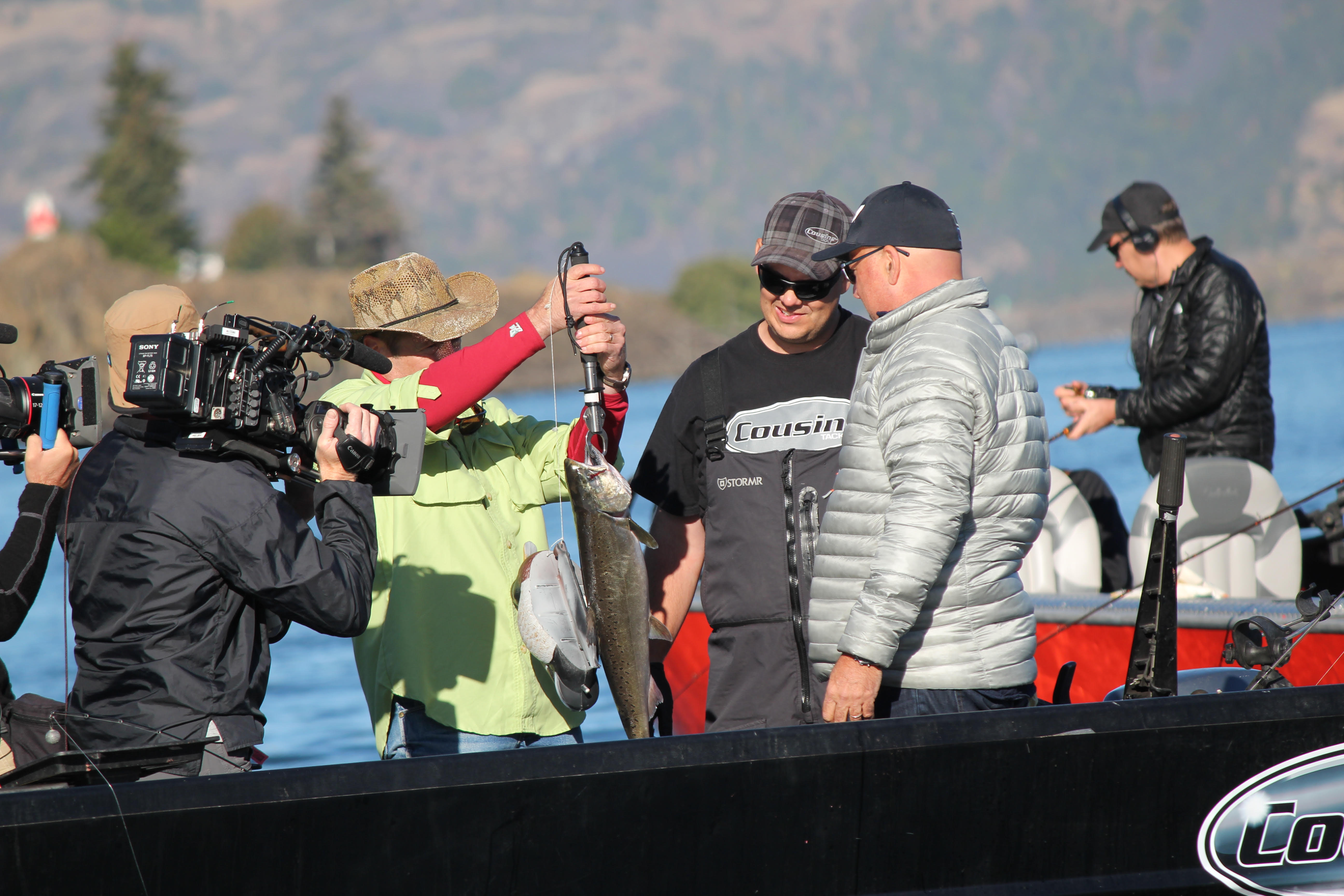
I looked at it, pronounced it a female, and guessed Zimmern would try to spoon-feed us salmon eggs. With one in the boat, we motored away, back to the ramp where the crew had assembled a grill and Dutch ovens.
While a director in cowboy boots stalked up and down the beach, cigarette in and out of his mouth, eyes flicking from one element of the scene to another, Zimmern’s knives flashed. When I angled in to check on the ingredients, I saw prime red-fleshed steaks and two skeins of milt. Milt! Our fish was a male.
In a male salmon, the sperm we call milt lies in two foot-long rolls. About an inch in diameter, the texture of fresh liver, it is often discarded. It shouldn’t be.
On a sandbar on the big river that is the lifeline of The West, there is no better way to taste the elemental flavor of the salmon.
Roasted lemons, eggplant, and onions. Rice and a reduction. Zimmern wasted no motion.
Flames licked at the grill. Seasonings are seared into vegetables, salmon strips, and organs. In moments we held salmon bowls while the good smells wafted out to fishermen still angling for their limits of bright chinook.
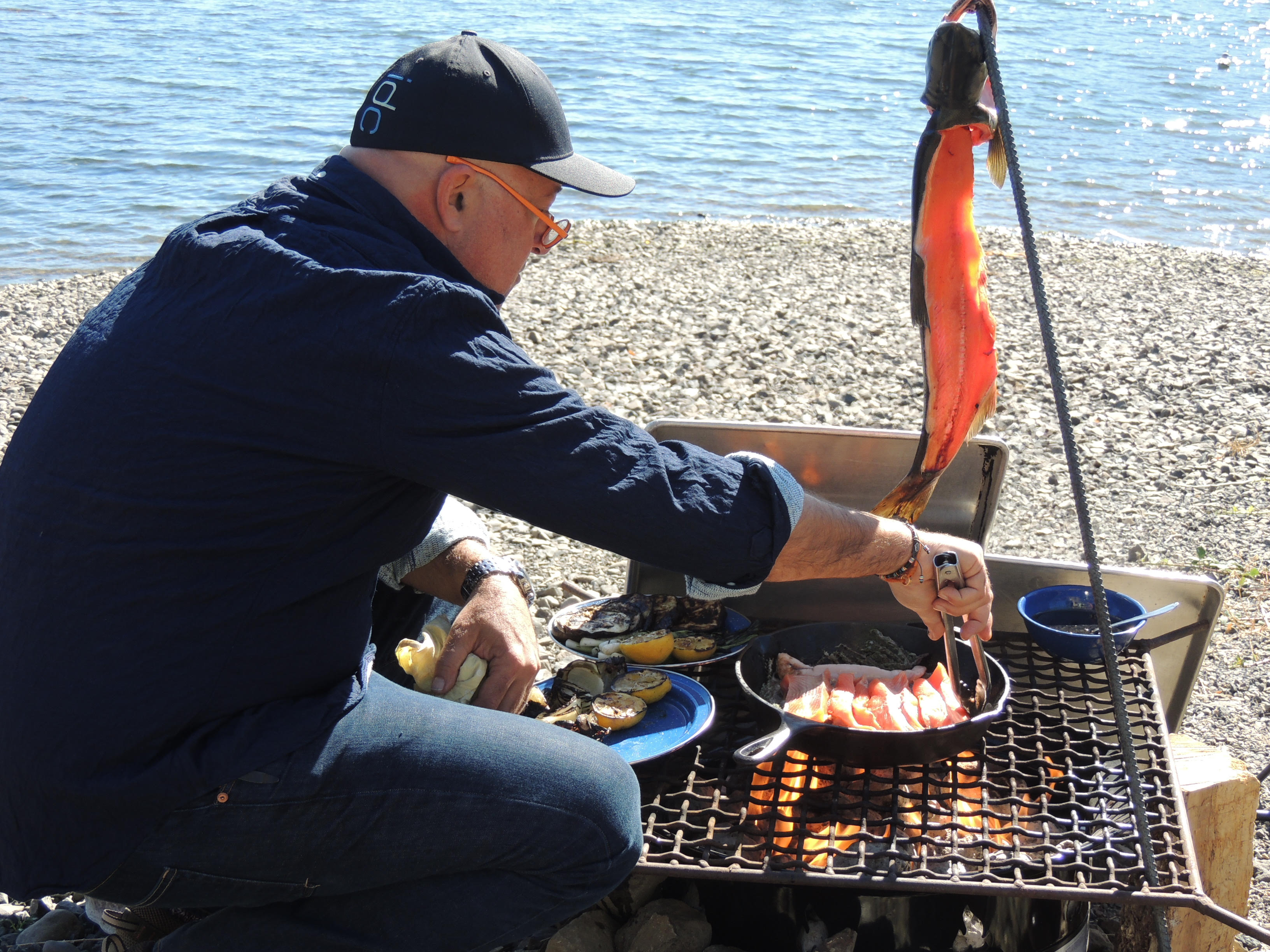
The best place to eat salmon is on a sandbar in September. We ate the strips of salmon with forks and fingers. We ate the milt and proclaimed it worthy. Milt and eggs. These are the building blocks of the protein that energizes the Columbia River. How does milt taste? It cooks up like a better version of tofu and it adds a certain something to a salmon bowl.
This was Zimmern's first time fishing for fall Chinook. While we labored for a bite we talked fly-fishing and grouse hunting. And it was a chance for me to get a glimpse into the machine that was a big Travel Channel production. At the heart of it all was a chef who was a risk taker, story-teller, all-showman, and a real sportsman.
# # #
For a copy of the Fishing Central Oregon book, send $29.99 to Gary Lewis Outdoors, PO Box 1364, Bend, OR 97709 To contact Gary Lewis, visit www.GaryLewisOutdoors.com
/articles/bright-salmon-sandbar
The Washington Outdoors Report
HUMPIES, LAWSUITS AND TROUT
PINK SALMON NUMBERS ARE LOOKING GOOD
Odd numbered years are pink salmon years here in Washington State and 2023 is lining up to be a good one for anglers fishing for them in Puget Sound and its tributary streams. The Washington Department of Fish and Wildlife is forecasting a return of nearly four million of these smaller salmon, nicknamed “humpies”, for the hump the males develop on their back after entering fresh water to spawn.
The pinks show up in the Strait of Juan De Fuca as early as June and can be caught by both boat and shore anglers in Puget Sound throughout the month of August. By September, most of the pink salmon are entering tributary streams like the Skagit, Snohomish, Skykomish, Green and Puyallup Rivers, providing additional opportunities for anglers who target them with Buzz Bomb lures, jigs with squid bodies and spoons, the key to all of them is that they must be pink in color if you want to catch pinks with them!
Humpies are a fun fish to cut your teeth on as a first-time salmon angler and it’s not uncommon to catch a good number of them in a day of fishing. While many anglers save them for the smoker, they do taste very good when fresh, especially when grilled over a BBQ or pellet smoker.
LAWSUIT FILED AGAINST WDFW COMMISSIONER
On March 6th the Sportsmen’s Alliance Foundation, which is a pro-hunting and fishing organization, filed a lawsuit in Thurston County to prohibit WDFW Commissioner Lorna Smith from participating as a member of the Commission.
The basis for the lawsuit is that state law prohibits anyone from holding an additional elected or appointed office while serving on the commission. Smith currently serves on the Jefferson County Planning Commission which the Sportsman’s Alliance says is in direct violation of Washington Law.
Todd Adkins with the Sportsman’s Alliance says, "We view this lawsuit as the initial step of a long but important process to bring sanity and decency back to wildlife decision-making in Washington. It all starts here, but trust me, it won’t end here. The animal extremists are going to see a lot of the same in the coming weeks and months."
Lorna Smith is a controversial appointee to the Fish and Wildlife Commission. Since being appointed in 2021 by Governor Jay Inslee she was an instrumental voice in shutting down Washington’s long running spring bear hunt, despite the recommendation of WDFW staff members that it be allowed to take place.
When the Blue Mountain elk heard declined (primarily due to cougar predation), Smith suggested managing the herd as a smaller one instead of addressing the predation issues. She has also introduced the framework of a plan that would limit hunting as a management tool by the agency.
It is worth noting that Smith is not the only commissioner serving in another appointed or elected position. Commissioner Molly Linville (who generally sides with hunters in her decision making), serves on her local school board in Douglas County.
Eli Francovich, writing for the Spokesman Review, contacted both commissioners. Linville told Francovich that she was advised by legal counsel that serving on the school board was not a conflict of interest. Commissioner Smith told Francovich she was serving on the Jefferson County Planning Commission on a volunteer basis and in an advisory role when appointed to the Fish and Wildlife Commission. Smith continued stating she does not believe the statute does not preclude individuals serving in a volunteer position like she has been in Jefferson County.
LAKE LENORE FISHING TRIP
Last but not least, I made it up to Lake Lenore this past week after WDFW fisheries biologist Mike Schmuck told me the fishing there was very good last year and he expected similar results this season. I picked a cold, cloudy day to visit the north end of the lake which is where many of the Lahontan cutthroat trout tend to mill around in the spring prior to spawning.
Unfortunately, the trout were not yet in this part of the lake in good numbers. Two anglers who were leaving as I arrived said they each only caught one fish that day. While fishing, I did see one angler catch one trout and while I did get one good strike, I was unable to hook up and didn’t have any more bites that afternoon.
Lake Lenore is a selective regulation fishery and is primarily a catch and release destination where the trout average two to three pounds and can get up to six pound in size. Fly anglers in pontoon boats favor fishing chironomids under strike indicators while spin anglers can do well fishing spoons with single, barbless hooks.
The fishing at this scenic, desert lake north of Soap Lake should get better towards the end of March and peak in April. I plan to return to try again and will let you know how I do.
John Kruse – www.northwesternoutdoors.com and www.americaoutdoorsradio.com
PHOTO CREDITS:
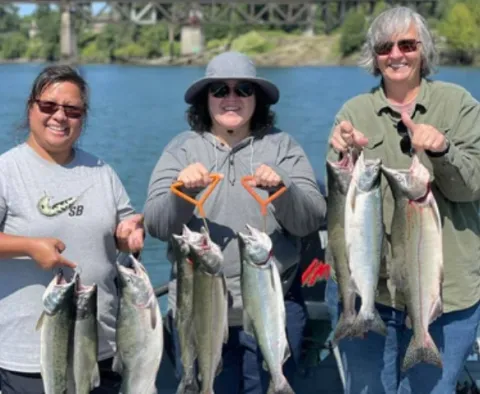
Pink salmon caught on the Snohomish River – Courtesy Brianna Bruce, Livin’ Life Adventures
/articles/washington-outdoors-report
Kokanee Fishing Color Choice Confidence
By Gary Gordon
It is the single most important thing to grasp: kokanee are kokanee and have the same whims, growth, hormone, and feeding issues wherever they are found. So these kokanee issues are the same in Washington, Oregon, Colorado, Idaho, Wyoming, Montana, Utah, California, North Carolina, New Mexico, and British Columbia.
It turns out that before getting to the point of deciding what colors are the answers to today’s fishing mysteries, selecting color is the last component of a successful outing. Since color makes no sound and has no scent, its single role is to stimulate a biting response.
The next thing to grasp is a consistent presentation strategy. What you are trying to do is make your presentation as 100% efficient as possible. This means that all of your equipment from your boat, trolling motors, fishfinder, GPS, rods, reels, downriggers, and releases must be working together so that your presentation can be as efficient as possible. Having the “right” colors means nothing if you are not placing your tackle where the fish are.
Correct presentation strategy means also that your attractor and the lure have to work together. You have to troll the dodger at a speed that allows it to attract. That means that each attracting dodger has a minimum speed that allows it to work correctly. What that speed is depends on the size and shape of the attracting dodger.
One of the best ways to check the correct speed is to simply put the dodger into the water on your fishing line right next to the boat, and look at the action. Speed up or slow down the boat until you feel the action is what you are looking for. Recognize that the dodger and lure are working together, so look for movement in the lure behind the dodger. You simply do not want the lure to just sit there in a straight line behind the dodger; you want some movement. Keep the lure in tight behind the dodger for the best movement. I advocate 6 to 8 inches of leader, even if your lure comes with a long leader.
For early season, that movement does not need to be great. As the season progresses, speed up your presentation to get more movement on your lure. Also, as your target depth gets deeper, increase your trolling speed, and increase the size of your dodger.
I carry three different size selections of dodgers for these very reasons.
For all except the Apex type lures, it is critical to have a short leader behind the dodger for the lure. This gives the maximum movement to the lure from the movement of the attracting dodger. I prefer only about 6 inches behind the attracting dodger regardless of the size of the dodger.
Next would be to match the dodger colors with the lure colors. Although color is not an initial attractor, it is vital to stimulate the biting response. You want what is making the attracting vibration (the dodger) and the following matching lure work together. The following chart shows relative penetration of visible colors in the water column. We all know there is less light at depth.
Go deep enough and there is no light. Water absorbs light in sequence of the visible spectrum. Light enters the water as white light. Then very shortly the red drops out, leaving the balance of colors to continue together down the water column. The next to drop out are the oranges, then the yellows, then the green, then the blues and then the indigo and then finally the violet.
But use fluorescent colors and the color you see in your hand will be the same color at depth. So, a fluorescent yellow will still be fluorescent yellow when only violet light can act on it. If it is not fluorescent, it will be black when violet light strikes it. All tackle marketed as “UV” is really fluorescent. There is no “UV” colorCOL, and “UV” light does not penetrate the water column more than just a few inches. Most tackle marketed today is fluorescent even if it is not marked “UV.” Fluorescent colors penetrate the water column to far greater depths than do ordinary colors.
So, can kokanee see color? Kokanee are vertebrates and as such they have eyes that contain rods and cones. Cones are the part of the eye for color. Salmonids have a distribution of about 10% cones and 90% rods. So, color vision is basically limited to an area directly in front of the snout and extending out about 20 inches or so in clear water.
This is actually a good thing. Stay with me now. You have this awesome hot pink squid properly trailing your dodger. The fish is going to be attracted to the dodger vibrating, but that will be at some distance to your lure. Once that lure become visible to the fish, it is still only seen by the fish’s eye rods in shades of gray and black and white tones. But as the fish approaches that 20-inch mark, there’s an explosion of color – just like turning on a light bulb. The fish backs off to 21 inches and it is back to black and white and gray. Come in closer, and bam! Hot color – just the way you planned it topside, but not exactly the way you planned it topside. This color shift works for you as a bite stimulant.
Here are some helpful suggestions about color.
• The first suggestion is that the color of the day, or even of the hour, is up to the kokanee.
• Early season stuff: pink, red, orange, green, natural glow, blue
• Mid-season – absolutely wide open, but add copper and gold to the mix. Run copper and gold setups a bit faster than the nickel. Don’t forget the black and white stuff.
• Later season – kokanee love the blue, pink, and watermelon.
• All seasons: White and glow.
/articles/kokanee-fishing-color-choice-confidence
Buoy 10 primer
Dropping gear down slowly so not to have it tangle is the key to catching salmon at the famed Buoy 10. Sure, there are a few other things, but if you do not put the gear into the water correctly all the rest that follows does not matter. It was a skill that I learned years ago while fishing on an August day just outside of Astoria’s East Mooring Basin. I use cannonball weights from 8 to 16-onces on a short dropper and slider, to an in-line flasher trailing a plug cut herring pierced with super sharp hooks. From the weight to the herring is nearly 4-feet of what could be a tangled mess, so it is best to slowly drop the gear into the water. Once you hit bottom, do a half crank up on the reel and then put it into the rod holder, and put your hands into your pockets.
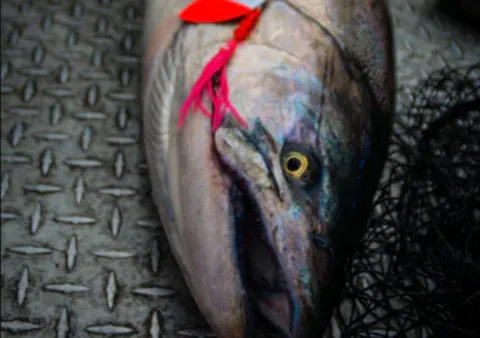
A few years ago, we started the day just like this and before my son could warm his fingers in his pockets, the rod doubled over and stayed down. This meant a big fish was on, and just as quickly as we had put out our gear, Ryan was lifting the rod and reeling. A battle that ensued much longer than we had already been fishing, and twenty minutes later an 18-pound Upriver Bright, or URB, came to the net. It was a hot fish with sea lice, and not even completely out of the ocean, with the incoming pushing tide bringing brackish water as far upriver as Portland, Oregon.

This is Buoy 10 and though we are still several weeks away from the river opening, you need to get the gear, boat, and plans ready now. Start with motel or camping accommodations. By now about every motel, hotel, and VRBO will be full with no vacancy. The best you can do is get on a standby list. Camping is always an option, but that does not mean it will be close by. Most campgrounds and state parks will be full as well. Even if you venture to the outlying areas such as Ilwaco, Long Beach, Seaside, and other towns, the motels, hotels, and campgrounds will be full.
Another option is to call some fishing friends who had the forethought to get accommodations already and see if you can join them, or if they decide to cut their trip short, then take the rest of their reservation. If you are willing to travel a bit further, then look to Longview and even Kelso. It will add a few hours to your trip, but you can find places to stay. Two years ago, we spent the first night in Longview and made the trip to the boat ramp that morning, but we were jumping in with Jason Hambley of Pro-Cure, so we did not need to launch a boat as he was at the dock and waiting for us.
Once you hit the water, be sure to look at the tides, as this will determine where to fish. With each incoming tide, more fish push up into the river. The tides here are so strong that when it is at high tide the fish will be facing downriver, as that is where the current is coming from. Do not think that you always must troll in one direction, and let the tides tell you which way to point the bow of the boat.
Astoria-Megler Bridge
The Astoria-Megler Bridge is the starting point for most anglers. Here, most of the fishing is done on the east side of the bridge, or “above the bridge”. This is because of the shipping channel on the south side of the river in front of Astoria, as well as a deep slot on the north side of the river near the Washington side. The middle is a big sand flat and be sure to be careful when crossing, as you could be in 10-feet of water one minute and the next in 6-inches of water. Again, know the tides, and if you cross at high tide, you might not be able to cross at that same place on low tide.
Just downriver from the bridge is the church hole, aptly named for a church that can be seen along the shoreline. Keep going down the river towards the ocean and you will find other well-known spots, such as the checkboard and the jetties, until you find yourself at the Buoy 10 deadline. From there you are out in the open ocean, but do make the mistake of thinking Buoy 10 is protected water. About anything from the church hole downriver gets to be big water, and depending on winds and tides, it can turn quickly.

As the tides start going out, the river returns to its normal course, and you fish it as such. The area above the Astoria bridge is good about any time, but it can be better during specific times such as the tide change, as the fish will once again be facing upriver and resting before pushing on when the water starts to slow with the onset of the incoming tide. The waters on the south side of the river by East Mooring Basin are similar. Here you will see large cargo ships anchored up, and it is easy to tell which way the tide is flowing by looking at the ships which will swing with the tide.
When it comes to gear, leave the downriggers at home. Everyone here uses a dropper weight and trolling set up. The standard is a cannonball on a slider, and the weight will vary depending on the tides and current as well as how many rods you are fishing. Rods at the front of the boat need heavier weights so they do not drag back into the rear rods.
Set-up
The set-up can differ a bit depending on what terminal gear you plan to use. One of the most popular set-ups includes a triangle flasher such as the Big Al’s Fish Flash from Yakima Bait Company or the UV Triangle Scent Flash from Mack’s Lure. The advantage of the UV Scent Flash is the ability to add extra scent. A brined herring that has soaked overnight in Pro-Cure’s Brine-n-Bite keeps the baits solid in warm and fast running currents.
It also as increases their shine, and that little bit of extra flash helps the salmon locate the bait, as the waters can be a bit murky. Some anglers also choose to dye the herring to a bright chartreuse color or blue, with Pro-Cure’s Bad Azz Bait Dye or their Brine-N-Bite Complete in chartreuse or blue making it a one-step curing and dyeing process.
If you do not know how to properly plug cut herring or do not want to mess with bait, then you have a few other options. One being the Simon Cut Plug, which resembles a plug cut herring and is solid, but has a scent chamber that also holds a miniature chem-light that makes it more visible. Brad’s Cut Plugs are also popular here because you can stuff them with bait and scent.
Just be sure to check on this lure regularly as it is secured with a rubber band, and any missed bite means the lure could have been opened. Yakima Bait Company came out with the SpinFish a few years ago, and they have become popular at Buoy 10. The larger sizes mimic a wounded baitfish, while the small 2.0 and 2.5 sizes work much like a spinner but can be filled with bait and scent. Spinners are another option.
When fishing spinners, small SpinFish, and the kokanee size Brad’s Cut Plugs, most anglers switch to a 360 flasher. These are the standard 11-inch flashers that saltwater anglers use. The flasher makes a large rotation, and using a short and stout leader of 40-pound monofilament, the spinner or small lure kicks out. Add in the spinning blade or action of the lure and it creates an impulse bite, where a salmon reacts to it and grabs it out of instinct as the prey tries to get away.
Advantage
The advantage to using spinners or spinning lures is that if you miss a bite then there is no worry if it not working. You can leave it in the rod holder and keep fishing. With bait you need pull it in and use a new bait every time you get a bite, or every hour or two without bites. With the scent holding lures it is best to add more scent every few hours as well.
The bite can be very tide and water temperature dependent. When the water is warm, such as during low tide, and the only water flowing is the summer Columbia River runoff, then the bite can turn off. The incoming tide pushes colder water into the tidal zone, and this helps with the bite as well as pushing in fresh fish. For days with a low tide swing, anglers often head to waters closer to the ocean where the fish will mill around before committing to the journey upriver. If the salmon fishing is slow, then be sure to toss a few crab pots out near Ilwaco: just be sure to use heavy weights to keep them from being pulled out to the ocean. You can also fish for other species if you decide not to salmon fish.
Bottom fish such as black sea bass and lingcod lurk along the jetties. This makes a multi-day and multi-species fishery option for those that want to make it a vacation. This year, there will be a few days in late August where salmon fishing is closed, to help with chinook escapement. If you find yourself at Buoy 10 during this time in August, then maybe spend a day or two out crabbing and bottom fishing.
Be sure to check for in-season updates and know the rules. Either Washington or Oregon fishing licenses work, but the catch codes of the record cards are different depending on which license you have. This year both chinook and coho must be clipped (hatchery only) below Puget Island, and there is a two-salmon daily limit with only one being a chinook. Once September rolls, around the chinook fishing will be closed but the coho fishing gets good and the daily limit is increased. Buoy 10 is almost here, and now is the time to plan and prepare.
/articles/buoy-10-primer
Lemon Peppered Baked Salmon
Salmon is a Pacific NW favorite and when cooked properly most would agree it’s one of the best eating fish to be found. Here is a classic recipe on salmon for your culinary chops.
Remember, the essentials to a good cooked fish begin with proper care of the fish out in the field. Catch it, bonk it, bleed it, and put it on ice. Cut it up and eat it ASAP. Or, vacuseal it if you can’t eat it fresh. Just don’t forget it’s in there! A freezer burned piece of fish does not a gourmet meal make. Not to mention a waste of a valuable resource.
Salmon lends itself to a myriad of ways to prepare it. As with any fish, the most important thing to do is – don’t over-cook it! So without further ado, here’s a simple yet delicious baked salmon recipe.
Ingredients:
Fresh salmon filet, one to two pounds, ¾-1” thick
1 ½ teaspoons lemon-pepper seasoning
1 teaspoon onion salt
4 lemon slices
1 tablespoon olive oil
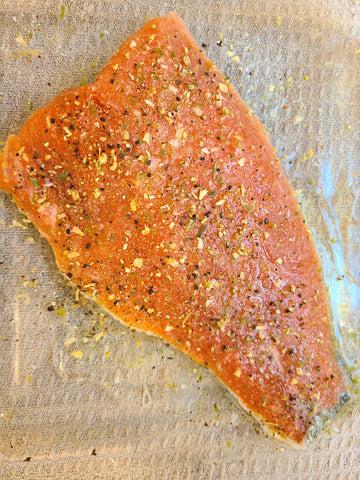
In a glass baking pan, take filet and coat with olive oil. Place salmon skin side down. Sprinkle onion salt and lemon pepper seasoning over the top. Squeeze juice out of lemon slices onto the filet (be sure to save a couple lemon slices to garnish the fish when it is served).
Preheat oven to 400 degrees and cook for ten minutes. For a crispy, sizzling finish, turn the oven up to hi broil and cook another two minutes. Remove from oven and serve immediately. If you leave the fish sitting in the pan it will continue to cook so get it out and serve it piping hot!
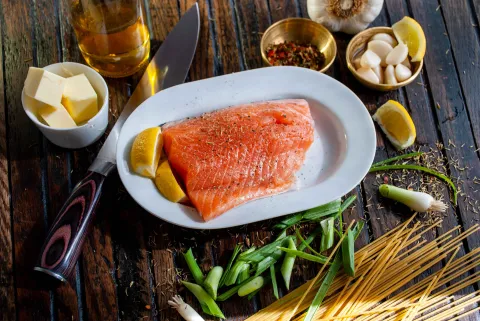
Add your favorite vegetables or pasta for a healthy and classic Pacific Northwest salmon meal. Enjoy!
/articles/lemon-peppered-baked-salmon