Kayak fishing in Makah Land
With cracked and battered hands, I paddled east with 25 knots at my bow and an incoming tide on my stern. Colliding forces of Mother Nature churned heavy swells into a roller coaster of seawater, tossing me about as I struggled to stay on track. A behemoth of a fish, a monster, 50, maybe 60 lbs, haunted me from the day before, yet kept me moving eastward, into the fray.
This is just one of the many tense experiences that characterize a spring kayak fishing trip at the continental United Sate’s most northwestern point—Neah Bay. Neah Bay has become somewhat of a kayak-fishing Mecca for me. Each year I make the almost 4 hour drive to its rugged and draw dropping coastlines. Heading up the east side of the Peninsula, the drive treats travelers to a myriad of jagged points and bluffs that meander past ancient saltwater beaten sea stacks before colliding with the belly of the North Pacific. The coastal terrain then wraps around Washingtons most Northwestern point, Cape Flattery, which is a marine anomaly in its own right, and then heads down to the sandy beaches of Makkah Bay, ending just south of Cape Alava.
Though fishing might be the main attraction for readers, it’s worth noting that this area holds an endless amount of wealth in its natural beauty and also in its cultural and historical prominence. The Makkah Museum is open to the public and is a great place for visitors to learn about Neah Bay’s native community and their long connection to the land and sea, that of which is estimated to be around 3,800 years old.
Case in point, the Makah tribe, for at least the past 1,500 years, have paddled hand carved cedar canoes out to often treacherous seas, where paddlers would track and hunt humpback and grey whales with harpoons attached to sealskin floats. They are the only tribe in the U.S to have whaling rights secured by way of treaty, though this right was later repudiated by the U.S government after commercial whaling by both European and Americans had all but extirpated both grey and humpback whale populations.
From here visitors can explore the many outdoor attractions Neah Bay has to offer. Whether it’s a backpacking trip down to Shi Shi Beach to camp and fish for surf perch, or a day trip to the Point of the Arches, there’s a number of things you can do to diversify your fishing trip before getting into filling your cooler.
Any trip to Neah Bay with a kayak should be well thought-out and planned, this is especially true during the spring when inconsistent and stormy weather frequently results in the waters around Neah Bay being under small craft warning. Always plan your trip around NOAA marine weather forecasting and make use of apps that predict swell size, wind speeds and wind directions. Optimal conditions would be flat and windless, and if we waited for those conditions, we would never fish. So, sticking with days where winds are sub 15 mph, swell size is moderate, and wind waves are predicted to be no more than a couple feet, will all help keep you on the right side of the water.
Staying on the right side of the water is always the goal, but as probability has it, there will be some point in any kayak angler’s life where he or she will get dumped into the salt. This is especially true if you’re launching or landing in surf zones. If you are prepared for it, which you 100 % need to be, then an experience like this will only serve as a minor inconvenience as opposed to something life threatening.
First order of your operations will be gearing up to stay warm. I suit up into a 5.4 mm wetsuit, equipped with a hood and 5 mm booties. Essentially, I dress the same exact way I would if I was to surf anywhere on Washingtons chilly coast (with the exception of a PDF). Many anglers prefer a wetsuit as they are not bulky, they make movement easy, and they perform consistently each time. Another option is to use a dry suit.
Dry suits are a breeze to put on when compared to a wetsuit, they slip on over your insulating layers, provide you the security of knowing that if you were to go in; you won’t experience a layer of cold water rushing over your skin like a wetsuit allows, and you can slip out them without a struggle as soon as you are done fishing. The downside of a dry suite is that in the event of dunk— a tear or a leak in the suite would allow water to flow inside and render it completely useless, thus making hypothermia less of a possibility and more of an inevitability.
If you do get dunked, you need to know how to get back into your boat. This is something that requires practice and should be done in calm and shallow waters, perhaps somewhere close to home. Neah Bay is not the place you want to have a “learning experience” when it comes to falling into the water. Know how to right your boat if capsized and know how to climb back in.
Finally, secure all your gear like you were planning to flip the boat. Lanyards and bungee cords are your friends. Keep hatches closed and secured and you should be set to catch some fish.
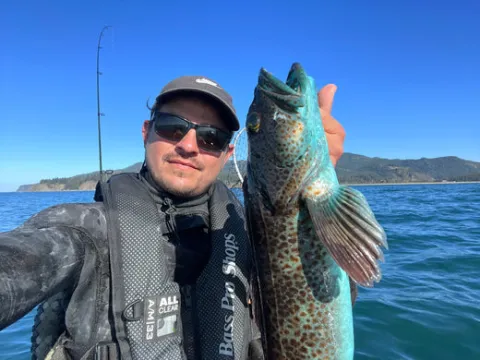
Spring kayak fishing in Neah Bay is red hot when it comes to Lingcod, rockfish, and Cabezon. They can be caught in relatively shallow waters where kayak fishing is more feasible, and in general, these amazing predator fish are typically going to bite down on whatever you’re willing to throw at them. My best luck comes from jigging 2 oz jig heads with a white single or double tailed grub.
The best bait for catching a trophy lingcod might be lingcod itself. The experience mentioned at the intro to this article foreshadowed what has become the most intense battle with a fish I’ve ever been part of, and that experience happened to occur because of the lingcods love for the predation of its own kin.
It was late morning and I had been fishing for a couple hours with various species already onboard. Snagging on kelp is a frustratingly common occurrence when fishing the straights of Juan de Fuca side of Neah Bay, and after losing my gear several times to snags, I was ready to throw in the towel. Just at that moment, my line was once again wrapped up on some vegetation deep below the surface. After a few attempts to free my hook from what would surely become its forever home, I felt a tug at the line.
Oscillating between thoughts of a monster fish or a monster let down, I decided to swing towards optimism and fought this potential snag like it was more than just another disappointment. I reeled in and raised the rod tip, letting it back down as the fish either slowly took line out or the current was simply just pushing me away from the point where my hook was snagged. Again, there was another strong tug at the line. This was a fish. Perhaps a fish caught-up around some kelp, but a fish for sure. After fighting for what felt like an eternity, and as the minutes passed by, and my arms became more tired, I finally felt progress as my reel started collecting more line.
Finally, through the darkness of the water, I made out the shape of not one, but two fish. A good size lingcod, maybe 30 inches long had its mouth tightly secured around my hook, and even more tightly secured around him—was something that I thought only exists in nightmares. A lingcod that looked to be about the length of my kayak was lock-jawed around this smaller fish, and they were getting closer to the boat. Fearful of what would happen if I tried to land this razor toothed behemoth in a kayak, I panicked a bit.
Yet, in a split-second decision, I grabbed my net and tried for a swoop. As I reluctantly scooped toward the fish that would in no-way ever fit into my net, let alone my boat, the giant ling let go of the smaller fish, and in true nightmarish fashion, breached out of the water with its mouth wide open and razor-sharp teeth exposed. Only inches from its giant head, I watched as the open mouth of the fish passed by my face and then landed back into the water, into the depths of Neah Bay; where I was oh so happy to see it disappear.
/articles/kayak-fishing-makah-land
Road trip options for ice-out trout
Remember that opening day of trout season tradition? It's a thing of the past. Most of our best trout fishing lakes and reservoirs are open year-round. In Oregon, you can go fishing when you feel like it or when the ice thaws, whichever comes first. Here are some of the best ice-out trout fishing destinations for early April.
Central Oregon
In Central Oregon, and west of Tygh Valley, Pine Hollow Reservoir is a 240-acre irrigation impoundment set in mixed pines and oak trees. Less than an hour's drive from The Dalles, it is a popular summer fishery, but can be pretty quiet early in the spring. And that's when this fishery kicks off. The Oregon Department of Fish and Wildlife stocks legal trout and big brood stock rainbows here, starting the third week of March if ice allows. When the ice first begins to thaw, the fishing should be excellent. A boat is a good idea for this lake, although there is good bank angling at the east shore boat ramp and on the east shore. My favorite trolling pattern touches at the buoys in front of the resort.
Nearby, and west of Wamic, Rock Creek Reservoir shows off best early in the season when ODFW stocks approximately 12,000 legal rainbows between early March and the end of May. Plan it for the third week of March and beyond. This is a good spot for bank angling, but a car-topper boat is a definite advantage. Bait is allowed and bank anglers do best when using jar baits with a sliding sinker and a long leader. This is not a place to use a light leader. The Department often plants brood stock trout that can run up to 30 inches long.
Summer Lake
Near the town of Summer Lake, 60-acre Ana Reservoir is one that does not ice over, but the best timing is going to be after the third week of March when ODFW typically plants 3,000 legal rainbows. The community of Summer Lake has been paying for additional trophy rainbows to be stocked in this lake, creating a destination fishery that is still relatively unknown. Trust me, if you catch one of the big ones and want to keep it for a barbecue, it may be one of the best tasting trout you have had in a long time. Or let it go for the next guy to tangle with. Your call. Best place to start is at the boat ramp and along the dam. Bank fishing is good here. Fly anglers will want a boat or float tube.
If you plan a trip to Ana, there is a good RV park, nearby hot springs with cabins, and the Lodge at Summer Lake. Tell them you're there for the fishing and they will keep this trophy program going.
In early April, Krumbo Reservoir is one of the best things going when ODFW plants the first legal rainbows of the year. Krumbo, a shallow desert lake on the west side of the Steens, is 150 acres and fishes best in spring and fall. Because the lake is so food-rich, the trout can winter over and 20-inchers are common. Bank anglers can do well here, although bank access is tricky, scrambling over lava rocks. A better bet is to bring a float tube or a small boat.
Between Sumpter and Baker City, 2,235-acre Phillips Reservoir was a formerly great rainbow trout fishery which was overrun by yellow perch and has since been rehabilitated with the help of the tiger muskie. That is all you need to know. But since you want more, I'll give it to you. Phillips is a better-than-good ice fishing destination. Perch can be easy to catch through the ice and are every bit as good to eat as walleye. And the perch, because there are fewer of them now, are bigger. As this issue goes to press, Phillips Reservoir has about 12 inches of ice, so depending on the spring conditions, it could still be iced over well into April. Another item to consider is that Phillips is refilling after being drained last year so boat ramps might be out of the water.
At full pool, trolling is a real treat on this lake. An angler should plan to troll for rainbows and spend a little time targeting tiger muskie, which is a catch-and-release fishery. On a steady diet of six-inch perch and 10-inch rainbows, these fish grow to four feet long and weigh as much as 30 pounds. I hooked one once and lost it when it plowed through the weeds next to the boat, jumped as high as my shoulder and broke my line. Use a steel leader and a six-inch swim bait or large spinner bait to target tiger muskies.
Lake Simtustus
One of my favorite lakes right now is Lake Simtustus, located seven miles west of Madras in the deep, narrow Deschutes canyon. Simtustus was formed by Pelton Dam, backing up to Round Butte Dam below Lake Billy Chinook. The reservoir was named after a Warm Springs warrior who served as an Army scout in the Paiute wars of the 1860’s and lived on the Warm Springs Reservation. The reservoir receives about 25,000 trout each season; a hard-fighting summer steelhead strain that run a fat 12 to 14 inches in April.
To fish Simtustus, an angler must not only have an Oregon fishing license, but also a tribal fishing permit. The annual price is up to $60 to fish Simtustus, and that keeps a lot of anglers away. Simtustus has been kicking out limits of rainbows already this year, but not for me. When I fished it in February, I only caught one, but I'm seeking rainbow redemption with several trips on the calendar for April and May.
For the trout fisherman, at the end of a long, cold winter, it's time to plan some road trips and do battle with trout.
# # #
Gary Lewis is the author of the Fishing Central Oregon book. For a signed copy, send $29.99 (free shipping) to PO Box 1364, Bend, OR 97709. Contact Gary at www.GaryLewisOutdoors.com
The End
/articles/road-trip-options-ice-out-trout
Get Ready to Catch More Fish
Anglers often hear about how ten percent of the fisherman catch ninety percent of the fish, and maybe this is not completely true, but there are things that you can do before hitting the water that will increase your catch. Guides are often blamed for showing anglers how to catch more fish, increasing pressure, and “taking” fish away from other anglers, but it is not the guides’ fault that they catch more fish. The difference between guides, those ten percent anglers, and the rest of those on the water often comes down to preparation. Success begins well before the boat gets wet, and those that learn to take care of gear, do needed maintenance, and prep for the day of fishing often catch more fish.
A few years ago, we were up in Nootka Sound fishing for chinook and early arriving coho. After fighting a fish to the boat, the toothy king had chewed up the leader to the point that the hooks broke off just as it was scooped into the net. A quick bonk on the head and a few photos along with taking care of the fish in the box, and it was time to get back to fishing. Instead of dropping the gear right back down to the school of salmon, we had to take a few minutes and re-tie the rigging. The few moments it took to do this caused us to lose the bait ball and the salmon feeding on it. That little mistake cost us an hour of fishing before we hooked up with another chinook and, once again, that fish tore up the leader and we were right back to needing to re-tie. If you have ever tried to snell a hook out in the open ocean you know how hard this can be, and it can cause you to start getting seasick.
Pre-tying leaders is necessary. Not only does it save time when you break off, but it can also help with switching presentations. It is not enough to just snell a bunch of hooks on leaders and call it good. Instead, tie up different set-ups so you can switch out easily. When winter steelhead fishing, one of the most popular lures is the pink rubber worm. Sometimes it is the rubber worm with a chartreuse tip tail, or a red and black worm, and other times it is the 4-inch worm or the 6-inch worm. Regardless, if you just tie up leaders and still need to thread the worm on then you are wasting time. Instead, use a Macks Pips Box and Leader Caddy, where you can pre-tie several different rigs and have them ready to go. Same when bead fishing, where you might need to change out to different size or color of beads.
Check the hooks. Sticky, sharp hooks are a must, no matter what species you are pursuing, but how often do you check the hooks or re-sharpen them? Keep a hook file handy, as in one in the boat tray, one in the tackle box, and one in your pocket. The idea is to keep them ready and make a few strokes on the hook each time you check the bait or switch out the lure. At the end of the day, re-sharpen the hooks so they are ready to go the next time you go fishing.
Wash your gear. The boat and trailer need good washing at the end of the day, but so does all the gear, including rods, reels, and lures. If you fish saltwater, then the benefits of washing everything metal is obvious, but even if you fish freshwater you should clean your gear. Using scents and baits, and even just sweating on the rod handle can lead to unwanted odors and cost you fish. Once, after a trip out shrimping, we came home and washed the exterior of the boat lightly rinsed the interior. A few weeks later, our garage reeked badly. Turns out we missed one shrimp that had fallen out of the pot and slid under the back decking. It took a few hours of re-washing the boat deck to get the stink out. If we had done a thorough cleaning of the boat the first time, we would have found that wayward prawn and avoided a stinky mess.
Rod and reel maintenance are often not done correctly or at all. Rods need to be inspected for broken or cracked guides, loose handles, and cracks in the blanks. If you have broken a rod, it might have been avoided by doing a simple inspection before the day of fishing. Reels have gears, bearings, and springs. Take them apart and learn how to grease and lubricate them, as well as clean the inside of the reels. Drag washers often need to be replaced as well, and once that is all done, then strip off all the line and re-spool. This type of maintenance can often be done once a year unless you fish in the saltwater a lot. If you do, then be sure to maintain the reel before and at least once during the season, and then again once after the season is over.
A deep cleaning followed by removing all the grease and reapplying is all that’s needed. Braided line can often be used for a few years, and one trick is to reverse the line or just strip off the top few hundred yards, use a surgeon's knot, and respool the amount of line you removed. When fishing braid, I often use a “top shot” of fifty feet or so of monofilament, and this gets replaced after each trip when using downriggers, as the clips can cause small nicks or crimps in the monofilament, which can cost you a fish if not checked or replaced.
Prepare the bait the day before. Most bait can be cured, brined, and rigged the day before the trip. Cured salmon eggs are often done months prior and then frozen, so be sure to take them out of the freezer and allow them to thaw slowly as a quick thawing can cause them to become mushy. One tip to thawing salmon roe is to add borax to the container or plastic bag they are frozen in, as this will soak up any moisture that is released during the thawing process and keep the eggs firm. Anglers who use herring or anchovies can make up the brine solution the day before and add the frozen baitfish, then place it into the refrigerator to allow the baits to thaw slowly and absorb the salted brine.
This keeps them firm and allows the chemicals in the brine to slowly soak, which will keep any chemical burns from occurring and toughen the baits. Brined herring can be used for multiple days if kept in the cold brine. If you plan to use a herring strip and wrapping plugs, do this the day before and keep them in the refrigerator by hanging them in a bait cooler. Having a day's worth of plugs pre-wrapped will save a lot of time on the water, and the more time the plugs are fishing, the more chances you will have of catching fish.
Trailer maintenance is more than just washing it and calling it good. The lights should be checked every time you go fishing, as well as before you put the boat away. A brake light out might not seem important, but it could lead to a collision with another driver who does not know you are braking. More than once, we were on our way to the river in the early morning hours, cruising down the highway, and we came upon a boat and trailer being hauled by an unsuspecting angler with the trailer light not hooked up or burnt out. The problem was the boat blocked the truck's rear lights and we almost ran right into the back of the truck. You cannot catch fish if you do not make it to the lake.
Batteries are one of the least thought of items boat owners and anglers think about. Marine batteries last a long time, but they do require maintenance. The best way to keep a battery in full charge and ready condition is to use a battery tender or on-board charging system that you plug in when you are back at home. This will charge the battery and then keep it topped off during the off season. Be sure to check all the cables at the beginning of each fishing season and especially after a trip where you encounter rough water.
Bouncing along and hitting waves causes loose connections, and you do not want to find out the motor will not start, or the downrigger will not retrieve, because the connection was loose or came undone. While you are checking the battery, be sure to look at the fuse box. Not only making sure they are all in good order and the wires are secure, but also what fuses you need to have on board for spares. Some are different AMPs, so it is best to have a handful of spares along.
Motor maintenance is more than just changing the oil. Be sure to open the cowling and look at all the connections. They should be tight and covered in marine grease. Same with any bolts, nuts, and electrical connections- they all need to have a special electrical grease on them. Fuel systems are an integral part of motor maintenance, including the fuel-water separator and fuel treatments.
With each tank re-fill, it is a good idea to add a fuel additive made for your motor. Be sure to check what the manufacturer recommends, and at the end of the season, a fuel additive and preservative is necessary. Even then, it is best to run the boat motor every few weeks or months until it is fishing season again, or have your motor properly winterized.
When you see a guide or one of those “fishy” anglers out on the water, realize that their success often comes down to preparation. If you have ever fished with a guide, you will notice good guides have good gear and are ready for anything that comes up. A nicked leader is quickly switched out with one ready to go, motors fire up right away, and baits are prepared before you step foot on the boat.
It is the trivial things that make the difference, and that is why those that prepare for the season ahead are successful. The old saying, “failing to prepare is preparing to fail” holds true when it comes to fishing success.
/articles/get-ready-catch-more-fish
Swinging Streamers for Trout
To me, there is absolutely no better feeling than a fresh, chrome anadromous fish hammering a properly swung fly. Life goes from less than zero to over 200mph in a split second. Typically, when it happens to me, I’m standing there going through the motions thinking about everything but fishing. Chaos comes and then goes just as quickly. The quick rush is addictive and leads some anglers into facing a maddening depression when there is a distinct lack of fresh chrome fish in the rivers. Years ago, while battling my own steelhead sickness, I discovered that some resident trout do in fact eat swung flies and that it was fun way to fulfill an angling need when a steelhead isn't in the same time zone.
If you are a dyed in the wool steelhead aficionado living within a stone’s throw of the fabled PNW steelhead rivers, stop reading now. Nothing I have to say here will be helpful or beneficial to your quality of life. Your geographic angling superiority is to be congratulated and celebrated. The rest of us that deal with a slight pilgrimage to steelhead water might find solace knowing that a temporary fix might just be a little closer to home than originally thought.
One fall/winter between Alaska and Patagonia guide seasons, I found myself in Western North Carolina. Appalachia. It’s beautiful there. Big mountains, trout streams, elk, bears, deer, and even musky, but not a single anadromous chrome fish anywhere at all. Nothing to swing flies to. I ended up there because of a girl. Although I can’t remember her name, I am sure that’s why I was there. We’ll just say her name was Alice. Alice lived on a big lake fed by three large trout rivers and several creeks. The lake was about 20 miles across and over 400 feet deep at the dam.
The largest river flowing into it averaged about 3000cfs (cubic feet per second) annually. The other two rivers had slightly less flow. Most people around regarded it as “tough fishing” mostly because of the depth and its ability to create nasty waves. Not your typical southern sparkle boat bass lake. I didn't care, it seemed normal to me. After spending a few seasons on Naknek Lake and Illimani Lake in Bristol Bay, I saw this as an opportunity to fish alone in water that rarely saw pressure. So, off I went in Alice’s boat, without Alice. She was terrified of the lake, and she didn't like fishing. Maybe that’s why I can’t remember her name. Either way, I was going armed with a new 6 weight spey rod and my trusted 10’ 7 weight single hand rod. The 6 weight spey was a gift from a buddy that built custom rods and I was itching to dial it in for an upcoming trip. I didn't really think it would be a useful tool for where I was.
As I pulled the boat into the mouth of the river, looking for a safe spot to anchor, I saw what could only be described as textbook holding water for migrating fish. Feeling like that was just a pipe dream fallacy, I lazily anchored the boat and trudged up to the pool above the shoal. As nonchalantly as could be, I made a cast. The rod was an absolute cannon for a 6 weight and still is. While basking in the glory of my new gift, my fly got slammed. The fish darn near ripped the rod right out of my hand. I wasn’t planning for this. I was just tuning a new rod.
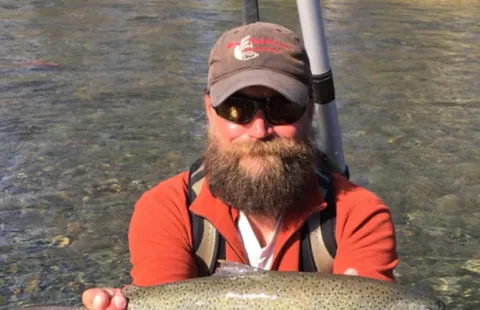
The fish pulled a couple of runs and then gave up. As the fish headed towards the shallows, I tailed it and just knelt there with it for a minute. Holding in my hand was a perfect specimen of rainbow trout that probably measured 26-27”. It wasn’t chrome, but it wasn’t full of color either. Just a perfect species specimen with all its fins and mandibles. Not a steelhead, but darned nice. I figured it to be a fluke but kept fishing anyway. I caught 4 just like it that day and 6 the next day. The day after that, I didn’t count the fish I caught. I just enjoyed the fact that I was successfully fishing the way I wanted to in a place where that should not be working.
Soon after that, It was time for me to leave for Patagonia, where I honed the swing method for trout even more. Three months of guiding the tributaries of Lake General Carrera proved to sort out my theories well. Trout that live in rivers without a lake system don't take swung flies as well as trout that live in rivers with a lake system. Maybe it’s because the lake provides a semblance of oceanic feeling to the trout, nurturing its true migratory genetics. Whereas a trout living in a creek or stream that tribs into a larger river is more resident homebody completely ignoring its DNA. Maybe that DNA is bred right out of those fish. I’m not a biologist, so I really don’t know the answer to why they do or don’t. People much smarter than me will be able to answer that.
Here is what I know - everywhere I have tested my theory on swinging flies for trout, it works. Every single time. In Alaska, PNW, Rockies, Sierras, Appalachia, and Patagonia. A trout river feeding a lake of any substantial size and depth will support an angler trying to get a fix by swinging flies to trout. It’s become a game of sorts for me now. Every steelhead trip, I pack my 6 weight spey rod and a 6 weight switch rod.
It’s been a lifesaver at times when the steelhead water is blown out. I don't get too crazy with the flies; everything is a stinger hook fly scaled down in size somewhat. I try to use more natural looking patterns. Any smaller stinger hook sculpin or leech pattern is great and there are several very good sources for trout swing flies out there. Start at your local fly shop. Those guys will know what’s up.
If your steelhead pilgrimage is a little too far to take a chance of being blown out, grab a 6 weight two hander or 10’ 6/7 weight single hander and test my theory. I am sure there is a river near you that fits the description. You might save some time, gas money, and get to fish alone. Who knows, you might even get Alice to tag along.
/articles/swinging-streamers-trout
Buoy 10 primer
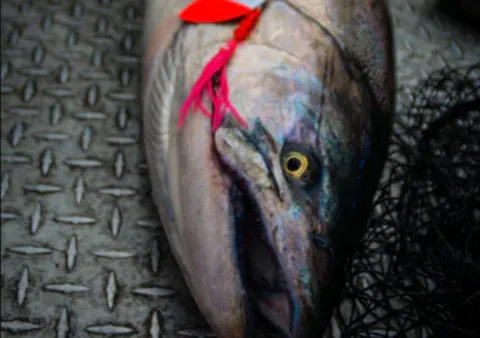
Dropping gear down slowly so not to have it tangle is the key to catching salmon at the famed Buoy 10. Sure, there are a few other things, but if you do not put the gear into the water correctly all the rest that follows does not matter. It was a skill that I learned years ago while fishing on an August day just outside of Astoria’s East Mooring Basin. I use cannonball weights from 8 to 16-onces on a short dropper and slider, to an in-line flasher trailing a plug cut herring pierced with super sharp hooks. From the weight to the herring is nearly 4-feet of what could be a tangled mess, so it is best to slowly drop the gear into the water. Once you hit bottom, do a half crank up on the reel and then put it into the rod holder, and put your hands into your pockets.
A few years ago, we started the day just like this and before my son could warm his fingers in his pockets, the rod doubled over and stayed down. This meant a big fish was on, and just as quickly as we had put out our gear, Ryan was lifting the rod and reeling. A battle that ensued much longer than we had already been fishing, and twenty minutes later an 18-pound Upriver Bright, or URB, came to the net. It was a hot fish with sea lice, and not even completely out of the ocean, with the incoming pushing tide bringing brackish water as far upriver as Portland, Oregon.

This is Buoy 10 and though we are still several weeks away from the river opening, you need to get the gear, boat, and plans ready now. Start with motel or camping accommodations. By now about every motel, hotel, and VRBO will be full with no vacancy. The best you can do is get on a standby list. Camping is always an option, but that does not mean it will be close by. Most campgrounds and state parks will be full as well. Even if you venture to the outlying areas such as Ilwaco, Long Beach, Seaside, and other towns, the motels, hotels, and campgrounds will be full.
Another option is to call some fishing friends who had the forethought to get accommodations already and see if you can join them, or if they decide to cut their trip short, then take the rest of their reservation. If you are willing to travel a bit further, then look to Longview and even Kelso. It will add a few hours to your trip, but you can find places to stay. Two years ago, we spent the first night in Longview and made the trip to the boat ramp that morning, but we were jumping in with Jason Hambley of Pro-Cure, so we did not need to launch a boat as he was at the dock and waiting for us.
Once you hit the water, be sure to look at the tides, as this will determine where to fish. With each incoming tide, more fish push up into the river. The tides here are so strong that when it is at high tide the fish will be facing downriver, as that is where the current is coming from. Do not think that you always must troll in one direction, and let the tides tell you which way to point the bow of the boat.
Astoria-Megler Bridge
The Astoria-Megler Bridge is the starting point for most anglers. Here, most of the fishing is done on the east side of the bridge, or “above the bridge”. This is because of the shipping channel on the south side of the river in front of Astoria, as well as a deep slot on the north side of the river near the Washington side. The middle is a big sand flat and be sure to be careful when crossing, as you could be in 10-feet of water one minute and the next in 6-inches of water. Again, know the tides, and if you cross at high tide, you might not be able to cross at that same place on low tide.
Just downriver from the bridge is the church hole, aptly named for a church that can be seen along the shoreline. Keep going down the river towards the ocean and you will find other well-known spots, such as the checkboard and the jetties, until you find yourself at the Buoy 10 deadline. From there you are out in the open ocean, but do make the mistake of thinking Buoy 10 is protected water. About anything from the church hole downriver gets to be big water, and depending on winds and tides, it can turn quickly.

As the tides start going out, the river returns to its normal course, and you fish it as such. The area above the Astoria bridge is good about any time, but it can be better during specific times such as the tide change, as the fish will once again be facing upriver and resting before pushing on when the water starts to slow with the onset of the incoming tide. The waters on the south side of the river by East Mooring Basin are similar. Here you will see large cargo ships anchored up, and it is easy to tell which way the tide is flowing by looking at the ships which will swing with the tide.
When it comes to gear, leave the downriggers at home. Everyone here uses a dropper weight and trolling set up. The standard is a cannonball on a slider, and the weight will vary depending on the tides and current as well as how many rods you are fishing. Rods at the front of the boat need heavier weights so they do not drag back into the rear rods.
Set-up
The set-up can differ a bit depending on what terminal gear you plan to use. One of the most popular set-ups includes a triangle flasher such as the Big Al’s Fish Flash from Yakima Bait Company or the UV Triangle Scent Flash from Mack’s Lure. The advantage of the UV Scent Flash is the ability to add extra scent. A brined herring that has soaked overnight in Pro-Cure’s Brine-n-Bite keeps the baits solid in warm and fast running currents.
It also as increases their shine, and that little bit of extra flash helps the salmon locate the bait, as the waters can be a bit murky. Some anglers also choose to dye the herring to a bright chartreuse color or blue, with Pro-Cure’s Bad Azz Bait Dye or their Brine-N-Bite Complete in chartreuse or blue making it a one-step curing and dyeing process.
If you do not know how to properly plug cut herring or do not want to mess with bait, then you have a few other options. One being the Simon Cut Plug, which resembles a plug cut herring and is solid, but has a scent chamber that also holds a miniature chem-light that makes it more visible. Brad’s Cut Plugs are also popular here because you can stuff them with bait and scent.
Just be sure to check on this lure regularly as it is secured with a rubber band, and any missed bite means the lure could have been opened. Yakima Bait Company came out with the SpinFish a few years ago, and they have become popular at Buoy 10. The larger sizes mimic a wounded baitfish, while the small 2.0 and 2.5 sizes work much like a spinner but can be filled with bait and scent. Spinners are another option.
When fishing spinners, small SpinFish, and the kokanee size Brad’s Cut Plugs, most anglers switch to a 360 flasher. These are the standard 11-inch flashers that saltwater anglers use. The flasher makes a large rotation, and using a short and stout leader of 40-pound monofilament, the spinner or small lure kicks out. Add in the spinning blade or action of the lure and it creates an impulse bite, where a salmon reacts to it and grabs it out of instinct as the prey tries to get away.
Advantage
The advantage to using spinners or spinning lures is that if you miss a bite then there is no worry if it not working. You can leave it in the rod holder and keep fishing. With bait you need pull it in and use a new bait every time you get a bite, or every hour or two without bites. With the scent holding lures it is best to add more scent every few hours as well.
The bite can be very tide and water temperature dependent. When the water is warm, such as during low tide, and the only water flowing is the summer Columbia River runoff, then the bite can turn off. The incoming tide pushes colder water into the tidal zone, and this helps with the bite as well as pushing in fresh fish. For days with a low tide swing, anglers often head to waters closer to the ocean where the fish will mill around before committing to the journey upriver. If the salmon fishing is slow, then be sure to toss a few crab pots out near Ilwaco: just be sure to use heavy weights to keep them from being pulled out to the ocean. You can also fish for other species if you decide not to salmon fish.
Bottom fish such as black sea bass and lingcod lurk along the jetties. This makes a multi-day and multi-species fishery option for those that want to make it a vacation. This year, there will be a few days in late August where salmon fishing is closed, to help with chinook escapement. If you find yourself at Buoy 10 during this time in August, then maybe spend a day or two out crabbing and bottom fishing.
Be sure to check for in-season updates and know the rules. Either Washington or Oregon fishing licenses work, but the catch codes of the record cards are different depending on which license you have. This year both chinook and coho must be clipped (hatchery only) below Puget Island, and there is a two-salmon daily limit with only one being a chinook. Once September rolls, around the chinook fishing will be closed but the coho fishing gets good and the daily limit is increased. Buoy 10 is almost here, and now is the time to plan and prepare.
/articles/buoy-10-primer
Dry Fly Fishing 101
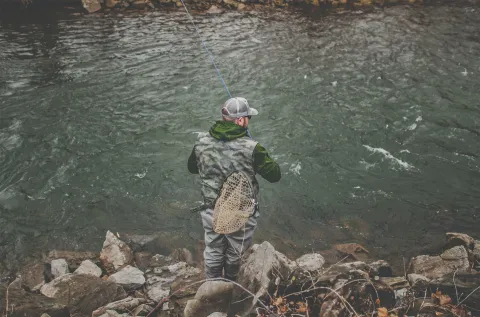
The image of a trout rising to eat an aquatic insect, usually a mayfly of sorts, is the encapsulation of what drives most anglers to pursue fly fishing. I remember as a young boy seeing it happen for the very first time. What seemed like a gargantuan brown trout rose from an abyss to chase, crush, and inhale a grasshopper. I think I was 7 years old. So in reality, that fish was probably only about 17-18 inches long, and the abyss it rose from was more than likely just a plunge pool that was as deep as I was tall. Nonetheless, it impacted my angling future by putting me on a path to learn fly fishing at a very young age.
Almost as quickly as I started, I found out just how difficult enticing a trout to eat a fake fly could be. My grandfather and my dad were kind enough to allow my pursuit of relentless frustration just to the breaking point before they insisted I fish with bait. At 8 years old, my patience wasn't virtuous at all. However, I did have the persistence and drive to succeed, just not the patience to figure out what I was doing wrong. God bless my grandfather and my dad for tolerating me during that time.

Fast forward 43 years and I have a much better idea of how to help new fly anglers get started. There are a couple of key ingredients that reduce the learning curve. First, buy some equipment that works. Notice I didn't say buy some expensive equipment, I said buy some equipment that works. For example, a 9’ 5 weight fly rod is the most universal of all rods. It is the perfect trout rod as well as panfish, and my favorite dry fly fish, the Arctic grayling. Just make sure your 5 weight rod has a 5 weight fly line on it, matched up with a 5 weight size fly reel.
Putting this together accordingly is literally the difference in casting and flailing. There will be some flailing, but not nearly as much if you match everything accordingly. If you are not sure if your set up is right, visit a fly shop for assistance. Any reputable fly shop will be more than willing to help you fuel this latest version of insanity.
So, you have visited the local fly shop, you have everything matched up. You probably bought some leaders, tippet, and a few flies. If it was a really super reputable fly shop, you probably got loaded up on a healthy dose of sarcasm and ridicule. The best shops always seem to have that air about them, but they will steer you in the right direction. It comes from a good place. Armed with your newfound knowledge and gear you need to proceed to step two: find some dumb fish. Really dumb. The dumbest. Find an entire village of idiot fish to cast to. Panfish make some of the best beginning dry fly fish to cast to. They aren't spooky, they eat willingly, and they taste delicious.
There is also absolutely no shame in following the local trout hatchery stocking schedule. Trout raised in a concrete raceway seem to fit the description “village of idiots.” They are used to looking up to eat the food served to them twice a day in the very pleasant, controlled environment of the hatchery. In addition, hatchery trout aren’t typically too spooky. What we are looking for here is bang for the buck on opportunities. In the beginning of your dry fly fishing pursuits, you need a lot of opportunities to fail without punishment. The more times you can make a cast and get results, the more you learn. The more learning opportunities you get, the faster you become a better fly angler. Don’t be bashful about fishing to the village idiots. We can all learn something from them.
Once you have found your village to fish in, you need to consider what exactly you are trying to do. You are attempting to imitate an aquatic insect that is resting on the surface of the water above the meniscus. If you are lucky enough to live somewhere that has legitimate bug hatches on the trout creeks, stop and watch the bugs float downstream. Watch the trout that rise to eat them. Also watch the trout that rise for the intent of eating an insect but refuse at the last second. That’s just as important. The bugs that are floating downstream with trout eating them are the ones you want to imitate.
Invariably someone out there is currently saying “match the hatch.” It is a catch phrase that I have come to detest and loathe but it does bear some legitimacy. We can worry about the catch phrases later. For now, you just need to focus on making a cast so that your fly looks right to the fish. Ultimately, that is the most important part of the equation. Casting your fly with it splashing the water upon impact has the same impact as the brute squad knocking your front door down with a battering ram. If that happened at your house, you probably aren’t gonna want to hangout, hold hands, and sing kumbaya. Try to be soft on approach. A live insect doesn't even weigh fraction of an ounce. No way it can make a giant splash when it hits the water. Your fly shouldn’t either.

Lastly, in regards to presentation, there is this thing you need to learn called “drag free drift.” Yeah, I know, another catch phrase. This one is tolerable though only because it carries weight with it. Obtaining a drag free drift absolutely ensures that your presentation looks as good as it can possibly look to the fish. It’s imperative to seducing a fish to eat your fly. What is this drag free drift, you say, and how do I obtain it? The drag free drift is achieved by manipulating the fly line with upstream or downstream in order to make the fly travel at the same speed at the river current on the surface where the fly is positioned. Great. Now here it is in layman terms, you are going to cast your fly and there will be a V-wake coming off of it. V-wake is bad.
V-wake tells the fish that your fly presentation does not look right, therefore, the fish does not eat your fly. This is, of course, not what we are trying to accomplish at all. The act of “mending” your fly line, or manipulating the fly line, upstream or downstream of your fly will either speed up the fly or slow it down to the point of eliminating the V-wake. Trying to put in to words how to mend fly line in order to achieve a drag free drift is like trying to write down instructions for riding a bicycle for the first time. Hands on handle bars, feet on pedals, pedal fast, hold tight, and hope for the best. Mending fly line is best learned through visual aid. Hire a guide or watch a video from Rio Products on YouTube. It will be the difference in catching and flailing.
We have covered a lot of ground here, but one last thing. What do you do when the fish does actually eat your fly? You’ve made a good cast, good drift, and a trout graces your ego by taking your synthetic offering as if it were a tomahawk ribeye. Dear baby Jesus, this actually worked. What now? I’m willing to bet the first time it happens, you will set the hook well before the fish has the fly in its mouth. Most anglers react upon the visual of the fish breaking the surface resulting in the fly being pulled away from the fish before it has time to come down on top of the fly to ingest it.
If you can somehow force yourself to wait on the hook set until after you can see the dorsal fin, your success rate will increase substantially. I once had an Alaska client that came every year only to fish Arctic grayling on dry flies. He would stand in the run and say “God save the queen” every time a grayling rose to his fly. After he said the words, he set the hook. That was his way of metering his hook set so it wasn't too quick. After about the 50th time hearing it, I was hoping for a new phrase or no phrase at all, but it worked for him.
It's summer. Get your gear sorted out, find a village of idiots, have some fun, and God save the queen.
/articles/dry-fly-fishing-101
Safety and First Aid Afloat
We’re going fishing! The gear is stowed, trailer lights checked and working, you’ve topped off the fuel tank, and the ice chest is full of food, drinks and bait. When going through the checklist, did you consider your first-aid supplies? I know you’re just going out to pull crab pots or fish the last few hours of the tide change, what can possibly happen?
In 2022 the USCG statistics show that there were 2,222 reportable boating injuries. Who knows how many unreported injuries there are. This year it is estimated that 55 million Americans will embark on a fishing trip. While the plan is to make it back to the dock without so much as a thought about a boating or fishing injury, they happen, and you should be prepared.
While the most common injuries are largely preventable, there are many “oh crap” moments any time you are on the water. Some preventable mishaps are as follows:
Falls, Pulled Muscles/Sprains - Many injuries can be prevented by wearing proper footwear and keeping the deck organized. I don’t know how many times I have slid down a ramp float at 2:30 in the morning because I was wearing worn out flip-flops or sandals. Make sure the tread on your footwear is serviceable. Boat organization is important in the prevention of injuries. Everything should have a place and be kept there. Loose ice chests, loose gear, or weights have caused many falls related injuries. Fish slime and blood should be cleaned up immediately. A few years back while fishing for winter blackmouth, I slipped on a puddle of chinook slime we hadn’t cleaned up yet. If not for a quick handed atomic wedgie by a fishing buddy I would have gone swimming.
Back injuries
Many times, back injuries are caused by twisting under load- if the seas are rolling don’t pick up a heavily loaded ice chest to clear the deck. Pulling crab or shrimp pots should be done with a plan. Use a puller if you can but if not possible keep your chin over your knees while pulling pots. Be aware of your posture as you swing the pot into the boat. When downrigger fishing, use a retriever setup, don’t lean over the edge of the boat to manage the downrigger clip. Anchoring is another activity where an extra dose of caution should be prescribed. Never just throw the anchor and hope for the best. Always have control of the anchor line and then once it hits the bottom, slowly feed it out to get the appropriate scope. Keep the deck clear when managing the line and if you don’t have an anchor locker use a milk crate, anchor bag, or even a 5-gallon bucket to manage loose line. Finally, consider the potential for cumulative abuse injuries to you or your passengers’ backs.
Here in the Pacific Northwest, many of us are running aluminum boats. While a great option for general recreational use, they typically ride rough. As the skipper you may have some form of suspension seat but it is likely your passenger does not. For that matter it is likely that you have passengers on cushioned seat boxes. I mention this because Repetitive Lumbar Injuries (RLI) are a real possibility when boating in choppy conditions. Basically, the tissue between your lumbar vertebrae can break down and pinch the nerves when running in heavy seas.
Short of installing high end suspension seats there are a few things you can do to help prevent RLI. The key is to slow down and practice what I call “Become one with the sea”. You can also run a bit bow up to push the impact point towards the stern for a smoother ride. Both will slow you down, but eventually you’ll get where you’re going and your backs will thank you for your extra efforts. On a personal note; I have pretty severe arthritis and my lumbar region is a mess. For work, I run a small aluminum boat 6 days a week year-round. For the most part, I make the run independent of the weather conditions. There are days where I have to stand to run the boat. If I sat down while running in the heavy, unsettled seas I would be paying for it later.
Many boating accidents are preventable, keep an organized deck, limit your passenger’s alcohol consumption, secure knives, gaff hooks, and anything else that can swing or roll around. A 12# downrigger ball rolling around could do some serious damage if you got in its way. Even consider what a 3-ounce jig can do swinging from a rod in the rocket launchers can do (I know…) Stay alert, try to get some sleep the night before an outing, again, limit alcohol consumption, and stay hydrated. A key in preventing boating accidents is knowing your limitations as a skipper and what your boat and crew can handle. Don’t be afraid to put the boat back on the trailer if the conditions warrant.
Establish a general safe boating routine for your boat and share it with your passengers. It should include location of the PFDs and a throwable device, location and use of your firefighting equipment. Possibly address the docking procedure: Things like, secure the stern line first when docking, no jumping from the boat to the dock, watch your fingers, and watch for cleats and other dock hazards. Any time the seas are questionable have everybody wear their PFD and stay seated. If it’s really bad, have them sit on the floor to lower the overall CG of the boat. When running in the dark, for or other inclement weather, always post a lookout.
While many boating injuries are preventable, others just happen. Medical emergencies are rare when recreational fishing but as a skipper you should be prepared to offer basic first aid. On our boat we carry a comprehensive first aid kit. Fortunately, we rarely break it out, but at least we are prepared if something serious develops. Here in the PNW your boaters first aid provisions should include the following as a minimum:
- First Aid Guide, the Red Cross offers an Emergency First Aid Reference Guide for 3.95. It is available at https://www.redcross.org/store/emergency-first-aid-guide/758276.html
- A Small Bolt Cutter to assist in removing fish hooks.
- Band Aids
- A Medical Shears
- Tweezers
- Gause Dressing
- Nitrile Gloves
- Antiseptic Wipes
- Pain Killers/Anti-inflammatory Tablets
- Burn Cream
- Cloth Tape
- Triple Antibiotic Ointment
- Q-tips
- Drinking Water
- A Spray Bottle with a 50/50 solution of vinegar and seawater. A quick spray will neutralize jellyfish stings and in a pinch help to clean a slippery deck.
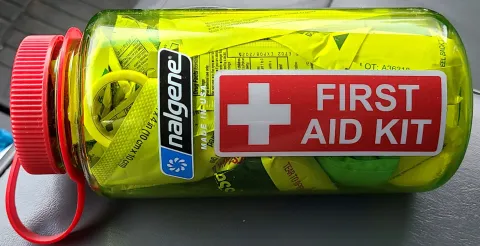
Most of the items noted above will fit in a 32-ounce wide mouth Nalgene water bottle. In fact, that’s what we keep in the truck and it often is with us during other outdoor activities. If you want to step it up a bit, there are many commercially available first aid kits out there. Generally, they offer an elevated level of medical care. Some lessons learned and general comments are as follows:
Establish an inventory management plan. You want to ensure adequate supplies are available when required (think 4-year old girl, redheaded Cabbage Patch Doll, a pack of Band-Aids, and a weekend on the boat). Your plan should also check for out of date products. For storage of the bolt cutter, I use one of those anticorrosion chips of plastic to keep it from corroding. I use Zerust Plastabs but there a number of other corrosion-inhibiting products available. If you do have to manage a medical situation, your demeaner will go a long way towards helping your patient. Even if you are uncomfortable, don’t panic and calmly work through the situation. If you have a serious situation recognize it sooner than later and don’t be afraid to call the Coast Guard or 911.
With adequate prevention measures and the ability to manage a first aid as required, your crew is likely to return to the dock with nothing more than a sunburn, a bag of fish, and a smile. In the unlikely event that you do have to render first aid, part of wearing the skipper’s hat is being prepared. This article should be considered as a general guideline and feel free to set up your own safety/first aid program.
/articles/safety-and-first-aid-afloat
Revisiting The Ten Essentials
As a young Boy Scout who went on monthly hiking and camping trips, the Ten Essentials for survival was drilled into me as the items I always needed to have with me, even if I was on a day hike. In the last few years, Search and Rescue teams have become increasingly busy, in large part because novice hikers hit the trail unprepared and get in over their heads, relying on only their cell phones for help. With that in mind, revisiting the Ten Essentials seems like a good idea.
POCKET KNIFE – Never underestimate the many uses of a pocket knife for cutting, whittling, cleaning fish or game, and more. If you want to get even more use out of pocket knives, carry a Swiss Army Knife or Leatherman Tool which gives you all sorts of tools at your disposal.
FIRST AID KIT – It’s all fun and games until you fall, cut yourself or otherwise become injured. That’s why a basic first aid kit is needed, especially since you will not be anywhere near a medical facility.
EXTRA CLOTHING – Layered clothing is a must when out for a hike. That sunny day can cool down in a hurry when the sun goes down or even if clouds obscure the sun.
RAIN GEAR – Those clouds can turn into rain and especially in the mountains, thunder storms and rain can happen fast. That’s why a lightweight rain jacket should be part of your extra clothing.
WATER BOTTLE (filled) – Hydration is key and a filled water bottle (or two) will not only be needed, but appreciated while hiking on a hot day.
FLASHLIGHT – Why would you need a flashlight for a day hike? Because sometimes things go wrong and you are stuck in the woods when the sun goes down. Fortunately, cell phones have flashlights in them but a small (and more powerful) flashlight is easy enough to carry with you.
TRAIL FOOD – It’s amazing how much energy you burn hiking, especially if you are going uphill. Trail food that includes protein can give you a quick pick me up. Some of my favorites include trail mix, jerky, or protein bars.
MATCHES AND FIRESTARTERS – If you get caught in the weather or are forced to stay in the woods overnight a fire provides both warmth, comfort, and the opportunity to cook a meal. A box of waterproof matches, a lighter or a flint or carbide fire starter are all easy to carry and worth their weight in gold.
SUN PROTECTION – It’s easy to get dehydrated while on a hike or camping and not only do you want water to replenish lost fluids, but also protection from the sun. Sunburnt skin or lips are not only uncomfortable, but also a major factor in dehydration. Use sunscreen with a high SPF, lip balm and wear a hat to ward off that sunburn.
MAP AND COMPASS – Orienteering is rapidly becoming a lost art but having a map of the area along with a compass can be very handy, assuming you know how to use them. It’s an enjoyable skill to learn, and a reason to get out into the woods in and of itself. It’s also a lifesaving skill if your smartphone battery dies or if you are out of cell range and can’t access digital mapping.
ADDITIONAL MODERN DAY ESSENTIALS
COMMUNICATION – Cell phones can give you a false sense of security, with many novice hikers assuming they can just call 911 and get rescued if they need help. Unfortunately, a lot of wild places do not have cell service. A better idea is a satellite phone or a less expensive satellite messaging device that works anywhere on earth.
Speaking of communication, another essential thing to do occurs before you hit the trail. That would be telling someone where you are going, when you plan to return, and when to call the authorities if you don’t arrive back at a specified time. In the event you are incapacitated or can’t call for help, someone else can do it for you.
Be safe out there on the trail, and don’t forget the Ten Essentials!

/articles/revisiting-ten-essentials
Lemon Peppered Baked Salmon
Salmon is a Pacific NW favorite and when cooked properly most would agree it’s one of the best eating fish to be found. Here is a classic recipe on salmon for your culinary chops.
Remember, the essentials to a good cooked fish begin with proper care of the fish out in the field. Catch it, bonk it, bleed it, and put it on ice. Cut it up and eat it ASAP. Or, vacuseal it if you can’t eat it fresh. Just don’t forget it’s in there! A freezer burned piece of fish does not a gourmet meal make. Not to mention a waste of a valuable resource.
Salmon lends itself to a myriad of ways to prepare it. As with any fish, the most important thing to do is – don’t over-cook it! So without further ado, here’s a simple yet delicious baked salmon recipe.
Ingredients:
Fresh salmon filet, one to two pounds, ¾-1” thick
1 ½ teaspoons lemon-pepper seasoning
1 teaspoon onion salt
4 lemon slices
1 tablespoon olive oil
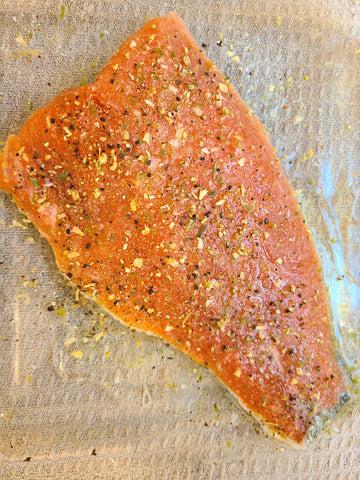
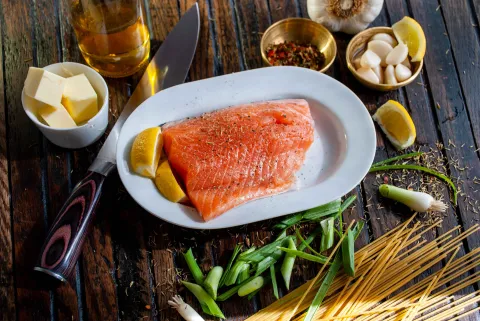
In a glass baking pan, take filet and coat with olive oil. Place salmon skin side down. Sprinkle onion salt and lemon pepper seasoning over the top. Squeeze juice out of lemon slices onto the filet (be sure to save a couple lemon slices to garnish the fish when it is served).
Preheat oven to 400 degrees and cook for ten minutes. For a crispy, sizzling finish, turn the oven up to hi broil and cook another two minutes. Remove from oven and serve immediately. If you leave the fish sitting in the pan it will continue to cook so get it out and serve it piping hot!
Add your favorite vegetables or pasta for a healthy and classic Pacific Northwest salmon meal. Enjoy!
/articles/lemon-peppered-baked-salmon
Pink Salmon Everywhere!
Introducing the unique Pink salmon: distinguished by their distinct life cycle, these fish follow a two-year journey, returning to their spawning rivers as two-year-olds. Adding to their allure is the intriguing fact that they exclusively run during odd years within Washington State. This year, an estimated 4 million Pink salmon are projected to traverse the Sound. Despite their classification as the smallest Pacific salmon, their tenacity in battle and delightful flavor remain unyielding. Their culinary versatility shines as they excel on the grill, particularly atop a cedar plank, and find their way into many anglers' smokers. For numerous enthusiasts, Pink salmon mark their initiation into the world of Washington State salmon fishing, thanks to their abundant presence and approachable nature compared to their larger counterparts.
Around this time of year, pinks flood the Sound and begin to stage near their home rivers. One of the best things about pink salmon is that you don’t need a boat to catch them from the shore or pier. They tend to swim within casting distance most of the time, and at this point in their life cycle they are still actively feeding, so they aggressively attack most offerings they see. With millions of pink salmon cruising by the shoreline looking for a meal, this is the perfect time to head to your local saltwater pier or beach and bring home some pinks for the grill.
Presenting A Jig
By and large, most shore anglers fish for pink salmon with jigs. There’s no need to use bait because pink salmon will aggressively bite a well-presented jig. Buzz Bombs and Rotators are the most commonly used jigs. They are easy to use and thousands of pink salmon readily gobble them up every year. They are designed to resemble a wounded baitfish, and they flutter erratically as they fall. Rigging them up is pretty simple: put on your buzz bomb, then thread on a bead and a bumper. Then tie directly to your hook (don’t forget to pinch the barb if it’s required). I usually use a 1/0 or 2/0 hook for pinks. To use jigs, cast out to where you think the fish are at, let your jig sink for a few seconds, then reel in and lift your rod tip up. Next, quickly lower your rod tip and let the jig fall. Repeat this until you reach the shore or catch a fish. Make sure to jig all the way until shore- sometimes the fish will follow your lure and strike at the last second.
Most of your strikes will be as the jig is falling. If you get a bite, quickly set the hook and keep up the pressure, especially if you’re using barbless hooks. As their name suggests, pink salmon love the color pink! It’s a good idea to start with that color, then switch it up if you aren’t getting fish. Buzz Bombs come in a variety of different weights. For pinks, I’d suggest using the lightest weight that you can cast well. If the bite is slow, try rubbing on some shrimp, anise, or herring scent. Gel based scent will cling to the jig longer. You can also thread on a small pink hoochie for extra action. If switching lures doesn’t work, you can switch locations as well. Sometimes just walking down for a few minutes on the beach can make all the difference.
Spinners
Another viable option if fish don’t seem to be hitting your jig is to use spinners. Vibrax spinners tend to be light, so it’s a good idea to thread on some bullet weights above a swivel to help get them down to where the fish are at. Several other brands such as Mepps make heavier spinners that will get to the proper depth without additional weight. Bring several options, and don’t be afraid to add scent or thread a hoochie on.
For your rod and reel, I’d recommend using a rod that can handle ½ to 1 ½ oz. weights, probably around 8 to 10 feet in length. I highly recommend using braided line because you can feel those sensitive bites easier, but mono will definitely do the job. A size 3000 to 4000 reel will have plenty of backbone to handle the fish. Remember to rinse your reel after fishing, saltwater is very corrosive and can cause damage if not washed off.
Where To Start?
Wondering where to start? Les Davis Pier, Edmonds Pier, Des Moines Pier, Browns Point, and Point No Point are all popular locations that reliably produce pinks every year. Any beach with a point and a good drop-off will most likely hold fish. Expect to have some company, though. Just be patient and try to avoid tangling your line with other anglers, especially if the current is strong. If you go to a pier, have a plan for netting your catch. Most piers are too far from the water to be able to use traditional nets. Pier anglers have taken to using crab rings. Just lower them down to the water and scoop up your fish. It takes some practice though! Beach anglers need not use a net, simply back up and swing your fish onto the beach.
As always, be sure to check the rules and regulations before going fishing. Don’t forget to swap those treble hooks for barbless single-point hooks, if required. You can buy barbless hooks or simply pinch the barb yourself with pliers. If you’re new to salmon fishing, WDFW offers salmon identification guides. It’s important to be able to tell the difference between salmon species, because they are regulated differently. You may be able to keep pinks but not chinook, for example.
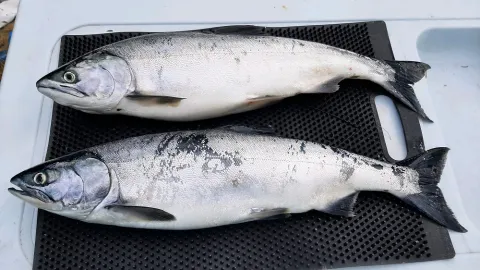
In general, hatcheries do not clip pink salmon fins, so don’t worry about checking if they’re hatchery or wild. The way to identify pink salmon is by checking the gums and the spots on the tail. Pink salmon have large spots on the tail and a white mouth with black gum line and tongue. For optimum meat quality, don’t forget to bleed and gut your catch before going home. Despite what some anglers say, pink salmon tastes great on the smoker or grill. Since they don’t have as much fat as their cousins, they have a milder taste than other salmon, which some people actually enjoy more. My favorite way to eat them is to season them with some of my favorite rub and then grill them on cedar or alder planks. They’re a great summertime treat that the entire family will love!
/articles/pink-salmon-everywhere