Early Ice Fishing Tactics for Trout
While frigid temperatures and dustings of snow mark the end of the open water fishing season for some, it signals the beginning of another exciting ice fishing season for others.
Previously a sport dominated by anglers in the Midwest and Canada, ice fishing in the inland Pacific Northwest has boomed in recent years thanks to its reputation as a fun winter activity for the entire family, as well as the vast number of accessible lakes in the region.
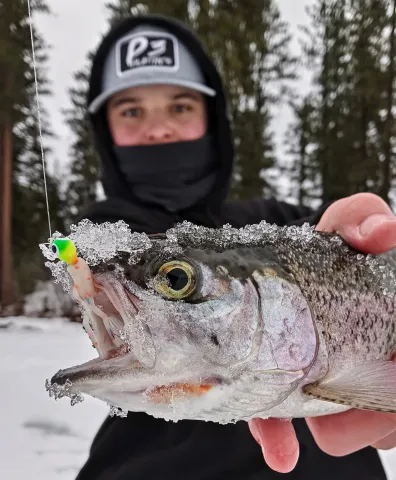
Northwest lakes offer plenty of hard water game fish opportunities, including yellow perch, walleye, and other schooling fish, but there’s also plenty of trout species ripe for the catching — and these salmonids should be at the top of any ice anglers’ target list. Ice fishing for trout, however, is different than other species, but it can be just as plentiful.
Using the correct gear when ice fishing for trout
While not impossible to use when ice fishing, a typical 6- to 8-foot trout rod is likely to be a nuisance relatively quickly on the ice, as you’ll be sitting on a bucket most of the day. Instead, an affordable, 30- to 36-inch ice fishing rod with light- to medium-action is plenty sufficient for nearly any type of ice fishing adventure.
Spool your spinning reel with 4-pound fluorocarbon line and you’ll be in good shape for anything that bites, but especially trout. If you’re concerned about your line, there’s many fluorocarbon options that are designed for ice fishing that will handle the conditions better, but that’s simply personal preference.
In addition to your rod, reel, and line, you’ll want all the ice fishing staples, including an ice auger, as well as a bucket, a rope, ice scoop, warm, layered clothing, and a sled to tow it all onto the ice with you — or, even better, a snow machine.
Locating trout through the ice in early winter
To catch the fish, you first need to find the fish. On ice, that can be tricky, but trout, including rainbow, cutthroat, and browns, all cold-water species, are predictable in the winter months.
Trout crave cool, highly oxygenated water. Thus, as the lake turns over, they move into cold, shallow water, while panfish, including yellow perch, evacuate the shallows and head into deeper drop-offs. The trout’s migration into shallow water is ideal for ice anglers, as you can target them in flats as shallow as 4- to 8-feet. This is ideal for early season ice fishing, as it’s just short walk from the shoreline, an area that typically features the safest ice on the lake.
Experienced ice anglers will troll during the open water season to scout areas on the lake that will inhabit trout in the winter months. To locate these trout-rich areas, use electronic depth finders to look for areas with large, shallow flats, between 4- and 20-feet, and drop-offs adjacent to weed lines. It’s common for trout to cruise these drop-off edges and seek forage along the weed lines.
Once you’ve settled on a spot to fish for the day, it’s time to start drilling. Trout, though, are easily spooked, therefore moving around and drilling holes throughout the day can be counterproductive. Instead, pre-drill your holes early in the morning. Using your ice auger, begin drilling holes close to shore in 3- to 6-feet of water, drilling into deeper water every 5- to 10-feet until you see weeds. Once you’ve found the weed line, begin pre-drilling holes from the weed line into deeper water in a Z-pattern to cover more ice.
If the lake you’re fishing doesn’t feature many weeds, you’ll instead look for large, flat regions with muddy lake floors. Use the same technique, drilling in a Z-pattern, into deeper water, as later in the day, the trout will become less active and move into these areas, suspending themselves in the middle of the water column chasing small prey.
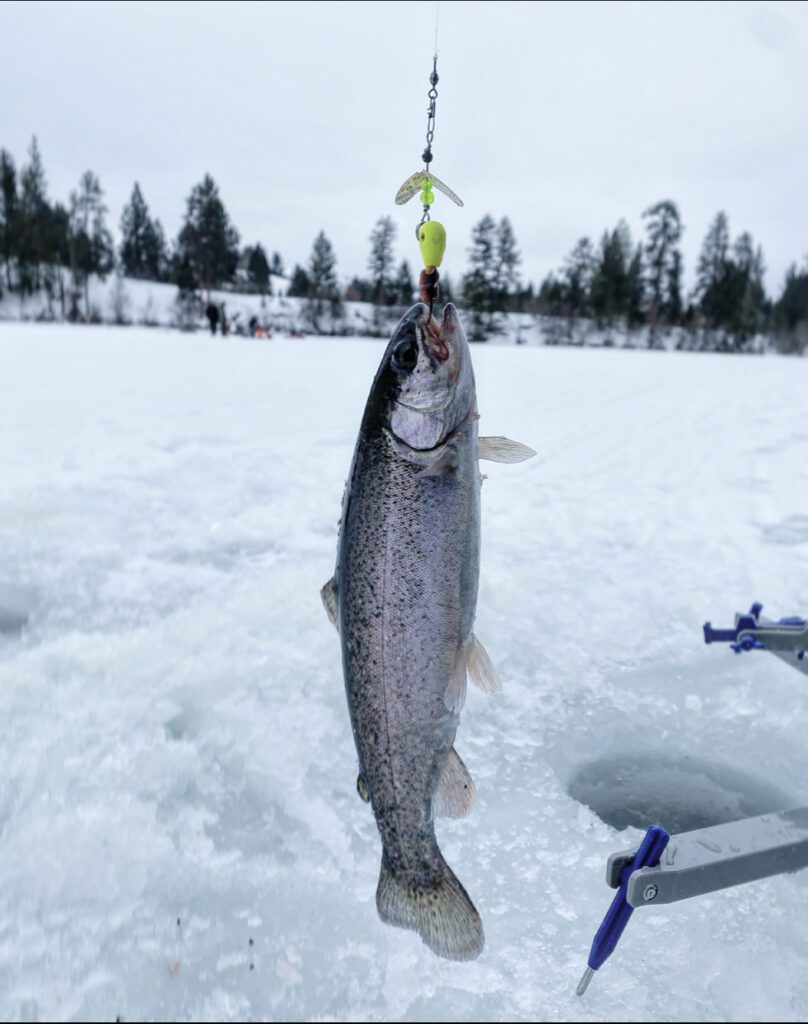
Selecting the best tackle for targeting trout through the ice
Trout, being the apex predator in most lakes, will cruise the weed lines looking to aggressively find any snack available to them, thus it’s imperative that you have reactionary type baits that emulate a dying baitfish to entice them to bite.
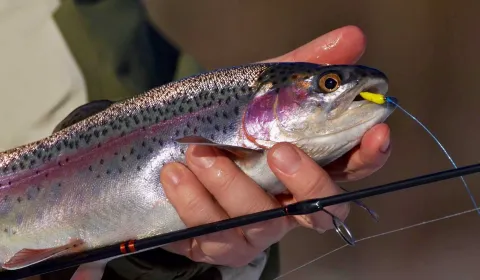
Small spoons, such as the Mack’s Lure Sonic BaitFish (1/16 oz. to 1/6 oz.) and the Mack’s Lure Hum Dinger (1/8 oz.), tipped with artificial pink maggots, meal worms, or corn will do the trick — and don’t be afraid to add scent to the lures and bait as well. When aggressively jigged, these spoons will create flutter and vibration, attracting trout from further distances.
If you’re not having luck with spoons, it likely means the trout aren’t as aggressive. Instead, use the smallest bait possible to reach your target depth. Try a Mack’s Lure Glo Hook (#6), tipped with maggots, corn, or meal worms, and a little split shot to get your presentation to the bottom.
Don’t be afraid to mix up your colors often. Begin with natural colors, including silvers and whites, but be quick to shift to brighter colors, including chartreuses, reds, and oranges if they’re not taking your offering. The trout will tell you what they want, so be versatile in your tackle selection and change often if they’re simply not biting.
Effective jigging techniques for targeting trout through the ice
When fishing closest to the weed line, make sure your presentation is hugging the bottom, typically 8- to 12-inches from the lake floor. Drop to the bottom, then a couple cranks up and you’re in the strike zone.
There’s no jigging cadence that’s tried and true. Really, it’s whatever you feel comfortable with. One thing that is for certain, however, is that your jigging cadence needs to be consistent and in rhythm. If you’re erratic, the trout will have a tough time attacking your presentation — and we’re in the business of making it easier for trout to bite your lure, not harder.
The only exception to rhythmic jigging is, occasionally, dropping your presentation to the bottom to drum up some silt and create a disturbance. Trout, in shallower water, are constantly feeding on prey that burrow in the sand, thus anything out of the ordinary is sure to catch their eye, especially from further distances. Alternatively, on really slow days, you can try dead sticking, just a few inches off the bottom, meaning you’re doing nothing with your presentation (tipped with a worm or bait) except holding it still.
Later in the day, when the trout move deeper, you’re going to follow them, as you’ve already pre-drilled holes in this deeper water. Fish to these suspended trout, at least six feet from the top of the water column, using the same, rhythmic jigging cadence as before.
Practice safety at all times when ice fishing
While ice fishing is a perfect activity for the entire family, it can quickly go badly if you’re not prepared. Use common sense, dress warm and, especially early in the season, always check the ice conditions before venturing out. To do so, drill your first hole, then measure its thickness. Ice 4-inches and thicker is safe for small groups, but be sure to spread out.
At the end of the day, just being out on the ice with friends and family is a blast. Hooking into some trout on super light gear, however, is the prize. Hopefully, by using the tips here, you’ll be well on your way to a successful ice fishing season targeting trout.
/articles/early-ice-fishing-tactics-trout
Enhance Your Ice Fishing Experience
Ice fishing is a unique and exhilarating activity that requires a combination of skill, patience, and the right equipment. While many anglers are accustomed to traditional techniques, incorporating modern technology like fish finders and electronics can significantly enhance your success on the ice.
In this article, we’ll delve into how and why you should utilize fish finders, and electronics while ice fishing.

MAXIMIZE EFFICIENCY
Ice fishing often involves drilling many holes in the ice and patiently waiting for a bite. However, with a fish finder, you locate fish faster and more accurately. These devices use sonar technology to send out sound waves, which bounce off objects in the water and return to the transducer, providing a visual representation of the underwater terrain and fish. This allows you to identify the most promising spots quickly, saving you time and energy.
UNDERSTANDING UNDERWATER TOPOGRAPHY
Fish finders not only reveal the presence of fish but also help you understand the underwater topography. They can detect depth changes, underwater structures, and vegetation, which are crucial factors in determining where fish are likely to congregate. Armed with this information, you can strategically position yourself for a successful ice fishing season.
ACCURATE DEPTH READINGS
One of the most significant advantages of using fish finders is their ability to provide accurate depth readings. This is crucial for ice fishing, as different species prefer different depths. By knowing the exact depth of water, you can adjust your bait and technique accordingly, increasing your chances of more catches.
LOCATING SCHOOLS OF FISH
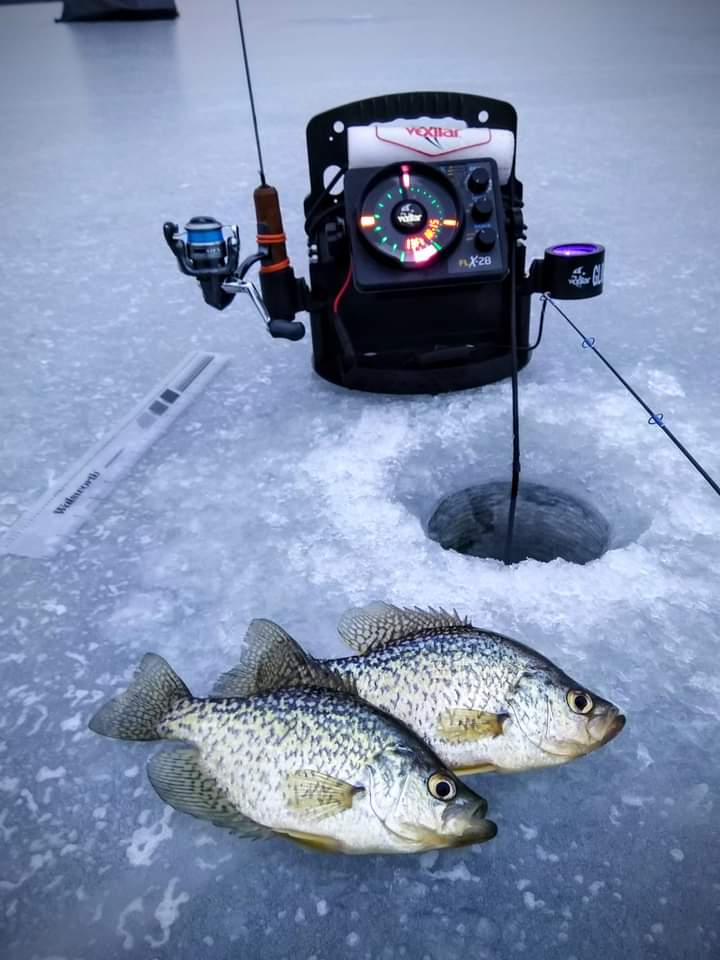
Fish finders excel at finding schools of fish and of course that lonely straggler. Instead of relying on guesswork or trial and error, you can pinpoint where the fish are congregating. This allows you to make precise adjustments to your bait and presentation to entice more bites.
MONITORING FISH ACTIVITY
Most fish finders are equipped to allow you to monitor fish activity in real-time. Real-time means there's no delay in the transfer from the transducer to the screen, so when the fish or lure moves you can see it move accurately. These devices can display fish movements, indicating whether they are actively feeding or just passing through. This invaluable information helps you adapt your strategy on the fly, ensuring a more productive outing.
STAYING SAFE ON THE ICE
Apart from enhancing your fishing success, fish finders also contribute to safety on the ice. Not only do they read and provide accurate depth information, but some units with GPS can also have up-to-date warnings for hazard areas, thin ice, closed boat launches, etc. while using lake map cards. This knowledge is especially crucial during early and late seasons when ice conditions can be unpredictable.
IMPROVING YOUR OVERALL FISHING EXPERIENCE
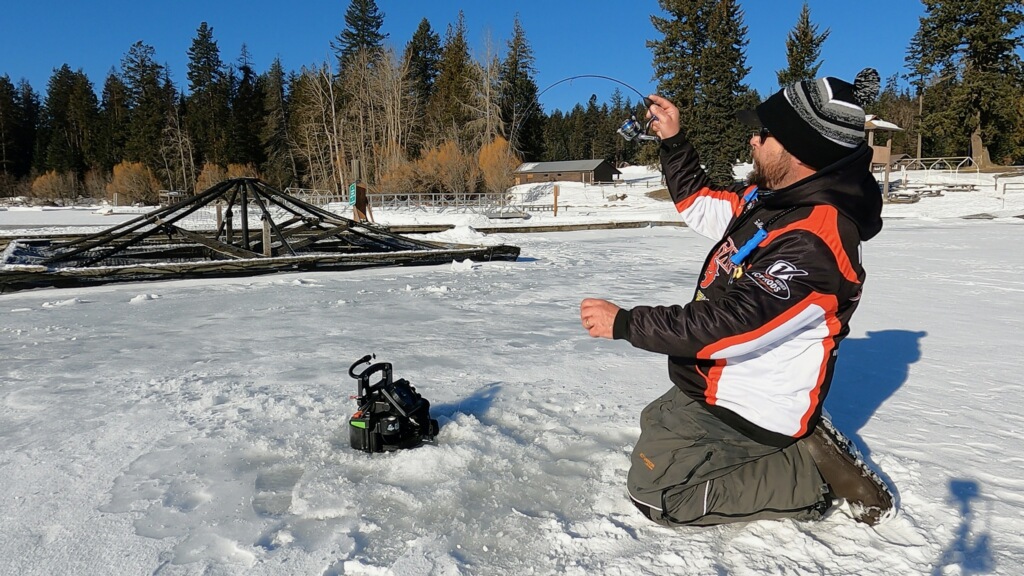
Incorporating electronics like a GPS unit, or an underwater camera alongside a fish finder flasher can further amplify your ice fishing experience. GPS is a nice option in some units, allowing you to mark productive spots for future reference, or a unit that is usable from the boat to the ice. Underwater cameras offer a fascinating glimpse into the underwater world, helping you understand fish behavior and habitat. This can also help you fine-tune your approach each time you chase fish under the ice.
Embracing fish finders and electronics in your ice fishing endeavors is a game changer. By providing valuable insights into the underwater terrain, fish behavior, and safety conditions, these tools significantly increase your chances of a successful and enjoyable ice fishing experience. So, equip yourself with the right gear and technology, venture out to the frozen lakes, and let the fish finding begin!
/articles/enhance-your-ice-fishing-experience
Ice Fishing Season is Coming
I’ve been watching Ice Cold Catch on TV lately. For those of you who aren’t in the know, it’s a reality TV documentary series that follows two greenhorns as they learn the ins and outs of operating a commercial fishing boat in Iceland. It’s a week at sea in some of the harshest conditions imaginable, and then they return to the port and do it all over again. Some of the catches can yield multiple hundreds of thousands of dollars for the boat and $5,000 for crew members. Other times, they make fractions of that amount. It’s the embodiment of a hard way to make an easy living. Watching the boat and crew lay mile after mile of baited line to circle back, pull it up, and see what was caught is entertaining TV from the warmth of my living room. The blend of passion for the sea with the business acumen needed is something I think anyone who enjoys fishing and also works a “regular” job can appreciate. I don’t plan on heading 50 miles outside of the Icelandic coast to commercial fish for cod anytime soon, so I guess I’ll stick to something closer to home.

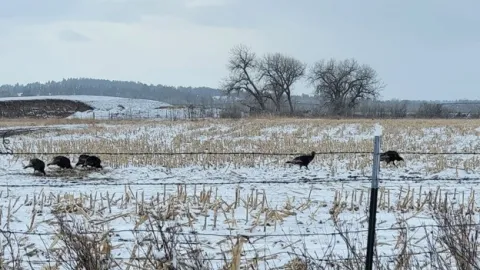
With the winter season approaching, many of us are stowing away the outboard engines on our boats and getting out the ice houses and augers. Maybe if you’re brave enough, and have invested in a decent winter jacket, all you’re checking to see is if you have your trusty plastic bucket to flip upside down as your seat when you jig away for what fish lay below. I’m referencing another way to get your fishing fix during the cold winter months - ice fishing. When the weather gets cold, many of us shift gears and turn our attention to hunting season. Big game, waterfowl, upland bird, or otherwise, it’s the thrill of being outdoors that does it for many of us. I’ve been known to pull off to the side of the road and look at a few turkeys walking around or admire an elk or two coming down from the mountains. For those interested in braving the elements but not quite ready for the physical exertion of hunting outdoors, ice fishing offers continued sporting opportunities. Whether fishing for perch, kokanee, walleye, or burbot, it never hurts to remind yourself of the respect needed on the ice when fishing these glorious winter months.
Gear matters
I joked about the winter coat, but seriously, having an insulated jacket does wonders on those days when the temperature is below freezing. What else might you need before hitting the ice? While a gaiter is always helpful, you’ll need a beanie at a minimum to keep your head warm. Some gloves and boots that are ideally waterproof with disposable hand warmers are a great idea. Ice picks are also a very smart accessory to have should disaster strike and you need to crawl out of the frigid water. They are every bit the equivalent of having life jackets and first aid kits on your boat: the classic “you’d rather have it and not need it than need it and not have it” item. One other item you might not think about but will be glad to have with you is a good pair of sunglasses. It might be December or January and 15 degrees outside, but on a clear day with the sun reflecting off the ice, it can be nearly blinding. The sunglasses/beanie combo is the personification of ice fishing in my mind. It’s a cool look, what can I say?

The gear on your body is important, but you want to make sure the gear you bring to set yourself up to fish is adequate and check that conditions are safe. It is generally advised that ice fishing should be done on ice that is at least 4 inches thick- the thicker the better, especially if you are considering heavy equipment like an ATV or snowmobile to travel to different parts of the lake. 7 inches is recommended when using an ATV. A ruler is an easy tool to measure the thickness of the ice. Another indicator that it is safe to fish is a visual inspection of the ice - it should be clear. Cloudy or cracked ice are indicators it may have been melting and refreezing and not as strong as it should be. After you’ve drilled your hole with an auger (or found an abandoned hole), a scoop is extremely helpful to clear ice out of your fishing hole and to prevent your line from freezing. Besides the obvious fishing pole and lure, the last item to consider bringing along would be a fish finder. Relatively small, briefcase or guitar amp-sized, they can often give you an edge to find the bottom of the water and determine the movement of the fish below the ice.
Got the list? Excellent! You’re ready to hit the water…sorry, ice, to continue this obsession we share that is fishing. It’s always exciting to catch fish on a boat or from shore during the warmer climates and summer months, but it’s a whole other experience to brave the cold and reel up your catch of the day through the ice.
/articles/ice-fishing-season-coming