Ocean Coho Tips and Techniques
Coho are one of the most sought-after salmon in the Pacific Northwest. For the saltwater angler, the coho bite can be a bit chaotic, with the fish running in large schools and being active biters when the conditions are right. They can also be a bit frustrating if you are not using the right gear or fishing the right presentation. By keying in on techniques that work the topwater and get the coho to bite, you can increase your catch rate and fill the coolers with great eating, hard fighting silver salmon.
Silver Salmon
Silver salmon like to swim fast and attack their prey. Known for their topwater action, coho tend to be close to the surface. This makes for a great fishery because you are not constantly trying to work the bottom and worrying about losing a downrigger ball like you are when chasing after chinook that are on a sandlance bite. When it comes to catching coho, there are few things you can do to increase your catch rates.
Lose the bait to catch more fish. It might seem like using a fresh anchovy or a perfectly plug cut herring would lead to more fish but rigging these baits takes time. When you get into the schools of coho, the action can be fast, which means you will catch more fish if you can keep your gear in the water longer. Same with getting it back into the water faster, and anyone who has rigged an anchovy hood knows that you need to set it correctly and that takes valuable time.
Spoons
Spoons are one of the more popular lures because they are simple and are always working even if you miss a bite. Keep the spoons small such as the Coho Killer or a 3.0 or 3.5 Coyote spoon in sardine or rainbow trout patterns. The rainbow trout spoon looks more like a herring or mackerel and it has a glow back to it for low light such as cloudy days. Another spoon that is popular with coho fishing is the Skinny Gee in Herring Aide color. When running a spoon behind a flasher, it is best to go a bit longer on the leader such as 42” as this allows the spoon to flutter.
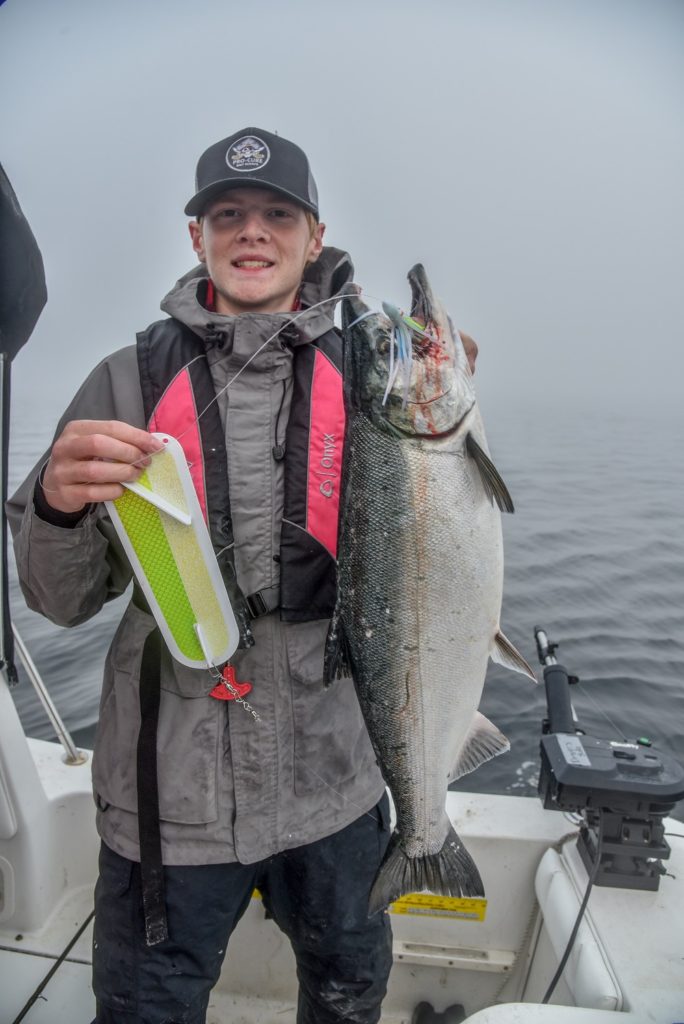
Sometimes spoons don’t draw the fish to strike. Give tube flies a try. This is a technique often used in the Great Lakes by salmon fishermen and by fly anglers chasing after fall coho along the shoreline. The ocean angler can take advantage of these lightweight lures that mimic baitfish. One of the best things about a tube fly is that they can be fished behind a dodger or a flasher or all alone, since they have low drag and are lightweight. Tube flies tend to have an erratic action that coho can’t resist, especially if you put a Mack’s wiggle bill in front of them. Bechhold and Son’s make a unique flasher with offset holes to add extra action. They have teamed up with Rapture Trolling Flies, a Great Lakes company, and offer a combo set matched together and ready to fish. If you already tie your own flies, you can pick up a tube fly adapter and tie your own easily.
Tricking The Salmon
Add flash and movement to your squids. When rigging a squid skirt with an insert or a tube fly, such as the Luhr Jensen Flash Fly (unrigged version, as they are smaller than the pre-rigged Flash Fly) to be fished behind a dodger or flasher, be sure to use a short and stout leader. Try using 30 or even 40-pound test as the stiff leader will give the lure more action. The idea is to get the lure to move in an erratic motion and make the dodger look like a feeding salmon with the lure being a wounded baitfish. It creates the “bite now” instinct of the feeding coho and tricks it into thinking the other salmon, which is the dodger, missed the baitfish and now it’s there for a free meal.
Using an insert into a hoochie or squid skirt adds attraction and can turn on a bite. The past few years we have been using the Luhr Jensen Flash Fly inserts and putting them into a squid skirt. By doing this you can make several different combinations of colors to attract the fish or add some extra UV flash for those cloudy days. You can also add a Mack’s Lure Wiggle Bill to the front to add extra movement.
Artificial Bait
Try using an artificial wounded baitfish lure. Lures that mimic a wounded baitfish are the SpinFish by Yakima Bait Company, Brad’s Super Bait Cut Plug, and the new Spin Dawg by Simon, who also makes a Spin Cut Plug that has a hole at the tip of the lure making rigging much easier with no rubber bands or chance of it coming apart. The Simon products are solid and have a scent chamber. Each of these lures is made of hard plastic and has a hollow cavity inside where you can stuff them with scent or minced-up baitfish such as anchovies or herring. For these lures, use a longer leader with a bead chain swivel in the middle since the lure provides the action that creates that need to bite reaction by rotating and spinning.
When using artificial lures such as spoons, squid skirts, and the hollow cavity lures, scent is crucial. Unlike when you use a real baitfish that has oils being released and the fish know it is an actual herring, the use of artificial lures is only a visual attraction unless you scent it up. The cavity lures like the SpinFish offer a way to fill them with various baits to create a scent trail. One common bait is to mix canned tuna fish with your favorite scents. Because the lure holds the minced-up bait, one of the better scent mediums to use is one of the many water-soluble scents from Pro-Cure. When the scent leaks out of the lure, it mixes with the water and stays at the same depth as the lure, creating a large scent trail for the fish.
Oil Based Scents
Oil-based scents such as Pro-Cure's super sauces, gels, and oils hold a scent well and last a long time, but the scent will not mix well with water. This means when it is washed off the scent trail starts to float. Water-soluble oils wash off lures and squid skirts too quickly which is why you should use oil-based scents for these lures, but it will not gum up or ruin the action of a tube fly, just be sure to apply frequently. Knowing which scent to use is more than just the baitfish it is made from, but also which ones are best to stay on the lures you are fishing.
Downsize the dodgers and flashers. The idea behind using a dodger or flasher is to create a feeding salmon scenario as well as add action to your lure. Since you are fishing for coho, be sure to match the dodger and flasher to the size of the fish. Most use the standard 11-inch flasher but the 8-inch flasher is a better choice. Instead of the attacking salmon looking like a chinook with the 11-inch, the 8-inch reflects light more to the natural size of a coho. It is also less drag and that means you can fight the fish better. The smaller dodgers and flashers also work well at faster trolling speeds. The Sling Blade dodger from Mack’s lure is a very universal dodger that is designed to work well at fast speeds. Since it is a long teardrop design you can bend it to create a more dramatic dodge or side-to-side action, or you can keep it straight and troll it fast. This design also cuts through the water well and allows you to fight the fish and not the dodger, even when using the larger 9-inch version. The dodger comes with UV-treated colors and is offered in many sizes, which allows you to change it up to the varied sizes of lures you are using.
Coho
Since coho are often found actively feeding near the surface, you do not always need to use downriggers. Instead, trolling with a mooching weight that cuts through the water easily and a simple lure behind can be a way to either add an extra rod out of the back of the boat or not deal with the downriggers altogether. Again, the more you can keep your lines in the water, the more fish you will catch. When rigging this outfit, use a longer leader around 48 inches with a bead chain swivel in the middle and a lure that imparts action such as the SpinFish, Brad’s Cut Plug, or Simon Spin Dawg. But do not overlook the tube fly or even the squid skirt with the addition of a Wiggle Hoochie Bill. These small plastic bills from Mack’s Lure are simple to use, just slide it down the leader to the head of the squid skirt and push it into the collar. If using a tube fly then adding a bobber stop knot or rubber bobber stop to the front of the bill will keep it tight to the fly. The Wiggle Hoochie Bill act much like the bill on a plug, but instead of creating a diving motion, it moves the lure in side to side in and erratic motion. They also come in an assortment of colors and are UV treated to add even more visual attraction.
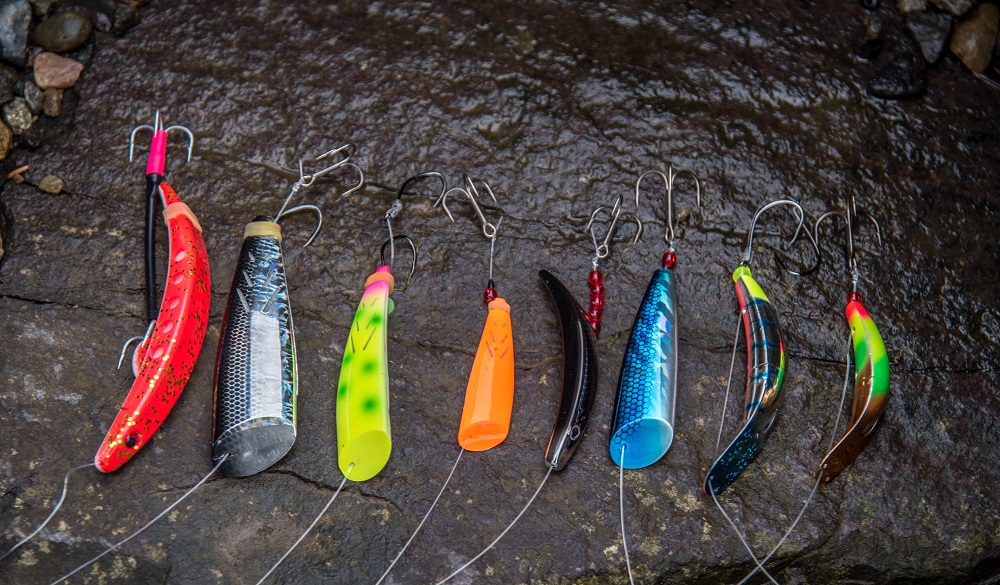
Coho are known for their acrobatic fights, often coming right up to the surface and jumping, but a dodger or flasher can take away from the fight and even become a problem when the fish jumps. The attractor breaks the surface of the water pulling in an opposite direction and taking the hooks with it. When using downriggers, you can rig in a way that the dodger or flasher stays with the downrigger ball and you get to fight the fish without any extra drag on the line. To do this, either use one of the lures with action or the added Wiggle Hoochie Bill and then a downrigger clip that is above the ball. Use a short section of cord or very stout mono line such as 50-pound test from the flasher or dodger attached to the downrigger ball, and then set the downrigger clip twice the length of the cord above the ball.
Furthermore, If you run the dodger or flasher behind the downrigger ball 36-inches, then set the downrigger clip 72-inches, or 6 feet, above the downrigger ball. Then run your lure back just a few feet from the clip. This will keep your lure from tangling with the flasher or dodger, and yet when the salmon sees the attractor, it will look like the baitfish got away and they will grab the lure. This works really well with plug cut herring or an anchovy with a bait hood, as well as lures that don’t need the imparted action of a dodger or flasher. One other great trick when using this way of fishing is to use the Scent Flash triangle flasher from Mack’s Lure, as these flashers are designed to hold scents inside of them. As the triangle flasher spins, it creates a very large scent cone out of it as it disperses the scent. When using these, you don’t need to use a leader or cord, but instead you can attach it directly to the downrigger ball, which means you can also keep your lure a lot closer to it as well.
Run timing and knowing which fish you are targeting will lead to more fish. Ocean coho are found all along the coastlines from Oregon to Alaska, and the feeding fish will often work along the shoreline, feeding on herring, candlefish, anchovies, and various other prey in the kelp beds and protected waters around islands. Look to the rocky breaks often found just offshore and find the coho. Even when out in the open ocean, where the fish will form large schools to travel from their feeding grounds to the rivers each fall, the fish will still be “shallow”. Not the depth of the water but where they are in the water column, meaning closer to the top.
When it becomes prime time for ocean coho but weather and fishing seasons keep you away from the open seas, resident coho fishing can produce a fishery for the avid angler. Puget Sound and the various inlets around Vancouver Island offer coho that do not head out too far away feeding grounds but instead live “inside”. Starting in May and all through the summer, resident coho fishing is good. Using the same techniques as fall fish, the angler can perfect their coho set-ups. Look for points along the shoreline as silvers tend to use them as tide breaks that will harbor baitfish. Where you find resident coho you will also find ocean-bound fish once they return. This is where you want to be when the runs start to show up in August and continue to flood through October.
/articles/ocean-coho-tips-and-techniques
Reel Time in Cabo
In the previous year, Rob and I had the chance to connect with Toby Wyatt, the Northwest Guide from Reel Time Fishing, along with his wife Cindy, while we were in Cabo San Lucas. We eagerly seized the opportunity to escape the chilly season and head down to Mexico to explore the exciting developments of Reel Time Fishing in Cabo.
Toby, an experienced PNW guide renowned for fishing from Buoy 10 to the Clearwater River, has devoted several years to developing his Mexico venture. He has fine-tuned the guest experience down to a science, curating everything from local captains and upscale resorts to luxurious transportation and diverse vacation possibilities beyond fishing. Upon our arrival, his team was readily available to steer us in the right direction and acquaint us with the intricacies of Cabo. Having Toby's steadfast support provided us with a reassuring sense of security and tranquility as we ventured abroad.
Planning Ahead
In early December, we strategically planned our journey to Cabo, a prime period for sport fishing, especially with favorable Marlin-catching opportunities (which both Rob and I were enthusiastic about). Our airfare was secured, and our dates with Reel Time were locked in, thanks to arrangements made half a year prior with a cohort of industry friends from Spokane. We also ensured our passports were up to date. Accompanying us on this adventure were the renowned Chef and Restaurateur Adam Hegsted, Chef Aaron Fish and his wife Miranda, Creative Director Jason Olsen and his wife Heather, as well as Rob and myself. Embarking on this expedition as a group added an enjoyable dimension, and thanks to Toby's recommendations, we were able to shape the ideal trip we had envisioned.
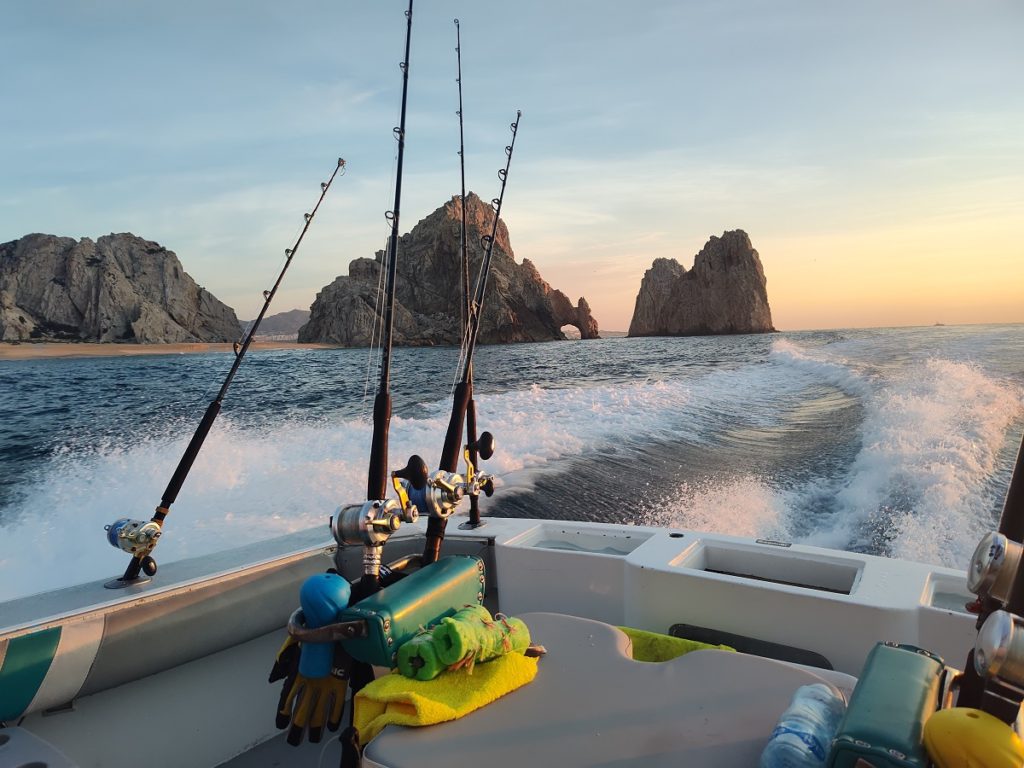
As a united group, we touched down in Cabo and navigated customs, proceeding to the transportation meticulously coordinated by Reel Time Fishing. Awaiting us was a sleek black Escalade, and our designated driver, "Eddie," who could only be likened to our personal guide – Toby's trusted on-site emissary. Our airport pickup was characterized by sophistication, and we were subsequently transported to our lavish all-inclusive abode, the Hotel Riu Palace Cabo San Lucas. Throughout our journey, Eddie remained at the wheel, chauffeuring us to the docks, an exciting ATV escapade, and any destination of our choosing, ensuring a seamless and convenient experience.
Our Stay
The resort proved to be an absolute marvel. Our desires were not only met but effortlessly anticipated. Our all-inclusive package encompassed both beverages and cuisine, with a plethora of restaurants, entertainment options, and pools that catered to every whim. Our refrigerator remained abundantly stocked, and a continuous flow of tequila was readily available, satisfying our every indulgence.
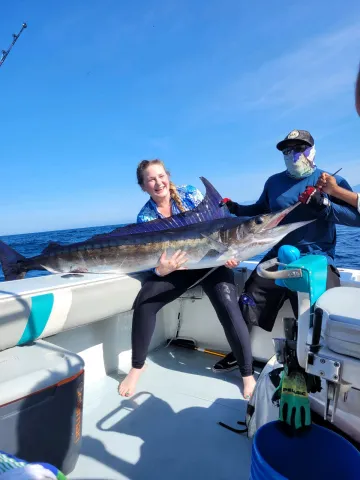
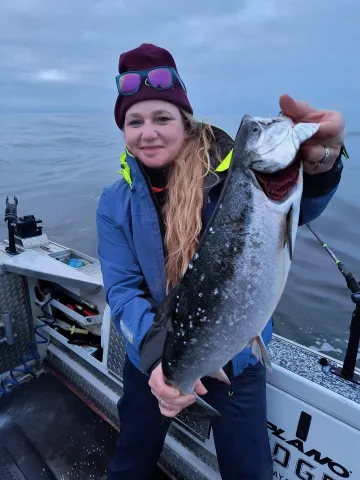
The primary motivation behind our trip revolved around the fishing prospects, and we were not disappointed – they were exceptional! Rob and I both achieved the thrilling feat of reeling in our first Marlin, an experience that will forever stand out in our memories. Across two days of deep-sea angling, we hauled in Ahi Tuna and Mahi Mahi as well. The intense battles Rob and I waged against our Marlin catches surged with an adrenaline rush unparalleled in the waters of the Northwest. The sensation was beyond expectation; truly an extraordinary encounter worthy of being on anyone's bucket list. Our cooler brimmed with the bounties of Mahi Mahi and Tuna, all set to journey home with us. Following the local custom, we released the Marlin back to the sea. The crew adeptly managed the cleaning process and even connected us with a processor to ensure our catch was expertly prepared for transport on our flight back.
Crave TV
We embarked on a Crave TV episode alongside Chef Adam Hegsted and Chef Aaron Fish, capturing the awe-inspiring sight of Northwest culinary experts skillfully crafting fish dishes infused with the vibrant flavors of Cabo's ingredients. Our poolside relaxation day proved refreshing, and we delved into the local shopping scene, exploring charming boutiques. A leisurely boat taxi ride across the bay allowed us to embrace the coastal charm. Venturing into the countryside, we engaged in an exhilarating desert off-road adventure, navigating the terrain with four-wheelers.
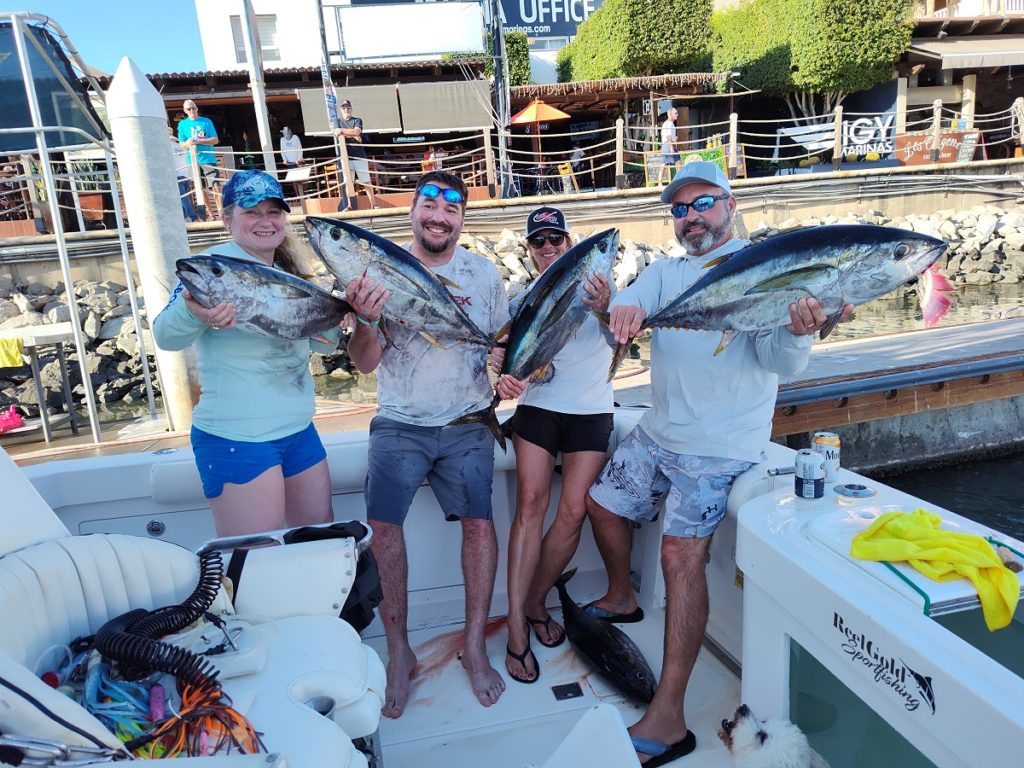
"It's an incredible way to punctuate the time spent on the water. There's something invigorating about cruising through the Mexican desert that truly makes you feel alive." - Jason Olsen
I had the opportunity to sit down with Jason Olsen and discuss his firsthand experience in Cabo with Reel Time Fishing.
Jason:
How was your fishing experience with Toby's team?
"Second to none! Nothing compares to that whole trip. It’s a lot of buildup. And it doesn’t disappoint. As far as going out on the boat with Pepe, knowing he was linked to Toby, I felt comfortable and safe knowing I was in good hands. Toby has seasoned dudes, and he has a standard for bringing people on. I would definitely go again at the drop of a dime. I was impressed with Pepe. He knew exactly what to do and where to go. He had an innate instinct on where to go to catch the fish and had electronics to get us on the fish. Also, having someone to show us around and be our wheels on the ground, saved us money and we did it in style."
What kinds of fish did you reel in?
"Yellow Tin Tuna, mostly. We went out from about 5 am and by 11 am we caught 10 Tuna."
What was the battle like?
"A lot harder than freshwater fish. High energy. At one point I had to strap myself into the chair."
Can you tell me about the flags?
"So the whole experience coming back to the dock was pretty great. After we caught the fish, Pepe had me hang up these flags I wasn’t sure what for. The minute we pulled into the marina, It was a bit of a parade. A bragging parade. Everyone could see what kind of fish we caught and how many from the amount of flags that were flying on our boat. It was pretty great to showboat our way into the Marina."
How was the dining experience?
"The resort accommodations and restaurants were amazing! The experience of going out in the morning and coming back and having my fish prepared by a local chef, was like no other. My liver hurt when I came home."
Jason's Wise Words:
"Take the seasickness patch, don’t be a hero! Go with a guide that is credible. Toby’s network takes the worry out of travel. Listen to Toby and you will do just fine. Use his knowledge and connections. The culture and being able to start my fishing endeavors at such a high caliber was an amazing opportunity."
Toby:
"One thing we do is we babysit our guests. We transport them from the airport to the resort to fishing and back. “We are like a coach in your corner.”
"We have a full service-all Baja Peninsula tour company that specializes in sport fishing. We help keep you safe and save you money. We have 4 captains in Cabo and packages with many of the Cabo Resorts. We can accommodate Groups of up to 40 people and have access to a 45 ft boat and 90 ft yacht. "
/articles/reel-time-cabo
Leave It Better Than You Found It
As outdoorsmen, we have a duty to continue to cultivate the resources that are our land and water. How many times have you pulled into a boat launch and seen it torn to shreds? Concrete half off the ramp, rope handrails cut and laying lifeless, no longer serving their purpose. What about the campsite with half ripped apart beer cases, food scattered around, and dog poop on walking paths? One of my personal favorites is seeing trash thrown in the firepit. It’s one thing if the stuff thrown into the firepit can burn up (I’m plenty guilty of that), it’s another when the material should’ve been disposed of properly. The old adage of “pack it in and pack it out” is simple in speech and at times aggravating in action. My college football coach had a saying, “do what you are supposed to do, when you are supposed to do it, and do it that way every time”. The lens in which that quote was said was more along the lines of eat right, study your playbook, and lift hard, but the message applies across the board. Leave it better than you found it.
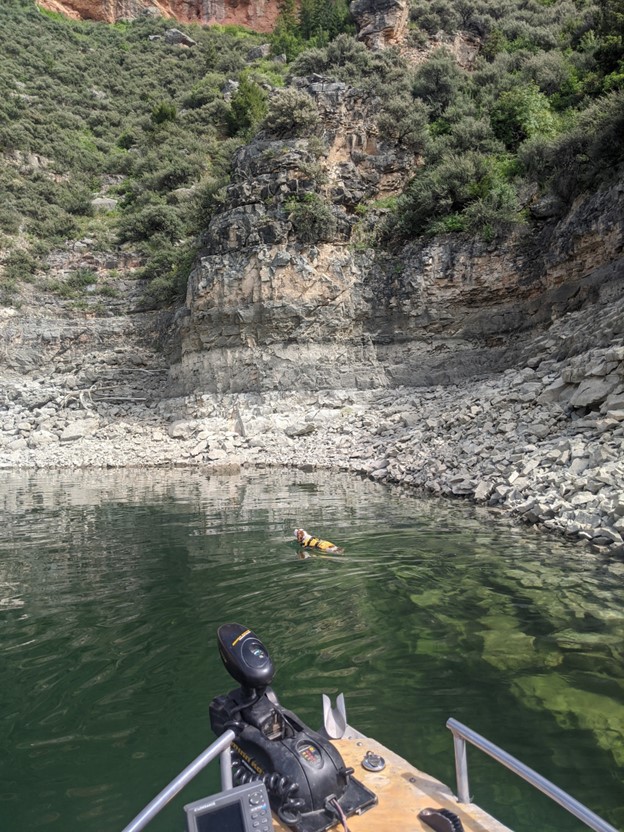
This isn’t meant to be a tirade against littering (not that I’m pro-littering - there is a Seinfeld skit somewhere about this I’m sure) or some kind of political statement. Rather, just an observation from a summer that I’m sure many of you shared. Time with friends and family outside. Some of us are lucky enough to have boats to get out on the water. Others may hike up into the mountains for some serenity and isolation. Then, for a brief moment, you realize the person there before didn’t care enough to keep the place clean. It probably doesn’t consume much of your brainpower or ruin the weekend, but it’s enough to make you roll your eyes and sigh. Those are the kind of simple things we can all do to help one another continue to enjoy these shared spaces.
Hunting Season
Another element that should be considered, particularly for those hunters among us, is the consideration of land water access. Familiarizing yourself with the public vs private land, access points, and limits on how many people can utilize certain access points are all equally important and part of our duty as conservationists. I remember during the last hunting season being continuously peppered by advertisements from Montana Fish Wildlife and Parks (FWP) about the importance of seeking permission for type II block management access (BMA). It certainly didn’t hurt that the advertisement featured a cameo from MeatEater star Ryan Callaghan. A quick sidebar for those who aren’t in the know - Block Management in the state of Montana is a partnership between private land owners and FWP to grant access to hunters on private land, sometimes adjacent to public land.
Type I BMA allows hunters to sign in on a card for hunting permission on private lands; you simply show up, fill out a card, and go hunt. Type II BMA often requires a reservation and is subject to availability from the land owner. Examples might be limiting the number of hunters in a day, hunting parties in a day, or what type of game is being hunted. The word partnership isn’t used by mistake. It takes action on all parties involved to maintain access to these hunting areas. The land owner to continue to be willing to allow hunters on the land, MT FWP to facilitate the opportunity for hunters, and hunters to respect the land and do their part to make sure their presence is continually welcomed. Leaving behind shell casings, wrappers from eaten protein bars, or other garbage is a quick way to find our access to otherwise great areas suddenly restricted. Maybe you don’t own 1,500 acres of land but instead a 1,500 square foot home. Would you be willing to invite back a stranger who tracked mud all along your carpets? Even worse, how about a buddy watching some football at your place who stains your couch with buffalo chicken wing fingers rather than wiping his hands. Why would we expect those land owners to welcome us back if we’re doing the equivalent?
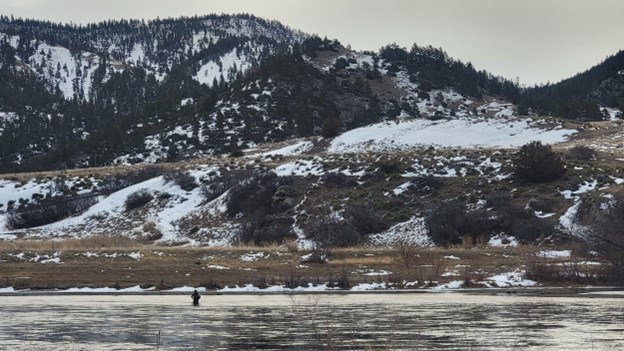
Let’s continue to work together to make sure we can enjoy the outdoors we all know and love. It doesn’t take much to clean up that last bit of trash, keep debris and clutter out of the community that should be enjoyed by all and keep shared areas like boat launches in working condition. If not for you and I, how about for our kids who hopefully enjoy these hobbies, and sometimes obsessions, as much as us.
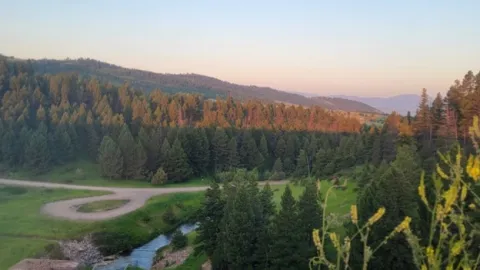
/articles/leave-it-better-you-found-it
Late Season Baker Lake Sockeye
Whoo-hoo! The long-coveted Baker Lake sockeye season is in progress! The 2023 Baker Lake sockeye season is proving to be an interesting one. Through the North of Falcon process, the planned opener was scheduled to be Saturday July 15th. Because record numbers of sockeye have signed up for a ride in the fish taxi, the WDFW decided to open the fishery 1 week earlier. The opener was July 8th and the action has been on fire. It was reported that boat limits were the norm and many ice chests were full just a few hours or so after splashing the boat. In fact, on opening day one of the fishing specialists at Holiday Sports in Burlington, Philip Chuprinov, his wife Alexus and gang got their 12 fish boat limits in in less time than it took to drive to the lake and back.
OK, the fishing is good, but what is a “fish taxi” and why the early opener? Sockeye in Baker Lake are native to the system. After the Upper Baker Dam was constructed in 1959, sockeye were cut off from access to the natural Baker Lake. With limited success, various methods were used to trap and transport returning adult sockeye to the newly formed Baker Lake, while smolts were left to out migrate via controlled spillway releases. By 1985 the population crashed, and the trap count was only 99 fish. As a component of PSE’s permit to generate power, PSE developed a mitigation plan for sockeye recovery.
Long story short; both Baker Lake and now Lake Shannon have a surface to lake bed “gulper” net that funnels out-migrating sockeye smolts into a collection facility where they are processed, counted, and then transported for release at a trap facility on the Baker River in Concrete. The returning adult fish are trapped analyzed and then loaded into live transport trucks, AKA “fish taxis”, and transported up the hill. Some sockeye are placed in artificial spawning bed runs while others are held as hatchery broodstock. The rest are released into Baker Lake.

Historically, the Baker Lake sockeye run slowly ramps up, then spikes during the second week in July. This year, after a very short ramp up of 200-400 fish a day, on June 27th the fish counts absolutely exploded. For the next 10 days, the daily trap count was running from 1,200-3,000 fish. With agreement of the North of Falcon team, the WDFW made the decision to maximize the fishing opportunity and open the fishery 1 week early.
The 2023 Baker Lake sockeye season is July 8th – August 31st but may close early to assure that 1,500 fish are able to spawn naturally in the lake. There is a 3 fish daily limit for adult sockeye. With the two-pole endorsement, two poles are allowed and all anglers onboard a boat may deploy gear until each angler onboard has caught their daily limit. Because Baker Lake is actively monitored for regulation compliance, make sure to record your catch before you redeploy the gear. The Baker Lake catch code is 825. Are you jonesing for a grilled sockeye fillet or a bowl of fresh sockeye poke yet? If so, read on, if not there’s always a Safeway seafood counter nearby (it’s probably cheaper).
There are 5 launch ramps on Baker Lake. They are as follows.
PSE Baker Lake (Kulshan) Launch
The boat ramp has a moderate grade. Concrete blocks have been placed along the side of the ramp for protection from erosion. No designated disabled parking. The parking lot slopes slightly. Nearby, Kulshan Campground offers campsites, a RV dump station, and both restrooms and porta potties. Overnight parking is discouraged within the boat ramp parking area but is available just down the hill from the ramp. Kulshan is typically my go to launch ramp.
Horseshoe Cove
The boat ramp has a gentle grade. Launching and load occur on both sides of the gravel and sand bar. The surface is uneven from wave erosion and vehicle use. No designated disabled parking. Horseshoe Cove Campground also offers campsites, drinking water, picnic area, group camp area, and vault toilets. Overnight parking is available. 4-wheel drive is advisable.
Panorama Point
The boat ramp has a gentle to moderate grade, lots of parking and a vault toilet. The Panorama Point Campground is separate from the launch. Depending on lake level, the asphalt ramp approach stops short of the shoreline. Additionally, a drop off has been created by wave action and the gravel is becoming rutted from parking lot run-off. With the uncertain ramp conditions, 4-wheel drive is advisable.
Swift Creek
The Swift Creek launch is paved or concrete and is usable at all lake levels. There is a tall bulkhead wall on one side with a short log boom on the other side of the ramp. There is also a small marina adjacent to the ramp. The marina has limited non-reservable short term tie up but no services or fuel. Swift Creek Campground offers campsites, drinking water, picnic shelters, a group camp area, and vault toilets. Overnight parking is available. I advise that you have a capable mate at this ramp. If solo, there are no provision to tie up your boat right at the ramp. Solo, you’ll have to deal with your boat after launching and you’ll be holding up traffic. Unless you’re offering free coffee and doughnuts, generally not a good thing at 2:30 in the morning when there is a long line of headlights glaring at you... Having somebody run the boat while you go park is a solid community-based plan.
Shannon Creek Campground
The boat ramp has a gentle to moderate grade. Ruts are developing around the ramp due to the runoff from the parking lot drainage. Waves have been creating some erosion along the shoreline. No designated disabled parking. Shannon Creek Campground also offers campsites, drinking water, picnic sites and a vault toilet. This varies year to year, but they may be limiting launch access to campers registered at Shannon Creek Campground. 4-wheel drive is advisable, and this is the best launch for hand launch boats and inflatables. With just a short run you’re in Grand Central Sock-station.
Maybe a few words regarding the logistics and fishing Baker Lake. Once you turn onto Baker Lake Road there will be no services, fuel, food, or camping supplies available. Make sure your pre-trip planning includes extra fuel, ice, propane or whatever you’ll need for your trip. Early morning, evening and anytime you’re in the shade there will be mosquitos. Not a few pesky mosquitos but a large squadron of blood thirsty flying vampires, I think they even have radar, night vision, and little stick figures drawn on their blood engorged bodies. As a bonus, I even stepped on a yellow jacket nest last year, be aware. Above all, this is a true combat fishery. Patience and ramp courtesy will assure everyone enjoys the experience.
After some deep thought I think that the biggest thing I can say about late season Baker Lake sockeye fishing is patience. The fishing can be very hot or very cold. Whereas the day before, limits may have been the rule, it is not always, and fishing may be dead. Slow fishing or otherwise, there are a few things you can do to improve your odds and put a few late season fish in the box.
As mentioned, patience (theme) will be the name of the game, and trust your electronics. Especially during your pursuit of late season sockeye, you will see the fish on the meter before they chase down your offering. When chasing late season sockeye, the more flash the better. Some people run 2 attractors and/or run a dummy off their downrigger ball. Other people bend their flashers to give them more wiggle and flash. Make sure you keep your gear clean; I don’t think that the late season sockeye like the scent of yesterday’s bait or scent oils. That said, make sure to use fresh bait. The 2013 sockeye bait you found in the back of the bait/beer fridge is not going to cut it.
Location is important in your pursuit of late season Baker Lake sockeye, although there are stock areas of the lake that consistently fish well. Areas like the Kulshan Loop, Maple Grove, Silver Creek, Noisy Creek and the Race Track along Baker Lake Road all reliably produce fish. The problem is each of those areas will also have a healthy aluminum hatch. With all the gear dangling in front of their noses, the fish may just ignore it. In my experience it pays to go look for fish. Many times, I find schools of willing biters in shallow water. Often, after a slow morning I have just flatlined gear in shallower areas of the lake and picked off limits in one or two passes.

FISH ON THE METER! Now what? Typically, a “0” size 50/50, chrome or pearl dodger is the backbone of the setup. While you can catch fish on tandem red, black or blue hooks the fishiest gear includes small spinner blades, Smiley Blades or Wiggle Hoochie inserts. Thinking outside of the box also has advantages. Sometimes the fish just don’t want the standard gear. We have had success using the kokanee size Brad’s Cut Plug lures, Coho Killers with an extra bend in them, kokanee/sockeye flies, and Brad’s Wee Warts. Start with the basics, a “0” dodger and a bare 3/0 red hook, and then be prepared to make changes until you are consistently catching fish.
Downriggers are the way to go with this fishery, but dropper rigs rack up many of the fish caught at Baker Lake. When running downriggers, beware, the lake is uncharted and there are many stumps, old structures and who knows what else to snag you downrigger ball on. If using downriggers, be alert and be prepared to part company with your downrigger ball (does your pre-trip planning include an extra downrigger ball?). Safety first, especially if fishing out of a shallow freeboard skiff, kayak, or inflatable. A 10-pound hunk of lead is not worth losing your boat or giving your boat mate unexpected swim lessons. Try to maintain your trolling speed at .8-1.2 MPH, and we have found that 5-10’ setbacks from your downrigger clip are all that are required.
Another thought and in my mind a gem of an opportunity. Late in the season these fish form tight schools and cruise around on the flats where the Baker River flows into Baker Lake. There are several underwater springs in the area and the fish seem to be staging for the spawn. With caution you can slowly motor (or row) into the area, find a pocket of fish and drop a dead weight anchor. There will be a ton of logs and woody debris so don’t use any kind of pronged or claw anchor. An old pile of chain or bucket of cement is perfect. Caution: do not come into this area of the lake on plane or even any faster than at idle. Depending on lake level there are numerous stumps and trees just waiting to meet your prop. Why go to all this effort? Glad that you asked…
With a little luck and an adventurous spirit, you can set yourself up to sight fish sockeye with a fly rod. Let me tell you it is an absolute hoot, and once you have it dialed in, you’ll be a serf to the great sockeye gods. You’ll go to sleep dreaming about watching your line snap tight as the water seems to boil around it and wake up in a sweat still dreaming about your airborne quarry.
I’ve said this before; Baker Lake sockeye are the best eating fish in the state. To preserve their quality, bleed and ice your catch immediately. If you’re camping, gut the fish and pack the body cavity with ice, layer the fish in ice with a handful of rock salt evenly scattered around on top of the ice. It is best to use an ice chest that is dedicated to your prize catch. Leave the ice chest drain plugs out. This will prevent your catch from sitting in an ice chest ½ full of cold, very slimy sockeye sludge.
So, those are the late season basics; I wish you luck and an enjoyable trip to Baker Lake. Please be respectful of the opportunity to fish Baker System sockeye. This fishery is closely monitored and there will be multiple game wardens, WDFW, and Sheriff Department personnel conducting on the water checks. If there is widespread abuse, they will close the fishery. Be courteous, know the regulations, limits, and gently release any Dolly Varden trout caught.
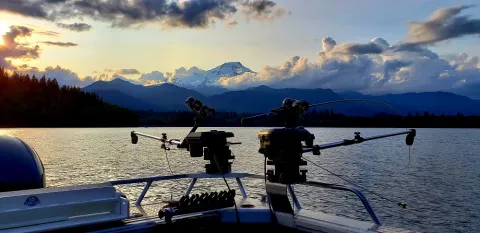
/articles/late-season-baker-lake-sockeye
First water on the Rogue
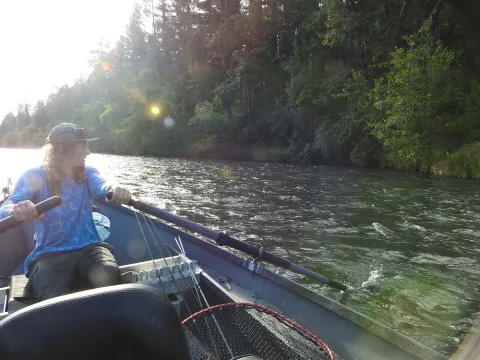
We slid down out of a tail-out and into the next riffle. I was in the bow, tilted into the front brace, rod up. "Cast left, this side has the fast water." Twenty-three-year-old Cole McAuliffe, of Chrome Tales Guide Service, was on the sticks, his curly hair around his shoulders. McAuliffe flicked the right oar and lifted the left. Water ran down off the blade and the boat caught in the current. I flopped an inelegant short cast, looped an upstream mend, and watched the two-fly rig catch the foam line past a jagged submerged rock. Sloppy but perfect. The float plunged and I lifted the rod into a summer steelhead that rocketed out of the shallow slot and into the air, twisting three feet above the water.
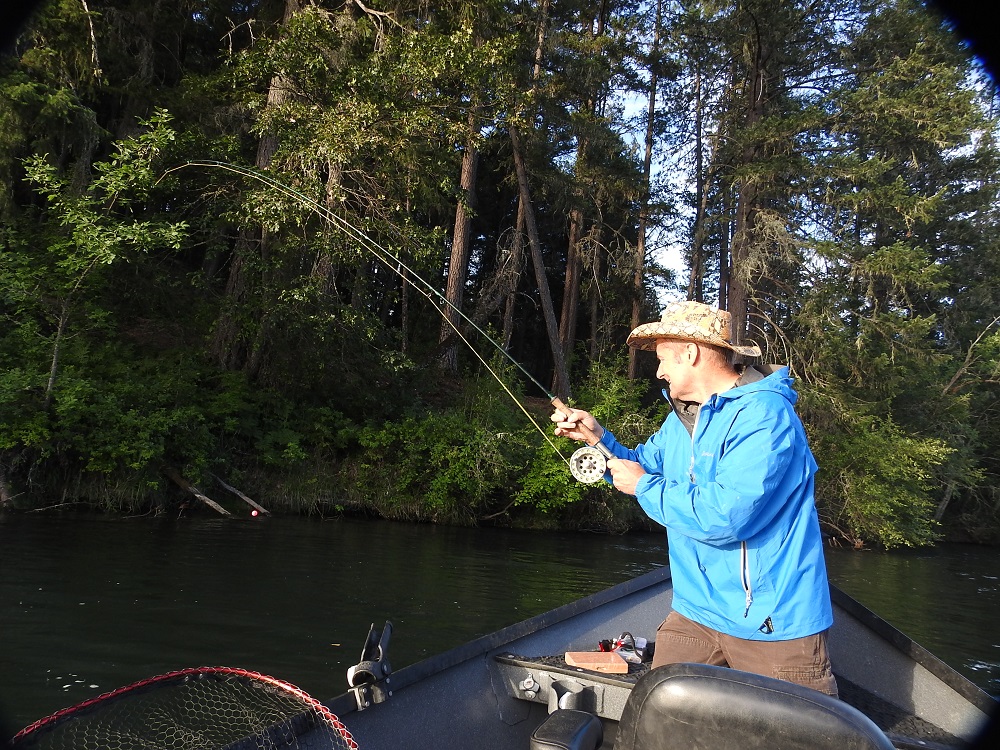
Oh, there is something about hooking a summer steelhead on a fly when you know the leader is 10-pound test and you have a lot of river!
We were only 20 minutes off the launch and no one on the water ahead of us or behind us. Is this not the great Rogue River? Where is everybody? But then I remembered, it was the hottest week of the summer and the rafts and tubes would hit the river about 11 in the morning. And I would be with them, except I'm older and smarter. We met each other earlier this summer when I helped McAuliffe find a highly efficient German shorthair chukar dog, and after the deal was done we both saw a drift-boat shaped hole in our August calendars.
Out of the launch with the sun just breaking over the Cascades, McAuliffe charged the boat straight across the river to a favorite run where a fat sea-run cutthroat waited for us. Now, barely ten minutes later, we had a steelhead on the line, on 10-pound Maxima, charging downstream.
Down through the tailout of the next riffle we followed it, and before I could get the fish's head up, it tail-walked again. Moments later, McAuliffe grabbed the net and made one stab for it when the fish was close, as if we had been fishing together for years instead of just the last 20 minutes. I jumped over the side into the shallows and lifted the wild fish out of the net and showed it to the young guide with the Wild Bill Hickock haircut, shooting my camera. But the fish was done with handshakes and flipped out of my grasp. Five pounds of shiny summer steel, back into the water from whence she came.
There are not as many good summer run rivers in Oregon as there used to be, as hatchery managers have ratcheted back on the good times we enjoyed in the '80s and '90s. Did we have too much fun then and now we have to work harder for our fish? Guess so. McAuliffe, by my calculations, was born at the end of that era and, as fishing guide is his chosen profession in the 2020’s, he is probably going to hear from a lot of middle-aged clients about how it used to be. Today a fishing guide has to work harder. And get up earlier in the morning.
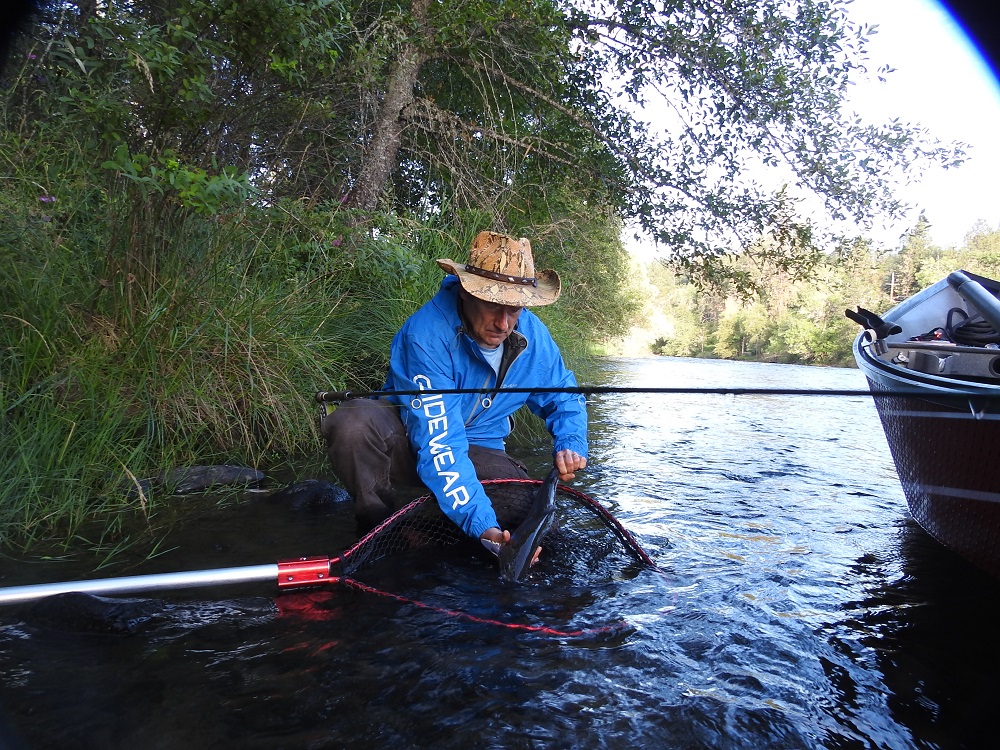
Now I had steelhead lenses on, reading water left and right, with Cole sliding the boat from one good slot to the other. Depending on the water, I used my fiberglass 5-weight to swing a fly or his 6-weight TFO with the float and two-fly rig. McAuliffe said the summer run steelhead season has started stronger than last year and while a lot of guides are using spinning gear, he prefers to stick with the fly rod.
At the business end is a No. 10 beadhead with a heavily weighted stonefly nymph to get to the bottom fast. We adjusted the float to run about 2X the depth of each run. We looked back upstream. Still no one behind us. Still no one ahead. We had first water all the way to the takeout. And trout in every drift. A few were hatchery rainbows and a few were smolts, and they beat the steelhead to the fly.
Trout chased the float, they chased the stonefly out of the water on the retrieves and swiped at the point fly, and I expected a fish on every drift. Get up early in the morning to beat the floaters and the cone-lickers. Go for the trout fishing and let the steelhead surprise you.
/articles/first-water-rogue