Tips & Tactics: Pitching Plastics
It's the time of year when the fish are on their spawn, and in their beds and many of us anglers are throwing artificial baits, especially plastics. I'm going to share 3 different tactics you can use while pitching plastics, may it be Bass, Walleye, or Panfish.
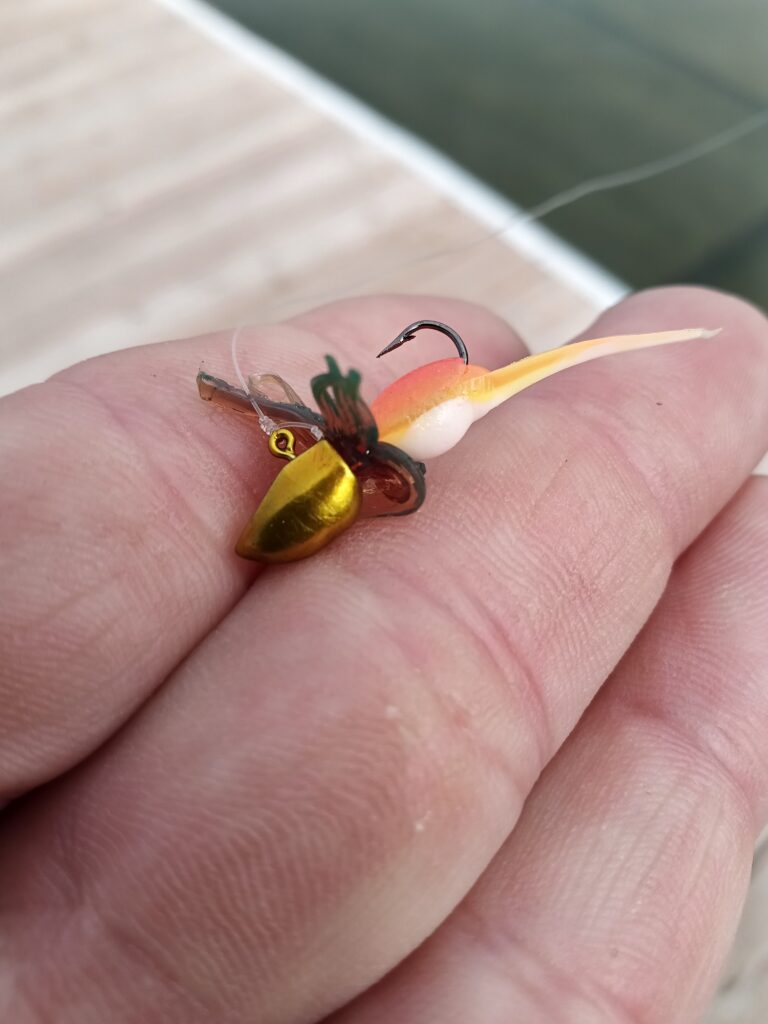
#1 Pairing two different plastic profiles together on one jig has been an effective way to entice the most finicky pan fish. A collared style with a ton of movement, and a subtle trailing tail gives them the best of both worlds.
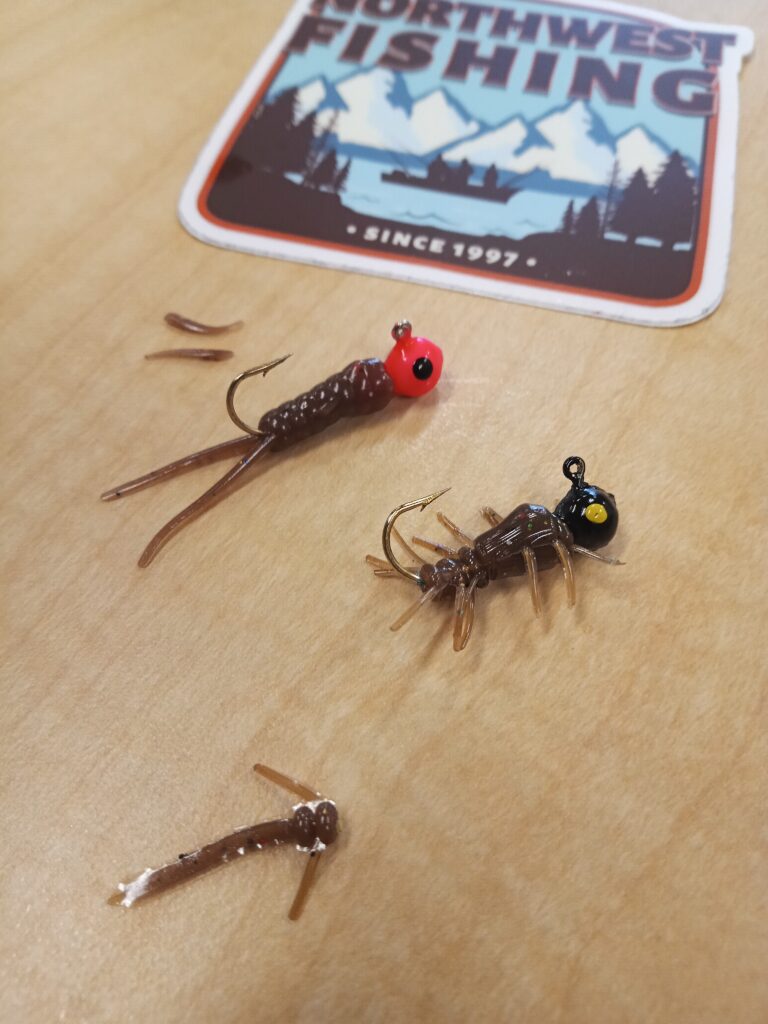
#2 We've all had the tail, and or legs ripped off the plastic we're using thinking we need to change it out. Well, don't.... Inspect it, and if it still looks fishy, fish it. Some of these, which I call "Creature Bait" have sometimes outperformed the original profile. Sometimes they may not want all that frill in their face, just something more sized down and buggy.
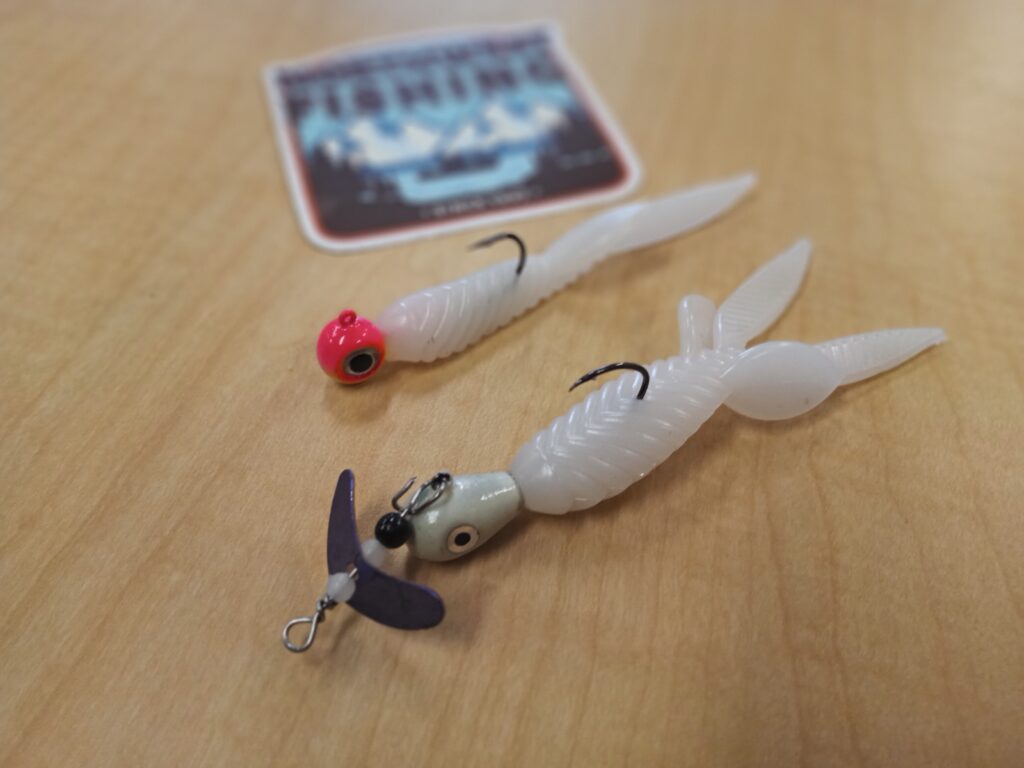
#3 I've tinkered with larger bait while bass and walleye fishing. May it have been a damaged plastic I refinagled on the jig knowing it would still fish. Or I change the profile completely myself for a different look and action. Like this here Burbot Bomb from Bad Dad's Jigs, I've fished the original profile with a ton of success. One day fishing Smallmouth, I cut one in half with scissors and tossed it on another jig head, and the action drove the fish "Bonkers"!
Try it next time, don't change out in such a hurry, inspect the bait, and fish it if it looks fishy. Or go create your own "Creature Bait" that will make them fish crazy.
![{"capture_mode":"AutoModule","faces":[]}](https://cdn.northwestfishing.net/sites/default/files/styles/large/public/images/IMG_20240627_055915_3-scaled.jpg.webp?itok=QZ0r3E67 "{\"capture_mode\":\"AutoModule\",\"faces\":[]}")
/articles/tips-tactics-pitching-plastics
Big Bass Tournaments
A GREAT WAY TO BREAK INTO THE WORLD OF TOURNAMENT FISHING
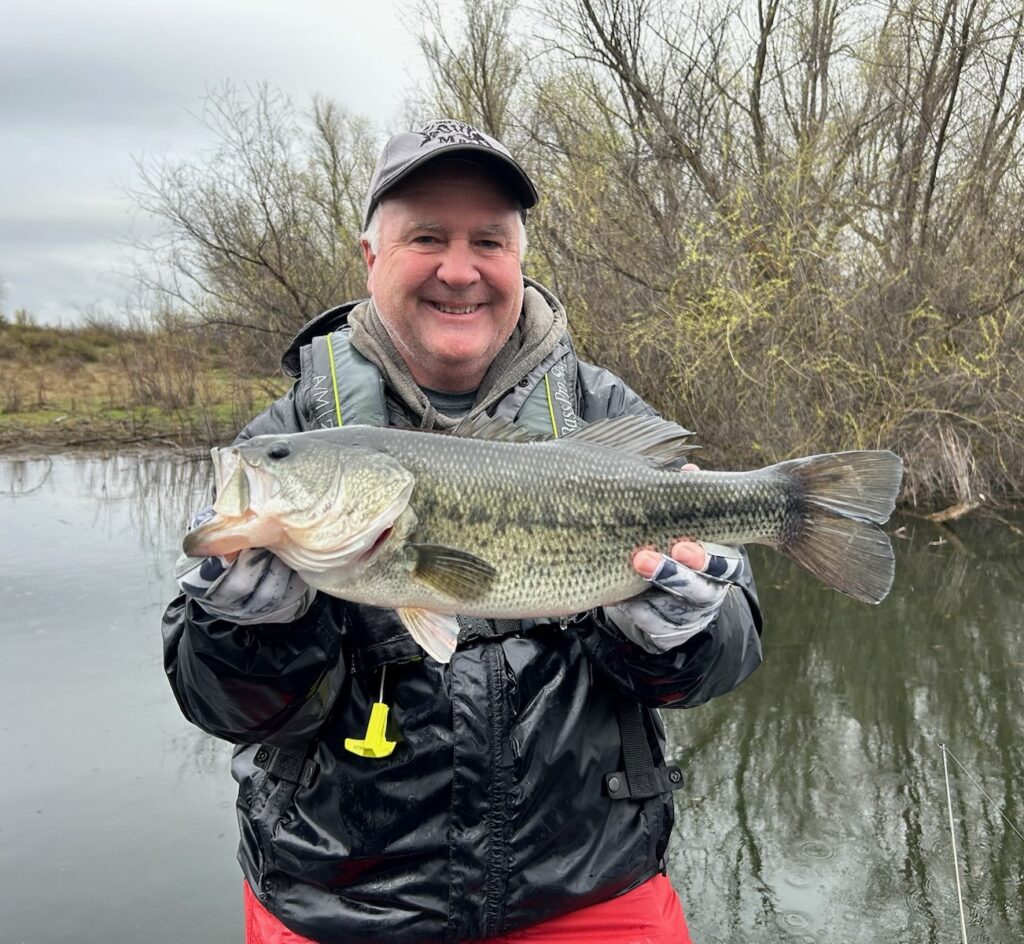
Tournament bass fishing can be an intimidating experience, but it can also be a whole lot of fun and if you want to dip your toes into the world of competitive fishing, a Big Bass tournament is a terrific way to start!
THE STANDARD TOURNAMENT FORMAT
For decades, the standard tournament format involves either an individual angler or a two-person team on board a bass boat fishing for anywhere from one to three days. The goal is to catch five big bass, put them into your livewell, and at the end of the day bring them to the dock where a weigh-in takes place. The team with the heaviest bag wins. After the weigh-in, the bass are released into the lake. If anglers submit a dead bass to be weighed in it is subject to a penalty with a certain amount of the weight being subtracted. In some cases, dead bass are not allowed to be weighed in at all.
There is usually an 80-20 rule when it comes to these bass tournaments, especially the opens where anyone can fish the event. The top twenty percent of anglers tend to end up at the top of the leaderboard while the other 80 percent of the anglers essentially donate their entry fees to the winners.
It’s a tough way to break in because there is invariably a huge learning curve when it comes to tournament fishing that improves with on-the-water experience. It is something that can’t be overcome by watching YouTube videos about bass fishing.
Another barrier to anglers wanting to get into the tournament scene is the best anglers also have the best electronics, boats, 250 HP outboards, Power Poles, forward-facing sonar, and more. In other words, they spend a bunch of money on equipment that may give them an edge over their competition.
HOW A BIG BASS TOURNAMENT WORKS
Big Bass tournaments are a completely different animal from a standard bass tournament. They are almost always open vs. club tournaments, meaning any angler can compete and you don’t have to be a member of the specific club putting on the tournament.
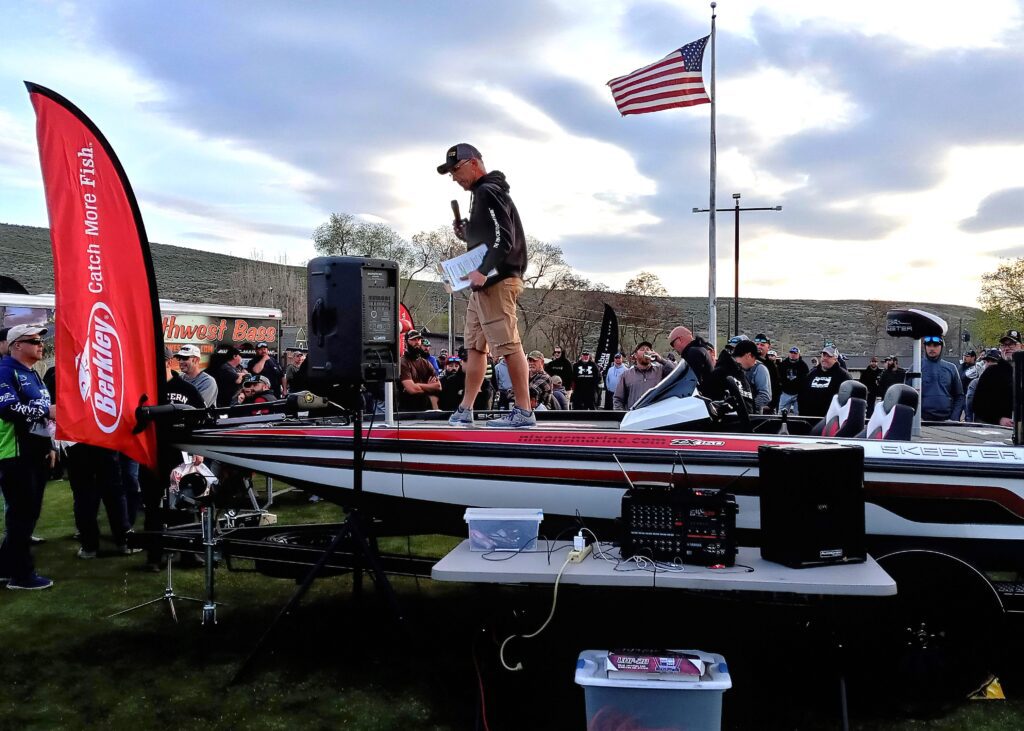
The goal of a Big Bass tournament is to catch the biggest bass and the payouts can be huge. Northwest Bass and Nixon’s Marine team up to give away a new bass boat to one of the hourly winners. What is an hourly winner? That would be the biggest bass caught over an hour-long period throughout the tournament. During the Northwest Bass tournament I participated in, some 100 teams were competing, and seven hourly winners. Each hourly winner was given a key and one by one, the team would get into the giveaway boat and turn the key to start the engine. One of the seven keys works, the other six do not and it’s an exciting event to watch at the end of the day.
Other tournaments I’ve participated in with Limit Out Marine and the Mount Saint Helens Bass Masters also had hourly payouts for the biggest bass weighed in each hour and a big check (up to $10,000) for the biggest bass weighed in during the event.
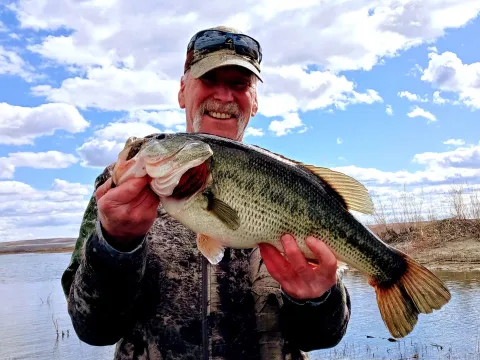
Big Bass tournaments draw big crowds fishing from a variety of different boats. Unlike the upper-level tournament anglers who routinely catch three to four-pound fish over the course of the day, a Big Bass contestant only needs to catch one good fish to cash a check. This really helps level the playing field, giving even the casual bass angler a shot and being a winner.
CONSERVATION
Tournament bass anglers pride themselves on their catch and release ethic of letting all bass go at the end of the tournament. However, catching bass in the morning and driving around the lake all day can really beat the fish up, especially on a windy day. In some cases, bass don’t make it alive to the weigh-in and in other cases, while they may be alive when they are released back into the lake they may not survive over the long term.
That’s why Big Bass tournaments are much easier on the fish. You generally know what it is going to take to have a chance to win an hourly weigh-in. So, let’s say that weight is four pounds. You might catch five fish that are all three-pounders you would normally have in the livewell all day but in a Big Bass tournament, knowing you need at least a four-pounder, you release them immediately right where you caught them.
If you do have a four-pound or bigger fish in this scenario, you race back to the weigh-in site within the hour, get it weighed, and then release it back in the general area where you caught it. By doing these things, you are really helping the overall fishery by keeping the bass healthy and back in the water as soon as possible.
STRATEGIES
The best thing about a Big Bass tournament is that no matter what your skill level, you know that even a blind squirrel can find a nut sometimes and the same goes for you as a Big Bass tournament angler! However, if you want to increase the odds there are a few things you can do.
Do your research and find out, historically, where the bass are usually found in the body of water you are fishing at the time of year the tournament takes place. Ask the local bait shop employees what the hot lures and offerings are for the time of year you are fishing. And most importantly, fish the lake or river before the event.
Many tournaments will have a cut-off date where you cannot be on the water for several days before the tournament begins. That’s okay. Just get on the water as close to the cut-off as you can. Explore the lake. Figure out the places where the fish are not and narrow it down to where they are in terms of depth and orienting around structures; whether it be trees, submerged vegetation, beaver huts, rocks, points, etc.
Oh, and don’t go crazy and win the pre-fish! You don’t want to catch 30 fish at one place because you’ll likely find those fish wise up to what you are trying to sell them come tournament day. Instead, just hook a couple and shake them off so that the majority of the fish in the area you want to be on your big day are undisturbed.
WASHINGTON BIG BASS TOURNAMENTS TO CHECK OUT:
The following clubs and tournament circuits offer Big Bass tournaments, open to the public, every year:
- Limit Out Marine/ Big Bass Trail – www.bigbasstrail.com
- Northwest Bass – www.northwestbass.com
- Washington State Bass Federation – www.wabass.org
- Mount Saint Helens Bass Masters - www.mshbm.org
Big Bass tournaments! They are a ton of fun and a great way to get into the sport. Give it a try this year.
John Kruse – www.northwesternoutdoors.com and www.americaoutdoorsradio.com
/articles/big-bass-tournaments
A Mothers Day Fishing
By Hillary Holman
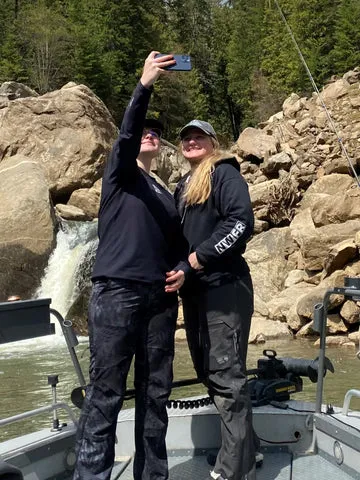
Last year for Mother’s Day I met up with my two daughters to fish Dworshak Reservoir in the Clearwater Valley for Monster Bass.
My eldest daughter Cameron had recently returned home from Temple University in Tokyo to attend WSU in Pullman, and Sarah had came back from PLU to attend Whitworth University in Spokane, both due to unforeseen complications associated with the pandemic.
Paul “the Bait Boy” Hamilton, and Sarah carpooled down from Spokane to Lewiston and Cameron scooted over from Pullman to meet Rob and I at the Clearwater Casino. It was the final leg of a spring fishing road trip with Rob.
We traveled the back roads through Waittsburg from the Tri Cities area, and found some great smoked cheese and meat at Mr C’s. We stocked up on snacks and hit the road to meet up with our posse in Lewiston by dinner time. It was a good 6 hour drive from The Dalles to Lewison, taking the scenic route, aka the shortcut.
Lenore Lodge, operated by Toby Wyatt, is situated on the way to Dworshak and was our lodging in the area. We often stay here when fishing with Reel Time Fishing on the Clearwater. The girls were impressed upon arrival. There was plenty of room, a great kitchen and a game room. The view of the river is nice. It was easy for the girls to unwind, unplug and relax. Cameron prepared a charcuterie board of the many meats and cheeses from Mr. C’s, that we bought along the way.
The next morning brought much excitement. There were winding roads and beautiful scenery. To see the wonder in my girls’ eyes again, as if they were little, gave me the greatest joy. Their curiosity and willingness to explore with us was wonderful. We looked out the windows and snapped pictures at the scenery. The Dam was a marvel. Hidden back in the Valley of the Clearwater, the monolithic dam is a sight to behold.
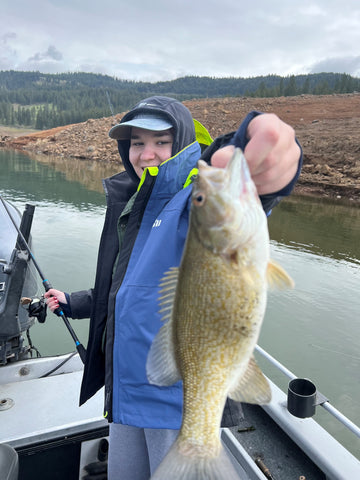
Arriving at the reservoir, we were greeted by Travis Wendt, of Reel Time Fishing. We were on the hunt for Jumbo Bass that are said to inhabit the huge lake created behind the huge Dworshak Dam. It was a beautiful clear day and not another boat was in sight. Travis knows this water well. “The reservoir is deep and steep,” as he says, and letting your leaded soft plastic baits sink to the bottom is paramount for success. Casting was right up our alley. Sitting on the bow of the boat tossing out lines on a clear spring day with my kids was exactly what I needed.
We took a lunch break and hit the shore, a hidden cove with a stream pouring from the rocky bank. Travis fired up the BBQ and us gals hit the shore for some much needed exploring. The hills were draped in green from the spring rain and runoff. We sat on top of a hill and looked down at the men doing their manly banter on the boat with the roaring smoke from BBQ as Travis prepared for lunch. The girls hopped up and set out to the creek to watch and listen to the streaming water down the rocks on the hillside. I watched and they jumped from one side of the falls to the other. Each was snapping pictures of the other. Capturing each moment as it came.
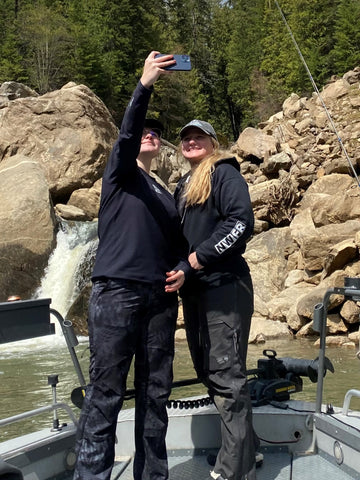
After lunch, we got to work. Paul, Rob and Travis were machines in procedure. They sent their plastics out at just the right spot, waiting for the right angle for the lead to hit the bottom. Cameron had enough time fishing and was ready for Mom to pass her the Camera to film the rest of the bass episode. She was ready to take the reins. The rest of the afternoon I spent fishing. Not worrying about getting the camera shot. Not worrying about the camera at all. Sarah would take turns with Cameron, but for the most part, she fished right alongside me. We hammered ‘em. We gave it everything we had and stayed as long as we could, even with the rain setting in. The girls were troopers. They came prepared with the right gear to withstand the spring day with unpredictable weather.
In the end, we caught some great sized bass and perch. We didn’t catch a monster, but we had fun. We saw a waterfall, beautiful scenery, the dam, and I got to reconnect with my girls after 2 long years apart. The boys were gracious and patient. The lunch was perfect. I could not have asked for a better day for Mother’s Day. Ok, maybe next time to have my son along for the trip is my only ask.
So, if you are wondering what your mom, wife or daughter may enjoy for Mother’s Day, consider taking them fishing. A trip we don’t have to plan and a meal we don’t have to cook or cleanup is all we hope for! The fishing, now that’s a bonus!
This article is dedicated to my Loving Mother Jerri Lee Cole.
/articles/mothers-day-fishing
If A River Runs Thru It
By Gary Lewis
If the days spent fishing do not count against our allotted time on this earth, as we have been told, then we should fish more often. Because we spend a lot of our time in towns, we should be fishing in towns. It's more efficient.
When the family wanted to go to Disneyworld, I fished. When we went to Hawaii, I dabbled a line in a king's bathing pool. I have fished off hotel balconies and out the windows of cars all over the country.
There are a lot of great fishing towns in Oregon; Shady Cove, Maupin, and Grass Pants, to name a few. If a river runs through it, it's a fishing town.
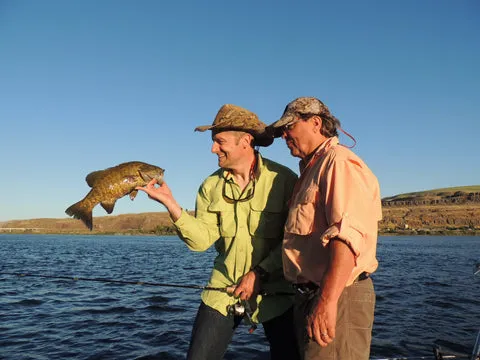
Portland is, of course, the ultimate fishing town, with the Willamette running right through it and salmon, sturgeon, shad, and smallmouth on tap. One of the best smallmouth of my life came from under the Sellwood Bridge.
What I like is going to a town and catching fish right out from under the noses of the local anglers. Here are some great fishing opportunities coming up in May and June.
SHAD FISHING AT OREGON CITY
One of the best fisheries in May and June is for shad - on the Umpqua, the Columbia, and the Willamette. American shad were introduced to the American west in 1871 when fish were released in major rivers up and down the Pacific coast. Today, millions of shad return to spawn in the spring. Plankton eaters, our American shad is the biggest of the herring species and averages three to five pounds. They bite and fight with abandon.
One great place to catch them is below the falls on the Willamette at Oregon City.
They take small spoons like Dick Nites and Mack's Lure Sonic Baitfish, and red, yellow, or chartreuse jigs. Fly-rodders can get them on small shad flies and darts. They are a blast to catch.
The action starts in May, right about the time the pink dogwood blooms. A fisherman can have 50-plus fish days in June, and contrary to popular opinion, shad are good to eat. Hint: learn how to debone them. Shad roe is good to eat too. Fast fishing continues through mid-July.
SMALLMOUTH BASS FISHING AT THE DALLES
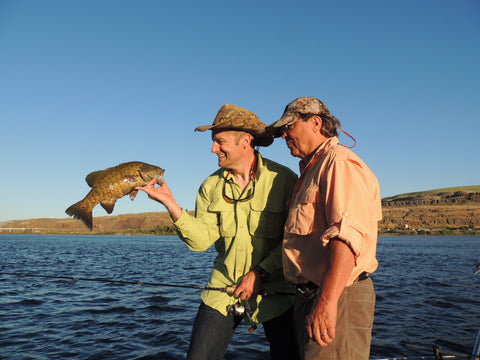
Smallmouth bass will probably spawn a bit later this year, as the waters are running cold with snow melt, but June is always great for smallies. When the water is running fast, they are likely to be in the eddies along the rip-rapped banks of the Columbia, from Mosier up to Boardman and beyond.
There is a lot of bank access in this section of the river. Some of it requires parking off the highway. Backwater fisheries are an overlooked resource with bass and panfish.
When towing a boat to the Columbia for the first time, keep in mind this is big, tricky water with heavy currents. That said, the river is accessible and the best fishing is along the banks next to the riprap and around jetties in softer water.
If the wind is blowing, there are always backwaters, side channels, and turns in the river where an angler can get out of the wind.
Another option is trout fishing. Taylor Lake, right on the edge of city limits of The Dalles, has been stocked three times already this spring.
TROUT FISHING AT JUNCTION CITY
A few miles north of Eugene on old Highway 99, the angler has to start slowing down at the edge of city limits at Junction City. This town with a population of 6,700 people has its own eponymous body of water, the 8-acre Junction City Pond. Stocked and fishable year-round, this pond gets legals, trophies, brood stock, and sometimes surprise surplus steelhead that will rock your world. By the time this issue went to press, JC Pond, as the locals know it, had been blessed with a reported 13,450 legals. That's a lot of fish, folks. It's worth a stop along the highway to soak some bait or cast a fly or spinner this spring.
PIKEMINNOW AT PDX
I caught my first pikeminnow across from the Portland airport. We caught a lot of them in those days, toothy critters that averaged 11 inches and ran up to 17 inches or so.
Northern pikeminnow thrive in the tailwaters below the dams and eat tons of baby salmon and steelhead. And for this, they have a bounty on their heads.
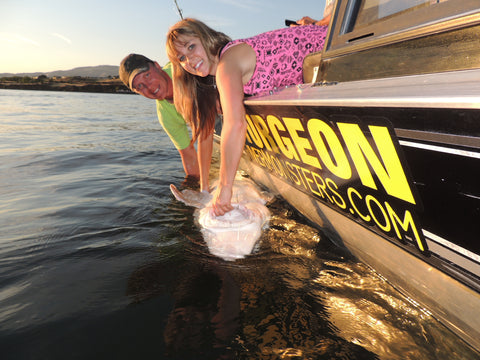
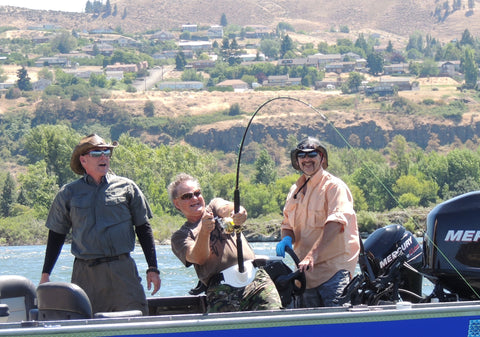
For a true city fishing experience, register at the check-in station early in the morning at M. James Gleason Boat Ramp on Marine Drive, then prowl upriver and downriver for northern pikeminnow - nightcrawlers are a good bait - and take your fish to the check-out station at the end of the day. Click on http://www.pikeminnow.org/ for more information. A fisherman can make $6 a fish these days.
Think about making this one a last stop on a spring fishing swing through western Oregon. It's not a bad way to cover some fuel expenses and do something for salmon and steelhead at the same time.
The days spent fishing don't count against your life, but the miles on the truck do go against my wallet.
For me, PDX is a 360-mile round trip. According to my calculations, I'll need to catch 11 pikeminnow to break even on the fuel. Once I catch fish number 12, I'm making a profit!
/articles/if-river-runs-thru-it
The Outdoors Roundup
Are you in need of outdoor activity ideas for the days ahead? Here, you'll find seven suggestions that offer you the chance to embrace the outdoors and partake in fresh experiences this spring season.
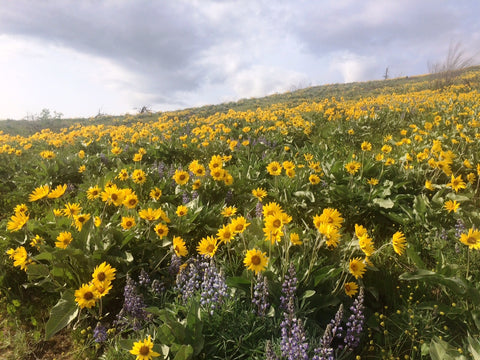
Wildflower Hikes
The wildflowers are blooming around Eastern Washington and now is a great time to go on a hike and immerse yourself in their presence! A few of my favorite places to go include Columbia Hills State Park in Klickitat County, Hay Canyon and Nahahum Canyon near Cashmere, Ingalls Creek south of Peshastin, the Turnbull National Wildlife Refuge south of Cheney, and the area around Palouse Falls State Park.
Waterfalls
Speaking of Palouse Falls, this is the best time of year to visit this state park near Starbuck in Southeast Washington. The spring runoff on the Palouse River sends a voluminous amount of water crashing into the 198-feet deep basalt basin below the falls. Other waterfalls worth checking out right now include Rainbow Falls near Stehekin, Silver Falls west of Entiat, and Periwee (also known as Peewee) Falls in Pend Oreille County, which cascades 233 feet into Boundary Lake.
Bass Fishing
The bass are in the shallows and getting ready to spawn. This is arguably the easiest time of year to sight fish for bass. Casting finesse rigs like senkos, jigs or Texas rigged worms and lizards can readily draw strikes. Look for these bass in thick cover and be prepared to scratch up the boat a bit to get at them.
Trout Fishing
Most of those trout planted prior to the lowland lakes opener are still there, and this is a great time to go fishing for them. If you are looking for places to go, check out the WDFW derby lakes where trout with blue tags have been planted. If you catch one of these trout, they are worth a prize, which could be anything from a gift card to a canoe!
Catfish Fishing
Another option for anglers right now is to go after catfish. You can find them in the lower John Day River between the mouth and the falls as well as the mouth of the Palouse River near Lyons Ferry State Park. Channel catfish are also plentiful in the Snake River.
Desert Hikes
As the weather warms, desert hikes become a lot less enjoyable, but if you go now, you can still take advantage of the great scenery and some of the lakes found in these regions. Some of my favorite desert hikes are the lower route to the Ancient Lakes, Dusty Lake, (1.5 and 3 mike one-way hikes respectively), and near Frenchman or Winchester Wasteway in the Desert Wildlife Area in Grant County. If you go, check yourself for ticks at the conclusion of your excursion.
The Washington lowland lakes opener is in the history books, but that doesn’t mean you can’t still catch fish from them. Here’s a report on some favorites and how angler did:
Steve Caromile, the Inland Fish Program Manager for the Washington Department of Fish and Wildlife said, “The lowland lake trout season, Washington’s single biggest fishing season, opened April 22nd with decent weather and catch rates. It is still one of the best bargains in local family recreation. The 22nd was also the first day of our annual trout derby, and we are already seeing catches of tagged trout!”
Caromile continued saying, “With typical springtime weather, angler catch and effort at our lakes was comparable to prior seasons, with catch averaging just about three fish per angler. The air temperatures weren’t bad, but water temperatures are still on the cool side. But with better weather in the forecast, the catch will be heating up as well.”
If you are wondering how Central and Eastern Washington lakes fished on opening day, here are reports from WDFW staff who visited various waters in the region:
Klickitat County
Horsethief Lake was fishing pretty slow on the opener. Individuals averaged two trout each. However, things were very different at Rowland Lake. 29 anglers were checked, and although there were not many people fishing, creel checkers noted they harvested lot of fish. Eight trout were caught per angler, and on average they kept 3.24 fish. The largest trout seen? A 21-incher!
Chelan County
Clear Lake was frozen over and Beehive Reservoir was not accessible to vehicular traffic due to snow at this lake located near the Mission Ridge Ski Area, south of Wenatchee. However, Wapato Lake, near Manson, was open for fishing, and anglers caught and kept around 3.5 trout apiece.
Douglas County
The crowds were out at Jameson Lake on opening morning. Creel checkers counted 234 anglers fishing for trout at 8 AM. Just under 3 trout per angler were caught here, the average fish measuring 11-inches long. The largest fish seen by WDFW staff was a 16-inch rainbow.
Grant County
The crowds were also out for the opener at Blue Lake, with nearly 300 individuals counted, and a lot of these anglers were kids. The average catch was only 1.5 trout each, but the size of the trout was a healthy 14 inches. Park Lake, south of Coulee City, was also crowded, and the catching was about the same as Blue Lake. There was far better fishing at nearby Deep Lake, in Sun Lakes State Park. Anglers there were catching five fish limits of rainbow trout averaging 13 inches.
Okanogan Country
Okanogan County is a popular destination for the lowland lakes opener and for good reason: the fishing can be very good here and the scenery is nice. Creel checkers did not make it out to any of the lakes here for the opener but I called Gene Bussell at Liars Cove Resort, who said anglers did pretty good for both bass and trout. However, the lake is really low right now, and according to Bussell, “it’s not easy to launch boats at the moment.” The good news is the lake is starting to fill and boat access is getting better. Check with Bussell for exactly where to launch so you don’t get stuck in the mud.
Pend Oreille Country
At Diamond Lake, the crowds were low and the fishing was slow, due primarily to cold water temperatures. Of the anglers checked, on average they only harvested a rainbow apiece, though most of them were 13-inches long, and the largest checked was a respectable 19-inch trout.
Stevens County
Waitts Lake had more anglers than any other body of water in Stevens County on opening day. Creel checkers noted the fishing was best in the morning before the winds kicked up. The anglers checked averaged 2.4 trout apiece, but the fish were large, with the rainbows going nearly 14 inches and the brown trout 16. There were not many anglers seen at the other Stevens County lakes. At Starvation Lake, anglers were indeed starving for trout and the fishing was slow. The same scenario played out at Rocky and Mudgett Lake. The few trout checked averaged 12 inches in length.
Last but not least, if you catch a trout with a blue tag on it, don’t throw it back. That’s a WDFW trout derby fish and it’s worth a prize. Go to https://wdfw.wa.gov/fishing/contests/trout-derby for details about where these fish have been stocked and how to claim your prize if you catch one.
John Kruse – www.northwesternoutdoors.com and www.americaoutdoorsradio.com
/articles/outdoors-roundup