Lions, Snakes, & Bears, Oh My! by Mike Carey
Back in my Washington Alpine Lakes hiking days, my biggest concern was the potential of being stalked by a cougar. The odds were low, but the risk was high. The common wisdom was that you would never know what hit you until it was too late. Even so, I was in the habit of hiking with a Glock 45, which I figured was better than no protection. It was also protection against two-legged danger. Of course, hiking with a firearm in Washington led to some interesting encounters. One beautiful summer day, I was hiking up to Snow Lake, and when I arrived, there was a group of four younger hikers. I was wearing my outdoor shirt, which I had sewn the old Washington Lakes logo onto. One of the hikers looked at me, looked at my gun, fishing gear, and logo, and asked me, “Are you surveying the lake?” He obviously thought I was some type of official person. I replied, “No, just up here for some fishing.” The group had puzzled and worried looks on their faces as I went on my way. Guns were and are not a common sight on the hiking trails in Washington.
Fast forward twenty years and a move to Montana, where it is normal to be hiking with a holstered gun. And bear spray, and a knife. Because, in case you hadn’t heard, the last few years have seen a dramatic growth in black and grizzly bear populations in Montana, and the exodus of bears from the high mountain country to the plains of central Montana, where they once roamed freely (you can read about Merriweather Lewis’s famous encounter with a grizzly at the Great Falls of the Missouri).
Washington and Idaho are experiencing similar increases, not to mention growing wolf populations. The North Cascade Mountain range has grizzly bears again. Unfortunately, many casual hikers are sadly ignorant of the danger of wildlife encounters.
I don’t want to discourage anglers from exploring these beautiful, remote locations where it is possible to spend a day fishing and not see another angler or person. The desire to fish in secluded places means accepting the risks and being prepared. Going alone increases that risk. At the very least, you need to hike with the “ten essentials”, which you can find by doing a simple internet search. In addition, I now always bring bear spray and my gun. I tell my wife the general area I’ll be in, and if my plans change, I will text her the updated location I’m going to.
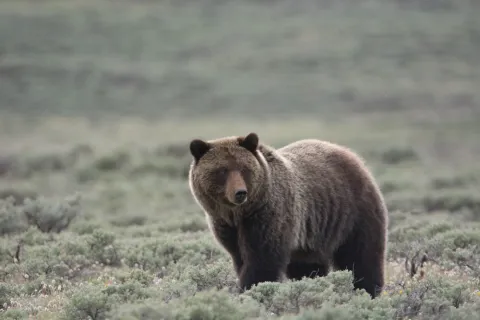
Time of year plays an important role in bear encounters, including the potential for lethal attacks. Bears coming out of hibernation are hungry, and female bears have their cubs with them, which puts them in protection mode. Spring is an extremely dangerous time of the year to be out and about, and extra caution is required. It’s not the best time for solo trips.
That said, I’m at the stage of life where I am semi-retired, and spring fishing is just a given. This year I’ve been exploring segments of the Missouri River in my jet boat, and often it’s just me and my dog, Duke. Obviously, being in a boat affords a higher level of safety, but there are times when we’ll pull up on shore to stretch our legs. Looking for spots that are open rather than brush-filled is the first thing to do. Having a dog that comes when called and doesn’t wander is darn important, too!
OK, you’re saying, spring is dangerous with bears; I’ll wait until summer comes. Not so fast, buddy. With the warm temperatures comes Indiana Jones’ worst fear: snakes. Washington, Idaho, Oregon, and Montana all have their fair share of snakes. The kind that rattle are particularly worrisome for me, not to mention my dog.
On a recent outing to “Widow’s Coulee” on the Missouri, Duke and I were wrapping up a productive day of fishing for walleye and smallmouth bass. It was a day in the low eighties, and by 2 PM, it was time to get Duke into some shade and call it a day. Securing my boat onto the trailer, I noticed some movement on my left. Coming out of the grass was a big old snake, easily 3-4 feet long. My first reaction was to break the Second Commandment, something I haven’t done in some time (I need to get to confession for that…). My second reaction was to walk around the far side of the boat, get in the truck, and run the snake over. I went back to investigate and never found the snake, so he’s probably waiting for the next angler to come along and scare the heck out of.
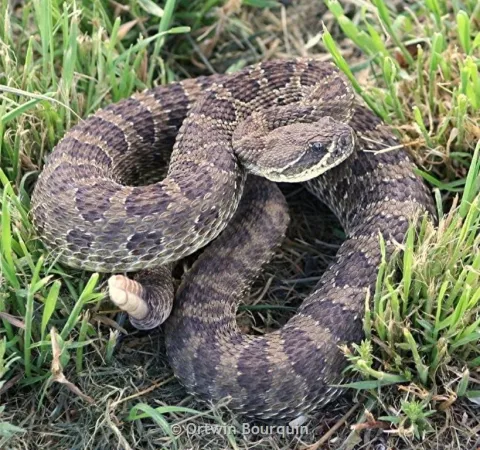
By the way, snakes can swim. Last year, on a different stretch of the Mo, I was anchored up and watched as a snake swam by our boat and onto shore. I’m still not sure what to do in the case of a snake on the boat situation, and I hope to never have to figure it out! Duke has received the rattlesnake vaccine, although I need to get him to a snake aversion training class as well.
Snakes, wolves, lions, bears – have I dissuaded you from backcountry adventures? I hope not. Our wild areas offer a unique and special experience to anglers. And sadly, more are disappearing every year. Personally, I’ve weighed up the risks and decided the experience is worth it. The quiet, peace, and solitude are something that feeds my soul, bringing me closer to my Creator.
I hope you’ll do the math and decide to venture on the roads less travelled. May your fishing adventures bring you the peace we all yearn for.
/articles/lions-snakes-bears-oh-my-mike-carey
Avoiding Wildlife Collisions
By John Kruse
Steelheaders typically get up early to hit their favorite spots, meaning traveling in the dark on roads that can be wet and icy. In addition to those hazards, there is another hazard this time of year we all need to be mindful of.
I’m talking about wildlife collisions,
Every year, law enforcement agencies submit reports to the Washington State Department of Transportation (WSDOT) of vehicles that have sustained over $1,000 of damage. On average, 1500 reports are received every year.
The animal is killed in most of these collisions but there are dangers to the occupants of the vehicles as well. Typically, 167 people are injured on an annual basis and at least one individual is killed.
WSDOT believes, based on the number of deer and elk carcasses they remove every year from roadways, that the actual number of animal/vehicle accidents is far higher than reported.
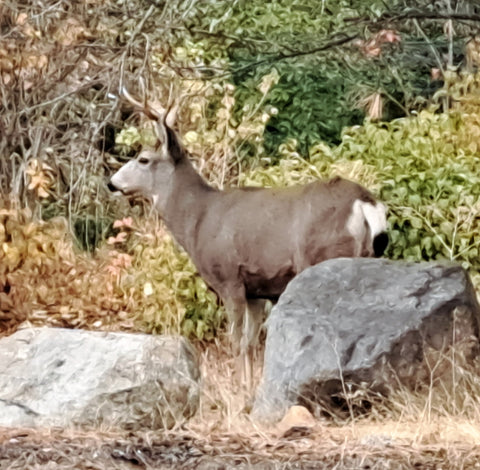
State Farm Insurance actually projects, state by state, how many deer/vehicle collisions will likely occur every year. The latest data available is from 2014 but the Northwest numbers are illuminating:
IDAHO – 6,372
MONTANA – 10,099
OREGON – 10,523
WASHINGTON – 14,043
The next question is, why do deer and elk collisions increase during the fall months? The answer to that is partially due to sex. Fall is the time of year deer and elk go into the rut and the primary thing they have on their mind is mating.
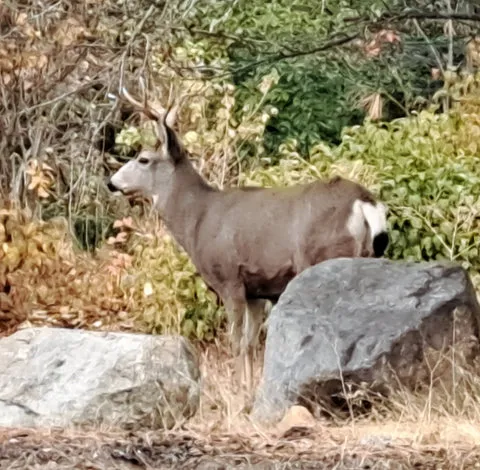
If a buck or bull picks up the scent of a doe or cow, no highway will stand in the way of that animal making a beeline towards what they hope will be a hook up.
Another reason why is because fawns and calves are now grown enough to act on their own and being the young animals they are, make bad decisions about crossing roadways in front of speeding vehicles.
How do you avoid collisions with wildlife?
When you see a wildlife crossing sign, know that it’s there for a reason. Pay attention to the roadway in front of you and to the sides of the road.
- If you see a deer or elk on the side of the road assume it’s going to do something stupid. Slow down to the point you’ll be able to avoid a collision.
- Most wildlife collisions occur at times of limited visibility, particularly between sunset and sunrise. Make it a point to slow down and not overdrive your headlights when driving in areas known to have wildlife. For most vehicles, that means slowing down to 55 MPH.
- If a deer or elk does step out or sprint in front of you, do not swerve off the road or into the incoming lane to avoid a collision. You may have a much worse collision to contend with if you do.
If you do strike a deer or elk and sustain damage to your vehicle, call 911. If the animal is alive a law enforcement officer or fish and wildlife enforcement officer can dispatch it with a firearm. If you want to salvage the meat from the animal a relatively new law in Washington State allows you to do that. Remove the entire animal from the roadway.
Then, within 24 hours obtain a free salvage permit from the Washington Department of Fish and Wildlife website. According to WDFW over 4,000 of these salvage permits have been issued since August of 2020. You can find out more details about this program and apply for an online salvage permit at https://wdfw.wa.gov/licenses/roadkill-salvage
Oregon has a similar las regarding roadkill salvage. According to the Oregon Department of Fish and Wildlife, “It is lawful for a member of the public to humanely dispatch a crippled or helpless animal, but OSP must be immediately notified. In these cases, only the driver of the vehicle that struck the deer or elk may salvage it as part of the roadkill salvage permit program.”
In Idaho you can also dispatch not only a deer, but any other lawfully hunted animal that you accidently hit. You then have 24 hours to notify the Idaho Department of Fish and Game and 72 hours to obtain a salvage permit.
Montana also allows you to salvage any roadkill big game animals killed in vehicle collisions that are lawful to hunt. Like Washington, you have 24 hours to obtain a salvage permit which can be provided by a law enforcement officer at the crash scene or obtained online.
Last but not least, know that state Department of Transportation working with state Fish and Wildlife agencies and non-profit partner organizations like Backcountry Hunters & Anglers, Conservation Northwest, the Mule Deer Foundation and others have been working to reduce collisions between wildlife and vehicles in recent years.
They are doing so through the construction of a wildlife crossings and fences. Places in Washington where this has occurred include
- Wildlife crossing underpass on SR 240 that provides access to habitat in the vicinity of McNary National Wildlife Refuge
- A wildlife crossing underpass and fencing on U.S. 97 in Okanogan County
- Bridge and fencing at Butler Creek on U.S. 97 north of Goldendale
- Wildlife fence on U.S. 97 north of Wenatchee
- Interstate 90 near Snoqualmie Pass where a large overpass and fencing was installed
In Idaho similar work has occurred:
- A wildlife underpass for mule deer on Highway 21 east of Boise
- A planned wildlife crossing at Rocky Point on US Highway 30 near Montpelier is also being designed in an area that averages 100 deer/vehicle collisions a year.
These projects do work to reduce collisions with wildlife but there are still plenty of animals crossing our roadways this fall so pay attention, be careful, and avoid colliding with a wild animal this fall.
John Kruse – www.northwesternoutdoors.com and www.americaoutdoorsradio.com
/articles/avoiding-wildlife-collisions